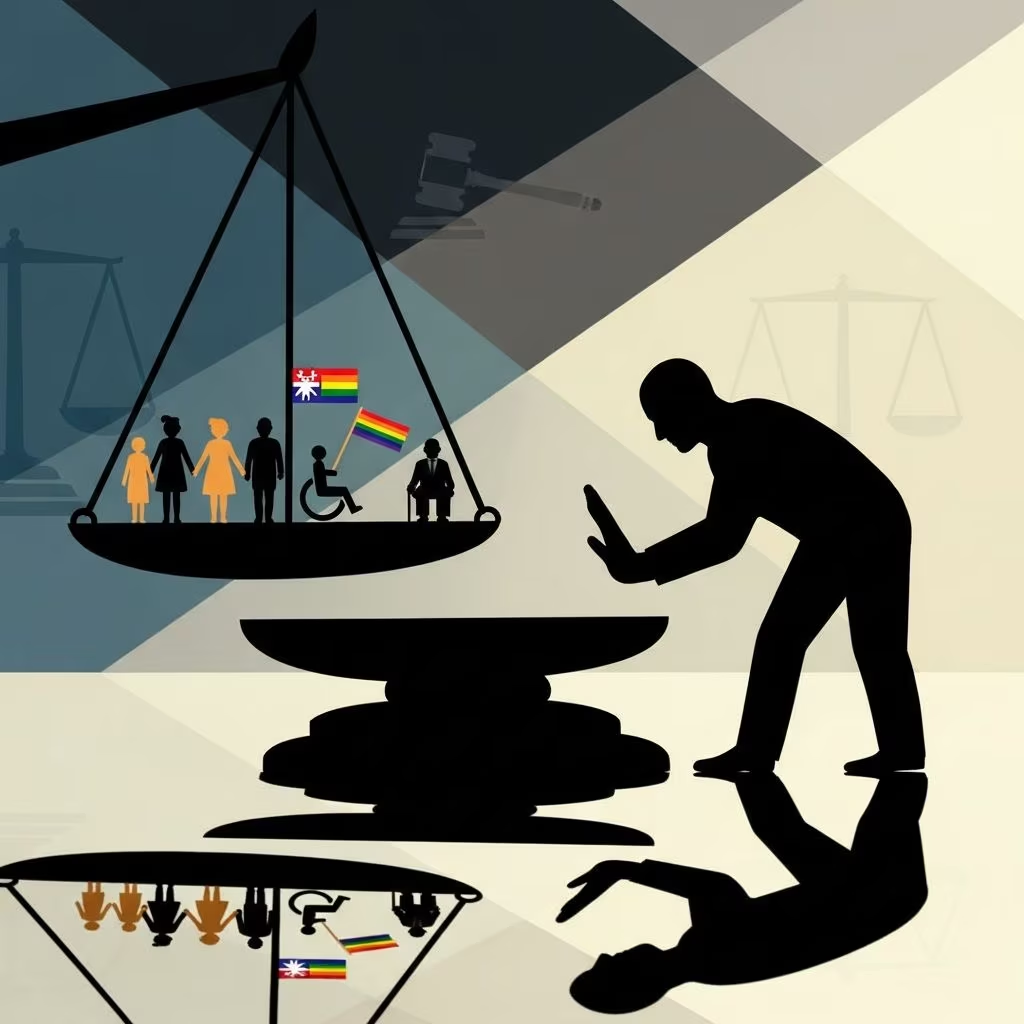
Federal and state laws in the United States establish strong safeguards against unfair treatment in employment. These regulations prohibit employers from making decisions based on protected characteristics such as race, sex, age, or disability, ensuring equitable opportunities for all workers.
Core Federal Protections Against Discrimination
The foundation of U.S. anti-discrimination law lies in several key federal statutes enforced primarily by the Equal Employment Opportunity Commission (EEOC). Title VII of the Civil Rights Act of 1964 is central, banning discrimination in hiring, firing, pay, promotions, and other employment terms based on race, color, religion, sex (including pregnancy, sexual orientation, and gender identity), and national origin. This applies to most employers with 15 or more employees, as well as unions and employment agencies.
The Age Discrimination in Employment Act (ADEA) protects workers aged 40 and older from age-based bias in employment decisions. Similarly, the Americans with Disabilities Act (ADA) and Section 501 of the Rehabilitation Act prohibit discrimination against qualified individuals with disabilities, requiring reasonable accommodations unless they impose undue hardship.
Additional laws include the Equal Pay Act (EPA), which mandates equal pay for equal work regardless of sex, and the Genetic Information Nondiscrimination Act (GINA), shielding employees from bias based on genetic data.
Protected Categories Under Federal Law
- Race and Color: No adverse actions based on racial or ethnic background.
- Religion: Employers must accommodate sincerely held beliefs.
- Sex: Encompasses gender, pregnancy, sexual orientation, and gender identity.
- National Origin: Protects against bias due to ancestry or cultural traits.
- Age (40+): Prevents favoritism toward younger workers.
- Disability: Covers physical and mental impairments substantially limiting major life activities.
- Genetic Information: Bars use of family medical history in decisions.
These categories extend to all employment phases, from recruitment to termination.
Understanding Workplace Harassment
Harassment becomes illegal when it creates a hostile work environment or results in tangible employment actions like demotion. It includes unwelcome conduct tied to protected traits, such as offensive jokes, slurs, or physical advances. Sexual harassment, a subset, involves quid pro quo demands or pervasive hostility.
Employers bear responsibility to prevent and correct harassment. They must investigate complaints promptly and take remedial steps. Even a single severe incident, like assault, can violate the law.
| Protected Category | Example of Illegal Harassment |
|---|---|
| Race | Derogatory cartoons or epithets targeting ethnicity. |
| Sex | Unwanted touching or explicit emails. |
| Religion | Mocking prayers or dress code conflicts. |
| Disability | Belittling accommodations or medical conditions. |
| Age | Comments stereotyping older workers as slow. |
Harassment can come from supervisors, coworkers, clients, or vendors, and victims or bystanders can complain.
Retaliation: A Common Violation
Retaliation occurs when employers punish employees for asserting rights, such as filing complaints or opposing discrimination. Protected activities include reporting bias, serving as a witness, or refusing discriminatory orders.
Prohibited responses encompass firing, demotion, pay cuts, increased scrutiny, or threats. Even subtle actions like reassigning shifts can qualify if linked to protected conduct. The law protects those with reasonable beliefs of illegality, even if unproven.
- Filing an EEOC charge.
- Discussing pay disparities with colleagues.
- Intervening to stop harassment.
- Requesting disability accommodations.
Retaliation claims often succeed due to clear timelines linking complaints to adverse actions.
State-Level Enhancements to Protections
While federal laws set minimum standards, states often expand coverage. California’s Fair Employment and Housing Act (FEHA), for instance, applies to employers with five or more employees and adds protections for marital status, medical conditions, and victims of domestic violence. It mandates harassment prevention training and reasonable accommodations for pregnancy or caregiving.
Many states lower employee thresholds (e.g., 5-10 workers) and include categories like sexual orientation explicitly. Public sector workers gain extra safeguards against political coercion or veterans’ preference violations.
Immigration laws under the INA prevent citizenship-based discrimination and unfair document demands.
Filing Complaints and Enforcement
To challenge discrimination, contact the EEOC within 180-300 days (varies by state). Submit online, by mail, or phone; no lawyer needed initially. The EEOC investigates, mediates, or issues a right-to-sue letter for court.
Remedies include back pay, reinstatement, damages for emotional distress, and attorney fees. Federal contractors face additional scrutiny under Executive Order 11246.
- Document incidents with dates, witnesses, emails.
- Report internally first if safe.
- File with EEOC or state agency.
- Consider legal counsel for lawsuits.
States like California route through the Civil Rights Department (CRD) for broader remedies.
Employer Responsibilities and Best Practices
Employers must implement anti-discrimination policies, conduct training, and respond to complaints. Prohibited practices include segregated facilities, nepotism favoring relatives, or job ads excluding protected groups.
Reasonable accommodations—modified schedules, equipment, or telework—are required for religion or disability, balanced against business needs.
Proactive steps reduce liability:
- Annual training on harassment.
- Diverse hiring panels.
- Anonymous reporting hotlines.
- Regular audits of pay equity.
Special Considerations: Pregnancy, Pay, and More
The Pregnancy Discrimination Act amends Title VII to treat pregnancy like other conditions, requiring accommodations like leave or lighter duties. The EPA targets wage gaps for substantially equal roles.
Family status protections in some states cover leave for bereavement or reproductive loss. Genetic testing bans prevent preemptive bias.
Frequently Asked Questions (FAQs)
What should I do if I experience discrimination at work?
Report it to HR, document everything, and file with EEOC promptly. Seek legal advice if needed.
Does my small employer have to follow these laws?
Federal laws apply to 15+ employees, but states like California cover 5+.
Is joking about race considered harassment?
Yes, if pervasive or severe enough to alter work conditions.
Can I be fired for complaining about pay inequality?
No, that’s illegal retaliation under the EPA and Title VII.
What is a hostile work environment?
Unwelcome conduct based on protected traits severe/pervasive enough to interfere with work.
References
- Anti-discrimination laws & legislation in the United States (USA) — L&E Global. 2023. https://leglobal.law/countries/usa/employment-law/employment-law-overview-usa/04-anti-discrimination-laws/
- Protections Against Discrimination and Other Prohibited Practices — Federal Trade Commission (FTC). 2023-10-01. https://www.ftc.gov/policy-notices/no-fear-act/protections-against-discrimination
- Discrimination, harassment, and retaliation — USAGov. 2024. https://www.usa.gov/job-discrimination-harassment
- CALIFORNIA LAW PROHIBITS WORKPLACE DISCRIMINATION — California Civil Rights Department. 2023-01. https://calcivilrights.ca.gov/wp-content/uploads/sites/32/2023/01/Workplace-Discrimination-Poster_ENG.pdf
- Know Your Rights: Workplace Discrimination is Illegal — U.S. Equal Employment Opportunity Commission (EEOC). 2023. https://www.eeoc.gov/know-your-rights-workplace-discrimination-illegal
- Summary Discrimination and Harassment in the Workplace — National Conference of State Legislatures (NCSL). 2024. https://www.ncsl.org/labor-and-employment/discrimination-and-harassment-in-the-workplace
- Prohibited Employment Policies/Practices — U.S. Equal Employment Opportunity Commission (EEOC). 2023. https://www.eeoc.gov/prohibited-employment-policiespractices