
The Human Cost of Agriculture: Migrants Are Not Disposable
Migrant laborers are essential to our food supply, not disposable tools.
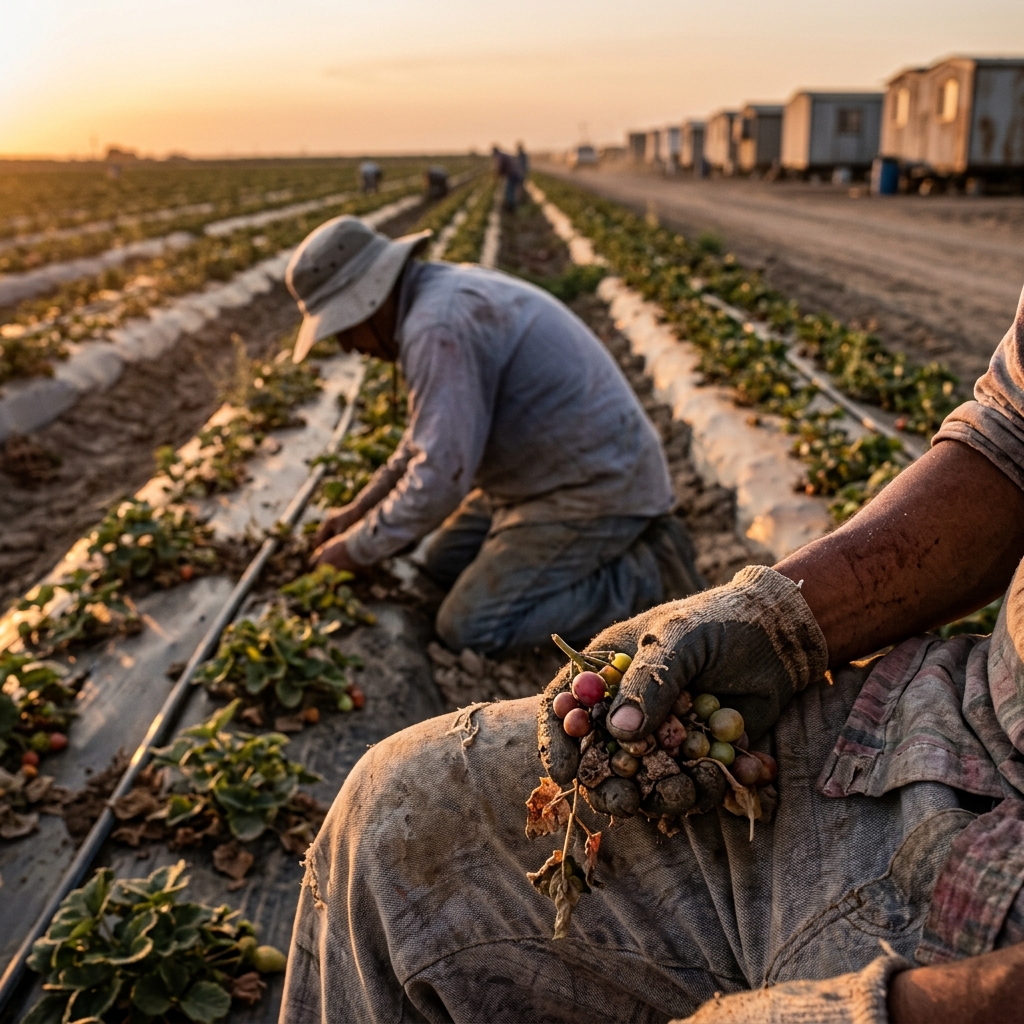
The Unseen Backbone of the Agricultural Economy
The agricultural engine of the United States relies heavily on the physical endurance, resilience, and relentless toil of migrant laborers. From the sprawling tomato fields of the Southeast to the sun-baked vineyards and orchards of the West Coast, these workers plant, tend, and harvest the crops that sustain the nation and fuel a multi-billion-dollar industry. Yet, despite their indispensable role in maintaining the global food supply chain, migrant agricultural workers are frequently subjected to a labor system that treats them as disposable commodities. In too many instances, they are viewed merely as implements of production—tools to be used and discarded—rather than human beings entitled to fundamental dignity, workplace safety, and fair compensation.
This systemic dehumanization is not an accidental byproduct of modern agriculture; it is deeply rooted in historical exclusions from labor laws and perpetuated by contemporary immigration frameworks. When workers are stripped of their voice and leverage, the resulting power imbalance paves the way for severe exploitation. Advocates, human rights observers, and government agencies alike have long documented the grim realities hidden behind rural fence lines: rampant wage theft, hazardous working conditions, retaliatory threats, and predatory housing schemes. The ongoing fight for immigrant and worker rights seeks to dismantle this paradigm, insisting that the men and women who feed the world are afforded the protections they rightfully deserve.
Understanding the plight of migrant laborers requires looking past the grocery store aisles and examining the systemic vulnerabilities engineered by current labor and immigration policies. By treating workers as interchangeable and devoid of fundamental rights, bad-actor employers maximize profits at an unacceptable human cost. Addressing this crisis demands a comprehensive overview of how these abuses manifest and what structural reforms are required to restore justice to the fields.
The Weaponization of Immigration Status
One of the most insidious dynamics within the agricultural labor sector is the deliberate weaponization of a worker’s immigration status. Employers frequently exploit the precarious legal standing of their workforce to maintain absolute control and suppress any dissent regarding unlawful working conditions. For undocumented workers, the constant, looming threat of deportation serves as a powerful gag order. When faced with unpaid wages, denied rest breaks, or dangerous exposure to toxic pesticides, many choose to suffer in silence rather than risk losing their livelihoods and facing forced removal from the country.
However, the vulnerability is not limited to undocumented immigrants. Workers who arrive in the country legally through the H-2A temporary agricultural guestworker program face their own unique brand of coercion. The H-2A visa explicitly ties a worker’s legal status to a single, specific employer. If an H-2A worker protests abusive treatment, demands the federally mandated Adverse Effect Wage Rate, or attempts to quit, they instantly lose their visa status and become deportable. This captive labor arrangement creates a modern-day indentured servitude environment, where the employer holds all the cards. The fear of retaliation is not merely psychological; it is a structural reality baked into the visa program itself.
Exploitative supervisors and farm labor contractors actively leverage this fear. Reports from labor rights organizations frequently highlight instances where passports and identification documents are confiscated upon arrival, physically trapping workers on isolated rural compounds. Threats of reporting workers to immigration enforcement authorities are routinely used to break unionizing efforts or silence complaints about sexual harassment and physical abuse. When the legal system inherently favors the employer’s authority over the worker’s autonomy, the result is a workforce that is structurally coerced into submission.
This dynamic creates a race to the bottom for agricultural labor standards. When a significant portion of the workforce cannot safely report violations without risking deportation, employers face little to no consequence for flouting labor laws. This not only harms the migrant workers directly experiencing the abuse but also depresses wages and degrades working conditions for domestic workers in the same industries, as employers preferentially hire the most easily exploited labor pool available.
Living on the Margins: Predatory Housing and Debt Bondage
The financial exploitation of migrant workers extends far beyond the fields and into their living quarters. While farmworkers perform some of the most physically demanding labor in the country, they remain among the lowest-paid demographic in the national workforce. This poverty-level income is further diminished by predatory practices surrounding employer-provided housing and transportation. Under the guise of providing essential accommodations, some employers and labor contractors operate lucrative side enterprises that extract massive portions of their workers’ earnings.
In many agricultural hubs, migrant workers are housed in severely overcrowded and dilapidated conditions. It is not uncommon to find multiple workers crammed into a single, aging mobile home or barracks-style facility lacking proper ventilation, adequate plumbing, or functional heating and cooling systems. Despite the substandard nature of these dwellings, the rent deducted directly from workers’ paychecks can be astronomical. In some documented cases, workers collectively pay thousands of dollars a month for a single trailer—rates that rival luxury apartments in major metropolitan cities.
Furthermore, the reliance on employer-provided transportation often becomes another avenue for financial extraction. Workers are frequently charged daily fees to be transported from their labor camps to the fields in unsafe, overcrowded vans or buses that lack basic safety features like seatbelts. These compounding deductions—for housing, transportation, and even basic equipment like gloves and harvesting tools—often leave workers with a fraction of their promised wages.
In the most extreme cases, these practices devolve into outright labor trafficking and debt bondage. Workers who incur significant debts to recruiters in their home countries to secure H-2A visas arrive in the United States already desperate to pay off their loans. When employers systematically siphon off their wages through inflated housing and transportation fees, the workers become trapped in an endless cycle of debt, unable to save money, send remittances home, or afford to return to their native countries.
Climate Hazards: Working Through the Extremes
The attitude that migrant workers are mere tools of production becomes alarmingly apparent when severe weather events and climate hazards strike. A tool does not require shelter from a storm, nor does it suffer from heatstroke—and tragically, some employers treat their human workforce with the same detached calculus. As climate change accelerates the frequency and intensity of extreme weather, agricultural workers are on the front lines of environmental occupational hazards, often with zero protection.
During extreme heatwaves, which routinely push temperatures in agricultural valleys well into the triple digits, farmworkers are frequently denied adequate water, shade, and legally mandated rest breaks. The piece-rate compensation system—where workers are paid based on the volume of crop they harvest rather than an hourly wage—heavily disincentivizes taking breaks, pushing individuals to work past the point of physical collapse. Heat-related illnesses and fatalities are disproportionately high among agricultural laborers, yet federal standards specifically regulating heat exposure in the workplace remain sluggishly enforced or entirely absent in many regions.
Similarly, the response to natural disasters highlights the devaluation of migrant lives. There are numerous documented accounts of agricultural workers being ordered to remain in the fields and continue harvesting crops despite approaching hurricanes, severe thunderstorms, or heavy wildfire smoke. The primary concern of the employer in these scenarios is preserving the crop yield and mitigating financial loss, explicitly prioritizing the agricultural commodity over the survival and respiratory health of the people harvesting it. When the air is thick with toxic particulate matter from wildfires, farmworkers are often the only people left outside, performing aerobic labor without adequate N95 respirators.
Systemic Legal Failures and the Enforcement Gap
The vulnerability of migrant workers is heavily compounded by systemic loopholes in U.S. labor law and a chronic lack of regulatory enforcement. Agricultural exceptionalism—the historical exclusion of farmworkers from foundational labor protections—has deep, racially motivated roots dating back to the New Deal era. Today, agricultural workers remain excluded from the National Labor Relations Act (NLRA), meaning they have no federally protected right to form unions or engage in collective bargaining. Furthermore, many farmworkers are excluded from the overtime pay provisions of the Fair Labor Standards Act (FLSA).
Even where protective laws exist, such as the Migrant and Seasonal Agricultural Worker Protection Act (MSPA), the enforcement mechanisms are woefully inadequate. Federal and state labor departments are chronically underfunded and understaffed, resulting in a shockingly low number of wage and hour investigations on farms each year. When investigations do occur and penalties are levied, the fines are often treated by large agribusinesses as merely the cost of doing business, rather than a deterrent against future exploitation.
Common Exploitation Tactics and Necessary Reforms
| Exploitation Tactic | Impact on Migrant Workers | Proposed Policy Solution |
|---|---|---|
| Employer-tied H-2A Visas | Creates a captive workforce unable to report abuse without facing immediate deportation. | Decouple visas from specific employers, allowing workers mobility within the agricultural sector. |
| Predatory Housing Deductions | Traps workers in debt bondage and forces them to live in substandard, overcrowded conditions. | Cap allowable housing deductions and mandate rigorous, unannounced federal housing inspections. |
| Piece-Rate Compensation | Incentivizes skipping rest and water breaks, leading to severe heat-related illnesses and injuries. | Mandate minimum hourly wages that apply regardless of harvest volume, alongside strict heat standards. |
| Exclusion from the NLRA | Prevents collective bargaining and leaves workers without a unified voice to demand better conditions. | Amend federal labor laws to grant agricultural workers the right to unionize and strike without retaliation. |
Paths Forward: A Human Rights Approach to Labor
Shifting the paradigm from viewing migrant workers as disposable tools to recognizing them as essential human beings requires aggressive, multi-faceted policy reform. The foundation of this reform must be the decoupling of legal immigration status from specific employers. If guestworkers were granted sector-wide visas, they could freely leave abusive employers and seek work on farms that obey labor laws. This simple injection of free-market mobility would instantly force employers to improve wages and working conditions to attract and retain labor, effectively disrupting the cycle of coercion.
Furthermore, there must be a massive expansion of whistleblower protections for undocumented workers. Programs that grant deferred action or temporary legal status to workers who report labor violations, wage theft, or human trafficking are essential. If the threat of deportation is removed from the equation, workers will become the most effective inspectors of their own worksites, partnering with labor agencies to root out exploitation that currently operates in the shadows.
On a regulatory level, Congress must significantly increase funding for the Department of Labor’s Wage and Hour Division and the Occupational Safety and Health Administration (OSHA). A credible threat of rigorous, unannounced inspections and severe financial penalties—including criminal prosecution for egregious cases of labor trafficking and willful safety violations—is necessary to deter bad actors. Additionally, ending the era of agricultural exceptionalism by fully integrating farmworkers into the NLRA and FLSA is a moral imperative that is decades overdue.
Ultimately, international labor standards must be the benchmark. As outlined by international human rights frameworks, the right to safe working conditions, fair wages, and freedom from forced labor are non-negotiable human rights. The agricultural industry must adapt its economic models to account for the true cost of dignified labor, rather than subsidizing cheap food through the systemic exploitation of vulnerable migrants.
Frequently Asked Questions (FAQ)
- What is the H-2A visa program?
The H-2A program allows U.S. agricultural employers who anticipate a shortage of domestic workers to bring nonimmigrant foreign workers to the U.S. to perform agricultural labor or services of a temporary or seasonal nature. While it provides a legal pathway for work, the visa ties the worker strictly to the petitioning employer, heavily restricting their mobility and making them vulnerable to exploitation.
- Why are agricultural workers excluded from standard U.S. labor laws?
Historically, agricultural and domestic workers were excluded from foundational 1930s labor laws, like the National Labor Relations Act and the Fair Labor Standards Act. These exclusions were largely political concessions made to secure the passage of the New Deal, intentionally excluding sectors that heavily employed marginalized and minority workforces. While some states have passed localized protections, federal exemptions remain.
- What is the Migrant and Seasonal Agricultural Worker Protection Act (MSPA)?
Enacted to protect migrant and seasonal agricultural workers, MSPA establishes employment standards related to wages, housing, transportation, disclosures, and recordkeeping. It requires farm labor contractors to register with the U.S. Department of Labor. However, enforcement relies heavily on funding and the willingness of workers to report violations.
- How does climate change uniquely impact migrant farmworkers?
Migrant farmworkers spend long hours performing strenuous outdoor labor, making them highly susceptible to climate-driven extremes such as unprecedented heatwaves, increased pesticide volatility, and poor air quality from wildfires. Without stringent federal heat and smoke standards, workers are often forced to choose between their health and their paychecks.
Conclusion
Migrant agricultural workers are the undisputed backbone of the food supply chain, yet they operate in a system engineered to render them invisible and powerless. The pervasive mindset that these individuals are merely tools of production—valuable only for the speed at which they can harvest a crop and disposable the moment they demand basic human rights—is a profound moral failure. When employers prioritize crop yields over human lives, and when legal structures actively suppress worker voices through the threat of deportation, the entire agricultural system is complicit in human rights abuses.
True reform requires confronting uncomfortable truths about how the nation’s food is harvested. It demands legislative action to close historic loopholes, empower workers with mobility and legal protections, and aggressively prosecute those who profit from debt bondage and wage theft. Migrant workers are human beings with families, aspirations, and an inherent right to dignity. It is time the laws and practices of the agricultural industry finally reflect that reality.
References
- Combating Labor Trafficking At Home and Around the World — U.S. Department of Labor. 2024-01-31. https://blog.dol.gov/2024/01/31/combating-labor-trafficking-at-home-and-around-the-world
- International labour standards and migrant workers’ rights: A Guide for policymakers and practitioners — International Labour Organization. 2026-02-13. https://www.ilo.org/publications/international-labour-standards-and-migrant-workers-rights-guide
- Fact Sheet #49: The Migrant and Seasonal Agricultural Worker Protection Act — U.S. Department of Labor, Wage and Hour Division. 2024. https://www.dol.gov/agencies/whd/fact-sheets/49-mspa
- New report finds a record-low number of federal wage and hour investigations of farms in 2022 — Economic Policy Institute. 2023-08-22. https://www.epi.org/publication/federal-wage-and-hour-investigations-of-farms/
Similar Articles








Read full bio of Sneha Tete




