
Workplace Cameras: Legal Boundaries in Private Areas
Understand the strict legal prohibitions on installing surveillance cameras in restrooms and other private workplace areas to avoid violations.
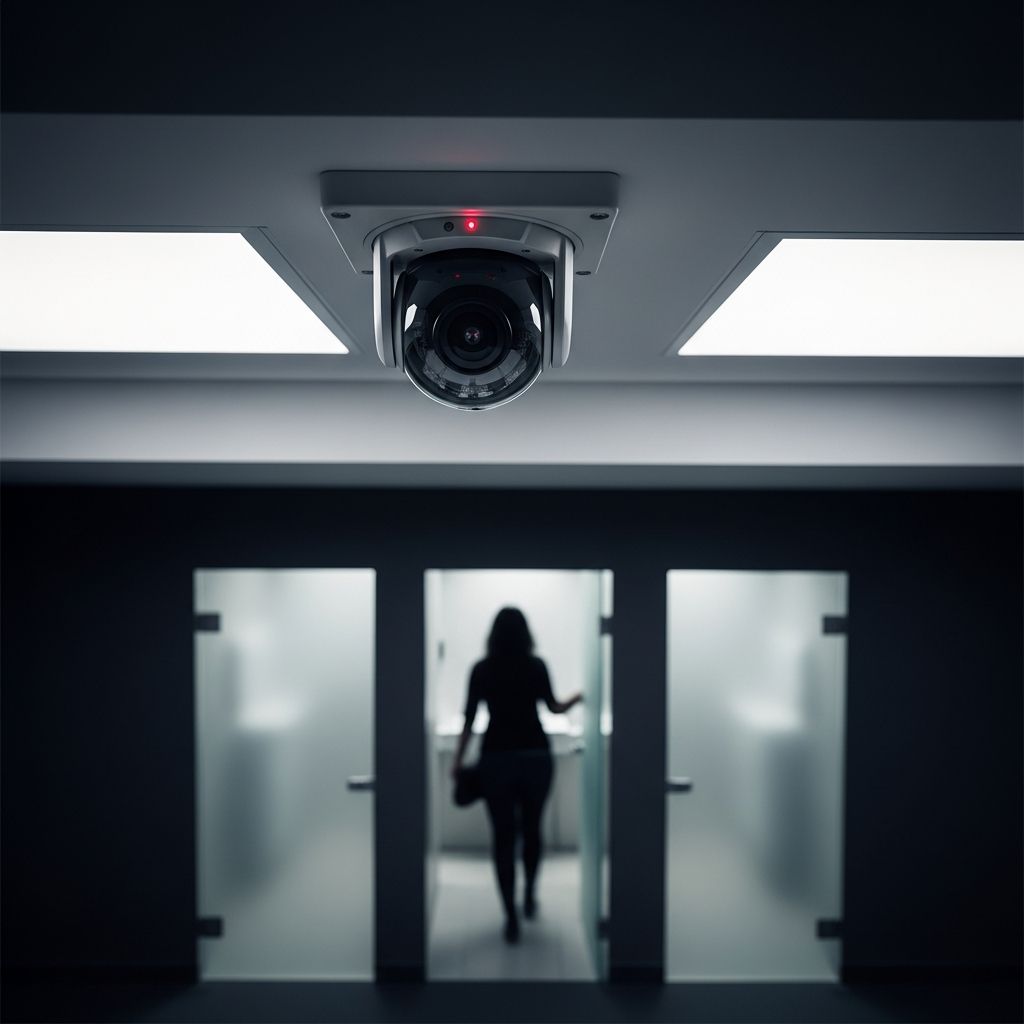
Installing surveillance cameras in business premises raises complex legal questions, particularly when it involves areas like restrooms where privacy expectations are high. In the United States, such installations are broadly prohibited to safeguard employee rights under federal and state privacy statutes. This guide explores the regulatory landscape, reasons for these restrictions, and strategies for implementing security measures without crossing legal lines.
Core Principles of Workplace Privacy Protections
Employee privacy in the workplace is anchored in a balance between business security needs and individual rights to personal dignity. Federal laws set a baseline, while states impose stricter rules. The Electronic Communications Privacy Act (ECPA) permits video monitoring in open areas for legitimate purposes but draws firm lines at audio interception without consent. Similarly, the National Labor Relations Act (NLRA) prevents surveillance that could intimidate union organizing efforts.
State variations amplify these protections. For instance, California and Connecticut explicitly ban cameras in restrooms and changing facilities, classifying violations as criminal offenses. These laws recognize that certain spaces inherently demand seclusion, overriding any purported security rationale.
Why Restrooms Are Off-Limits for Surveillance
Restrooms represent the epitome of private domains within workplaces. Courts consistently rule that individuals maintain a reasonable expectation of privacy in these areas, making camera placement an invasion regardless of notice or business intent. Key rationales include:
- Universal Prohibition: All U.S. jurisdictions deem restroom surveillance illegal, often under voyeurism or privacy tort statutes.
- Criminal Liability: Hidden cameras can lead to felony charges, as seen in cases involving two-way mirrors or concealed devices.
- Civil Remedies: Affected employees may sue for emotional distress, defamation, or wrongful termination if footage is misused.
Even visible cameras fare poorly in legal scrutiny here, as privacy trumps visibility. Businesses attempting justification via theft prevention or safety claims fail, since alternative measures like motion sensors exist without compromising dignity.
Other Prohibited Zones in Business Settings
Beyond restrooms, several areas warrant similar safeguards:
- Locker and changing rooms, where undressing occurs.
- Lactation spaces, protected under federal nursing mothers provisions.
- Break rooms or lounges in some states, like Connecticut.
- Medical exam areas, risking HIPAA violations if health data is captured.
| Area | Legal Status | Example States with Bans | Potential Penalties |
|---|---|---|---|
| Restrooms | Illegal Everywhere | All U.S. States | Criminal Charges, Fines |
| Locker Rooms | Illegal Everywhere | CA, CT, NY | Civil Suits, Injunctions |
| Break Rooms | Restricted in Some | CT, DE | Privacy Torts |
| Lactation Rooms | Federally Protected | All | EEOC Claims |
This table summarizes common no-go zones, highlighting jurisdictional nuances.
Federal Regulations Shaping Surveillance Practices
No single federal statute mandates workplace video rules, creating a patchwork reliant on broader protections. The ECPA allows business-justified monitoring but excludes private spaces. Wiretap laws further restrict audio, demanding at least one-party consent in most states.
NLRA Section 7 shields concerted activities, invalidating cameras aimed at union discussions. For unionized workplaces, bargaining over surveillance is required. These frameworks ensure surveillance serves security, theft prevention, or productivity without overreach.
State-Specific Rules and Notification Requirements
States fill federal gaps with tailored mandates. Connecticut requires advance employee notice for any cameras. California’s all-party consent for audio elevates compliance burdens. New York and Delaware mirror restroom bans.
Best practices include:
- Posting clear signage on camera locations and purposes.
- Distributing written policies on footage retention (e.g., 30 days).
- Restricting access to HR or security personnel only.
Failure to notify can nullify footage admissibility in disputes.
Legitimate Justifications for Permissible Camera Use
Cameras thrive in public workspaces like entrances, sales floors, and hallways when tied to valid needs:
- Asset protection against theft.
- Safety in high-risk environments.
- Performance reviews in open roles, sans audio.
Courts weigh business necessity against privacy intrusion. Transparent, consistent application bolsters defensibility.
Risks and Consequences of Non-Compliance
Violating privacy via restroom cameras invites severe repercussions:
- Criminal Prosecution: Misdemeanor or felony voyeurism charges.
- Civil Damages: Compensatory and punitive awards for invasion of privacy.
- Regulatory Fines: From labor departments or EEOC.
- Reputational Harm: Lawsuits publicize misconduct, deterring talent.
Workers’ comp claims may reject tainted footage, undermining defenses. Class actions amplify exposure for chains or large firms.
Implementing Compliant Surveillance Strategies
To harness cameras effectively:
- Conduct legal audits with employment counsel.
- Prioritize visible, non-audio systems.
- Limit retention and secure storage.
- Train staff on policies annually.
- Audit placements regularly for equity.
Alternatives like access logs or AI motion detection minimize privacy risks.
Employee Perspectives and Dispute Resolution
Workers spotting suspicious devices should document and report internally, escalating to state labor agencies if needed. Union reps can challenge via grievances. Coworker recordings hinge on consent laws—one-party states permit participant capture, all-party do not.
Frequently Asked Questions
Can businesses ever justify cameras in private areas?
No, courts universally reject this due to overriding privacy expectations.
Is audio recording allowed with workplace cameras?
Typically no without consent, per wiretap statutes; video alone is safer.
What if a restroom camera is for ‘safety’?
Safety claims fail; use non-invasive tech like emergency buttons.
Do employees need notice for public area cameras?
Many states require it; always disclose to mitigate risks.
How long can footage be kept?
Follow policies (e.g., 7-90 days); delete promptly to limit liability.
Global Comparisons and Evolving Trends
Unlike laxer U.S. federal rules, EU’s GDPR demands explicit consent and data minimization, banning high-privacy surveillance outright. U.S. trends toward stricter notice via new state laws signal tightening. AI-enhanced cameras prompt fresh scrutiny under bias laws.
Businesses must evolve policies amid remote work, where home monitoring risks ECPA breaches. Proactive compliance preserves trust and legality.
References
- Cameras in the Workplace Employee Rights & Considerations — GetSafeAndSound. 2023. https://getsafeandsound.com/blog/cameras-in-the-workplace-employee-rights/
- Is It Legal To Install Cameras in the Workplace for Surveillance? — SuperLawyers. 2025-07-21. https://www.superlawyers.com/resources/employment-law-employee/is-it-legal-to-install-cameras-in-the-workplace-for-surveillance/
- Are Cameras in the Workplace Ethical and Legal? — Coram AI. 2024. https://www.coram.ai/post/cameras-in-the-workplace
- Having a Camera in the Office – It is Legal? What You Need to Know — Inspired eLearning. 2023. https://inspiredelearning.com/blog/having-a-camera-in-the-office-it-is-legal-what-you-need-to-know/
- Workplace Cameras and Surveillance: Laws for Employers — Nolo. 2024. https://www.nolo.com/legal-encyclopedia/workplace-cameras-surveillance-employer-rules-35730.html
- Workplace Monitoring: What’s Allowed, What’s Off Limits? — ADP. 2025. https://sbshrs.adpinfo.com/blog/workplace-monitoring-whats-allowed-whats-off-limits
Similar Articles








Read full bio of Sneha Tete




