
Wisconsin Car Crash Regulations: 2025 Driver Guide
Essential overview of Wisconsin's car accident rules, from fault determination to insurance mandates and driver safety protocols.
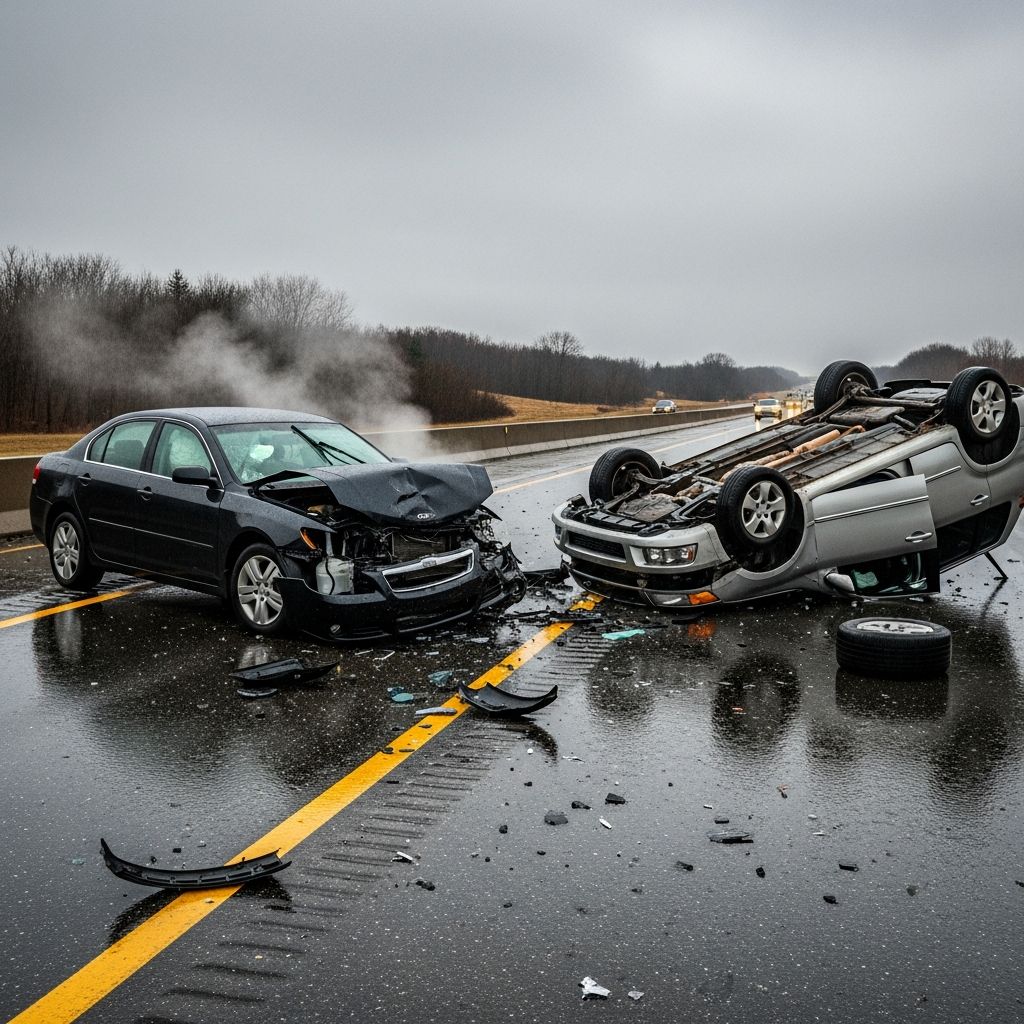
Wisconsin maintains a structured legal framework for handling vehicle collisions, emphasizing accountability through a fault-based approach. Drivers must understand these rules to protect their rights and ensure compliance after an incident.
Core Principles of Fault in Wisconsin Collisions
Wisconsin operates as a fault state, meaning the driver responsible for causing a crash bears financial responsibility for resulting damages. This system contrasts with no-fault jurisdictions where personal insurance covers initial claims regardless of blame. Here, the at-fault party’s insurer pays for medical bills, vehicle repairs, and other losses suffered by others involved.
Determining fault involves examining evidence such as traffic signals, witness accounts, vehicle damage patterns, and any citations issued. Common factors include speeding, failure to yield, distracted operation, or impaired driving. Courts and insurers assign percentages of responsibility, which directly impacts compensation awards.
Modified Comparative Negligence Explained
Under Wisconsin’s modified comparative negligence rule, victims can recover damages even if partially responsible, provided their fault does not exceed 51%. Compensation reduces proportionally to the assigned fault percentage. For instance, in a $20,000 claim where a claimant is 30% at fault, recovery drops to $14,000.
This balanced approach encourages careful driving while allowing fair recovery for those with minor contributions to the incident. Severe cases, like those involving intoxication, may lead to full denial of claims if fault exceeds the threshold.
Mandatory Insurance Coverage Standards
All Wisconsin motorists must carry liability insurance meeting state minimums to operate legally. These limits include $25,000 for bodily injury per person, $50,000 per accident for bodily injury, and $10,000 for property damage. Falling short exposes drivers to license suspension, fines, and personal liability for excess costs.
| Coverage Type | Per Person | Per Accident |
|---|---|---|
| Bodily Injury Liability | $25,000 | $50,000 |
| Property Damage Liability | N/A | $10,000 |
While minimums provide basic protection, higher limits or additional policies like collision, comprehensive, or uninsured motorist coverage are advisable for comprehensive safeguarding.
Reporting Obligations for Crashes
Drivers must report collisions resulting in injury, death, over $1,000 in property damage, or $200+ to government property. If police attend, they typically file the report; otherwise, submit the Wisconsin Driver Report of Crash form promptly to the Department of Transportation.
- Secure the scene and check for injuries first.
- Exchange contact and insurance details with others involved.
- Notify law enforcement if required.
- Gather witness statements and photographic evidence.
Accurate reporting preserves driving records and supports insurance claims. Failure to report can result in penalties and complications in fault disputes.
Duration of Crash Records on Driving History
Reported accidents linger on Wisconsin driving records for five years from the incident date, irrespective of fault. Even non-at-fault crashes appear, potentially influencing insurance premiums. Serious violations, such as DUI-related crashes, may persist indefinitely.
Motorists can access their records via the DMV online portal to monitor entries and ensure accuracy. Maintaining a clean record post-incident requires defensive driving and timely resolutions.
Time Limits for Legal Action
Wisconsin imposes a three-year statute of limitations for personal injury claims from most car crashes. Wrongful death suits must file within two years of the decedent’s passing. Missing these deadlines bars recovery, though discovery rules may extend timelines in concealed injury cases.
Early consultation with legal experts helps navigate exceptions and preserve evidence within these windows.
Expanded Move Over Safety Protocol
A recent legislative update extends Wisconsin’s Move Over law to protect individuals attending disabled vehicles with activated hazard lights, flares, or direct supervision. Previously limited to emergency responders, this now mandates drivers to shift lanes or reduce speed when safely possible.
Violations incur fines up to $300, escalating if contact occurs. Over five years, such incidents caused five fatalities and 145 injuries, plus 73 responder strikes, prompting bipartisan adoption aligned with 28 other states. Enforcement begins with warnings for 90 days post-enactment.
Key Move Over Guidelines
- Scan ahead for stopped vehicles or roadside activity.
- Avoid distractions; secure phones.
- Move over if feasible; otherwise, slow significantly.
- For stalled drivers: Wear seatbelts, exit only if essential.
Immediate Response Strategies Post-Crash
Prioritize safety by activating hazards, checking occupants, and calling 911 for serious impacts. Document the scene thoroughly: vehicle positions, damage, road conditions, and injuries. Obtain police reports for official documentation.
Notify insurers promptly but cautiously, avoiding admissions of fault. Seek medical evaluation even for minor symptoms, as conditions like whiplash may emerge later.
Compensation Categories in Claims
Recoverable damages encompass economic losses (medical expenses, lost income, repairs) and non-economic (pain, emotional distress). Punitive awards apply rarely in egregious recklessness cases. Insurers often undervalue claims, necessitating negotiation or litigation.
Role of Legal Representation
Attorneys investigate crashes, negotiate settlements, manage filings, and counter insurer tactics. Their involvement maximizes recoveries while handling procedural complexities, allowing focus on healing.
Common Crash Contributors and Prevention
Distraction, impairment, speeding, and weather dominate Wisconsin statistics. Adopting habits like full attention, sobriety, and vehicle maintenance reduces risks. NHTSA standards guide consistent crash data for safety improvements.
Frequently Asked Questions
Is Wisconsin a no-fault state for car accidents?
No, Wisconsin uses a fault-based system where the responsible driver’s insurance covers damages.
How long do I have to file a lawsuit after a crash?
Generally three years for injuries; two years for wrongful death.
What if I’m partially at fault?
You can recover if under 51% responsible, reduced by your fault share.
Does a crash stay on my record if not my fault?
Yes, for five years regardless of fault.
What is the new Move Over law change?
It now protects disabled vehicles with hazards, requiring lane shifts or slowing.
Are minimum insurance limits sufficient?
They meet legal requirements but may not cover major accidents fully.
References
- What drivers need to know about Wisconsin’s newly expanded ‘Move Over’ traffic law — FOX 11 News. 2023-11. https://fox11online.com/news/state/what-drivers-need-to-know-about-wisconsins-newly-expanded-move-over-traffic-law-governor-tony-evers-state-legislature-jim-piwowarczyk-alexander-zimmerle-lee-snodgrass-state-patrol-department-transportation-crashes-fine
- Does Wisconsin Use a No-Fault System for Car Accidents? — Peterson, Berk & Cross, S.C.. 2024-01. https://www.pbclaw.com/does-wisconsin-use-a-no-fault-system-for-car-accidents/
- How Long Does an Accident Stay on Your Driving Record in Wisconsin? — Phil Tatlow Law Office. 2025-08-21. https://philtatlowlaw.com/2025/08/21/how-long-does-an-accident-stay-on-your-driving-record-in-wisconsin/
- 2025 SENATE BILL 63 — Wisconsin Legislature. 2025. https://docs.legis.wisconsin.gov/document/proposaltext/2025/REG/SB63.pdf
- Wisconsin 2024-2026 Triennial Highway Safety Plan — NHTSA. 2023-10. https://www.nhtsa.gov/sites/nhtsa.gov/files/2023-10/WI_FY24HSP-tag.pdf
Similar Articles








Read full bio of medha deb


