
Winter Sidewalk Injuries: Legal Rights and Liability
Understand your legal options after slipping on ice or snow and who may be responsible.
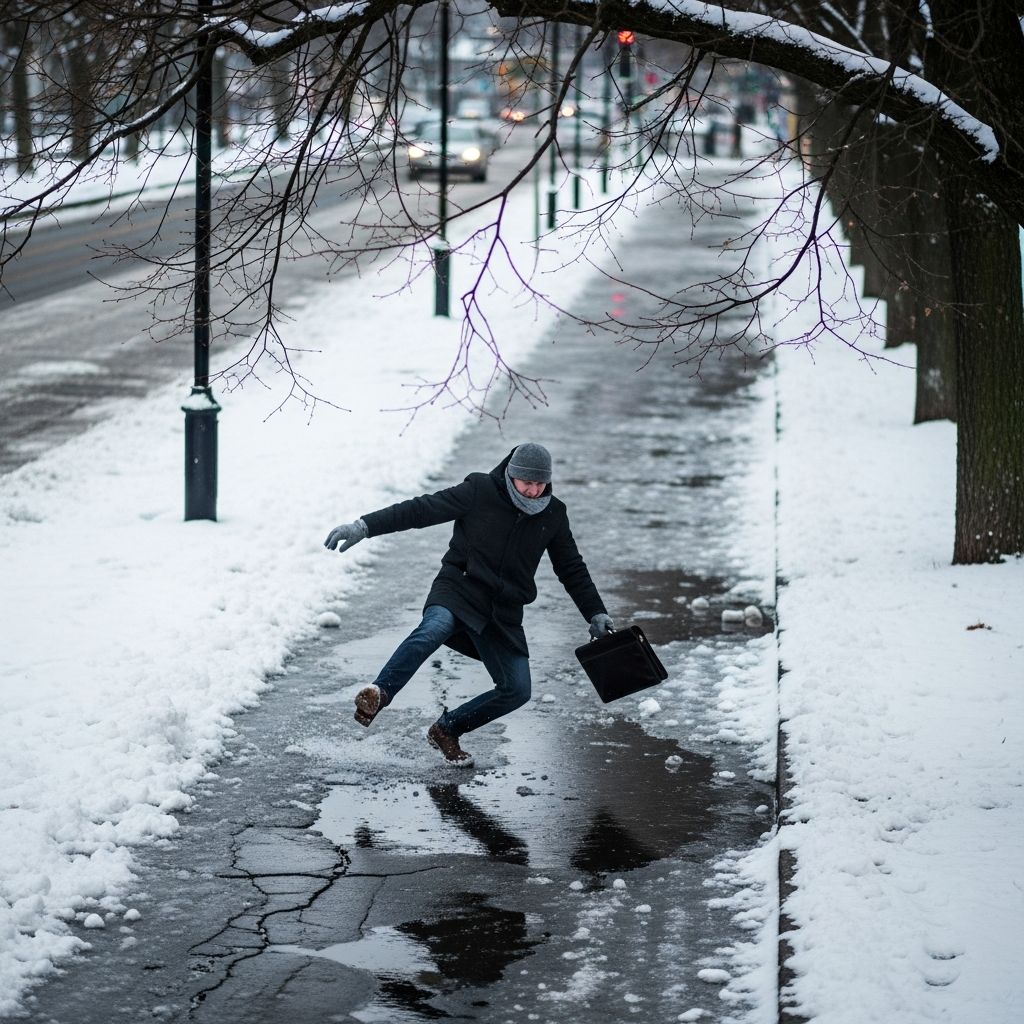
Winter Weather and Pedestrian Safety: Understanding Your Rights
Winter conditions bring significant challenges to pedestrians navigating sidewalks and walkways. When snow and ice accumulate on outdoor surfaces, the risk of serious injuries increases dramatically. Many people who experience slip-and-fall accidents on icy sidewalks question whether they have legal recourse against property owners or municipalities responsible for maintaining those areas. The answer depends on multiple factors, including local laws, the specific circumstances of the accident, and the actions taken by the property owner before the incident occurred.
Understanding your rights as an injured pedestrian is essential if you have suffered injuries from slipping on ice or snow. The legal framework governing these incidents exists to protect public safety and hold property owners accountable for maintaining their premises in reasonably safe conditions. However, the application of these laws varies significantly depending on your jurisdiction and the specific details of your case.
The Foundation of Premises Liability in Winter Accident Cases
Premises liability is the legal doctrine that holds property owners and managers responsible for maintaining safe conditions on their property for visitors and the general public. Under this principle, property owners have a duty of care to address hazardous conditions that could injure people on their premises. This duty extends to sidewalks adjacent to commercial properties and residential buildings.
The concept of premises liability recognizes that property owners are in the best position to identify and remedy dangerous conditions. They can install appropriate safety measures, maintain surfaces regularly, and warn visitors about known hazards. When property owners fail to exercise reasonable care in maintaining their property, they may be held financially responsible for injuries that result from that negligence.
For winter-related slip-and-fall cases, premises liability applies when a property owner knew or should have known about the dangerous condition created by ice or snow accumulation. The property owner’s failure to take reasonable steps to address this hazard—such as removing snow, applying de-icing materials, or providing warnings—can establish negligence.
Statutory Protections: The Natural Accumulation Doctrine
Many jurisdictions recognize what is known as the natural accumulation doctrine or the “hills and ridges rule,” which provides significant protection to property owners in winter weather situations. This doctrine shields property owners from liability when snow and ice accumulate naturally due to weather conditions.
Under the hills and ridges rule, as established in cases like Morin v. Traveler’s Rest Motel, Inc., a property owner cannot be held liable for naturally occurring snow and ice unless the accumulation has created unreasonable ridges and elevations that obstruct travel and pose danger to pedestrians. This means that simple, even layers of ice or snow typically do not trigger liability, but hazardous piling or uneven accumulation may.
This protection acknowledges the practical reality that property owners cannot entirely prevent natural weather phenomena. The doctrine allows property owners a reasonable time after a storm to clear accumulated snow and ice before they can be held liable. However, if snow and ice remain unaddressed for an unreasonable period following a storm, liability becomes more likely.
Key Elements Required to Establish Liability
To successfully pursue a slip-and-fall claim against a property owner for injuries sustained on an icy sidewalk, you must establish several critical elements:
- Dangerous Accumulation: The snow and ice must have accumulated in ridges and elevations of such a nature that they would unreasonably obstruct travel and create a genuine hazard to pedestrians.
- Property Owner Notice: You must demonstrate that the property owner had actual knowledge of the condition or should have discovered it through reasonable property inspections. This is known as constructive notice—the owner should have been aware of the hazard through ordinary oversight of their property.
- Causation: The dangerous accumulation of snow and ice must have directly caused your injuries. You cannot recover damages if other factors contributed to your fall.
- Negligence: The property owner must have failed to take reasonable care to prevent or mitigate the hazard. This includes failing to remove ice, apply de-icing materials, install warning signs, or close off dangerous areas.
- Damages: You must have sustained quantifiable injuries or losses, such as medical expenses, lost wages, or pain and suffering.
Property Owner Duties and Reasonable Care Standards
Property owners have specific obligations to maintain their premises safely. These duties include taking reasonable steps to remove or remediate hazardous conditions such as snow and ice buildup. The standard of “reasonable care” varies based on local ordinances, industry practices, and what other similarly situated property owners do.
In many jurisdictions, property owners must:
- Clear obvious hazards from their property, including icy sidewalks
- Apply de-icing materials such as rock salt or sand to reduce slipping hazards
- Install appropriate warning signs when hazardous conditions exist and cannot be immediately remedied
- Allow a reasonable time following storms to perform cleanup before liability attaches
- Perform periodic inspections to identify developing hazards
- Remedy conditions created by water diversion, such as downspouts directing water onto sidewalks that subsequently freezes
Municipal Liability and Local Ordinances
In some cases, municipalities bear responsibility for maintaining public sidewalks and may be held liable for slip-and-fall injuries. Many jurisdictions have specific ordinances requiring property owners to remove snow and ice from adjacent sidewalks or pay municipal fees for the city to perform this service.
Municipal liability can be complicated by unique factors, such as damage caused by snow plows operated by city crews. If a city’s snow removal equipment unintentionally creates hazardous conditions—such as pushing accumulated snow into ridges or blocking drainage that leads to icing—the municipality may bear liability for resulting injuries.
If you slip and fall on a publicly maintained sidewalk, you may be able to file a claim against the municipality for negligent maintenance. However, many jurisdictions impose notice requirements and strict procedural rules for claims against governmental entities. Some require written notice within a specified timeframe—often 30 days to six months—before you can pursue litigation.
Comparative Fault and Pedestrian Responsibility
Many jurisdictions apply comparative fault principles to slip-and-fall cases. This means your own actions may reduce or eliminate your ability to recover damages. For example, if you were walking too quickly for conditions, not watching where you were stepping, or wearing inappropriate footwear, a court might find you partially responsible for the accident.
In states following comparative negligence rules, even if a property owner failed to maintain their sidewalk properly, you may be found partially at fault, which proportionally reduces your recoverable damages. Some states apply “pure” comparative negligence (allowing recovery even if you are 99% at fault), while others use “modified” comparative negligence (barring recovery if you are more than 50% or 51% at fault).
Practical Steps Following a Slip-and-Fall Accident
If you have slipped and fallen on an icy sidewalk, taking prompt and thorough action can strengthen your potential legal claim:
- Seek Medical Attention: Obtain immediate medical evaluation, even if injuries seem minor. Medical records establish the connection between the accident and your injuries.
- Document the Scene: Take photographs of the location where you fell, showing ice accumulation, lack of warning signs, and absent de-icing materials. If possible, photograph the area from multiple angles and distances.
- Gather Witness Information: Obtain contact information from anyone who witnessed your fall. These witnesses can corroborate your account of conditions and your injury.
- Report the Incident: File a written report with the property owner and, if applicable, the municipality. Obtain a signed copy of any report you file.
- Preserve Evidence: Keep all medical bills, receipts for related expenses, photographs, and documentation of lost wages.
- Consult an Attorney: Contact a personal injury lawyer promptly, as many jurisdictions impose statutes of limitations on injury claims. In Washington, for example, the statute of limitations is three years.
Special Considerations for Different Property Types
Liability standards may differ depending on the type of property involved in your accident:
| Property Type | Liability Considerations |
|---|---|
| Private Residential Property | Property owners generally have less stringent duties to remove naturally accumulated ice and snow, but remain liable if they created the hazard or allowed unreasonable accumulation. |
| Commercial Property | Business owners typically face higher standards of care and may be held liable more readily for icy conditions, as they have greater resources and responsibility to maintain safe premises. |
| Public/Government Property | Municipalities and public institutions may have immunity protections, but notice requirements and specific procedures often apply before pursuing claims. |
| Institutional Property (Schools, Colleges) | Educational institutions have duties to maintain safe conditions for students and visitors. Liability depends on whether they knew or should have known about the hazard. |
Damages Available in Successful Claims
If you successfully establish liability in a slip-and-fall case, you may be entitled to recover several types of damages:
- Medical Expenses: Current and future medical bills related to treating your injuries, including emergency care, hospitalization, surgery, physical therapy, and ongoing treatment.
- Lost Wages: Income lost due to time away from work for recovery or medical appointments. In severe cases, this may include lost earning capacity if the injury reduces your ability to work in the future.
- Pain and Suffering: Compensation for physical pain, emotional distress, and diminished quality of life resulting from your injury.
- Property Damage: If your personal property was damaged in the fall (such as broken glasses or a phone), you may recover its replacement cost.
- Permanent Disability: If the injury causes lasting disability, damages may account for the long-term impact on your life.
Common Questions About Winter Slip-and-Fall Liability
Q: Can I sue a property owner if I slip on naturally accumulated ice and snow?
A: Possibly, but only under specific circumstances. The natural accumulation doctrine protects property owners from liability for naturally occurring snow and ice. However, if the accumulation is unreasonable, creates dangerous ridges or elevations, and the owner failed to clear it within a reasonable time after the storm, you may have a claim.
Q: What is considered a “reasonable time” to remove snow and ice?
A: Reasonableness depends on circumstances including the storm’s severity, timing, and local weather patterns. Generally, property owners are allowed time to respond, especially if the storm occurred overnight or during hours when the property is typically unoccupied. However, leaving sidewalks untouched for days after a storm significantly increases liability exposure.
Q: Is the property owner liable if ice formed due to water drainage from their roof?
A: Yes. If the property owner created the hazard through negligent water management, such as allowing a downspout to direct water onto a sidewalk where it freezes, they can be held liable regardless of natural accumulation doctrines. This is considered a “created hazard” rather than a natural accumulation.
Q: What should I do if I slip on a city-maintained sidewalk?
A: Report the incident to the municipality and file a written claim following their specific procedures. Many municipalities require notice within 30 days to six months of the incident. Failing to comply with notice requirements can bar your claim entirely, even if the municipality was negligent.
Q: Can I recover damages if I was partially at fault for my fall?
A: This depends on your state’s comparative fault laws. In pure comparative negligence states, you can recover even if partially at fault, though your damages are reduced proportionally. In modified comparative negligence states, you cannot recover if you are more than 50% or 51% at fault, depending on the state.
Q: How much time do I have to file a lawsuit for a slip-and-fall injury?
A: Statutes of limitations vary by jurisdiction. Many states allow 2-3 years to file, but some have shorter or longer periods. For claims against public entities, notice periods are often much shorter. Consult an attorney immediately to ensure you meet all deadlines.
Q: What evidence do I need to prove the property owner knew about the icy condition?
A: You can establish notice through direct evidence (someone reported it to the owner) or circumstantial evidence (the condition was visible and obvious, or the property owner failed to inspect the area regularly). The fact that ice had been accumulating for days suggests the owner should have discovered it through reasonable property inspections.
References
- Who Is Liable For An Icy Sidewalk Slip And Fall? — HV Law Firm. Accessed January 17, 2026. https://www.hvlawfirm.com/who-is-liable-for-an-icy-sidewalk-slip-and-fall/
- Slipping and Falling on Icy Sidewalks—4 Things to Remember — Evergreen Personal Injury Counsel. Accessed January 17, 2026. https://epic-law.com/slipping-and-falling-on-icy-sidewalks-4-things-to-remember/
- Slip and Fall on Snow or Ice Sidewalks—Protecting Yourself and Seeking Justice — Ridge Law Firm. Accessed January 17, 2026. https://ridgelawfirm.com/slip-and-fall-on-snow-or-ice-sidewalks-protecting-yourself-and-seeking-justice/
- Slip and Fall Injuries: Liability for Icy Sidewalks — Gingras, Thomsen, Wentworth & Harness, S.C. Accessed January 17, 2026. https://www.grgblaw.com/wisconsin-trial-lawyers/slip-and-fall-injuries-liability-icy-sidewalks
- If Someone Slips on an Icy Sidewalk in Front of My Home or My Business — Western National Insurance Services. Accessed January 17, 2026. https://www.wnins.com/blog/icysidewalk.html
- I fell walking on the icy sidewalk of my college campus, are they liable? — Avvo. Accessed January 17, 2026. https://www.avvo.com/legal-answers/i-fell-walking-on-the-icy-sidewalk-of-my-college-c-1607347.html
- What to Do When You Slip and Fall on an Icy Sidewalk — Karbasi & Associates. Accessed January 17, 2026. https://www.karbasianlaw.com/what-to-do-when-you-slip-and-fall-on-an-icy-sidewalk/
Similar Articles








Read full bio of medha deb


