
Winter Road Crashes: Weather’s Role in Liability
Unraveling legal accountability in winter car accidents: Can harsh weather excuse driver negligence?
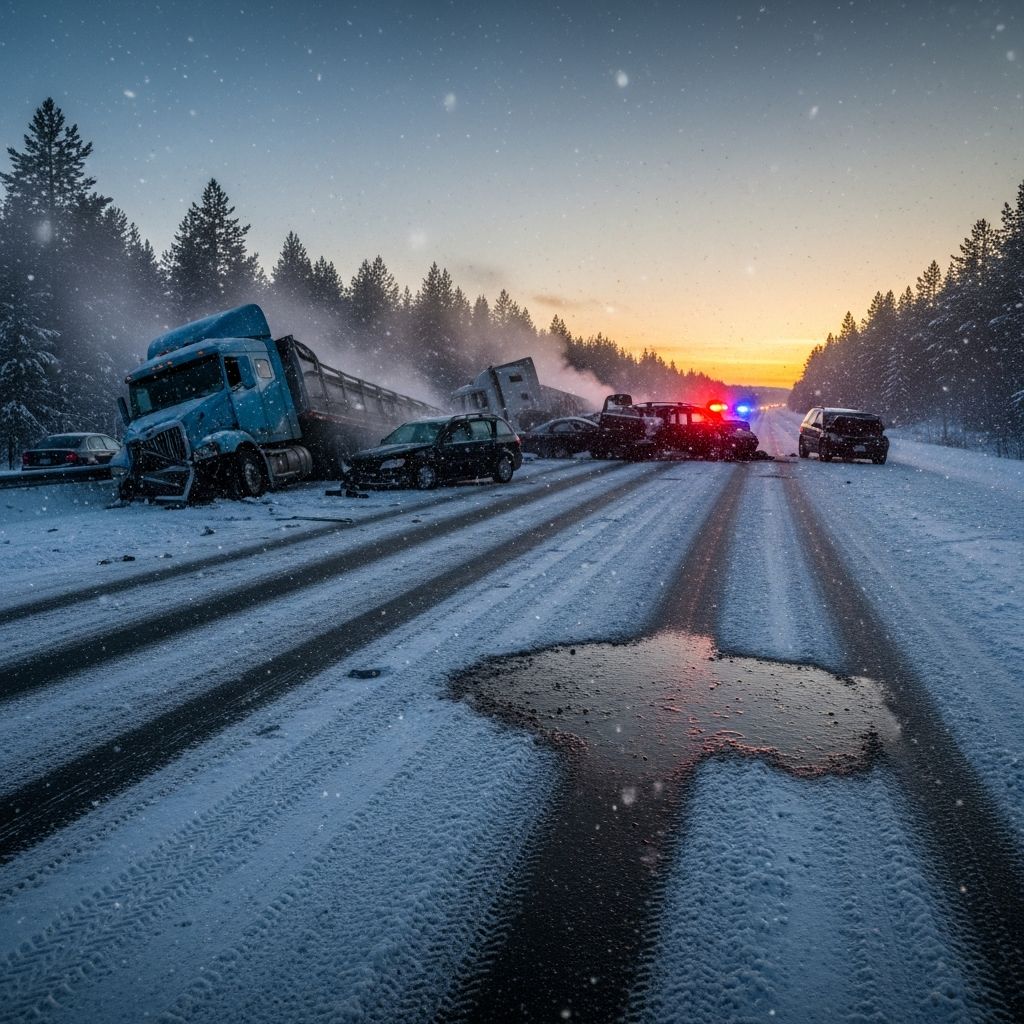
Winter conditions transform ordinary drives into high-stakes challenges, with snow, ice, and sleet contributing to thousands of crashes annually. While harsh weather plays an undeniable part, legal systems rarely allow it to fully absolve drivers of responsibility. Understanding the interplay between environmental factors and personal accountability is crucial for both prevention and pursuing justice after an incident.
The Harsh Reality of Winter Driving Dangers
Adverse weather consistently ranks among top crash contributors. Each year, weather-related vehicle incidents account for approximately 12 percent of all crashes, totaling nearly three-quarters of a million events, resulting in over 3,800 deaths and more than 268,000 injuries. Specifically, 24 percent of these occur on snowy, slushy, or icy surfaces, claiming over 1,300 lives and injuring 116,800 people.
During active snowfall or sleet, risks escalate further: the National Highway Traffic Safety Administration recorded over 101,000 police-reported crashes in 2023 under these conditions, linked to more than 22,000 injuries. Snow obscures visibility and road markings, while sleet forms deceptive ice layers that undermine tire traction, making control nearly impossible without adjustments.
Black ice, heavy fog, and freeze-thaw cycles compound these threats, particularly in urban areas where plowing delays and salt buildup create unpredictable surfaces. Drivers face a 15 percent higher crash likelihood in winter compared to summer, driven by reduced traction and sudden storms.
Common Collision Patterns in Cold Months
Winter fosters distinct crash types due to physics-altered dynamics. Single-vehicle losses of control dominate, where speeds exceed grip, sending cars into ditches or barriers. Rear-end impacts surge as braking distances balloon on slick pavement, punishing tailgaters.
Intersections turn treacherous with angle crashes from vehicles sliding through stops or signals. Multi-vehicle pileups on highways amplify devastation, triggered by one slip in low visibility. Pedestrians and cyclists suffer too, shoved into lanes by snowbanks or obscured by poor sightlines.
Regional variations matter: northern states battle deep snow, while southern areas grapple with surprise ice from melting-refreezing. Rural highways, with higher speeds and slower clearing, see severe outcomes.
| Crash Type | Winter Contribution | Key Risk Factors |
|---|---|---|
| Single-Vehicle Run-Off | High (traction loss) | Excess speed, curves, bridges |
| Rear-End | Very High (long stops) | Tailgating, sudden braking |
| Intersection/Angle | Moderate-High | Sliding through controls |
| Pileups | High on interstates | Chain reactions, low visibility |
| Pedestrian | Increasing | Snowbanks, reduced sight |
Who Faces the Greatest Risks?
Certain groups encounter amplified dangers. High-speed rural drivers suffer from delayed maintenance and elevated impacts. Out-of-state travelers, unaccustomed to conditions, fail to adapt speeds or distances.
Elderly pedestrians and drivers over 65 show heightened vulnerability; studies reveal a 34 percent fatality spike for seniors during first snowfalls compared to later ones, as they adjust slower to seasonal shifts. Commercial truckers, with extended stopping needs, spark secondary wrecks via jackknifing.
Young drivers under 18 and mid-age adults (30-50) see 11-12 percent fatality rises on initial snow days, underscoring adaptation lags across ages.
Legal Foundations: Negligence Over Nature
In personal injury law, weather serves as a factor but not a blanket defense. Courts apply negligence standards: drivers must exercise reasonable care under prevailing conditions. This means slowing down, increasing following distances, and using lights or wipers appropriately.
Proving fault hinges on whether actions deviated from what a prudent driver would do. For instance, maintaining summer speeds on glare ice constitutes negligence, as does ignoring warnings or driving with bald tires. Weather evidence from cameras, witnesses, or plows bolsters cases against reckless parties.
Contributory negligence rules vary by state; some bar recovery if the victim shares blame, while comparative systems apportion damages. Always document scenes meticulously—photos of ice, skid marks, and vehicle states aid claims.
Challenging the Weather Excuse in Court
Defendants often invoke act of God or force majeure, arguing uncontrollable elements absolve them. However, judges reject this if evidence shows poor decisions, like speeding or distraction amid flurries. Precedent emphasizes foreseeability: winter storms in snowy regions demand preparation, from winter tires to route planning.
Government entities face immunity hurdles for road maintenance lapses, but exceptions apply for gross negligence, like unplowed known hazards. Expert testimony on traction physics and safe speeds sways juries toward accountability.
Insurance plays pivotal roles; policies cover weather-aggravated crashes under liability, but disputes arise over causation. Policyholders should notify carriers promptly, preserving subrogation rights against at-fault parties.
Safety Measures to Defy Winter Odds
- Vehicle Prep: Install snow tires for superior grip; check antifreeze, wipers, and batteries.
- Driving Adjustments: Reduce speed by 20-30 percent, follow at triple normal distance, avoid cruise control.
- Kit Essentials: Pack blankets, flares, sand, water, and a charger for emergencies.
- Visibility Boost: Use low beams in snow, clear all windows, watch for black ice indicators like mist.
- Route Smarts: Check forecasts, delay trips, opt for major cleared roads.
Defensive habits prevent most incidents: scan horizons for drift, brake gently, steer into skids. Training via skid schools hones reflexes.
Navigating Claims After a Winter Wreck
Post-crash, prioritize medical care—even minor-seeming bumps hide whiplash or concussions from impacts. Seek evaluations to link injuries to the event, strengthening claims.
Gather evidence: police reports noting weather, dashcam footage, witness contacts. Consult attorneys specializing in seasonal cases; they negotiate with insurers, who lowball amid weather arguments.
Compensation covers medical bills, lost income, pain, and property damage. Statutes limit filing windows—typically 2-3 years—so act swiftly. Settlements average higher for verified negligence, underscoring documentation’s power.
Seasonal Myths and Data Insights
Fatalities dip on snow days versus dry (incidence rate ratio 0.93), due to cautious driving, but nonfatal injuries surge 23 percent, property damage 45 percent. First snows spike fatalities 17 percent over subsequent ones, as rustiness prevails.
Overall, winter claims fewer total deaths than summer’s volume-driven tolls, yet per-trip risk soars, with icy fatalities quadrupling non-ice averages.
Frequently Asked Questions About Winter Crashes
Can weather completely excuse a driver in a crash?
No, drivers must adapt to conditions; failing to do so, like speeding on ice, equals negligence.
Are winter crashes more fatal than summer ones?
Not nationally—summer sees more due to traffic volume—but winter per-mile risk is deadlier amid slips.
Who pays if ice causes a government road failure?
Lawsuits possible under exceptions to immunity; prove notice and negligence.
Should I drive after the first snow of the season?
Caution advised—first events raise fatality odds 14 percent over later snows.
How do I prove fault in low-visibility crashes?
Use witnesses, telematics, scene photos, and expert reconstruction.
Preparing for Safer Winters Ahead
Armed with stats and strategies, motorists can mitigate risks. Governments invest in smart salting and apps for real-time alerts, yet personal vigilance remains paramount. By prioritizing preparation and prudence, fewer families face winter’s legal aftermaths.
References
- Winter Car Accident Statistics — Malman Law. Accessed 2026. https://www.malmanlaw.com/malman-law-injury-blog/winter-car-accident-statistics/
- How Winter Weather Changes Impact Car Accidents — Malm Legal. Accessed 2026. https://www.malmlegal.com/blog/winter-weather-impacts-car-accidents/
- Effects of Snowfalls on Motor Vehicle Collisions, Injuries, and Fatalities — National Library of Medicine (PMC). 2000-09-01. https://pmc.ncbi.nlm.nih.gov/articles/PMC1449863/
- Snow & Ice – FHWA Road Weather Management — Federal Highway Administration (FHWA). Accessed 2026. https://ops.fhwa.dot.gov/weather/weather_events/snow_ice.htm
Similar Articles








Read full bio of medha deb


