Understanding Winnie-the-Pooh’s Legal Status in Creative Projects
Many creative individuals wonder whether they can incorporate Winnie-the-Pooh characters into their own projects, from fan fiction to merchandise. The answer is complex and depends heavily on where you live, which version of the characters you want to use, and what you plan to do with them. The legal landscape surrounding this beloved children’s character has shifted significantly in recent years, creating new opportunities while simultaneously maintaining important protections that creators and rights holders should understand.
The question of whether you can use Winnie-the-Pooh in your creative endeavors involves navigating the intersection of copyright law, trademark protection, and intellectual property rights. Unlike some characters that remain firmly under copyright protection, Winnie-the-Pooh has undergone a dramatic transformation in legal status, particularly in the United States. However, this transformation comes with significant caveats that can affect your ability to create derivative works.
The Shift to Public Domain: What Changed and When
A major turning point occurred on January 1, 2022, when A.A. Milne’s original Winnie-the-Pooh stories entered the public domain in the United States. This landmark event happened because U.S. copyright law grants protection for 95 years after a work’s publication. Since the original Winnie-the-Pooh book was published in 1926, the copyright protection expired at the end of 2021. This means that as of 2022, anyone in the United States can legally use the original characters from that first book without needing permission or paying licensing fees.
The public domain status applies specifically to the literary works and characters as they appeared in A.A. Milne’s original 1926 publication. This is a critical distinction that many people overlook. You can now create your own adaptations, derivative works, sequels, prequels, or other creative projects based on the characters and storyline from that original book. The world has changed dramatically for content creators who want to work with these characters.
However, the situation becomes more complicated when you look at other characters from the broader Winnie-the-Pooh universe. Tigger, who first appeared in “The House at Pooh Corner” published in 1928, didn’t enter the public domain until January 1, 2024. This two-year gap reflects the different publication dates and the way copyright law calculates protection periods based on when works were first released to the public.
It’s important to note that the public domain transition varies by country. In the United Kingdom, the original stories remain under copyright protection until January 1, 2027, when A.A. Milne’s copyright finally expires 70 years after his death in 1956. The illustrations by E.H. Shepard, who created the iconic drawings accompanying Milne’s text, have separate protection and won’t enter the UK public domain until 2047. This creates a patchwork of different rules depending on where you’re located and what you’re trying to create.
The Disney Complication: Trademarks and Derivative Works
While copyright protection has expired for the original Winnie-the-Pooh characters, a substantial legal barrier remains in the form of trademark protection. The Walt Disney Company, which acquired the rights to Winnie-the-Pooh characters in 1961, maintains active trademarks for the character names and distinctive visual representations. Disney has spent decades developing and marketing its own version of Winnie-the-Pooh, complete with the iconic red shirt, specific character personality traits, and artistic style that differ from Milne’s original conception.
This distinction matters enormously for creators. While you can legally create a work featuring the original Winnie-the-Pooh character as Milne wrote him—a bear without a red shirt, with specific mannerisms and speech patterns from the original texts—you cannot use Disney’s trademarked versions without permission. Disney’s trademarks protect the visual and stylistic elements that make their Pooh instantly recognizable to modern audiences. Using these distinctive elements, even if you’re technically using public domain characters, can expose you to trademark infringement claims.
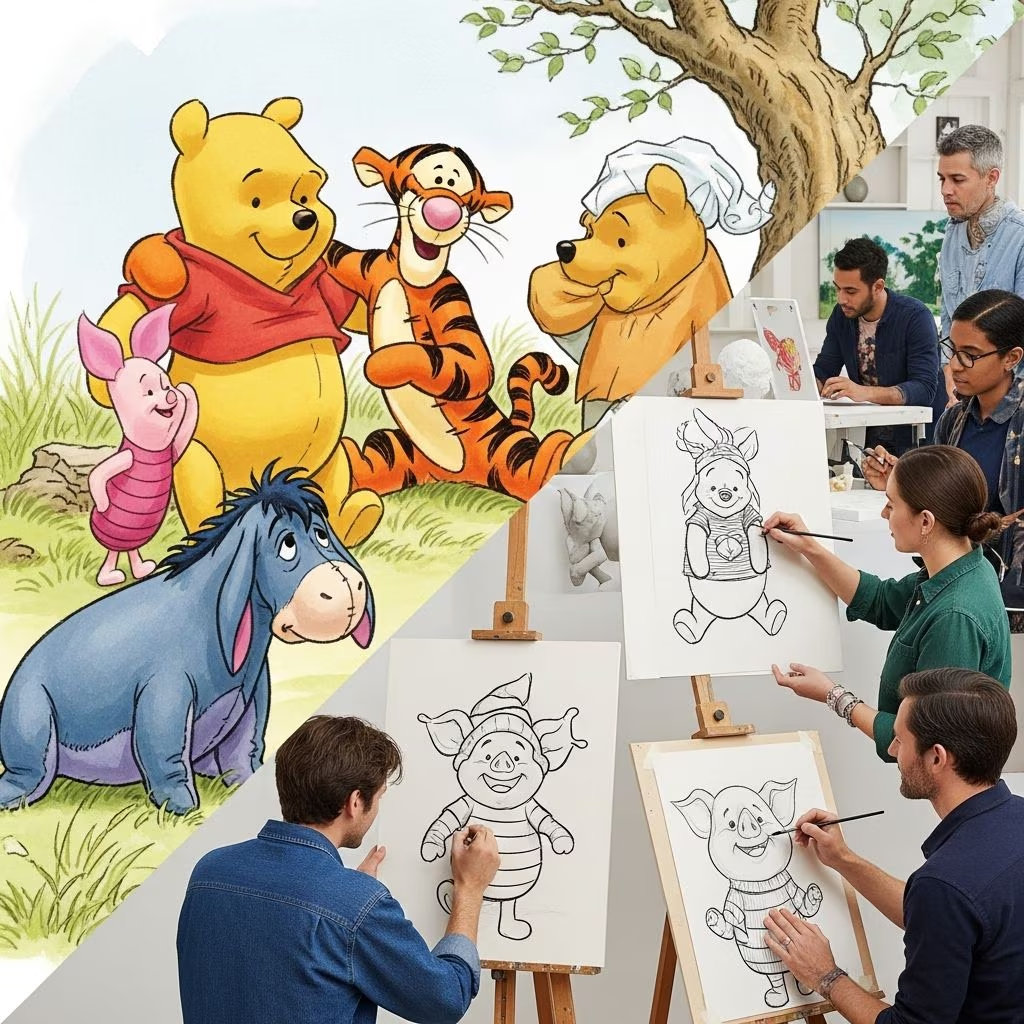
The practical implication is that any creative work you produce using Winnie-the-Pooh must maintain fidelity to Milne’s original conception rather than Disney’s adaptations. This means your character should look and behave like the bear from the 1926 book, not the cheerful, commercially polished version that Disney has promoted worldwide. The red shirt is perhaps the most obvious example—it’s Disney’s trademark, and using it would likely violate their intellectual property rights despite the characters being in the public domain.
What Creative Uses Are Now Possible?
The transition to public domain status opens numerous possibilities for creative individuals and businesses. You can now legally:
- Write original stories, sequels, or prequels featuring the characters
- Adapt the stories into plays, musicals, films, or other dramatic works
- Create comic books or graphic novels with the characters
- Develop merchandise featuring the characters
- Create fan art and distribute it without fear of copyright infringement
- Develop video games or interactive media with these characters
- Translate or reinterpret the original stories in new formats
These possibilities represent genuine creative freedom that didn’t exist before 2022. Independent creators can now produce professional-quality works featuring these characters, and they can distribute and sell these works without needing to negotiate licensing agreements with Disney or other rights holders.
Several creators have already taken advantage of this newfound freedom. A horror film titled “Winnie-the-Pooh: Blood and Honey” serves as a notable example of how creators are reimagining these traditionally innocent characters in completely different genres. The filmmakers carefully navigated the legal landscape by ensuring their version maintained connection to the original characters while avoiding specific Disney trademarks and derivative elements.
Critical Legal Boundaries to Respect
Despite the expanded creative freedom, several important limitations remain that can prevent you from freely using these characters:
- Trademark Infringement: Disney’s trademarks remain in full effect regardless of copyright expiration, protecting distinctive visual elements, character names as branded assets, and specific design features associated with their versions of the characters
- Derivative Work Protections: Any elements that are clearly Disney’s original creations, such as specific personality traits or modifications made during the Disney era, remain protected even though the underlying characters are public domain
- International Variations: Different countries have different copyright expiration dates, so a work legal in the United States might violate copyright law in Europe or the United Kingdom
- Character-Specific Variations: Not all characters entered public domain simultaneously; Tigger joined in 2024, while other characters may have different status depending on their first appearance date
The most common mistake creators make is assuming that public domain status means they can use any version of the characters they want. This is incorrect. The protection applies only to the original literary works and characters as they appeared in Milne’s publications, not to decades of Disney’s artistic, narrative, and commercial interpretations.
Practical Guidance for Your Creative Projects
If you’re considering creating something with Winnie-the-Pooh characters, first determine which characters you want to use and verify their public domain status in your jurisdiction. For U.S.-based creators, characters from the 1926 book are safe, and Tigger became safe in 2024. Next, review the original A.A. Milne texts carefully to understand how the characters look, speak, and behave in their original form. Reference the original E.H. Shepard illustrations to see the authentic visual style before Disney modernized them.
When developing your creative work, consciously avoid distinctive Disney elements. Don’t give Pooh a red shirt. Don’t use Disney’s character voice patterns or personality modifications. Don’t incorporate visual styles or design choices that Disney created. Instead, draw inspiration from the original texts and illustrations, creating something that feels consistent with Milne’s vision rather than Disney’s.
Consider how extensively you’re using the characters. A brief cameo or minor reference is less likely to attract legal scrutiny than building an entire work around these characters. Consider consulting with an intellectual property attorney if you’re planning to create something commercially significant, as legal costs for a consultation are minimal compared to potential litigation.
International Considerations for Creators
The global nature of digital content creation means you should understand copyright laws in major markets where your work might be distributed. In the European Union and the United Kingdom, Winnie-the-Pooh remains under copyright protection for several more years. This means a work that’s legal to create in the United States might not be legal to distribute in Europe without proper licensing.
If you’re creating content for international distribution, the safest approach is to assume the most restrictive copyright regime applies. This essentially means waiting until 2027 when the character enters the public domain in the United Kingdom, and potentially longer in other jurisdictions. Alternatively, you could seek licensing agreements with the rights holders, which might be simpler than waiting if your project has time-sensitive commercial value.
Frequently Asked Questions
Q: Can I sell merchandise featuring Winnie-the-Pooh characters?
A: You can create and sell merchandise featuring the original characters from the 1926 book, provided you don’t use Disney’s trademarked visual elements like the red shirt. However, trademark protections may limit how you can market or brand the merchandise.
Q: What if I want to use characters that entered public domain more recently, like Tigger?
A: Tigger became available for public domain use on January 1, 2024 in the United States. The same rules apply—you can use the character as originally conceived by Milne but must avoid Disney’s trademark-protected versions and adaptations.
Q: Can I create a movie or television show with these characters?
A: Yes, you can adapt the original stories into film or television format. You must base your adaptation on the original literary works and maintain fidelity to how characters appeared in those works, avoiding Disney’s distinctive creative choices.
Q: What counts as using Disney’s trademarked elements?
A: The red shirt is the most obvious trademark element. This includes the specific visual appearance Disney created, their branded character names used in marketing, distinctive personality traits Disney added, and specific design elements Disney developed over decades of adaptation.
Q: Do I need permission to write fan fiction with these characters?
A: For characters in the public domain, you technically don’t need permission to write fan fiction. However, distributing it commercially could attract trademark scrutiny, so many fan creators share works for free or on platforms specifically designed for fan content.
Q: How can I be sure I’m using the original characters correctly?
A: Read A.A. Milne’s original texts and study E.H. Shepard’s original illustrations. These represent the canonical version of the characters as they existed when copyright was active. Any significant deviations from these sources may constitute use of Disney’s derivative work.
Q: What happens if Disney sues me for using these characters?
A: If you’re using genuinely public domain material correctly, you have a strong legal defense. However, litigation is expensive and time-consuming. Many creators choose to err on the side of caution or seek legal counsel before launching significant commercial projects.
References
- A Bear of Very Little Copyright: Winnie-the-Pooh’s Journey into the Public Domain — UK Intellectual Property Office. 2025-03-06. https://ipo.blog.gov.uk/2025/03/06/a-bear-of-very-little-copyright-winnie-the-poohs-journey-into-the-public-domain/
- Winnie the Pooh and Copyright Law — Cislo & Thomas LLP. https://cisloandthomas.com/winnie-the-pooh-and-copyright-law/
- Winnie-the-Pooh’s Journey into the Public Domain — Northwestern University School of Law Intellectual Technology and Policy Program. 2023-04-19. https://jtip.law.northwestern.edu/2023/04/19/winnie-the-poohs-journey-into-the-public-domain/
- Copyright Expiration Opens the Door for Winnie-the-Pooh Horror Film — Lomnitzer Law. https://www.lomnitzerlaw.com/copyright-expiration-opens-the-door-for-winnie-the-pooh-horror-film/
- Winnie-the-Pooh and Hundreds of Other Works Are Now in the Public Domain — Temple University News. 2022-01-24. https://now.temple.edu/news/2022-01-24/winnie-pooh-hundreds-other-works-are-now-public-domain