
Projectors: Essential Gear for Modern Litigators
Discover how owning a projector empowers lawyers to deliver compelling courtroom visuals, boost persuasion, and streamline trial prep.
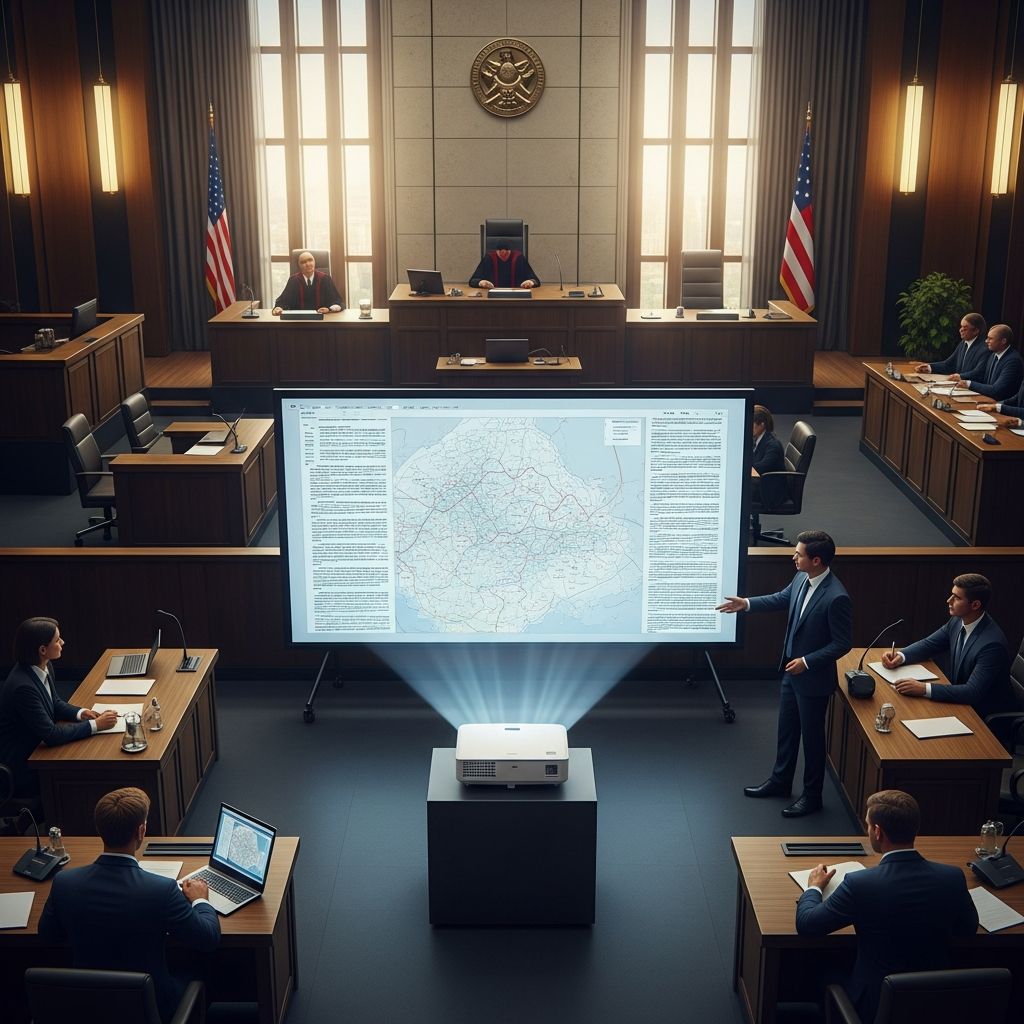
Projectors have become indispensable tools for litigators seeking to dominate courtroom presentations. By projecting high-clarity visuals across large spaces, they transform complex arguments into memorable displays that resonate with judges and juries alike.
Transforming Courtroom Dynamics with Projection Technology
In today’s fast-paced legal environments, the ability to present evidence dynamically sets winning attorneys apart. Projectors enable lawyers to scale images, documents, and multimedia from small screens to wall-sized views, ensuring every detail is visible regardless of seating position. This capability is particularly vital in spacious courtrooms where traditional monitors fall short.
Visual aids projected via modern devices help distill intricate case elements—like timelines, medical scans, or financial charts—into digestible formats. Research indicates jurors retain up to 65% more information when it’s presented visually rather than verbally alone, making projectors a strategic asset for persuasion.
Key Benefits of Personal Projector Ownership for Lawyers
Owning a projector offers litigators unparalleled flexibility compared to relying on rentals or court-provided equipment. Here’s why it’s a smart investment:
- Immediacy in Setup: No waiting for AV staff; plug in and project instantly during depositions, client meetings, or impromptu strategy sessions.
- Cost Savings Over Time: Frequent renters spend thousands annually; a one-time purchase pays off after just a few uses, especially for high-volume firms.
- Customization Control: Select models with features like 4K resolution, wireless connectivity, and keystone correction tailored to legal needs.
- Portability Edge: Compact, lightweight units fit in briefcases, enabling seamless transitions between office, home, and court.
These advantages compound during trials, where technical glitches from unfamiliar rented gear can derail momentum. Personal ownership ensures reliability and professionalism.
Enhancing Evidence Presentation Precision
Projectors excel at magnifying critical evidence, from annotated contracts to video clips. In intellectual property disputes, for instance, projecting high-res diagrams clarifies patent infringements that might otherwise confuse observers. Picture-in-picture modes allow simultaneous display of depositions and live annotations, heightening impact.
Document cameras paired with projectors eliminate passing physical items around, reducing handling risks and maintaining focus. Real-time zooming on key phrases or signatures reinforces arguments without physical disruption.
| Presentation Method | Pros | Cons | Best For |
|---|---|---|---|
| Projector + Screen | Room-wide visibility; scalable; immersive | Requires dim lighting; setup time | Large courtrooms; jury trials |
| Flat Monitors | Bright room compatible; portable | Limited view angles; size constraints | Small hearings; bench trials |
| Overhead Projector | Low cost; simple | Poor quality; outdated | Avoid; inferior to digital |
This comparison highlights projectors’ superiority for comprehensive coverage, outperforming legacy systems like overheads, which deliver fuzzy images and demand transparencies.
Boosting Jury Engagement and Retention
Jurors, often from non-legal backgrounds, struggle with dense testimony. Projectors counter this by visualizing abstracts: animations recreate accident sequences, graphs plot liability trends, and timelines map case chronologies. Such aids sustain attention during lengthy proceedings, preventing disengagement.
Emotional resonance amplifies too—vivid projections of injury photos or site recreations forge juror empathy. Studies affirm visual repetition embeds facts deeper, with multimedia boosting recall by 40-50% over oral arguments.
Streamlining Trial Preparation and Real-Time Adaptations
Beyond trials, projectors revolutionize prep. Mock juries benefit from life-sized exhibits, honing delivery. In-court, rapid editing software lets attorneys redact clips on-the-fly, avoiding recesses that kill rhythm.
Wireless models sync with laptops for instant exhibit swaps, impeaching witnesses with pulled documents or synced videos. This agility turns cross-examinations into decisive moments, showcasing mastery.
Overcoming Common Courtroom Tech Hurdles
Courthouses vary in AV readiness—some boast systems, others offer relics. Owned projectors bypass unreliability: no bulb failures mid-argument or incompatible cables. Battery backups ensure power outages don’t halt shows.
Ideal specs include 4000+ lumens for lit rooms, HDMI/USB-C ports, and short-throw lenses for tight spaces. Paired with matte screens, they combat glare, delivering crisp 4K visuals even in imperfect venues.
Strategic Advantages in Competitive Litigation
Opponents using subpar tech appear underprepared; your polished projections signal expertise, swaying perceptions subconsciously. In one federal case, multimedia users outshone overhead projector rivals, with jurors noting superior clarity influencing verdicts.
For solos or small firms, projectors level the field against big-firm resources, projecting confidence without budgets for full crews.
Practical Recommendations for Litigator Projectors
Select based on needs:
- Budget Option (<$500): Portable LED models for depositions.
- Pro Trial Unit ($1000-3000): Laser projectors with 5000 lumens, edge-blending for multi-screen setups.
- Enterprise ($5000+): Rack-mount with remote control for team use.
Maintenance is minimal: clean lenses, update firmware. Integrate with trial software like TrialDirector for seamless exhibit management.
Frequently Asked Questions (FAQs)
What resolution should litigators prioritize in a projector?
At least 1080p, ideally 4K, for sharp evidence details like fine print or scans. Higher specs ensure legibility from afar.
Are projectors better than multiple monitors in court?
Yes for large audiences; they provide uniform, giant views. Use hybrids: projector for jury, monitors for judge/bench.
How do projectors aid witness impeachment?
Instantly project contradicting clips or docs during cross, catching inconsistencies live without delays.
What’s the ROI for owning vs. renting?
Breakeven after 5-10 rentals; plus, ownership avoids last-minute availability issues.
Can projectors work in bright courtrooms?
High-lumen models (4000+) yes; pair with ambient light-rejecting screens for optimal contrast.
Future-Proofing Your Practice with Projection Tech
As courts digitize, projectors evolve with AR overlays and interactive touch. Early adopters gain edges in hybrid virtual-physical trials post-pandemic. Invest now to future-proof advocacy.
In summary, projectors aren’t luxuries—they’re necessities amplifying every litigator’s arsenal. From persuasion to practicality, they deliver returns exceeding costs manifold.
References
- How Technology Enhances Trial Presentations: A Guide to Equipment Rentals — Naegel USA. 2023. https://www.naegeliusa.com/blog/how-technology-enhances-trial-presentations-a-guide-to-equipment-rentals
- 4 Benefits of Trial Presentation Technology — Precise, Inc. 2022. https://precise-law.com/trial-presentation-technology/
- Presentation Technology: A Comparison for Courtroom Use — Su Ann Ingles. 2014-11. https://www.suanningle.com/wp-content/uploads/2014/11/Presentation-Technology-A-Comparison-for-Courtroom-Use.pdf
- Still Using a Screen and Projector: Think Again — TechLaw Crossroads. 2020-10. https://www.techlawcrossroads.com/2020/10/still-using-a-screen-and-projector-think-again/
- The Impact of Projector Screen Technology on Corporate Presentations — Coherent Market Insights. 2023. https://www.coherentmarketinsights.com/blog/the-impact-of-projector-screen-technology-on-corporate-presentations-2052
Similar Articles








Read full bio of medha deb


