
Who’s Who in the Courtroom: Roles, Duties, and Dynamics
Learn how judges, lawyers, jurors, and courtroom staff work together to ensure fair trials and orderly justice.
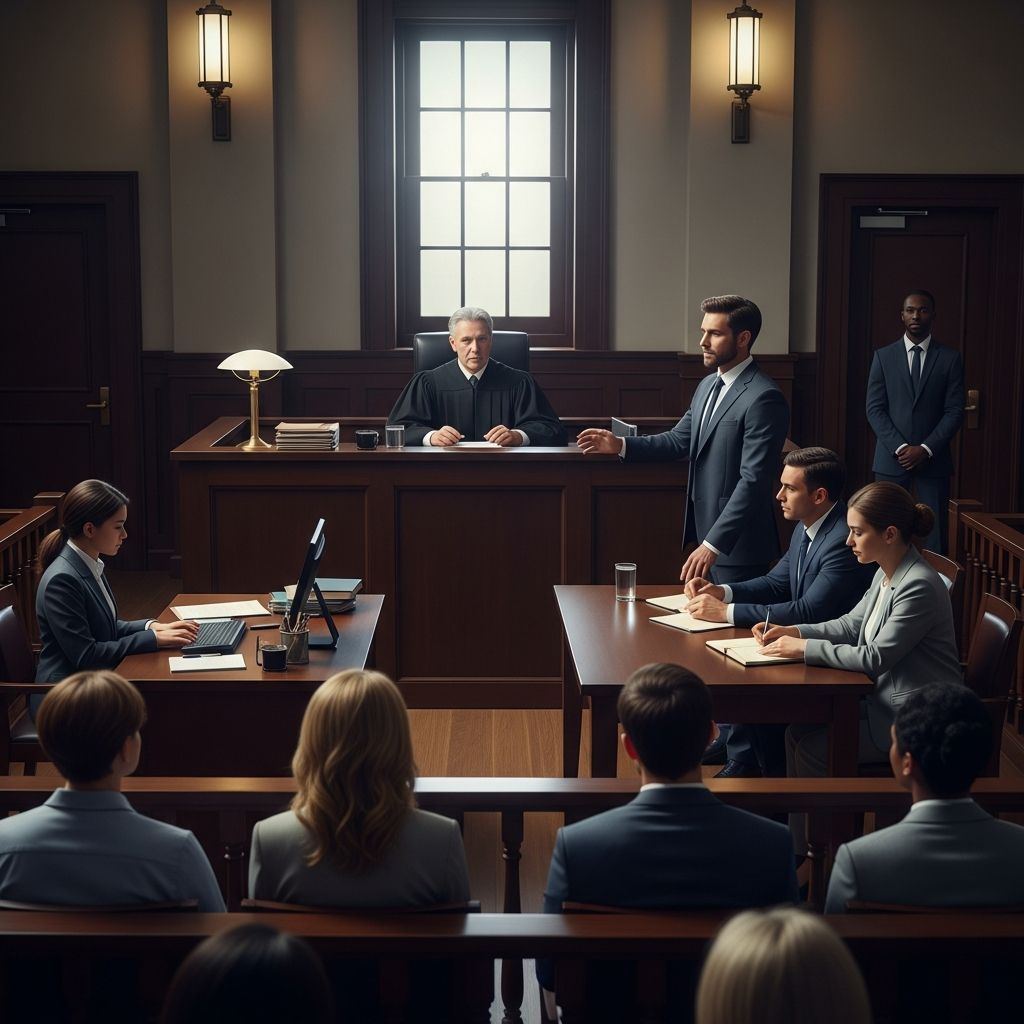
Walking into a courtroom for the first time can feel overwhelming. The room is full of people in different places, performing specialized tasks, all under strict rules and procedures. Knowing who does what in this setting makes the process less intimidating and helps you follow what is happening at every stage of a case.
This guide explains the key participants in a typical trial courtroom, their responsibilities, where they usually sit, and how they interact to ensure that cases are handled fairly and efficiently. It draws on general principles of court organization used across the United States and many other legal systems.
Main Decision-Makers in the Courtroom
The people responsible for making binding decisions in a courtroom—about facts, law, or both—are at the center of any trial. In most courts, this means the judge and, in jury trials, the jury.
The Judge: Neutral Guardian of Law and Procedure
The judge is the presiding official who oversees the trial from the bench, typically seated at the front of the courtroom at an elevated desk. Judges are responsible for interpreting and applying the law, ruling on legal questions, and ensuring that proceedings are orderly and fair.
- Key responsibilities of the judge:
- Explaining the legal rights of parties and ensuring they understand the process
- Ruling on objections and motions raised by attorneys
- Deciding what evidence the jury may hear
- Giving legal instructions to the jury at the end of the trial
- Issuing verdicts in trials held without a jury (bench trials)
- Imposing sentences in criminal cases after a conviction
- Impartiality: Judges must stay neutral, treat both sides fairly, and base decisions only on the evidence and law, not personal opinions or outside pressure.
- Courtroom authority: As the highest authority in the room, the judge can order people to follow rules, maintain decorum, or, if necessary, hold someone in contempt for serious misconduct.
The Jury: Finder of Facts
In many criminal and civil trials, a group of ordinary citizens is selected to serve as the jury. The jury listens to the evidence presented in court and decides what actually happened based on the facts.
- Primary duties of jurors:
- Listening carefully to testimony and reviewing admitted exhibits
- Discussing the case with fellow jurors only after deliberations begin
- Following the judge’s legal instructions about the law
- Reaching a verdict based solely on the evidence and the law
- Independence: Jurors must not conduct outside research, talk about the case with non-jurors, or be influenced by news coverage or social media until the trial concludes.
- Criminal vs. civil standards: In criminal cases, the prosecution must prove the defendant’s guilt beyond a reasonable doubt. In many civil cases, liability is decided using a lower standard called a preponderance of the evidence.
| Role | Main Function | Type of Questions Decided |
|---|---|---|
| Judge | Oversees the trial and applies the law | Legal issues (evidence rules, procedure, sentencing) |
| Jury | Evaluates evidence and determines facts | Factual issues (what happened, who is credible) |
Advocates: The Attorneys on Each Side
Attorneys are licensed professionals who represent parties in legal disputes. In trial courts, the two most visible advocates are the prosecutor (or government lawyer) and the defense attorney.
The Prosecutor or Government Attorney
In criminal cases, the prosecutor represents the government and is responsible for bringing charges against an accused person. Prosecutors are sometimes called district attorneys, state’s attorneys, or U.S. attorneys, depending on the jurisdiction.
- Core duties:
- Reviewing evidence gathered by law enforcement
- Deciding whether to file criminal charges and what charges are appropriate
- Presenting the government’s case in court through witnesses and exhibits
- Negotiating plea agreements when appropriate
- Recommending sentences after a conviction
- Ethical obligation: A prosecutor’s role is not just to win, but to seek justice, which includes ensuring that the accused receives a fair trial and that only reliable evidence is presented.
The Defense Attorney
The defense lawyer represents the person or organization accused of wrongdoing. In criminal cases, the defense attorney protects the accused person’s constitutional rights and challenges the prosecution’s evidence.
- Who they represent:
- Criminal defendants facing charges
- Civil defendants being sued for money or other relief
- Major responsibilities:
- Advising the client about their rights, options, and possible outcomes
- Investigating the facts and gathering favorable evidence
- Questioning the prosecution’s witnesses and challenging weak evidence
- Presenting a defense case, including calling witnesses and introducing exhibits
- Negotiating plea deals or settlements when in the client’s best interest
- Right to counsel: In U.S. criminal cases, defendants who cannot afford a lawyer are entitled to have counsel appointed for them in many situations, reflecting the importance of legal representation for a fair process.
Parties to the Case: People at the Center of the Dispute
The courtroom exists primarily to resolve disputes between parties. Those people or entities are known as the plaintiff (or prosecution, in criminal cases) and the defendant.
Civil Plaintiffs and Criminal Victims
In civil cases, the plaintiff is the person or organization that starts the lawsuit, claiming that the defendant caused harm and asking the court for a remedy such as money damages or an order to do or stop doing something.
In criminal cases, the plaintiff is effectively the government, acting through the prosecutor, but the victim of the alleged crime has a significant interest as well. Many legal systems recognize victims’ rights to be informed, to attend proceedings, and sometimes to address the court at sentencing.
Defendants: The Accused or The Sued
A defendant is the person or organization responding to charges (criminal) or allegations (civil). Defendants enjoy important legal protections designed to prevent wrongful convictions or unfair judgments.
- Key protections in criminal cases (general U.S. principles):
- Presumption of innocence until proven guilty
- Right to remain silent and not testify
- Right to confront and cross-examine witnesses
- Right to present evidence and call witnesses
- Right to a public trial before an impartial judge (and often a jury)
- Civil defendants generally have the right to notice of the claims, to respond in writing, to seek discovery of evidence, and to be heard at trial.
Supporting Roles That Keep the Courtroom Running
Beyond the judge, attorneys, and parties, a number of other professionals ensure that trials proceed smoothly, securely, and accurately. Although their work is less visible, it is essential to the justice system.
Court Clerk: Administrative Backbone of the Court
The court clerk (or deputy clerk) manages the official court file and many of the logistical details of a case.
- Typical duties:
- Maintaining the court’s docket and scheduling hearings
- Receiving and filing legal documents submitted by attorneys and parties
- Keeping track of exhibits admitted into evidence
- Recording certain events in the courtroom for the official record
- Assisting the judge with paperwork during hearings and trials
- Public contact: In many courts, clerks provide basic procedural information to the public (such as how to file a form) but cannot give legal advice.
Court Reporter: Creating the Official Record
A court reporter (sometimes known as a stenographer) produces a precise written record of what is said in court. In many trial courts, especially higher-level courts, this record is essential for appeals and later review of the case.
- Core tasks:
- Using specialized equipment to capture every spoken word
- Preparing transcripts when requested by parties or appellate courts
- Marking points in the record where exhibits are introduced or rulings are made
- Importance: Without an accurate transcript, it is difficult for reviewing courts to determine whether legal errors occurred during the trial.
Bailiff: Security and Order in the Courtroom
The bailiff is a court security officer responsible for keeping order and protecting everyone in the courtroom.
- Key responsibilities:
- Maintaining security at courtroom entrances and exits
- Escorting in-custody defendants to and from the courtroom
- Managing the jury—escorting jurors, ensuring they are not approached or influenced
- Announcing the judge’s entrance and calling the court to order
- Enforcing courtroom rules, such as limiting disruptions or improper use of electronic devices
- Emergency response: Bailiffs are typically trained to respond quickly to safety issues or medical emergencies during court sessions.
Court Interpreter: Bridging Language Barriers
When a party, witness, or other participant does not speak or understand the language used in court, a certified court interpreter ensures that person can fully participate in the process.
- What interpreters do:
- Interpret questions, testimony, and court instructions in real time
- Enable non-English speakers or people with limited proficiency to understand the proceedings
- Help the court comply with legal obligations to provide meaningful access regardless of language
- Neutral role: Interpreters must remain impartial and are not allowed to give legal advice or advocate for any side.
Witnesses and Evidence: Providing Information to the Court
Trials depend on reliable information. Much of that information comes from witnesses and exhibits (documents, photographs, physical objects, and digital records).
Witnesses
A witness is someone who gives testimony in court about facts they know that are relevant to the case.
- Types of witnesses:
- Fact witnesses: People who saw, heard, or experienced something firsthand
- Expert witnesses: Specialists such as doctors, engineers, or forensic analysts who provide opinions based on their professional knowledge
- Character witnesses: Individuals who testify about a party’s reputation or traits, when legally allowed
- Examination process:
- Called and questioned by the side that requested their testimony (direct examination)
- Questioned by the opposing side (cross-examination)
- Possibly questioned again on limited issues (re-direct and re-cross)
- Oath or affirmation: Witnesses swear or affirm to tell the truth before testifying, making false testimony subject to penalties for perjury.
Where Everyone Sits: A Quick Orientation
Although courtroom layouts vary, many trial courts have similar arrangements so that roles are clear and proceedings are orderly.
- Judge’s bench: Front and center, elevated; the judge presides from here.
- Court clerk and reporter: Typically seated near the judge, facing the courtroom.
- Prosecution and defense tables: Two tables facing the judge; the side bringing the case usually sits closer to the jury box.
- Jury box: To one side of the courtroom, with seats arranged for all jurors.
- Witness stand: Near the judge and jury so both can clearly see and hear the witness.
- Public seating: Benches or chairs at the back of the courtroom, open to the public unless the judge orders otherwise.
Frequently Asked Questions (FAQs)
Do I have to speak if I am a criminal defendant?
In many legal systems, including the United States, a criminal defendant has the right to remain silent and cannot be forced to testify at their own trial. Choosing whether to testify is a strategic decision made with the advice of a defense attorney.
Can the judge overrule the jury’s decision?
Generally, the jury decides questions of fact and the judge respects that verdict. In some limited circumstances, such as when the evidence cannot legally support the verdict, a judge may set aside a jury’s finding or order a new trial, as permitted by law.
Who explains legal terms to the jury?
The judge gives instructions to the jury about the law that applies to the case, including definitions of key legal terms and the standards they must use in reaching a verdict.
Can I talk to jurors about the case during the trial?
No. Parties, witnesses, and members of the public are not allowed to discuss the case with jurors while a trial is ongoing. This rule helps protect the jury’s independence and prevents improper influence.
What if I do not understand the language used in court?
If you are a party, witness, or defendant who does not understand the language used in court, you may be entitled to a qualified interpreter so you can follow the proceedings and communicate effectively.
References
- The Players in a Trial Courtroom — Arizona Judicial Branch, Administrative Office of the Courts. 2023-01-01. https://www.azcourts.gov/guidetoazcourts/The-Players-in-a-Trial-Courtroom
- Court Roles — City of Sugar Land Municipal Court (Official Site). 2022-06-15. https://www.sugarlandtx.gov/2704/Court-Roles
- Court Personnel — Federal Judicial Center, Judiciaries Worldwide. 2016-05-01. http://judiciariesworldwide.fjc.gov/court-personnel
- Court Role and Structure — Administrative Office of the U.S. Courts. 2024-02-01. https://www.uscourts.gov/about-federal-courts/court-role-and-structure
- Chapter Summary and Key Concepts: The Courts — Oxford University Press (Companion Website). 2014-01-01. https://global.oup.com/us/companion.websites/9780199997961/stud/chapter09/keyconcepts/
Similar Articles








Read full bio of medha deb


