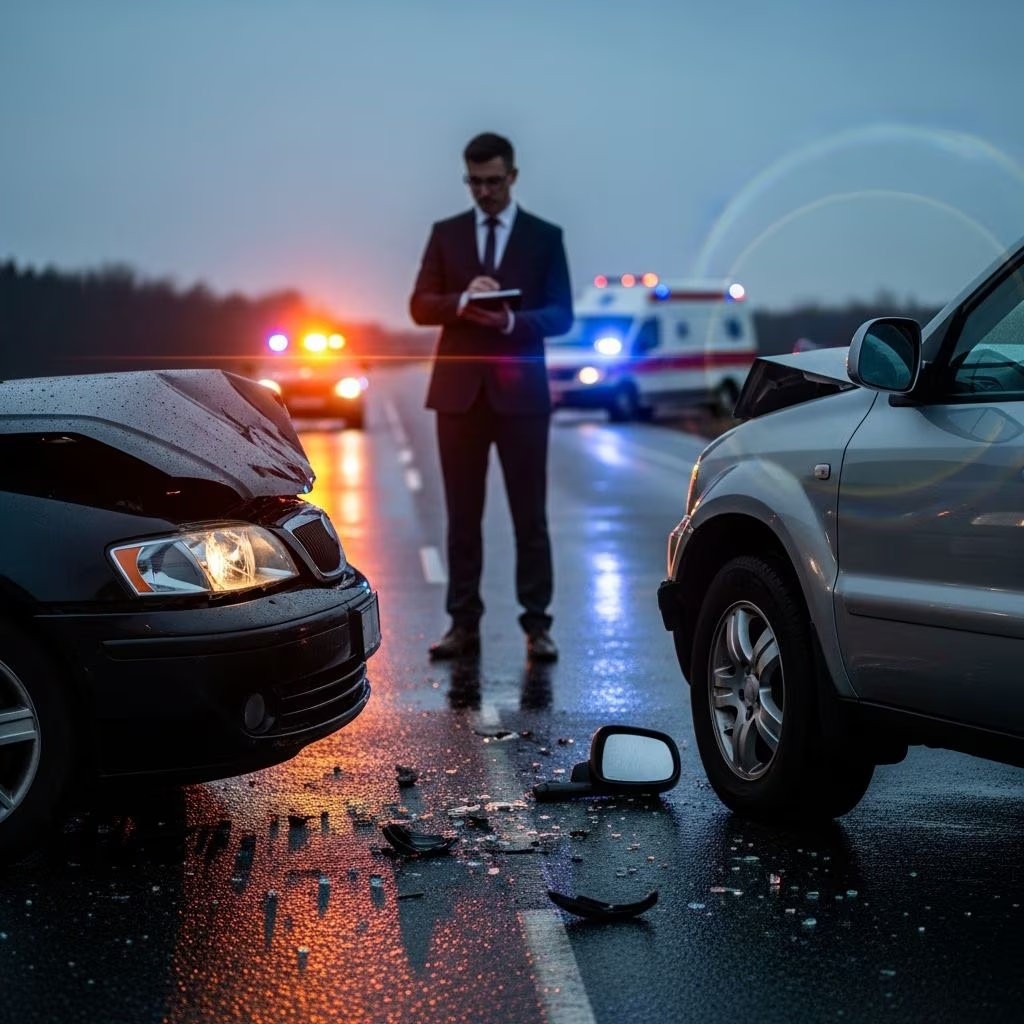
After a car crash, one of the first legal questions is simple but critical: who is liable for the damage and injuries? The answer determines which insurance company pays, how much compensation may be available, and whether you can sue another party. Liability is rarely about who is most upset or whose car looks worse; it is a legal conclusion based on fault, evidence, and state law.
Understanding Liability in Car Accidents
In most car accident cases, liability means the person or entity that is legally responsible for causing the crash and for paying resulting losses such as medical bills, property damage, lost income, and pain and suffering. Liability is usually based on the concept of negligence – a failure to use reasonable care under the circumstances.
- Duty of care: Every driver must operate their vehicle with reasonable care and follow traffic laws.
- Breach of duty: A driver violates that duty by unsafe behavior such as speeding, distracted driving, or ignoring signals.
- Causation: The driver’s conduct must be a direct cause of the crash and the injuries or property damage.
- Damages: The injured person must have real losses – physical, financial, or emotional – tied to the accident.
If all these elements are satisfied, the negligent party (or parties) can be held legally liable for the harm they caused.
Common Parties Who May Be at Fault
Determining liability is not always limited to the drivers directly involved in the collision. Several different parties may share responsibility, depending on how the crash occurred and what evidence shows.
1. Other Drivers
The most common situation is that another motorist is found liable for violating traffic rules or driving carelessly. Examples include:
- Running red lights or stop signs
- Speeding or driving too fast for weather or road conditions
- Texting or using a phone while driving
- Driving under the influence of alcohol or drugs
- Failing to yield, unsafe lane changes, or tailgating
2. Multiple Drivers in the Same Crash
In multi-vehicle accidents, fault is often shared. One driver might have started a chain reaction by following too closely, while another may have been speeding or not maintaining a safe lookout. Many states use systems that assign a percentage of fault to each person involved.
3. Vehicle Owners and Employers
Sometimes the person who owns the car or the employer of a driver can be liable even if they were not physically behind the wheel. For example:
- A company may be responsible for an employee who causes a crash while driving for work purposes (under vicarious liability principles).
- An owner who knowingly lets an unlicensed, intoxicated, or clearly unsafe driver use their vehicle can face liability in some jurisdictions.
4. Vehicle Manufacturers and Parts Makers
If a vehicle defect – such as faulty brakes, steering problems, airbag failures, or tire blowouts – contributes to a crash, manufacturers or parts suppliers may share responsibility under product liability laws. Investigations may involve recall records, engineering analyses, and expert testimony.
5. Governmental Entities and Road Authorities
In some crashes, the road itself is part of the problem. Poor design, inadequate signage, missing guardrails, or neglected maintenance (such as unrepaired potholes) can make government agencies or contractors partially responsible. Claims against public entities often have special notice deadlines and procedural rules.
How Fault for a Car Accident Is Investigated
Liability is not decided by guesswork. Insurance adjusters, attorneys, and sometimes courts review a wide range of evidence to reconstruct what happened and decide who should bear responsibility.
Key Evidence Used to Determine Liability
- Police reports: Document the scene, road conditions, involved vehicles, citations, and preliminary observations about fault.
- Traffic laws: Investigators examine whether any laws were broken, such as speeding statutes or right-of-way rules.
- Witness statements: Neutral witnesses can describe vehicle positions, speed, and driver behavior just before impact.
- Photos and video: Images of skid marks, damage, debris, and weather can help experts reconstruct the crash.
- Surveillance and traffic cameras: Video footage may capture the collision and the moments leading up to it.
- Vehicle data: Many modern vehicles store speed, braking, and steering information in electronic “black boxes.”
- Medical records: Treatment records show the nature and timing of injuries and can rebut claims that injuries were pre-existing.
Putting this evidence together allows professionals to build a timeline and decide how much each factor contributed to the crash.
Negligence: The Core of Most Car Accident Claims
Most car accident liability disputes revolve around negligence. To show a driver was negligent, the injured party must prove that the driver failed to act as a reasonably careful person would have in the same situation and that this failure caused the crash.
| Negligence Element | What It Means in a Car Accident | Example |
|---|---|---|
| Duty of care | Drivers must obey traffic laws and drive safely for conditions. | Keeping a safe following distance in heavy traffic. |
| Breach of duty | The driver’s conduct falls below that standard. | Texting while approaching a red light. |
| Causation | The breach directly leads to the collision and injuries. | The texting driver rear-ends a stopped car. |
| Damages | The victim suffers physical, financial, or emotional harm. | Medical bills, missed work, and vehicle repair costs. |
Evidence of traffic violations, distracted driving, intoxication, or other unsafe behavior is often central to proving negligence and securing compensation.
Comparative and Contributory Negligence: When Multiple Parties Share Blame
Not every crash is entirely one person’s fault. Many states recognize that several drivers – or even the injured person – may contribute to the collision. How that shared responsibility affects recovery depends on the state’s negligence rules.
Comparative Negligence
Under various forms of comparative negligence, an injured person’s compensation is reduced by their percentage of fault but not necessarily eliminated.
- Pure comparative negligence: A plaintiff can recover damages even if they are 90% at fault, but their award is reduced by 90%.
- Modified comparative negligence: Many states bar recovery if the injured person is at or above a certain fault threshold, often 50% or 51%.
For example, if a driver is found 30% at fault for driving slightly over the speed limit and the other driver is 70% at fault for running a red light, the partially at-fault driver’s damages would be reduced by 30% in a comparative negligence system.
Contributory Negligence
A minority of jurisdictions still follow contributory negligence. In these states, an injured person may be completely barred from any recovery if they are found even 1% responsible for the crash. This strict rule makes evidence and legal strategy especially important because small findings of fault can eliminate the ability to collect damages.
Fault-Based vs. No-Fault Insurance Systems
The way liability affects compensation also depends on whether the state follows a fault-based or no-fault auto insurance structure.
Fault-Based (Tort) Systems
Most states use a fault-based approach. The driver who is legally at fault – and their insurer – is responsible for paying damages. Injury victims may file insurance claims, negotiate settlements, or bring lawsuits against the at-fault parties.
- You typically file a claim with the at-fault driver’s liability insurer.
- If settlement fails, you may sue in court for medical costs, lost wages, property damage, and non-economic damages like pain and suffering.
- Comparative or contributory negligence rules govern how shared fault affects recovery.
No-Fault Systems
In no-fault states, drivers generally turn first to their own personal injury protection (PIP) coverage for medical expenses and certain economic losses, regardless of who caused the collision. Only when injuries meet specific thresholds (such as serious, permanent, or high-cost injuries) can a victim step outside the no-fault system and bring a lawsuit against another driver.
Even in no-fault systems, fault remains important for property damage claims and for serious injury cases that exceed statutory thresholds.
Factors That Can Complicate Liability
Some circumstances make the liability analysis more complex and may involve additional parties or defenses.
- Hazardous road conditions: Ice, rain, poor lighting, or construction zones can affect how much blame is placed on drivers versus public agencies or contractors.
- Vehicle maintenance issues: Bald tires, faulty brakes, or unaddressed safety recalls may implicate owners, repair shops, or manufacturers.
- Pre-existing injuries: Insurers may argue that some injuries existed before the crash, requiring strong medical documentation to link current problems to the accident.
- Commercial vehicles: Trucking companies, logistics firms, or other businesses may be liable alongside the driver based on employment and safety policies.
- Hit-and-run collisions: When the at-fault driver cannot be identified, uninsured motorist coverage and other insurance provisions become crucial.
Steps to Protect Your Rights After a Crash
What you do in the minutes, days, and weeks after an accident can dramatically influence how liability is decided and whether you receive fair compensation.
- Call emergency services: Report the crash and request medical help if needed. Police reports can later become key evidence.
- Gather information: Exchange contact and insurance information with other drivers, and note license plates and vehicle details.
- Document the scene: Take photos or videos of vehicles, injuries, skid marks, road conditions, and weather.
- Speak carefully: Avoid admitting fault or speculating about what happened. Simple statements like “I’m sorry” can be misinterpreted.
- Seek medical evaluation: Even if you feel fine, some injuries are delayed. Prompt care also builds a record linking injuries to the crash.
- Notify your insurer: Report the accident as required by your policy, but be cautious about recorded statements and broad authorizations.
- Consult legal counsel: An attorney can explain your state’s negligence rules, evaluate liability, preserve evidence, and negotiate with insurers.
Frequently Asked Questions About Car Accident Liability
Q: Does the driver who gets the ticket automatically lose the case?
A: Not necessarily. A traffic citation is important evidence of fault, but it is only one factor. Witness statements, physical evidence, video footage, and vehicle data can support or contradict the officer’s initial assessment.
Q: Can I recover damages if I was partly to blame for the accident?
A: In many states with comparative negligence rules, you may still recover compensation, reduced by your percentage of fault. In contributory negligence states, however, being even slightly at fault can bar recovery, making local law and case facts crucial.
Q: Who pays if the at-fault driver does not have insurance?
A: Uninsured or underinsured motorist coverage on your own policy may help cover medical costs and other losses. In some cases, additional parties such as employers, manufacturers, or government entities could share liability if their actions contributed to the crash.
Q: Is the rear driver always at fault in a rear-end collision?
A: Often, the rear driver bears primary responsibility for following too closely or not paying attention. However, liability may be shared if the front driver suddenly reverses, stops without working brake lights, or engages in other unsafe conduct. Comparative negligence systems allow fault to be divided between both drivers.
Q: How long do I have to bring a claim after a car accident?
A: Every state has a statute of limitations that sets a deadline for filing a lawsuit, often ranging from one to several years from the date of the crash. Waiting too long can permanently eliminate your right to seek compensation, so reviewing your state’s rules or speaking with an attorney promptly is important.
References
- National Highway Traffic Safety Administration: Countermeasures That Work — NHTSA. 2020-01-01. https://www.nhtsa.gov/document/countermeasures-work-9th-edition
- How Liability Is Determined in a Car Accident — DeMayo Law Offices. 2023-06-01. https://demayolaw.com/faqs/how-is-liability-determined-in-a-car-accident/
- 3 Factors That Help Prove Negligence in a Car Accident Case — The Vance Law Firm. 2023-05-01. https://www.vancelawfirm.com/blog/factors-that-prove-negligence-in-car-accident-case/
- Understanding Comparative Negligence in Car Accident Claims — Butters Brazilian LLP. 2024-02-01. https://www.buttersbrazilian.com/what-is-comparative-negligence/
- Determining Liability in Multi-Vehicle Auto Accidents — Inlet Law. 2025-01-10. https://www.inletlaw.com/blog/2025/january/common-misconceptions-about-premises-liability-l/
- Key Factors That Impact the Value of a Car Accident Claim in Arizona — Smith & Green Attorneys at Law. 2024-04-15. https://smithgreenlaw.com/factors-affecting-the-value-of-your-arizona-car-accident-claim/
- Determining Who Bears Liability for a Car Accident — Viles & Beckman. 2023-09-20. https://www.vilesandbeckman.com/blog/who-bears-liability-car-accident/