
Where You Can Cash a Check and What It May Cost
Learn when banks, credit unions, and alternatives will cash your check, what to expect in fees, and how to avoid costly surprises.
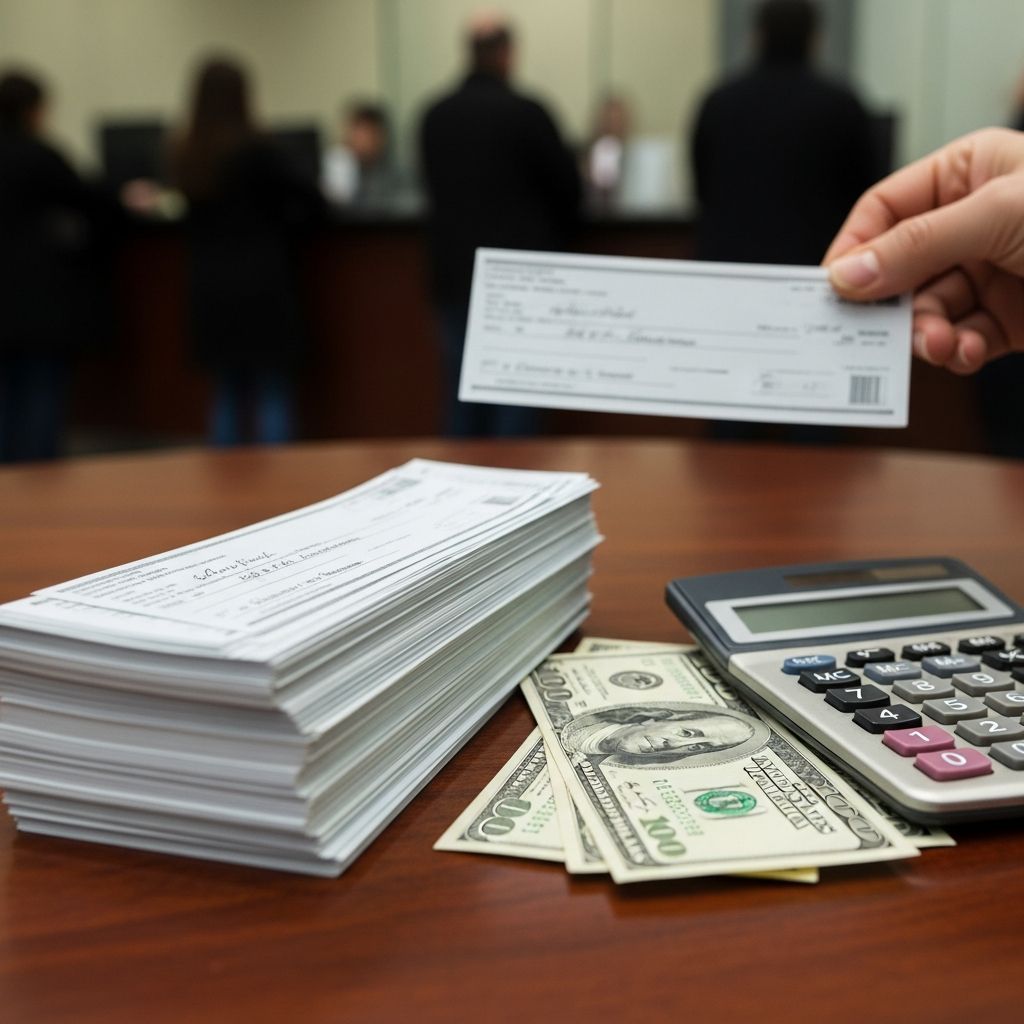
Cashing a check is not always as simple as walking into the nearest bank and walking out with cash. Whether you can cash a check at a particular bank or credit union, and how much you will pay, depends on the type of institution, your relationship with it, and the laws in your state.
This guide explains how check-cashing works at banks, credit unions, retailers, and check-cashing stores, and gives practical tips to reduce fees and protect yourself from loss or fraud.
Key Takeaways About Cashing Checks
- You are not guaranteed the right to cash a check at any bank or credit union you choose.
- Banks and credit unions can usually set their own policies on whether to cash checks for noncustomers and what fees to charge, subject to state law.
- State wage-payment laws may require that you can cash your paycheck without a fee at a specific institution or in a specific way in some states.
- Alternatives such as retailers and check-cashing outlets may cash checks but often charge higher percentage-based fees than banks.
- Opening even a low-cost bank or credit union account is often the cheapest and safest long-term option for handling checks.
Why You Cannot Always Cash a Check Anywhere
Many people assume that any bank must cash any valid check that is presented. In reality, banks and credit unions have broad discretion to decide:
- Whether they will cash checks for noncustomers at all
- Which types of checks they are willing to cash
- How they verify the check and your identity
- What fees, if any, they will require from noncustomers
According to guidance from the Consumer Financial Protection Bureau (CFPB), a bank or credit union generally may charge a fee when you try to cash a check and you do not have an account there, including when the check is drawn on that institution itself.
How Policies Differ for Banks and Credit Unions
Bank and credit union rules are shaped by federal banking law, state law, and the institution’s own risk and business policies. The table below highlights some of the most important differences for consumers.
| Feature | Banks (general) | Federal Credit Unions |
|---|---|---|
| Cashing checks for noncustomers | Usually allowed but not required; fees and limits are common. | Federal law does not generally permit cashing checks for nonmembers, except in narrow circumstances. |
| Obligation to cash checks drawn on own accounts | No general federal requirement to cash checks for noncustomers; may refuse or charge a fee. | Service is primarily for members; nonmember transactions are tightly restricted by the Federal Credit Union Act. |
| Typical fee for noncustomers | Often a flat fee (for example, around $7–$10) or a percentage of the check amount, depending on the bank and amount. | Where nonmembers can be served (such as specific card programs), fees may apply as allowed by law. |
| Account-holder advantages | May cash checks at no fee or lower cost; funds may still be subject to holds under availability rules. | Members typically receive check-cashing services; nonmembers usually must go elsewhere. |
Common Places to Cash a Check
Depending on the type of check you have and your access to financial services, you may choose among several options. Each has trade-offs in cost, convenience, and safety.
Banks Where You Are a Customer
If you already have a checking or savings account, your own bank is often the best starting point.
- Your bank will usually deposit the check into your account, then allow you to withdraw cash once funds are available.
- Under federal funds-availability rules, certain checks must become available within one or two business days, although longer holds are allowed in specific situations such as large deposits or repeatedly overdrawn accounts.
- Many banks do not charge an extra fee to cash a check for an established account holder, beyond any regular account fees.
Banks Where You Are Not a Customer
You may be tempted to visit a nearby bank just because it is close, even if you have no account there. Policies vary widely:
- Some banks will cash only checks drawn on their own institution for noncustomers (for example, a paycheck written on that bank).
- Many charge a noncustomer fee, typically a flat dollar amount or a percentage of the check value.
- Others may decline to cash checks for noncustomers altogether.
Because policies are different at each bank, consumer regulators recommend calling ahead to ask whether the bank will cash your check, what ID you will need, and what it will cost.
Credit Unions
Credit unions are member-owned financial cooperatives. Federal credit unions in particular are limited by the Federal Credit Union Act in which services they can provide to people who are not members. The National Credit Union Administration (NCUA) has stated that federal credit unions generally may not cash checks for nonmembers, except in narrow situations such as certain card programs.
For members, credit unions typically offer:
- Cashing of checks drawn on accounts within the credit union
- Deposit of outside checks subject to the institution’s funds-availability policy, which may delay access to some or all of the check for several days in higher-risk situations.
Retailers and Grocery Stores
Many large retailers and supermarket chains provide check-cashing services at their customer service counters. These services are generally targeted at people who do not have bank accounts or prefer to receive cash immediately.
- Retailers often cash payroll checks, government checks, and sometimes personal checks, subject to limits.
- Fees are usually a flat amount or small percentage of the check value; for example, some large retailers charge a few dollars for checks under a certain amount and a slightly higher fee for larger checks.
- Even modest flat fees can become expensive if you cash checks frequently or for small amounts.
Check-Cashing Stores
Specialized check-cashing outlets and payday lenders will usually cash a broad range of checks quickly, but often at significantly higher cost than banks or credit unions.
- Fees are frequently a percentage of each check, leading to substantial costs over time.
- Some locations also market payday loans or other high-cost credit products, increasing the risk that consumers will take on debt they cannot afford.
Mobile Deposit and ATMs
If you have a bank or credit union account, you may be able to deposit checks using a mobile banking app or at an ATM.
- Once deposited, the institution must follow federal funds-availability rules that specify when deposited checks must become available for withdrawal, with some exceptions.
- Remote deposits are generally not an option if you do not have any account relationship.
Typical Fees When You Cash a Check
Fees can vary by institution, type of check, and amount. It is important to ask about all charges before you hand over your check.
Flat Fees vs. Percentage Fees
- Flat fee: A fixed amount per check, such as a set dollar charge for noncustomers cashing checks over a specified value at some banks.
- Percentage fee: A percentage of the check amount, sometimes with a minimum and maximum; this is common at check-cashing outlets and some banks for noncustomer checks.
Examples of Noncustomer Fees
Publicly posted policies from some major financial institutions and regional banks show fees such as:
- A flat fee of around $7–$10 to cash a check for a noncustomer once the check exceeds a low threshold amount.
- Percentage-based fees such as 1% to 4% of the check amount, sometimes with minimum and maximum fee caps, depending on whether the check is drawn on that institution or another.
These examples illustrate the range of fees you might encounter, not a guaranteed rate. You should always check the current policy where you plan to cash your check.
When a Bank or Credit Union May Refuse to Cash a Check
Even when you present a genuine check and proper identification, a bank or credit union may still decline to cash it. Common reasons include:
- Suspicion that the check may be fraudulent or altered
- Insufficient funds in the account the check is drawn on
- Institution policy not to cash checks for noncustomers or nonmembers
- Technical problems, such as a damaged check that cannot be processed
In some situations, the institution may suggest that you deposit the check into an account rather than receiving cash immediately so that the check can clear and become available according to its funds-availability schedule.
Special Rules for Paychecks in Some States
While banks and credit unions generally can charge noncustomers a fee to cash checks drawn on them, some states have wage-payment laws that protect workers. These laws may require employers to pay wages in a form that allows employees to obtain their full pay without paying a fee, such as by:
- Providing a paycheck that can be cashed at a particular bank without fee
- Offering direct deposit at no cost
- Using payroll cards that allow at least one free withdrawal per pay period
The CFPB recommends that workers who believe they are being forced to pay a fee to access their wages contact their state banking regulator, attorney general, or state labor department to find out what state law requires.
How Funds Availability Affects Access to Cash
Even if a bank or credit union agrees to accept your check, you may not be able to withdraw the full amount in cash immediately. Federal rules set a minimum standard for how quickly certain deposits must be made available, but allow longer holds in higher-risk circumstances.
General Availability Time Frames
- Cash deposits are usually available immediately or very quickly.
- A portion of check deposits (for example, the first couple hundred dollars) may be available by the next business day.
- The remainder of a local check deposit must usually be available within two business days, unless an exception applies.
Credit unions and banks may extend holds for reasons such as new accounts, very large deposits, or patterns of overdrafts, as permitted by law.
Tips to Minimize Costs and Problems When Cashing Checks
With a few planning steps, you can reduce what you pay and lower your risk.
- Consider opening an account. A basic checking or savings account at a bank or credit union can dramatically lower your long-term check-cashing costs and provide protection through federal deposit insurance.
- Ask about all fees in advance. Before handing over your check, ask whether the institution will cash it, what identification is required, and the exact fee.
- Compare options. If one bank charges a high noncustomer fee, a different institution, retailer, or your own bank may be cheaper.
- Use direct deposit when possible. If your employer offers direct deposit, you may receive pay faster and avoid check-cashing fees altogether.
- Be cautious with check-cashing outlets. Although they may be convenient, their percentage-based fees can add up quickly, especially for recurring income such as paychecks.
- Protect against scams. Never cash a check for a stranger or send money back to someone who has paid you by check; many fraud schemes rely on counterfeit checks that later bounce.
Frequently Asked Questions
Do I have a legal right to cash a check at the bank it is drawn on?
Under federal law, banks are generally not required to cash checks for people who do not have an account with them, even if the check is drawn on that bank. Many banks choose to do so as a service, but they may charge a fee and set conditions, subject to state law.
Can a credit union cash a check for someone who is not a member?
Federal credit unions are generally not allowed to cash checks for nonmembers, except for a few limited exceptions such as certain card-related cash disbursements. State-chartered credit unions are also primarily focused on serving members, and their ability to serve nonmembers is shaped by state law.
Why did the bank place a hold on my deposited check?
Banks and credit unions may delay availability of deposited funds to make sure a check will be paid. Federal rules allow holds in situations like new accounts, large deposits, or when there is a history of overdrafts. Institutions must generally disclose when the funds will be available and provide a copy of their funds-availability policy.
Is it safer to cash a check or deposit it?
Depositing a check into an insured bank or credit union account is usually safer than walking around with a large amount of cash. Once the deposit clears, your money is protected up to applicable federal insurance limits if the institution fails.
What should I do if I am charged a fee to get my paycheck?
If you must pay a fee just to access your wages, contact your state labor department or attorney general to find out whether state law requires employers to provide a no-fee option, such as direct deposit or check-cashing at a designated bank. You can also submit complaints or questions about financial services to federal regulators such as the CFPB.
References
- I received a check and tried to cash it at the bank/credit union that holds the account on which the check is written. The bank/credit union charged me a fee for cashing a check. Can a bank/credit union do that? — Consumer Financial Protection Bureau. 2023-05-02. https://www.consumerfinance.gov/ask-cfpb/i-received-a-check-and-tried-to-cash-it-at-the-bankcredit-union-that-holds-the-account-on-which-the-check-is-written-the-bankcredit-union-charged-me-a-fee-for-cashing-a-check-can-a-bankcredit-union-do-that-en-937/
- Cashing a Check Without a Bank Account: Your Options — Business Insider. 2024-03-21. https://www.businessinsider.com/personal-finance/banking/can-you-cash-a-check-at-any-bank
- Cashing Checks for Nonmembers — National Credit Union Administration. 1999-09-10. https://ncua.gov/regulation-supervision/legal-opinions/1999/cashing-checks-nonmembers
- Understanding Check Holds — MyCreditUnion.gov (National Credit Union Administration). 2022-07-15. https://mycreditunion.gov/about/news-blog/understanding-check-holds
- Check Cashing & Check Holds Policy — Members 1st Federal Credit Union. 2021-08-01. https://www.members1st.org/check-cashing-check-holds-policy
- Check Cashing Without an Account | Now Banking — Regions Bank. 2023-11-01. https://www.regions.com/personal-banking/check-cashing-and-cash-solutions/check-cashing
- Check Cashing Policy — Somerville Municipal Federal Credit Union. 2020-06-01. https://www.sommfcu.com/resources/disclosures/check-cashing-policy/
Similar Articles








Read full bio of Sneha Tete


