
Where and How You Can Use a Prepaid Card
Understand where prepaid cards work, common limitations, and smart ways to use them safely for everyday spending and online payments.
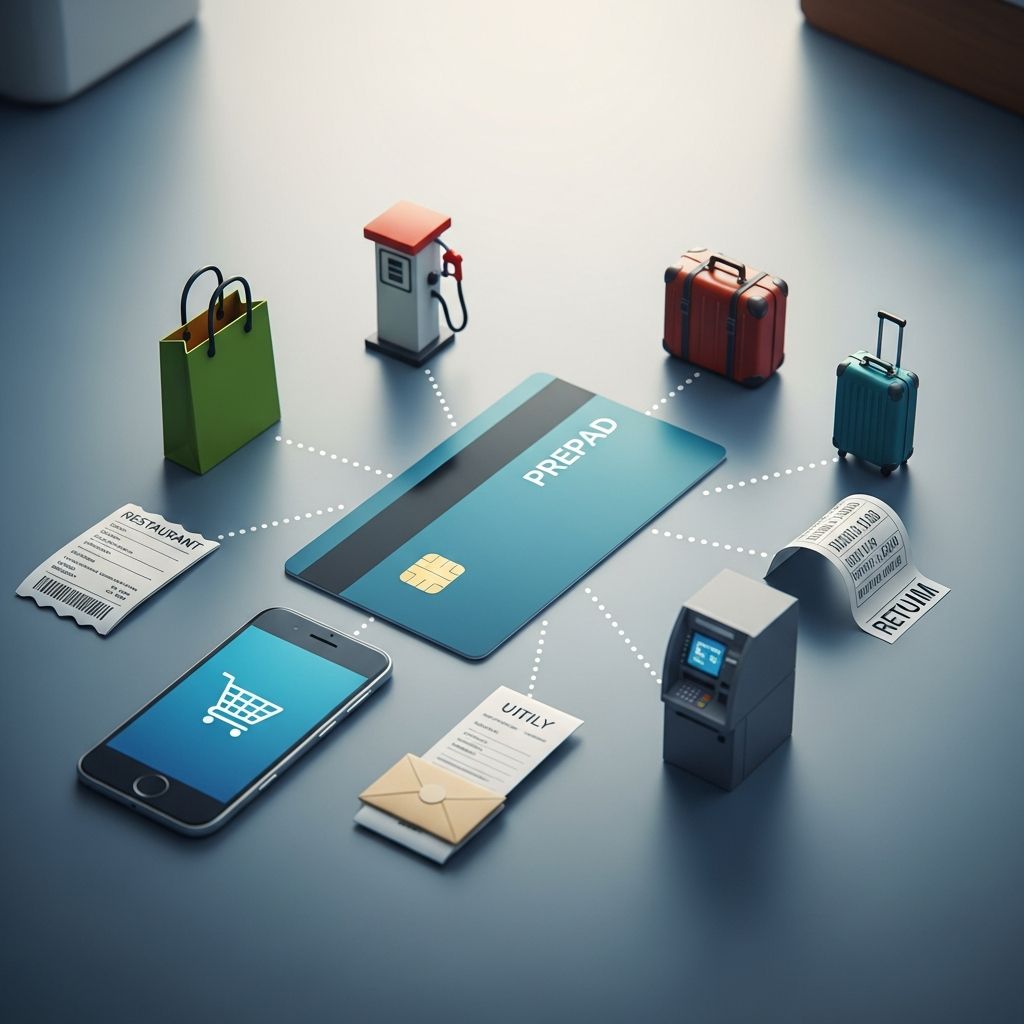
Prepaid cards look and work much like debit or credit cards, but they are funded with money you load onto the card in advance. In many situations, you can use a prepaid card almost anywhere a major payment network is accepted, yet there are important exceptions, limits, and fees to understand before you rely on one for daily spending.
This guide explains where prepaid cards are typically accepted, when they may not work, how to read your cardholder agreement, and practical tips for using them safely and efficiently.
1. How Prepaid Cards Fit Into the Payment System
Most general-purpose prepaid cards are issued on major payment networks such as Visa, Mastercard, American Express, or Discover. If your card displays one of these network logos, it usually can be used anywhere that network is accepted, subject to any limits or conditions set by the card program.
Although prepaid cards resemble bank debit cards, they differ in several ways:
- No checking account required: The card is funded by loading money onto the card, not by linking to a bank account balance.
- Spending is capped at the loaded amount: You generally cannot spend more than the card’s available balance, which can help with budgeting but may cause declines if you are close to your limit.
- Terms vary by issuer: Fees, ATM access, and where the card can be used are determined by the specific card provider and outlined in the cardholder agreement.
2. Everyday Purchases: Where Prepaid Cards Commonly Work
Many prepaid cards can be used for routine shopping in the same places you use a standard debit or credit card. Acceptance depends on the payment network and any restrictions your program imposes.
2.1 In-store retail and grocery purchases
Most general-purpose prepaid cards can be used at brick-and-mortar retailers that accept your card’s network, including:
- Supermarkets and grocery stores
- Big-box and discount retailers
- Department stores and clothing shops
- Pharmacies and convenience stores
At checkout, you will typically select credit or debit, depending on the card’s features and whether it has a PIN. Some prepaid cards allow both options.
2.2 Gas stations and fuel purchases
Prepaid cards generally can be used to pay at the pump or inside at gas stations that accept the relevant network. However, gas stations often place a temporary authorization hold that may exceed the actual purchase amount. Because prepaid cards have limited balances, this hold can reduce available funds for a period of time and may cause subsequent transactions to decline.
To reduce problems at fuel pumps:
- Consider paying the cashier inside for a specific dollar amount instead of using the card at the pump.
- Keep extra funds on the card to cover any temporary hold.
2.3 Restaurants, cafes, and entertainment venues
Many restaurants, fast-food chains, coffee shops, and entertainment venues (movie theaters, amusement centers, etc.) accept general-purpose prepaid cards. Some may place an additional temporary hold to cover tips or incidentals, so it is wise to have a balance larger than the expected bill.
2.4 Travel-related purchases
You can often use prepaid cards for certain travel expenses, but acceptance can be more complex than for regular debit or credit cards.
| Travel purchase type | Typical prepaid card acceptance | Key considerations |
|---|---|---|
| Airline tickets | Often accepted online or by phone | Card must have sufficient balance; some low-cost carriers may restrict prepaid use. |
| Hotels | Some accept for final payment; others require traditional credit card | Pre-authorization holds for room, taxes, and incidentals can be high and lengthy. |
| Car rentals | Commonly accepted at the end of the rental; less often for booking | Many rental agencies require a credit card to reserve or pick up the vehicle. |
| Rideshare and taxis | Often accepted if the network is supported | Service apps may decline some prepaid or virtual cards for risk reasons. |
3. Online, Phone, and Mail-Order Transactions
Most network-branded prepaid cards can be used for online shopping and other remote transactions, provided the merchant accepts that card network.
3.1 Online purchases
When used online, a prepaid card typically functions like a debit or credit card. You enter:
- The 16-digit card number
- Expiration date
- Security code (CVV/CVC)
- Billing name and address associated with the card
Some websites do not accept prepaid cards because of higher fraud risk or internal policy. If your transaction is declined despite having funds, it may be due to such merchant restrictions rather than a problem with your card.
3.2 Phone and mail-order purchases
Prepaid cards are often usable for orders placed by phone or mail, again where the network is accepted. You will generally provide the same card details as for an online purchase. Be cautious when sharing card information by phone and avoid giving details to unverified callers.
3.3 Subscriptions and recurring billing
It is sometimes possible to use a prepaid card for:
- Streaming services
- Online memberships
- Recurring digital subscriptions
- Automatic utility or phone bill payments
Recurring payments can be problematic with prepaid cards because there is no guarantee sufficient funds will be available on renewal dates. Some merchants will not accept prepaid cards for ongoing subscriptions or may cancel service if payments fail repeatedly.
4. ATM Access and Cash Usage
Many, but not all, prepaid cards allow holders to withdraw cash at ATMs. Whether you can access cash depends on your card’s specific program features and network arrangements.
4.1 Withdrawing money at ATMs
If your card permits ATM withdrawals, you can typically:
- Use ATMs that display the same network symbols as those printed on your card.
- Check your balance at compatible ATMs or via the card’s mobile app or website.
Some prepaid cards offer access to a specific surcharge-free ATM network, while others may charge withdrawal fees and allow the ATM operator to impose its own fee. Always check the fee schedule before withdrawing cash.
4.2 Cash back at point-of-sale
A number of prepaid debit programs allow cardholders to receive cash back when making purchases at certain retailers, similar to bank debit cards. This option is not universal, and many cards either do not allow cash back at checkout or charge fees for this service. Details are usually found in the card’s terms and conditions.
4.3 Limits on ATM and cash transactions
Your card may impose daily or per-transaction limits on:
- ATM withdrawals
- Cash back at merchants
- Total cash access per day or per month
These caps are designed for security and risk management and can vary significantly from one card program to another.
5. Situations Where Prepaid Cards May Not Work
Despite broad acceptance, prepaid cards are not universally usable. Program rules, merchant policies, and risk controls create a number of common exceptions.
5.1 Certain travel and lodging transactions
Hotels, car rental agencies, and cruise lines often require a credit card to hold a reservation and cover potential incidentals, even if they accept a prepaid card for final payment. Large pre-authorization holds at these merchants can quickly tie up a significant portion of your card balance, sometimes for days after checkout.
5.2 High-risk or restricted merchants
Some categories of merchants are frequently blocked or limited for prepaid cards, such as:
- Money transfer and certain cash-equivalent purchases
- Gambling or betting sites (where permitted by law)
- Cryptocurrency platforms
- Some subscription or trial-offer services perceived as high risk
Restrictions may be imposed by the issuer, the network, or by law in certain jurisdictions.
5.3 Cross-border and foreign-currency transactions
Not all prepaid cards are enabled for international use or for transactions in foreign currencies. Some are valid only in the country or region of issuance. Even when international usage is allowed, you may face:
- Foreign transaction fees on purchases and ATM withdrawals
- Currency conversion charges or adverse exchange rates
- Additional security checks or declines when used abroad
Travel-oriented prepaid cards are often better suited to foreign trips, but it is still essential to review their terms, supported currencies, and fee schedules before traveling.
5.4 Merchant-level refusal of prepaid cards
Individual merchants sometimes decide not to accept any prepaid cards, even if they take credit or debit cards on the same network. Reasons can include higher fraud risk, higher processing costs, or concerns about chargebacks. In these cases, there is typically no way around the merchant’s policy other than using another payment method.
6. Why the Cardholder Agreement Matters
The most reliable way to know where your prepaid card can be used is to review the official cardholder agreement and the accompanying fee and feature disclosures. According to the U.S. Consumer Financial Protection Bureau (CFPB), providers must make these terms available, often online, and you can request a copy if you cannot locate them on the provider’s site.
When reviewing your agreement and program materials, pay attention to:
- Where the card is valid: Domestic only or also international; any country or merchant-type restrictions.
- ATM access: Whether withdrawals are allowed, networks supported, and any fees or limits.
- Fee schedule: Purchase fees, monthly fees, ATM fees, inactivity charges, and any reloading costs.
- Authorization holds: How gas stations, hotels, and similar merchants may temporarily hold funds.
- Registration requirements: Whether you must register your card and verify your identity to unlock full functionality, such as ATM withdrawals or higher load limits.
7. Practical Tips for Using Prepaid Cards Safely
Used carefully, prepaid cards can be a convenient and relatively low-risk way to make purchases and manage spending. To get the most value and avoid surprises, consider the following practices.
7.1 Register and protect your card
- Register the card promptly: Many programs require registration to enable online, international, or ATM use and to provide consumer protections if the card is lost or stolen.
- Use strong security practices: Protect your PIN, avoid sharing card information, and enable alerts in your card’s mobile app where available.
- Monitor transactions: Check balance and transaction history regularly to detect unauthorized activity.
7.2 Plan for holds and limits
- Maintain a cushion: Keep more than the exact purchase amount on the card, especially for gas, hotels, or car rentals where holds are common.
- Understand daily caps: Know your card’s purchase and ATM limits to avoid unexpected declines.
7.3 Compare programs before choosing a card
Prepaid cards vary widely in fees, features, and acceptance. Independent reviews and comparison tools can help you evaluate options based on your needs, such as travel, ATM access, or family budgeting.
When comparing, focus on:
- Monthly or maintenance fees
- Cash reload and ATM withdrawal fees
- International usage rules and foreign transaction fees
- Network acceptance and availability of surcharge-free ATMs
8. Frequently Asked Questions (FAQs)
Q1: Can I use my prepaid card everywhere that Visa or Mastercard is accepted?
A: Many general-purpose prepaid cards can be used anywhere the card network is accepted, but your specific card program may block certain types of merchants, foreign transactions, or high-risk categories. Always confirm details in your cardholder agreement and on the issuer’s website.
Q2: Why was my online purchase declined when I had enough money on the card?
A: Online merchants sometimes choose not to accept prepaid cards at all or only allow them for certain products. Other common reasons include address mismatches, security checks, or temporary authorization holds. Checking the merchant’s accepted payment methods and verifying your card’s registered billing address can often resolve the issue.
Q3: Can I use a prepaid card to book a hotel or rental car?
A: Some hotels and car rental companies allow prepaid cards for the final bill but still require a traditional credit card to reserve the room or vehicle and to cover incidentals. Large authorization holds can also tie up your prepaid balance, so it is important to ask the merchant about its policy before you travel.
Q4: Are prepaid cards safe to use for travel abroad?
A: Travel-oriented prepaid cards can be convenient overseas because you limit your exposure to your main bank account. However, you must confirm that your card is enabled for international use and understand the foreign transaction and ATM fees that may apply. Some cards cannot be used outside the country of issue at all.
Q5: How do I know which ATMs I can use with my prepaid card?
A: Look for the network symbols on the back of your card (such as Visa, Mastercard, Plus, or Cirrus) and use ATMs that display those same logos. Your card provider may also list preferred or surcharge-free ATMs on its website or app. Check your fee schedule for any charges associated with ATM withdrawals.
References
- Where can I use my prepaid card? — Consumer Financial Protection Bureau. 2023-10-01. https://www.consumerfinance.gov/ask-cfpb/where-can-i-use-my-prepaid-card-en-383/
- Where can you use prepaid Visa gift cards? — Tremendous. 2023-08-15. https://www.tremendous.com/blog/use-prepaid-visa-gift-cards/
- 5 Best Prepaid Debit Cards of 2025 — NerdWallet. 2025-07-02. https://www.nerdwallet.com/banking/learn/best-prepaid-debit-cards
- 8 best prepaid travel cards for business travel 2025 — Engine. 2025-05-10. https://engine.com/business-travel-guide/best-prepaid-travel-cards
- Visa Prepaid Card with ATM Access — MyPrepaidCenter (Visa). 2023-06-01. https://www.myprepaidcenter.com/page/visa-atm-can
- Mastercard Prepaid Cards — Mastercard. 2024-03-01. https://www.mastercard.com/us/en/personal/find-a-card/prepaid-card.html
Similar Articles








Read full bio of medha deb


