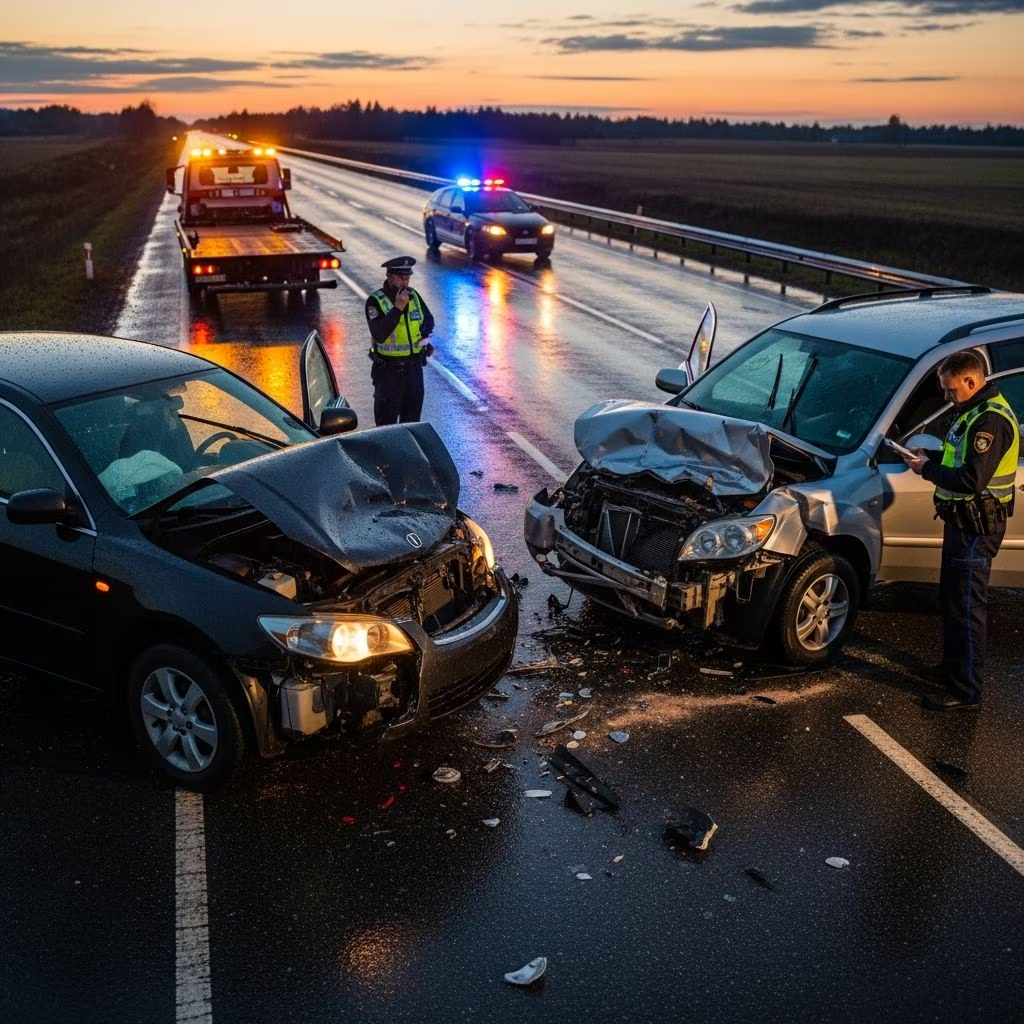
After a collision, most drivers focus on safety and damage, not paperwork. Yet knowing when you must report a car accident is essential for following the law, preserving your right to compensation, and avoiding fines or criminal charges. This guide explains the most common reporting rules, where those rules come from, and how to protect yourself after a crash.
Why Accident Reporting Matters
Accident reporting laws exist to make sure serious crashes are documented and that injured people receive help and compensation. States use these reports to:
- Create an official record for insurance and court cases
- Track dangerous driving patterns and crash statistics for safety planning
- Ensure drivers maintain required financial responsibility, such as liability insurance
- Identify uninsured or hit-and-run drivers for possible enforcement
Ignoring reporting rules can result in penalties, license consequences, or even criminal charges in some situations, such as hit-and-run or failure to stop and provide information.
Key Questions to Decide If You Must Report a Crash
While specific rules differ by state, you can usually determine whether you must report an accident by answering five core questions:
- Was anyone injured? (even minor pain, visible bruises, or complaints of injury)
- Was there a death? (at the scene or later from crash-related injuries)
- How much property damage occurred? (repair costs or total loss)
- Where did the crash happen? (public road, highway, or sometimes private property)
- Did another driver flee the scene? (possible hit-and-run)
In every U.S. state, a collision that causes injury or death must be reported to law enforcement, and many states also require a separate DMV or state agency report when damage exceeds a set dollar amount.
Common Legal Triggers for Mandatory Accident Reports
Although thresholds and deadlines vary, the same basic triggers appear in most state laws:
1. Injuries Requiring a Police or Official Report
All states require drivers to contact law enforcement when a crash involves bodily injury or death. That includes:
- Drivers, passengers, pedestrians, bicyclists, or motorcyclists with any injury
- Complaints of pain at the scene (not just obvious wounds)
- Serious injuries requiring emergency medical care or hospitalization
For example, official guidance in some jurisdictions requires a driver to file a written report to the motor vehicle department within a set number of days when any person is injured, even slightly, or killed in a crash. Many states also require prompt notification to local police or state highway patrol immediately or within 24 hours.
2. Fatal Crashes
When a collision results in a fatality, reporting is always mandatory. Typical requirements include:
- Immediate notification of law enforcement and emergency services
- A written report to the state motor vehicle agency within a short deadline
- Additional documentation from law enforcement, such as a detailed crash report
Failure to report a fatal crash can lead to serious criminal consequences, including charges related to leaving the scene or obstructing an investigation.
3. Property Damage Above a Dollar Threshold
States also use property damage thresholds to decide when a crash must be reported for record-keeping and insurance monitoring. According to a national overview, the dollar trigger ranges from any property damage to a few thousand dollars, depending on the state.
A typical scheme might look like this:
| Situation | Police Report Required? | DMV / State Report Required? |
|---|---|---|
| Injury or death | Yes, usually immediately or within 24 hours | Yes, written report within a set time (often 10–30 days) |
| Property damage over the state threshold (for example, $1,000–$3,000) | Sometimes, depending on the state and local rules | Yes, when damage exceeds the threshold |
| Minor damage below the threshold, no injuries | Usually not required, but permitted | Usually not required |
| Hit-and-run crash with damage | Always required | Often required if damage or injury thresholds are met |
4. Hit-and-Run or Uninsured Drivers
Many states impose specific reporting duties when the other driver:
- Flees the scene without sharing information (hit-and-run)
- Appears to be uninsured or underinsured
National legal summaries note that drivers who are victims of a hit-and-run must promptly report the collision or risk being treated as if they left the scene themselves. Some states, such as Alabama, require reporting when an accident involves an uninsured motorist, even apart from the usual damage thresholds.
5. Special Situations in Some States
States may adopt unique rules for particular types of crashes. For example:
- Some states require reporting if a vehicle must be towed from the scene.
- Others require a report when the parties cannot reach a settlement about damages within a set time.
- A few states create exceptions for single-vehicle crashes involving wild animals on certain roadways.
Because of this variation, it is important to check your own state’s motor vehicle code or DMV guidance for precise requirements.
Reporting to Police vs. Reporting to the DMV
Many drivers do not realize that there are often two separate reporting channels after an accident:
- Law enforcement report (police, sheriff, or highway patrol)
- Administrative report to a DMV or similar agency
Police or Highway Patrol Reports
Police reports typically focus on:
- Who was involved in the crash (drivers, passengers, witnesses)
- Location, time, weather, and road conditions
- Observed injuries and property damage
- Possible traffic violations or contributing factors
Officers often complete these reports at the scene, but some states allow you to file a walk-in or online report later for certain types of collisions. Police reports are important evidence for insurers and courts, though they do not by themselves determine civil liability.
DMV or State Agency Reports
Many states also require drivers to submit a written accident report to the DMV or similar state agency when crashes meet injury or damage thresholds. For example, California requires a specific form (SR-1) to be filed within 10 days when a crash involves someone injured or killed or when property damage exceeds a set amount.
These administrative reports help the state:
- Confirm that drivers carried required liability insurance at the time of the crash
- Identify uninsured drivers for possible license suspension or penalties
- Maintain statistical records of crashes and outcomes
Even if law enforcement already completed a collision report, many states still require the driver to submit the DMV form separately.
How Reporting Affects Your Insurance Claim
Reporting duties do not end with the police or DMV. Your auto insurance policy will also contain contractual requirements that affect whether your claim is covered.
Typical Policy Requirements
While each insurer’s language differs, most policies require you to:
- Notify the insurer of any crash promptly or “as soon as reasonably possible”
- Cooperate in providing information, documents, and recorded statements
- Forward any legal papers, such as lawsuits or settlement demands
- Preserve evidence and help the insurer investigate the claim
State consumer guides emphasize the importance of notifying both law enforcement and the DMV when required, and then contacting your insurer with the information collected.
Consequences of Not Reporting to Your Insurer
If you delay or fail to notify your insurance company, the insurer may:
- Refuse to pay for vehicle repairs under collision coverage
- Deny liability protection if a third party sues you
- Cancel or non-renew your policy in serious or repeated cases
Even when the law does not require a police or DMV report, it is usually wise to document the crash and tell your insurer, especially when there is any possibility of later injury claims.
Step-by-Step: What to Do Right After a Crash
To meet legal duties and protect your rights, follow these basic steps at the scene and shortly afterward:
At the Scene (If It Is Safe)
- Check for injuries and call 911 if anyone is hurt or if vehicles are dangerously positioned.
- Move to safety if possible, but do not leave the scene until you have exchanged information as required by state law.
- Exchange information with other drivers, including names, addresses, driver’s license numbers, vehicle registration, and insurance information.
- Document the scene with photos or videos of vehicle damage, road conditions, and visible injuries.
- Collect witnesses’ contact details if anyone saw the collision.
Within the Next Few Days
- Check your state’s reporting rules on the DMV or state police website to confirm whether an official report is required.
- File required forms with law enforcement or the DMV within the specified time limits (often within 10–30 days for administrative reports).
- Notify your insurance company and provide the information and documents they request.
- Seek medical attention if you experience pain or symptoms after the crash, even if you felt fine at the scene.
- Consider consulting an attorney if injuries are involved or fault is disputed.
Penalties for Failing to Report a Car Accident
The consequences of failing to report a collision depend on the type of violation and your state’s laws. Common penalties include:
- Fines for failing to file a required written report with law enforcement or the DMV
- License suspension or revocation, especially when the accident reveals that a driver lacked required liability insurance or financial responsibility
- Criminal charges for leaving the scene of an injury or fatal crash or for not providing required identifying information to others involved in the collision
- Insurance consequences, including denial of coverage or cancellation of your policy
Even where penalties are limited to fines, the lack of an official report can make it harder to prove what happened if the other driver later disputes fault or the extent of your injuries.
When You May Choose to Report Even If Not Required
There are situations where the law may not strictly require a police or DMV report, but filing one is still in your best interest. You may want to report a crash when:
- You suspect the other driver is uninsured or gave false information
- There is any chance of injury, even if symptoms are mild at first
- The other driver appears intoxicated or refuses to cooperate
- The damage amount is unclear and might exceed your state’s reporting threshold
- You want a neutral, third-party record of the crash for future disputes
An official report can provide an objective record of the scene, which often becomes important months later when insurance negotiations or lawsuits arise.
Frequently Asked Questions (FAQs)
Do I have to call the police after every minor fender-bender?
Not usually. Most states allow drivers to handle very minor accidents without calling the police if there are no injuries and damage is well below the legal reporting threshold. However, you should still exchange information and consider filing a report if the other driver is uncooperative or the damage might be more extensive than it appears.
Is a written DMV report the same as a police report?
No. A police report is completed by law enforcement, usually at the scene, while a DMV or state agency report is a written form you, your insurer, or your attorney must file with the motor vehicle department when the crash meets statutory thresholds, such as injury or specified property damage amounts.
What if the other driver says we should “just handle it privately”?
You are still responsible for following state law. If the crash involves injury, death, or damage that may exceed your state’s reporting threshold, you must report it even if the other driver prefers not to. Failing to report an injury crash could expose you to legal penalties and complicate any later insurance claim.
Do I have to tell my insurance company if the accident was not my fault?
Almost always, yes. Auto policies generally require you to notify your insurer of any accident that could trigger coverage, regardless of fault. Timely notice allows your insurer to investigate, defend claims, and pay benefits if needed. Delayed notice can lead to complications or even denial of coverage.
Can not filing a report hurt my injury claim later?
It can. An official police or DMV report creates a contemporaneous record of the crash, the parties involved, and any early observations about injuries and damage. Without that documentation, it may be harder to prove what happened, especially if the other driver later denies responsibility.
References
- Reporting Requirements for Motor Vehicle Accidents — Super Lawyers. 2023-03-15. https://www.superlawyers.com/resources/motor-vehicle-accidents/car-accident-liability-and-damages/navigating-reporting-requirements-for-motor-vehicle-accidents/
- Report of Traffic Accident Occurring in California (SR-1) — California Department of Motor Vehicles. 2024-01-10. https://www.dmv.ca.gov/portal/dmv-virtual-office/accident-reporting/
- So You’ve Had an Accident, What’s Next? — California Department of Insurance. 2022-07-01. https://www.insurance.ca.gov/01-consumers/105-type/95-guides/01-auto/hadaccident.cfm
- California Car Accident Laws – All You Need To Know — Barr & Mudford. 2023-09-12. https://www.barrandmudford.com/news/california-car-accident-laws/
- California’s Accident Reporting Requirement — Phoong Law Corp. 2023-05-20. https://phoonglaw.com/californias-accident-reporting-requirement/