
Police Roadblocks: When They Are Legal, A Driver’s Guide
Understand when police may lawfully set up roadblocks, what limits the Constitution places on them, and how these stops affect your rights.
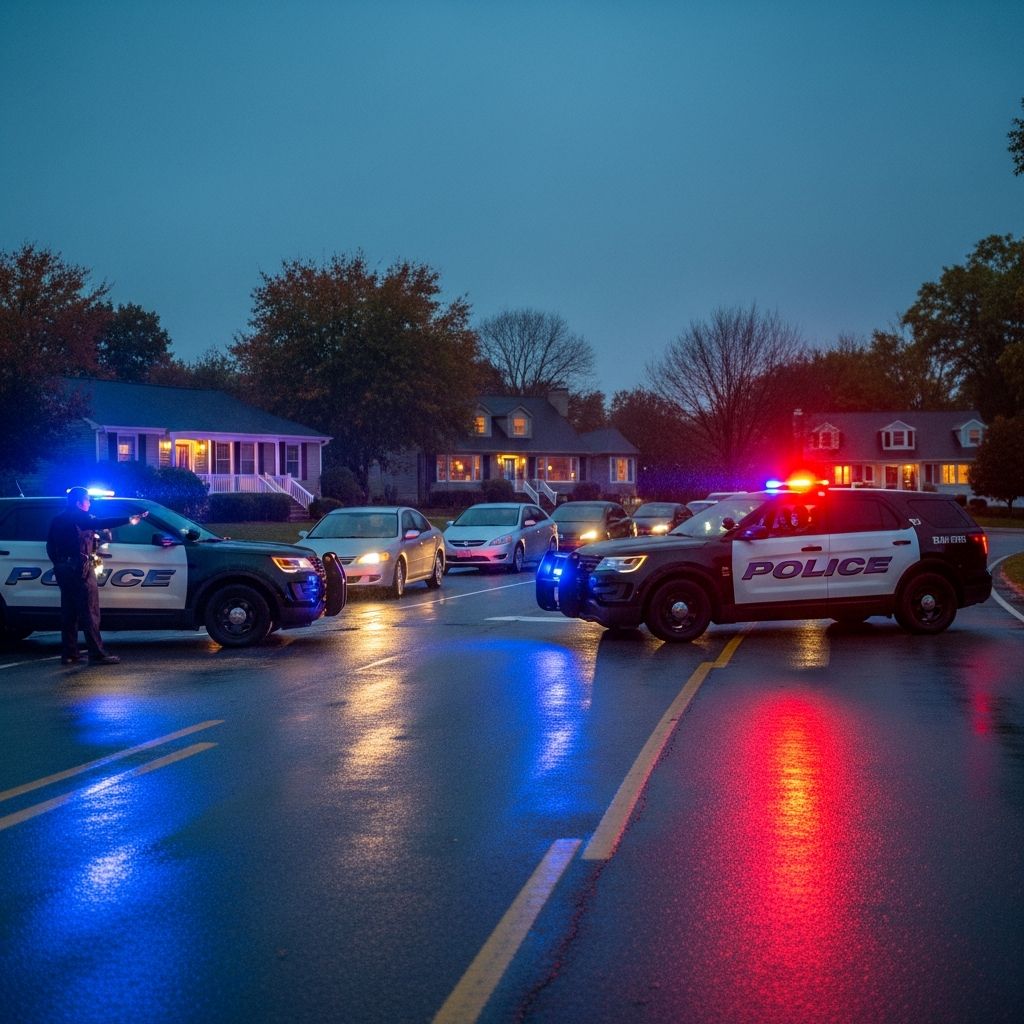
Police roadblocks, often called checkpoints, are one of the few times officers may stop drivers without the usual need for individualized suspicion. That does not mean they can appear anywhere for any reason. Roadblocks must fit within narrow constitutional limits, and understanding those limits helps you recognize when a stop is lawful and when you may have grounds to challenge it.
1. What Is a Police Roadblock?
A police roadblock is a temporary, planned barrier on a public road where officers stop every vehicle, or vehicles according to a pre-set pattern, to look for specific violations or threats to public safety.
Common labels include:
- Sobriety or DUI checkpoints – focused on impaired driving
- License and registration checkpoints – verifying legal authorization to drive
- Border and immigration checkpoints – checking citizenship or immigration status near borders
- Emergency or disaster checkpoints – related to evacuations or public safety emergencies
Because most stops at roadblocks occur without specific suspicion about any individual driver, courts treat these operations as a significant intrusion on privacy that must be justified and carefully structured under the Fourth Amendment protection against unreasonable searches and seizures.
2. The Constitutional Framework: Fourth Amendment Basics
The Fourth Amendment generally requires police to have at least reasonable suspicion to pull over a vehicle and probable cause to search it. Roadblocks are an exception to that typical rule.
Courts evaluate roadblocks using a balancing test that weighs:
- The government’s interest (for example, preventing drunk driving)
- How well the checkpoint advances that interest
- The level of intrusion and fear imposed on drivers
Under U.S. Supreme Court decisions, roadblocks may be allowed when they are closely tied to roadway safety or border control, but not when their primary purpose is general crime control, such as hunting for illegal drugs in the abstract.
3. Legitimate vs. Illegitimate Purposes for Roadblocks
Courts draw a sharp line between roadblocks serving narrow, safety-related purposes and those used as a tool for broad law enforcement fishing expeditions.
| Checkpoint Purpose | Typical Legal Status | Key Rationale |
|---|---|---|
| Border and immigration control | Generally permitted | Strong national interest in border security and longstanding precedent allowing suspicionless checks near borders. |
| Sobriety / DUI checkpoints | Often permitted, depending on state law | Target a major traffic safety threat; designed to prevent impaired driving. |
| License / registration checkpoints | Frequently upheld | Ensure that drivers and vehicles meet legal requirements tied to safety. |
| General crime control (e.g., drug sweeps) | Usually unconstitutional | Primary purpose is indistinguishable from broad crime control, which requires individualized suspicion. |
3.1 Border and Immigration Checkpoints
At or near U.S. borders, federal officers may stop vehicles without individualized suspicion to verify citizenship, immigration status, or search for contraband. These checkpoints are justified by the government’s strong interest in border control and have long been recognized as a constitutional exception to traditional Fourth Amendment requirements.
3.2 Sobriety and DUI Checkpoints
Sobriety checkpoints are typically set up on roads with a history of impaired-driving incidents or at times when drunk driving is more common, such as late nights or holidays. At these checkpoints, officers briefly speak with drivers and look for signs of intoxication, including:
- Odor of alcohol or drugs
- Slurred speech or confusion
- Red or glassy eyes
- Erratic behavior or difficulty following instructions
If officers detect possible impairment, they may direct the driver to a secondary area for further investigation, including field sobriety tests or breath tests when permitted by law.
Under federal law, sobriety checkpoints are considered constitutional if they are reasonably related to roadway safety and conducted in a non-discriminatory manner. However, individual states can provide more protection than the federal Constitution. Some states, relying on their own constitutions, ban sobriety checkpoints altogether, while others permit them with strict conditions.
3.3 General Crime Control Roadblocks
Roadblocks whose primary purpose is to search for general criminal activity, such as drug possession or outstanding warrants, are usually held unconstitutional. The Supreme Court has ruled that using a checkpoint to detect illegal drugs, without a link to a specific traffic safety issue, violates the Fourth Amendment because it is essentially a broad crime-control strategy without individualized suspicion.
4. Legal Requirements for a Valid Checkpoint
Even when the purpose of a roadblock is permissible, the way it is designed and run matters. Courts commonly look at a set of procedural safeguards to decide whether a checkpoint is reasonable in practice.
4.1 Decisions Made by Supervising Officials
Checkpoint decisions must be made by supervising officers or higher-level officials, not by individual patrol officers in the field.
- Supervisors choose the location and time based on neutral, safety-related factors (such as crash data or DUI statistics).
- They also establish written or clearly defined procedures that dictate how vehicles will be stopped.
This requirement reduces the risk that officers will use checkpoints arbitrarily or target specific individuals or neighborhoods without justification.
4.2 Neutral, Non-Discriminatory Stopping Patterns
Officers working at a checkpoint may not decide on the fly whom to stop. Instead, the plan must use a neutral formula, such as:
- Stopping every vehicle
- Stopping every second or third vehicle
- Using a pre-set mathematical pattern that does not consider driver characteristics
These neutral criteria prevent selective targeting based on race, ethnicity, vehicle type, or other improper factors. If officers deviate from the predetermined pattern, a court may find the checkpoint unconstitutional due to arbitrary enforcement.
4.3 Reasonable Location and Timing
A lawful checkpoint is usually located where it will meaningfully serve its stated purpose, not where it is merely convenient for officers.
- For sobriety checkpoints, that often means roads associated with late-night traffic or a history of DUI incidents.
- The time and duration must reflect good judgment, balancing enforcement goals with the burden on drivers.
Excessively long operations or poorly chosen locations that cause undue congestion or risk can weigh against a finding of reasonableness.
4.4 Safety Measures and Clear Identification
Courts pay close attention to whether the checkpoint is obviously official and operated in a safe manner. Typical safety and visibility features include:
- Marked police vehicles
- Uniformed officers
- Warning signs placed in advance of the roadblock
- Traffic cones, flares, or barriers to guide vehicles
- Proper lighting, especially at night
These measures reduce the risk of crashes and minimize surprise or fear among motorists, which is a key factor in the constitutional balancing test.
4.5 Minimal Detention Time
For most drivers, a checkpoint encounter should last only a brief period—typically just long enough to:
- Request license, registration, and proof of insurance
- Ask a few basic questions
- Observe for obvious signs of impairment or violations
Prolonged questioning or inspection without specific cause can push a checkpoint beyond what courts consider a permissible, minimally intrusive stop.
4.6 Advance Public Notice
Many courts and law-enforcement agencies treat advance publicity as an important safeguard. Announcing planned sobriety checkpoints through media outlets or agency websites helps to:
- Alert drivers and deter impaired driving
- Reduce the surprise and fear associated with unexpected stops
- Demonstrate that the checkpoint is part of an organized, transparent safety campaign
Although the specific legal requirement for notice varies by jurisdiction, advance publicity is commonly cited as part of a constitutionally reasonable checkpoint program.
5. Your Rights and Options at a Checkpoint
Even at a lawful checkpoint, drivers retain important rights. Knowing how to exercise those rights calmly and respectfully can protect you without escalating the situation.
5.1 Identification and Basic Questions
In most states, you are required to provide:
- A valid driver’s license
- Proof of registration
- Proof of insurance, where required by law
Officers may ask brief questions about your travel plans or whether you have consumed alcohol. While you generally must identify yourself as required by law, you often have the right to decline to answer potentially incriminating questions beyond basic identity and licensing. The exact rules depend on state law and whether you are considered detained or under arrest.
5.2 Refusing Searches
Even at a checkpoint, officers typically need either
- Your consent, or
- Probable cause (for example, clear evidence of contraband or strong signs of impairment)
to conduct a full search of your vehicle. You may usually decline a search request by stating that you do not consent, while remaining polite and non-confrontational.
5.3 Field Sobriety and Chemical Tests
If officers suspect you are impaired, they may ask you to perform field sobriety tests or take a breath or blood test. Under implied consent laws, licensed drivers agree in advance to chemical testing in certain circumstances, often after a lawful arrest for DUI. Refusal can carry separate penalties such as license suspension, even if you are later acquitted of DUI.
Because implied consent rules differ between states, drivers should be aware of the specific consequences of refusing chemical tests in the jurisdiction where they are licensed and where they are driving.
5.4 Avoiding a Checkpoint Legally
In general, you are not required to drive through a checkpoint if you can lawfully avoid it. For example, turning onto a side street or into a parking lot in compliance with all traffic laws is usually permitted. However:
- If officers see you perform an illegal maneuver (such as an improper U-turn), they may lawfully stop you for that traffic violation.
- Trying to evade in a dangerous or erratic way can create independent reasonable suspicion.
6. Challenging an Unlawful Roadblock
If you are cited or arrested at a checkpoint, your attorney may examine whether the roadblock itself met constitutional and statutory requirements. Courts may suppress evidence or dismiss charges if they find the checkpoint unlawful.
6.1 Potential Grounds for Challenge
- Improper primary purpose – If the real objective was general crime control rather than road safety or another recognized purpose.
- Lack of supervisory planning – If field officers improvised without oversight or written guidelines.
- Non-neutral vehicle selection – If officers deviated from the predetermined pattern and stopped cars arbitrarily or discriminatorily.
- Insufficient safety measures – If the checkpoint lacked signage, proper lighting, or visible official indicators.
- Excessive delay or intrusion – If most drivers faced long interrogations or unnecessary inspections.
- Failure to follow state-specific rules – For example, ignoring statutory notice requirements or location criteria set by state courts.
Demonstrating one or more of these defects can lead a court to conclude that the checkpoint violated the Fourth Amendment or state constitutional protections, potentially excluding evidence gathered at the stop.
7. State-by-State Variations
While federal constitutional standards set the baseline, state constitutions and laws play a major role in determining which checkpoints are permitted and how they must operate.
- Some states ban sobriety checkpoints entirely, relying on their own constitutional protections or legislative decisions.
- Other states allow checkpoints but impose detailed guidelines for planning, operation, and documentation.
- Even where checkpoints are legal, prosecutors must still show that a particular operation met constitutional and statutory standards.
Because of these variations, it is important for drivers and attorneys to consult local law and recent state court decisions when assessing a specific roadblock.
8. Practical Tips for Drivers at Roadblocks
Keeping a few practical points in mind can help you navigate a checkpoint encounter more confidently:
- Stay calm and courteous. Sudden movements or confrontational behavior can escalate the situation.
- Have documents ready. Keep your license, registration, and proof of insurance accessible.
- Limit conversation. Answer basic identifying questions, but you generally do not have to volunteer information that could be incriminating.
- Do not lie. Providing false information can lead to additional charges.
- Clearly but politely refuse searches if you do not wish to consent.
- Document details after the encounter—date, time, location, number of officers, and how cars were selected—if you believe your rights were violated.
- Contact an attorney promptly if you are cited or arrested, especially for DUI or other serious charges.
9. Frequently Asked Questions About Police Roadblocks
Q1: Can police set up a roadblock for any reason they choose?
No. Police generally may not use checkpoints for broad crime control or to search randomly for evidence of unrelated offenses. The primary purpose must be closely tied to roadway safety, border control, or another limited, recognized interest, and the checkpoint must follow strict procedural safeguards.
Q2: Are DUI checkpoints legal everywhere in the United States?
Under federal law, sobriety checkpoints are permissible if reasonably related to traffic safety and carried out in a non-discriminatory way. However, some states prohibit them under their own constitutions or statutes, while others allow them subject to detailed regulatory requirements. Legality therefore depends on the state where the checkpoint occurs.
Q3: Do officers need probable cause to stop me at a checkpoint?
Officers do not need individualized probable cause or reasonable suspicion to make the initial stop at a properly established checkpoint. Instead, the legality of the stop depends on whether the checkpoint itself satisfies constitutional standards. Once you are stopped, officers still need reasonable suspicion or probable cause to expand the investigation or conduct a full search.
Q4: Can I turn around to avoid a checkpoint?
You may usually avoid a checkpoint by executing a lawful traffic maneuver, such as turning onto a side street, as long as you obey all traffic laws. If you make an illegal U-turn or drive erratically while trying to avoid the roadblock, officers can stop you based on that separate violation or suspicious behavior.
Q5: What should I do if I think a checkpoint was unconstitutional?
If you are arrested or cited at a roadblock you believe was unlawful, speak with a qualified criminal defense or traffic attorney. They can review whether the checkpoint’s purpose, planning, and execution complied with federal and state rules and may be able to challenge the admissibility of any evidence obtained during the stop.
References
- When Can Police Set Up Roadblocks? — Nolo. 2024-01-15. https://www.nolo.com/legal-encyclopedia/police-set-up-roadblocks.html
- DUI Checkpoints & Legal Requirements — Justia DUI & DWI Law Center. 2023-06-01. https://www.justia.com/criminal/drunk-driving-dui-dwi/handling-a-dui-stop/sobriety-checkpoints/
- DUI Checkpoints: Understand the Law and Your Legal Rights — Super Lawyers. 2022-09-10. https://www.superlawyers.com/resources/dui-dwi/dui-checkpoints-understand-the-law-and-your-legal-rights/
- Are DUI Checkpoints Legal in California? — Shouse Law Group. 2023-04-05. https://www.shouselaw.com/ca/dui/laws/checkpoints/
- Are DUI Checkpoints Legal in California? — Amy Chapman Law. 2022-11-18. https://www.amychapmanlaw.com/are-dui-checkpoints-legal-in-california/
Similar Articles








Read full bio of medha deb




