
Undefined Can You Legally Shoot A Trespasser: Practical Guide
Understanding when deadly force is allowed against trespassers, and why most confrontations do not justify pulling the trigger.
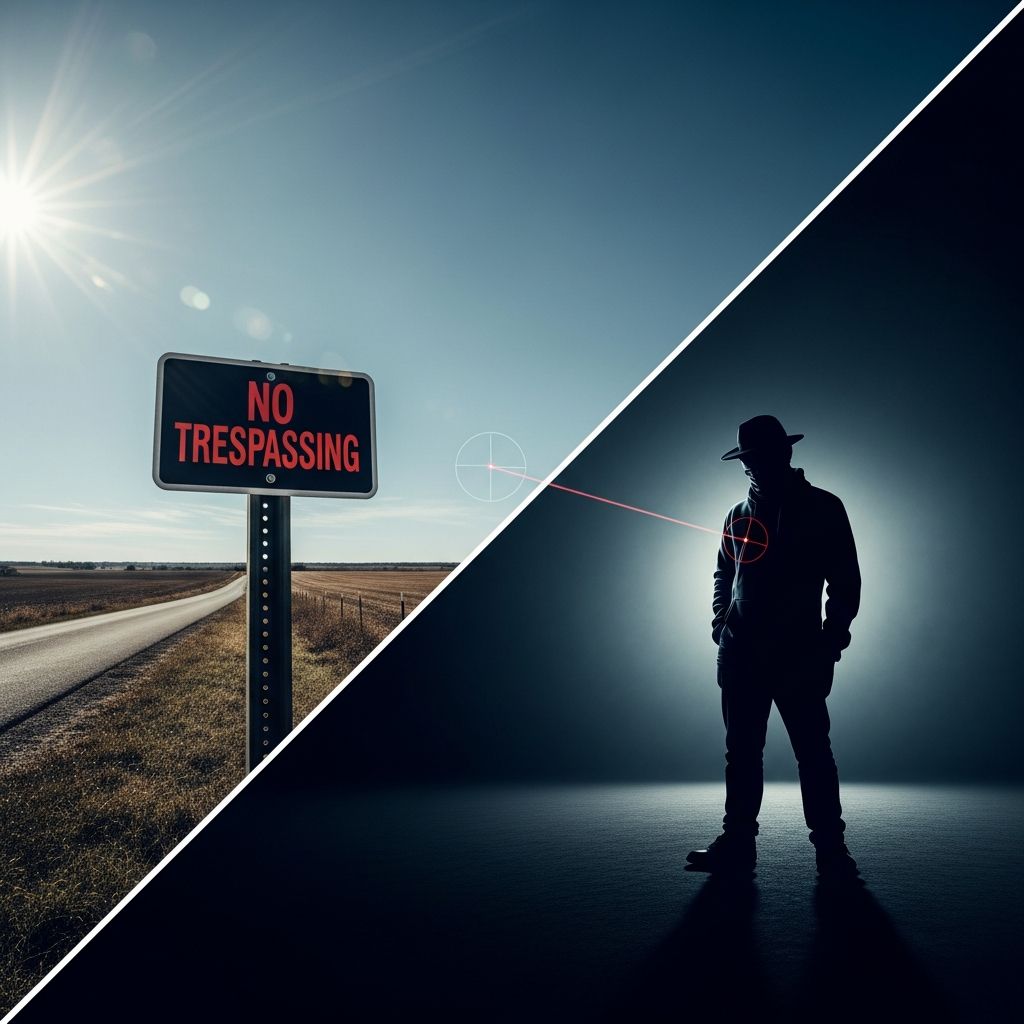
Stories about homeowners shooting people on their property often make headlines, leading many to assume that trespassing alone gives you the right to open fire. In reality, U.S. law almost never allows deadly force simply because someone is on your land without permission. Instead, what matters is whether you are facing an immediate and serious threat, and how your state’s self-defense laws define your options.
This guide explains, in plain language, when the law may allow you to shoot a trespasser, how “castle doctrine” and “stand your ground” rules work, and why using a gun to “send a message” can put you in serious legal danger. It is for general information only and is not legal advice.
1. Trespassing vs. A Deadly Threat: Two Very Different Ideas
The first step is understanding that trespass and self-defense are separate legal concepts. Someone can be a trespasser without being dangerous, and someone can be dangerous even in a place they are allowed to be.
1.1 What is trespassing?
While exact definitions vary by state, trespassing usually falls into two broad categories:
- Civil trespass – A person enters or remains on private property without permission, but without clear criminal intent (for example, turning into the wrong driveway or cutting across a yard).
- Criminal trespass – A person intentionally enters or remains on property after being told not to, ignoring signs, fences, or direct orders to leave, or enters in a way that suggests criminal intent (climbing a locked fence at 2 a.m., trying to force a door, etc.).
In many states, criminal trespass is a crime on its own, and may also be a warning sign that other crimes such as burglary or assault could be about to occur.
1.2 Why trespassing alone rarely justifies deadly force
Across the United States, private property owners generally have the right to use reasonable force to stop or remove a trespasser, but deadly force is usually only allowed when there is a threat of serious harm or a serious felony, not merely because someone stepped over a line.
In legal terms, deadly force is typically justified only when you reasonably believe it is necessary to prevent:
- Death or serious bodily injury to you or another person; or
- Certain serious crimes, such as violent felonies or forcible home invasion, depending on state law.
That is a much higher threshold than “they are on my land without permission.”
2. How Self-Defense Laws Shape Your Rights
Self-defense rules are mostly created at the state level, but they tend to follow some shared patterns. Two major ideas you will see are the castle doctrine and stand-your-ground laws.
2.1 Basic self-defense principles
Even in states without special castle or stand-your-ground statutes, traditional self-defense law usually asks whether:
- You reasonably believed you faced an imminent threat of unlawful force or serious harm.
- Your response was proportionate to that threat (deadly force only for deadly or extremely serious threats).
- You complied with any duty to retreat safely, if your state imposes one outside the home.
In other words, a jury does not just ask “Was the person trespassing?” but “Would a reasonable person in your position believe shooting was necessary to avoid being killed or badly injured?”
2.2 The castle doctrine: Defending your home
The castle doctrine is an old legal idea: your home is your “castle,” and you may use force, sometimes including deadly force, to defend it from unlawful entry.
- Most U.S. states incorporate some version of the castle doctrine in statutes or case law.
- In many places, if someone forcibly breaks into your occupied home, the law presumes you reasonably fear death or serious injury, making it easier to justify deadly force.
- However, details differ: some states apply these rules only inside a dwelling, others extend protection to attached structures or workplaces, and a smaller number include the immediate area around the home (known as curtilage).
For example, Connecticut law justifies using reasonable physical force, including deadly force, to stop a criminal trespasser if you reasonably believe it is necessary to prevent arson, a violent crime, or a forced illegal entry into your home or workplace.
2.3 Stand-your-ground laws: No duty to retreat in some places
Stand-your-ground laws go a step further. They allow people who are lawfully present in a location to use force in self-defense without first trying to retreat, if they reasonably believe such force is needed to prevent death or serious harm.
- Under these laws, there is no duty to retreat before using deadly force in many public or private places where you are legally allowed to be.
- Florida’s statute, for instance, allows a person to stand their ground if they reasonably believe deadly force is necessary to prevent death or great bodily harm, are not engaged in illegal activity, and are in a place they have a right to be.
Even in stand-your-ground states, however, being a trespasser on your land is not, by itself, a green light to shoot. The same core requirement remains: a reasonable belief that deadly force is necessary to stop a serious threat.
3. Deadly Force vs. Non-Deadly Force: Where the Line Is Drawn
Another key distinction is between deadly force and non-deadly force. Many states allow some physical force to remove or block trespassers but tightly restrict when you can escalate to lethal options.
3.1 What counts as deadly force?
Most jurisdictions define deadly force as force that is likely, or intended, to cause death or serious bodily injury. That generally includes:
- Shooting a firearm at or in the direction of a person.
- Stabbing, strangling, or using a deadly weapon in a manner likely to kill.
- In some states, even firing “warning shots,” because bullets can ricochet or strike someone unintentionally.
By contrast, non-deadly force could include pushing, grabbing, blocking a doorway, or in some cases using non-lethal tools, as long as they are not likely to cause serious injury.
3.2 When deadly force is typically allowed
Although language varies, many states limit deadly force to situations like:
- You reasonably believe it is necessary to prevent death or serious bodily injury to yourself or someone else.
- You reasonably believe it is necessary to stop certain violent felonies, such as arson, robbery, or forcible burglary, especially in your dwelling.
- The law creates a presumption of reasonable fear when someone unlawfully and forcibly enters your occupied home.
A state research report on Connecticut law, for example, explains that deadly force in defense of premises is allowed only to defend people, prevent arson or violent crimes, or stop a forced unlawful entry into a dwelling or workplace.
4. Property Lines, Yards, and Driveways: Does Location Change the Rules?
Many real-world confrontations happen outside the four walls of a house: in driveways, yards, garages, or parking areas. The law often treats these locations differently from the inside of a dwelling.
| Location | Typical Legal Treatment |
|---|---|
| Inside occupied home | Often strongest protections under castle doctrine; presumption of reasonable fear if there is a forcible unlawful entry in many states. |
| Porch, yard, driveway (curtilage) | Some states extend castle protections; others treat it more like general property. Deadly force still requires reasonable fear of serious harm, not mere trespass. |
| Detached land (fields, large acreage) | Typically viewed like other property. You may order people to leave and use reasonable non-deadly force to protect property; deadly force is rarely justified. |
The National Conference of State Legislatures notes that castle doctrine usually applies to one’s home or lawful dwelling, while stand-your-ground rules, where they exist, may expand rights in public places—but always tied to reasonable fear of serious harm, not just trespass.
5. Civil and Criminal Consequences of Shooting a Trespasser
Even if you believe you acted in self-defense, firing at a trespasser can expose you to both criminal prosecution and civil lawsuits.
5.1 Possible criminal charges
If authorities decide your use of force was not justified, you might face charges such as:
- Assault or aggravated assault with a deadly weapon.
- Manslaughter or murder if the person dies.
- Reckless endangerment or unlawful discharge of a firearm (in some states, even for “warning shots”).
Prosecutors and courts will look closely at whether your fear was reasonable, whether the intruder posed a real threat, and whether you had safer alternatives under your state’s law.
5.2 Civil liability, even if you avoid criminal conviction
Separately from criminal court, the person you shot—or their family—may file a civil lawsuit for damages. This can happen even if you are not charged criminally or are acquitted.
- Families of intruders have brought wrongful death or personal injury suits in many states, arguing that a homeowner’s response was excessive.
- Some states offer civil immunity when a shooting is found to be justified under self-defense statutes, but these protections vary and often require going through legal proceedings to claim them.
A Connecticut-focused legal guide, for instance, warns that a homeowner who shoots an intruder may later face a wrongful death claim from the intruder’s family, regardless of how prosecutors handle the case.
6. Safer, Law-Conscious Alternatives to Pulling the Trigger
Because the legal stakes are so high, most attorneys and law enforcement agencies emphasize de-escalation and avoidance over confrontation whenever possible.
6.1 Practical steps if you see a trespasser
- Stay inside and observe if you can do so safely, especially if the person is outside your home and not trying to break in.
- Call 911 early and clearly report what you see: location, number of people, behavior, any visible weapons, and whether they are trying to enter your home.
- Use verbal commands from a safe position if appropriate: telling the person they are on private property and law enforcement is on the way may resolve the situation without violence.
- Avoid opening doors or going outside to confront someone unless necessary for safety; doing so can escalate risk.
- Secure your home with locks, lighting, cameras, and clear signage, which both deter trespassers and later help show you acted reasonably.
6.2 If you own a firearm
- Understand your state’s specific self-defense, castle doctrine, and stand-your-ground rules—state government or legislative websites often have plain-language summaries.
- Get training on safe handling, storage, and use-of-force decision-making; many reputable instructors include legal context in their courses.
- Recognize that drawing or pointing a gun can itself be a serious criminal offense if there is no immediate threat.
- Consider consulting a local attorney in advance about self-defense laws in your state, especially if you keep firearms for protection.
7. Key Takeaways: When Is It Legal to Shoot a Trespasser?
Although details vary from one jurisdiction to another, several core themes appear consistently in official summaries of self-defense law and castle doctrine.
- Trespass alone is not enough. Merely being on your land without permission almost never justifies deadly force.
- Serious threat is required. You typically need a reasonable belief that you or someone else is in immediate danger of death, serious injury, or certain violent crimes.
- Home invasions get special treatment. Many states presume you reasonably fear harm when someone forcibly and unlawfully enters your occupied dwelling.
- Outdoors is more limited. Yards, driveways, and open land often do not receive the same legal protection as the inside of your home.
- Criminal and civil risks are real. Even a seemingly justified shooting may lead to arrest, prosecution, or lawsuits.
- De-escalation is usually safer. Calling law enforcement, securing your home, and avoiding confrontation reduce both physical danger and legal exposure.
Frequently Asked Questions (FAQs)
Q1: Can I shoot someone just for being on my property without permission?
Generally no. In most states, you may use reasonable non-deadly force to stop or remove a trespasser, but deadly force is allowed only when you reasonably believe it is necessary to prevent death, serious injury, or certain violent crimes, especially in the home.
Q2: Is it always legal to shoot someone who breaks into my house?
Not always, but many castle doctrine laws strongly favor the homeowner if there is a forcible, unlawful entry into an occupied dwelling. Some states presume you reasonably fear death or serious harm in that situation, but your actions still must be proportionate and within state law.
Q3: Do I have to warn a trespasser or tell them to leave before using force?
If it is safe to do so, courts often look favorably on attempts to warn, call police, or avoid confrontation. However, if someone is violently breaking in or attacking, the law usually does not require you to issue verbal warnings first. Requirements can differ by state, so local statutes and case law matter.
Q4: What about “stand your ground”—doesn’t that mean I can shoot instead of backing away?
Stand-your-ground laws typically remove a duty to retreat when you are lawfully present and reasonably believe deadly force is needed to prevent death or serious injury. They do not erase the need for a real, immediate threat. You cannot use them to justify shooting someone who merely refuses to leave your property.
Q5: Could I still be sued even if prosecutors say the shooting was justified?
Yes. Civil lawsuits, such as wrongful death or personal injury claims, operate under different standards than criminal cases. Some states give civil immunity in clearly justified self-defense cases, but others do not, and you may still have to defend your actions in court.
References
- Self-Defense and “Stand Your Ground” Laws — National Conference of State Legislatures (NCSL). 2024-02-29. https://www.ncsl.org/civil-and-criminal-justice/self-defense-and-stand-your-ground
- The Castle Doctrine and Stand-Your-Ground Law — Connecticut General Assembly, Office of Legislative Research. 2012-04-25. https://www.cga.ct.gov/2012/rpt/2012-R-0172.htm
- Self-Defense Laws in Connecticut — Lebedevitch Law Firm. 2023-06-01. https://www.leb-law.com/self-defense-laws-in-connecticut/
- What Happens if You Shoot a Home Intruder in Connecticut? — Sportsmen’s Outpost. 2021-10-15. https://sportsmensoutpost.com/what-happens-if-you-shoot-a-home-intruder-in-connecticut/
- Stand-Your-Ground Law — Florida Statutes § 776.013 (as summarized by Florida Legislature and secondary analyses). Current through 2024. https://www.leg.state.fl.us/statutes/
Similar Articles








Read full bio of medha deb


