
When Can Police Legally Set Up Roadblocks?
Understanding the legal limits and constitutional rules for police roadblocks and checkpoints.
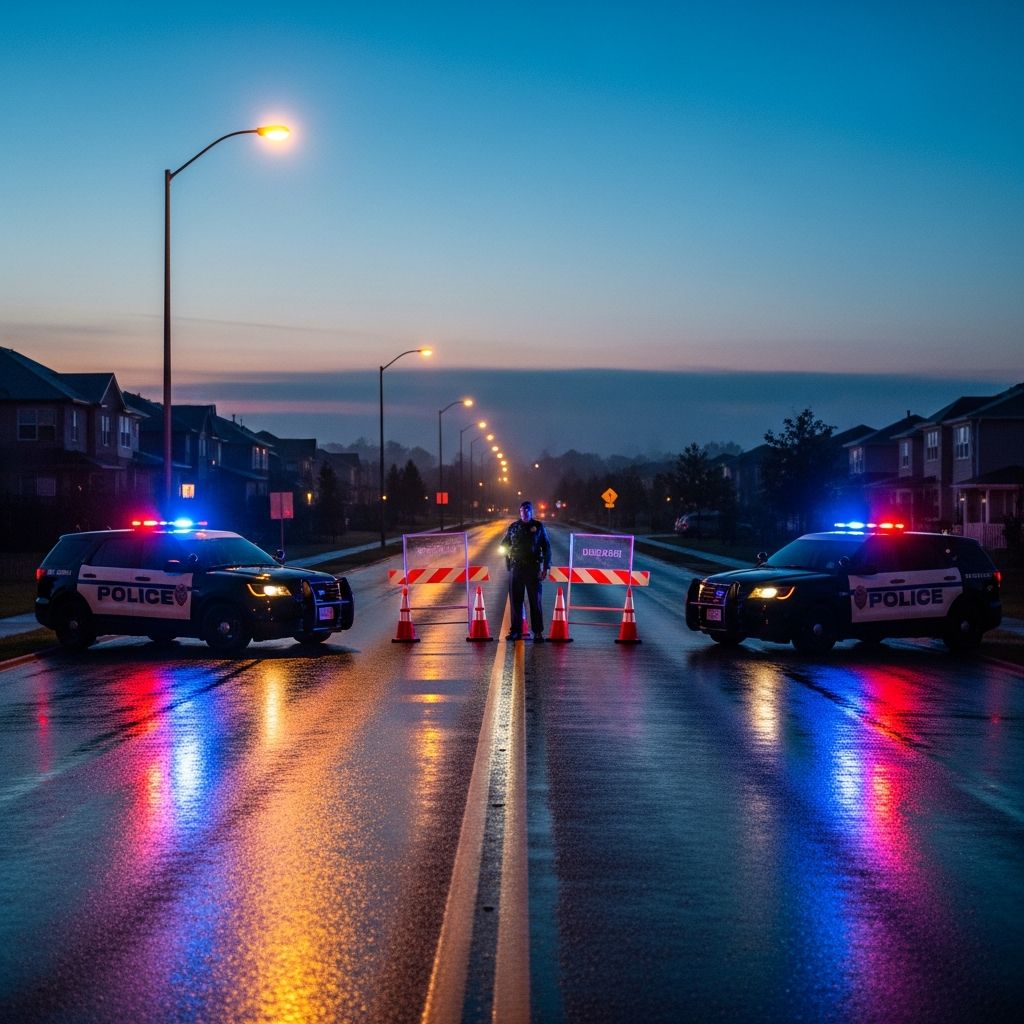
Understanding the Legal Framework for Police Roadblocks
Police roadblocks, also known as checkpoints, are a common sight in many communities, especially around holidays or in areas with high rates of impaired driving. These operations involve stopping vehicles at a designated location to screen drivers for specific violations, such as driving under the influence, expired registration, or outstanding warrants. While they can be effective tools for law enforcement, they also raise important questions about constitutional rights, particularly under the Fourth Amendment, which protects against unreasonable searches and seizures.
The legality of a roadblock is not determined simply by whether it exists, but by its purpose, how it is conducted, and whether it complies with established legal standards. Courts have drawn a clear line between checkpoints that serve a legitimate, narrowly defined public safety function and those that amount to general crime control, which is generally not permitted without individualized suspicion.
What Makes a Roadblock Constitutional?
The U.S. Supreme Court has repeatedly emphasized that suspicionless stops—stops made without probable cause or reasonable suspicion that a particular driver has committed a crime—must be justified by a compelling government interest and must be conducted in a way that minimizes intrusion on individual rights. This balancing test is central to determining whether a roadblock is constitutional.
For a roadblock to be lawful, it must meet several key criteria:
- Valid Government Purpose: The checkpoint must be designed to address a specific, pressing public safety concern, such as drunk driving, traffic safety, or border security.
- Neutral and Objective Procedures: Officers must follow a predetermined, non-discriminatory method for selecting which vehicles to stop (for example, stopping every third car).
- Supervisory Oversight: Operational decisions (location, timing, duration, and procedures) must be made by supervising officers, not left to the discretion of individual officers on the scene.
- Minimal Intrusion: The stop must be brief, and the questioning or inspection must be limited to the purpose of the checkpoint.
- Public Notice: In many jurisdictions, law enforcement is required to publicly announce the time and location of checkpoints in advance.
- Safety and Visibility: The checkpoint must be clearly marked with signs, lights, and official vehicles so that drivers can see it coming and understand it is a legitimate law enforcement operation.
When these conditions are met, courts are more likely to uphold the checkpoint as a reasonable exercise of police authority. When they are not, the checkpoint may be deemed unconstitutional, and any evidence obtained as a result could potentially be suppressed in court.
Types of Legal Checkpoints
Not all roadblocks are created equal. The law recognizes that certain types of checkpoints serve important public safety goals and are therefore permitted under the Constitution, provided they are properly conducted.
1. DUI and Sobriety Checkpoints
DUI checkpoints are among the most common and widely accepted forms of roadblocks. Their primary purpose is to deter and detect impaired driving, a major cause of traffic fatalities and injuries. Courts have generally upheld sobriety checkpoints as constitutional because the government’s interest in preventing drunk driving is substantial, and the intrusion on drivers is relatively minor when the checkpoint is properly run.
For a DUI checkpoint to be lawful, it must:
- Be established to reduce drunk driving, not as a general crime-fighting tool.
- Use a neutral formula for stopping vehicles (e.g., every second or fifth car).
- Be located in an area with a history of DUI incidents.
- Be clearly marked and staffed by uniformed officers in marked vehicles.
- Limit the duration of each stop to what is necessary to assess impairment (typically a few minutes).
- Be publicly announced in advance, where required by state law.
If a checkpoint is challenged in court, a defense attorney may argue that it failed to meet one or more of these requirements, which could lead to the suppression of evidence obtained during the stop.
2. Border and Immigration Checkpoints
At or near international borders, the federal government has broader authority to conduct vehicle inspections. The Supreme Court has recognized that border checkpoints serve a critical national security and immigration control function, and therefore suspicionless stops are more readily justified in these contexts.
These checkpoints are typically operated by federal agencies such as U.S. Customs and Border Protection (CBP) and are designed to:
- Detect illegal entry into the country.
- Interdict contraband such as drugs, weapons, or stolen vehicles.
- Verify immigration status and travel documents.
While these stops are more intrusive than routine traffic stops, they are considered reasonable under the Fourth Amendment because of the unique security interests at the border. However, even at border checkpoints, stops that go beyond the scope of immigration or customs enforcement (for example, prolonged detentions without cause) may still violate constitutional protections.
3. License and Registration Checkpoints
Some jurisdictions authorize checkpoints focused on verifying that drivers have valid licenses, insurance, and vehicle registration. These are sometimes called “driver’s license” or “safety” checkpoints. Like DUI checkpoints, they are generally permissible if they are narrowly tailored to ensure that vehicles on the road meet basic legal requirements.
Key features of lawful license/registration checkpoints include:
- A clear, written policy governing when and where they are conducted.
- Neutral selection of vehicles (e.g., every vehicle or every nth vehicle).
- Minimal questioning limited to license, registration, and insurance documents.
- Supervisory approval and advance planning.
These checkpoints are not intended to be fishing expeditions for unrelated crimes. If officers use them as a pretext to search for drugs or weapons without reasonable suspicion, the operation may be challenged as an unconstitutional general crime control measure.
When Roadblocks Cross the Line
Not every roadblock is legal. The Supreme Court has made it clear that police cannot set up checkpoints for the general purpose of detecting crime. In the landmark case Indianapolis v. Edmond (2000), the Court struck down a drug interdiction checkpoint program because its primary purpose was indistinguishable from ordinary law enforcement aimed at uncovering evidence of criminal activity.
Checkpoints that are likely to be found unconstitutional include:
- General Crime Control Checkpoints: Roadblocks set up with the broad goal of catching criminals, rather than addressing a specific traffic safety issue.
- Drug Interdiction Checkpoints: Operations whose main objective is to find illegal drugs, absent a special need that outweighs the intrusion on drivers.
- Arbitrary or Discriminatory Stops: Checkpoints where officers pick and choose which vehicles to stop based on appearance, race, or other subjective factors.
- Unmarked or Covert Operations: Roadblocks that are not clearly identified as official police operations, which can create confusion and fear among drivers.
- Excessive Detention: Stops that last far longer than necessary to achieve the checkpoint’s stated purpose.
When a checkpoint is deemed unconstitutional, any evidence obtained as a result of the stop may be excluded from criminal proceedings under the exclusionary rule. This can have a significant impact on the prosecution’s case, especially in DUI or drug possession charges.
Your Rights at a Checkpoint
Knowing your rights can help you navigate a checkpoint encounter calmly and confidently. While you cannot simply ignore a lawful checkpoint, you do have certain protections under the law.
Can You Avoid a Checkpoint?
Yes, in most cases, you are allowed to take a legal alternative route to avoid a checkpoint. For example, turning onto a side street before reaching the roadblock is generally not a violation of the law. However, if you make an illegal maneuver—such as an unsafe U-turn, running a red light, or swerving erratically—officers may have a valid reason to stop you for a traffic violation.
Key points to remember:
- Turning away from a checkpoint is not, by itself, reasonable suspicion of impairment or criminal activity.
- Officers cannot stop you solely because you tried to avoid the checkpoint, unless you committed a traffic offense in doing so.
- If you are stopped after avoiding a checkpoint, the officer must still have a lawful basis for the stop (e.g., probable cause or reasonable suspicion).
What Happens During the Stop?
At a lawful checkpoint, officers are typically allowed to:
- Ask for your driver’s license, registration, and proof of insurance.
- Ask brief, routine questions (e.g., “Have you been drinking tonight?”).
- Observe your behavior, speech, and appearance for signs of impairment.
However, they cannot:
- Search your vehicle without your consent, a warrant, or probable cause (e.g., visible contraband or strong odor of drugs).
- Detain you for an extended period without reasonable suspicion that you are impaired or involved in criminal activity.
- Use the checkpoint as a pretext to conduct a general investigation unrelated to the checkpoint’s purpose.
What Should You Do?
If you are stopped at a checkpoint:
- Remain calm and polite.
- Provide your license, registration, and insurance when asked.
- Answer questions briefly and honestly, but you are not required to admit to drinking or consent to a search.
- Do not argue or resist, even if you believe the stop is improper; that is a matter for the courts later.
- Remember that anything you say can be used as evidence, so be cautious about volunteering information.
Challenging an Unlawful Checkpoint
If you are arrested or cited after being stopped at a checkpoint, it may be possible to challenge the legality of the checkpoint itself. A skilled defense attorney can examine whether the checkpoint complied with constitutional and statutory requirements.
Common grounds for challenging a checkpoint include:
- Lack of supervisory approval or advance planning.
- Failure to use a neutral, objective method for selecting vehicles.
- Poor location or unsafe setup (e.g., obstructing traffic or creating a hazard).
- Excessive duration of stops or overly intrusive questioning.
- No public notice where required by state law.
- Primary purpose being general crime control rather than traffic safety.
If a court agrees that the checkpoint was unlawful, it may suppress evidence obtained during the stop, which could lead to a dismissal of charges or a favorable plea agreement.
State-Specific Rules and Variations
While the U.S. Constitution sets the baseline for what is allowed, individual states may impose additional requirements or restrictions on checkpoints. For example:
- Some states require law enforcement to publicly announce the time and location of DUI checkpoints in advance.
- Others may limit the hours during which checkpoints can operate or require specific written policies.
- A few states have held that their own constitutions provide greater protection than the federal Constitution, making certain types of checkpoints more difficult to justify.
Because of these variations, it is important to understand the rules in your jurisdiction. A local attorney familiar with state and local law can provide guidance on whether a particular checkpoint was conducted lawfully.
Frequently Asked Questions
Can police set up a roadblock for any reason?
No. Police cannot set up roadblocks for general crime control or as a pretext to search for unrelated crimes. Checkpoints must serve a specific, legitimate public safety purpose, such as preventing drunk driving or ensuring vehicles are properly licensed and registered.
Are DUI checkpoints legal everywhere?
DUI checkpoints are legal under federal law if they are conducted properly, but not all states allow them. Some states prohibit sobriety checkpoints entirely, while others permit them only if strict procedural requirements are followed.
Do I have to answer questions at a checkpoint?
You must provide your license, registration, and insurance when asked. You may be required to answer basic questions like “Have you been drinking?” but you are not required to admit to drinking or consent to a search. You also have the right to remain silent beyond what is necessary to comply with the law.
Can I be searched at a checkpoint?
Officers cannot search your vehicle at a checkpoint without your consent, a warrant, or probable cause (such as visible contraband, strong odor of drugs, or evidence of impairment). A routine checkpoint stop does not automatically give officers the right to search your car.
What if I think the checkpoint was illegal?
If you believe a checkpoint was conducted unlawfully, you should consult a criminal defense attorney. They can review the details of the stop and determine whether the checkpoint violated constitutional or state law, which could lead to suppression of evidence or dismissal of charges.
Conclusion
Police roadblocks and checkpoints are a complex area of law that balances public safety with individual constitutional rights. While law enforcement is permitted to set up certain types of checkpoints—such as DUI, border, and license/registration inspections—they must do so in a way that is narrowly tailored, neutral, and minimally intrusive.
Understanding when roadblocks are legal, what makes them constitutional, and what your rights are at a checkpoint can help you make informed decisions if you encounter one. If you are charged with a crime after being stopped at a checkpoint, it is crucial to have legal representation to ensure that your rights were respected and that any evidence against you was obtained lawfully.
References
- Indianapolis v. Edmond, 530 U.S. 1 (2000) — Supreme Court of the United States. 2000-03-21. https://supreme.justia.com/cases/federal/us/530/1/
- Michigan Dept. of State Police v. Sitz, 496 U.S. 444 (1990) — Supreme Court of the United States. 1990-06-18. https://supreme.justia.com/cases/federal/us/496/444/
- U.S. Constitution, Fourth Amendment — National Archives. https://www.archives.gov/founding-docs/bill-of-rights
Similar Articles








Read full bio of medha deb




