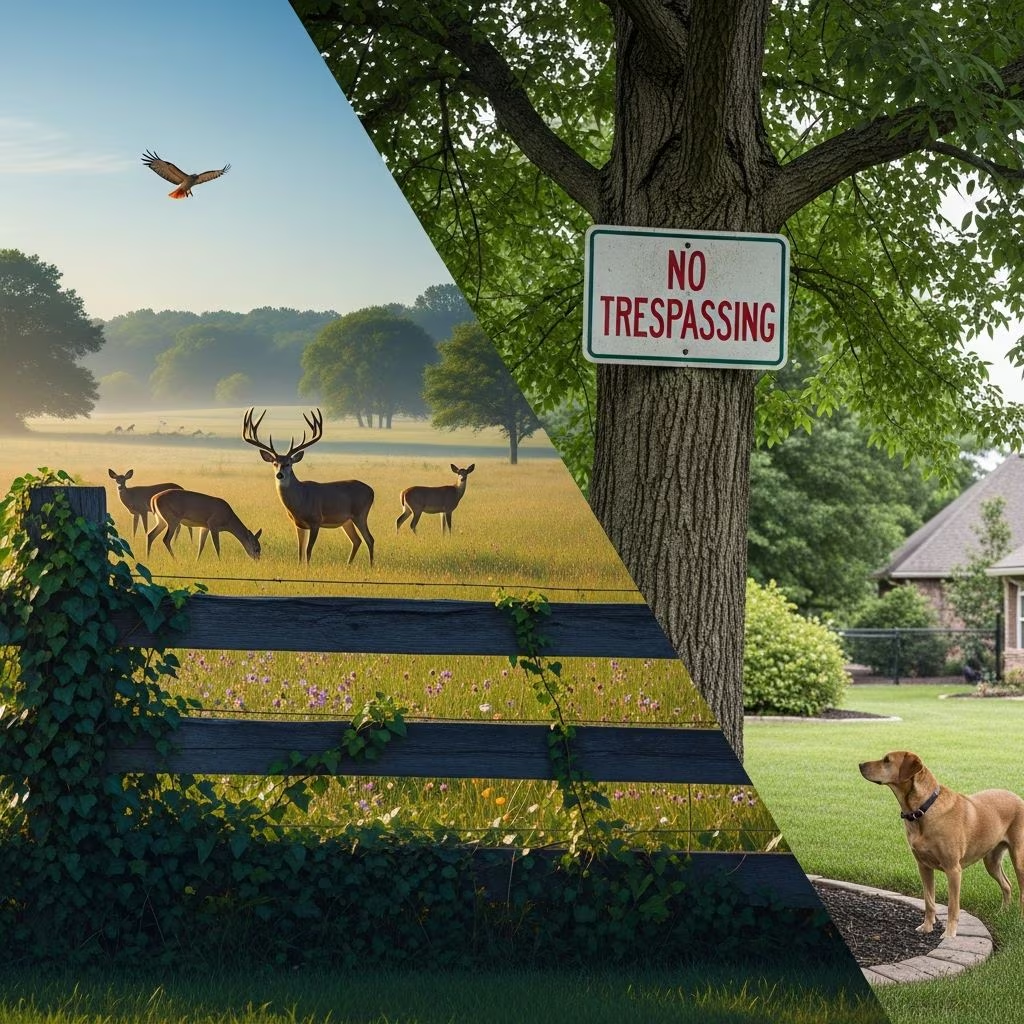
Finding a strange animal on your property can be stressful, especially if the animal is aggressive, damaging your land, or threatening your family or livestock. Many people assume that property ownership gives them broad power to get rid of unwanted animals by any means necessary. In reality, the law is much more limited and carefully balanced between public safety, property rights, and animal welfare.
This guide explains the main legal rules that apply when an animal comes onto your property in the United States, with examples drawn from state laws and court decisions. It is an educational overview, not legal advice. Because laws differ widely by state and city, anyone facing a real situation should consult a licensed attorney in their jurisdiction.
Key Principles: How the Law Sees Animals and Property
Before looking at specific situations, it helps to understand how the law typically classifies animals and what that means for property owners.
- Most domestic animals are treated as personal property. Dogs, cats, and many other domestic animals are legally considered the property of their owners, similar to a car or a piece of furniture.
- Destroying an animal is usually treated as destroying property. If you intentionally injure or kill someone else’s animal without a legal justification, you can be sued for damages and may face criminal charges such as animal cruelty or criminal mischief.
- Animal cruelty statutes create independent criminal liability. Modern animal cruelty laws generally prohibit torturing, maiming, or unnecessarily killing animals, even when they are considered property under civil law.
- Limited exceptions allow killing or injuring animals. In narrow circumstances, statutes and case law recognize defenses such as self-defense, defense of others, and protection of livestock or other property.
Because of this combination of property and cruelty concepts, courts often ask two questions: Was there a genuine and immediate threat? and Was the response necessary and reasonable under the circumstances?
Self-Defense: Protecting Yourself and Other People
Most jurisdictions recognize some form of self-defense or defense-of-others rule for dealing with dangerous animals, especially dogs.
Typical self-defense standard
While wording varies by state, laws and court decisions commonly require:
- A reasonable belief in an immediate threat of serious bodily harm to you or another person, not just annoyance or fear of minor injury.
- Necessity: injuring or killing the animal must be reasonably necessary to stop the attack; if you could safely retreat or use a less severe method, deadly force may not be justified.
- Proportionality: the level of force used should be proportionate to the threat. Shooting a retreating or restrained animal is far less likely to be justified than stopping an active attack.
Some states codify these ideas directly. For example, Georgia law allows killing an animal when reasonably necessary to protect a person from immediate attack, reflecting the general approach that the threat must be both imminent and serious.
Scenarios that usually do not justify killing
In many jurisdictions, the following situations typically will not meet the legal threshold for self-defense:
- A dog is barking from a distance but not advancing.
- An animal growls or postures but can be safely avoided.
- The threat has already ended (for example, the dog is running away or has been restrained).
In such circumstances, hurting or killing the animal can expose you to animal cruelty charges or civil lawsuits, even if the animal had behaved badly in the past.
Defending Your Property: Nuisance vs. Serious Damage
Property owners have a legitimate interest in protecting land, structures, crops, and personal belongings. However, the legal right to use deadly force against animals for property protection is much narrower than many people assume.
Minor property damage is rarely enough
Ordinary annoyances and small-scale damage typically do not justify injuring or killing an animal. Examples include:
- Digging in a garden or flowerbed
- Chewing on outdoor furniture or toys
- Leaving droppings on the lawn
In such cases, your legal remedies are more likely to be:
- Speaking with the animal’s owner
- Fencing, barriers, or deterrents
- Contacting animal control or law enforcement
Serious and ongoing property damage
Some states allow more force when an animal causes substantial, ongoing damage, particularly to commercial or agricultural property. For instance, laws sometimes permit farmers to kill dogs that are actively chasing or attacking livestock, even if the livestock has not yet been physically injured.
However, standards vary and often include conditions, such as:
- The animal must be in the act of harassing, chasing, or attacking livestock.
- The farmer’s response must be reasonably necessary to stop the incident.
- In some states, landowners who harm trespassing animals still must compensate their owners, minus the value of the damage caused.
Livestock and Working Animals: Special Protections
Livestock, such as cattle, sheep, goats, and poultry, often receive heightened legal protection because of their economic value and vulnerability to predators.
Common livestock protection rules
Many states have laws specifically addressing dogs and other animals that threaten livestock. These statutes often state that:
- Livestock owners may lawfully kill dogs that are chasing, harassing, or attacking their animals.
- Some laws extend to situations where the dog appears to be preparing to attack, not merely passing through a field, though courts interpret this cautiously.
- Dog owners are usually liable for injuries their dogs cause to livestock, including veterinary costs and lost animals.
Limits on pursuit beyond your property
Even in livestock-protection laws, the right to use deadly force often has boundaries. Courts in some states have refused to protect farmers who pursued a dog to its owner’s property and killed it after the immediate danger had ended, ruling that the statute did not justify revenge or delayed retaliation.
By contrast, courts in other states have interpreted their laws more broadly, allowing a livestock owner to pursue and kill a dog “within a reasonable time” after an attack, especially if the animal remains an ongoing threat and the owner has been warned.
Trespassing Animals: Why Presence Alone Is Not Enough
One of the most persistent misconceptions is that you can automatically kill or seriously harm any animal simply because it is on your land without permission. In most cases, trespass alone is not a lawful justification for killing a dog or other domestic animal.
Typical legal approach to trespassing dogs
The majority of courts and statutes take the following approach:
- Being on your property is not, by itself, a sufficient reason to injure or kill the animal.
- Property owners are expected to use nonlethal means first, such as shooing the animal away, contacting the owner, or calling animal control.
- Any use of force must still satisfy the usual self-defense or property-defense standards (immediacy, necessity, proportionality).
Some states provide narrow exceptions where landowners may injure animals to prevent trespass or drive them off, but even then they may need to compensate the owner for the loss, and animal cruelty laws still apply.
Poison, Traps, and Other Indirect Methods
Frustrated owners sometimes consider indirect methods such as poison baits or unattended traps to keep animals off their land. These approaches are especially risky from a legal standpoint.
Poisoning animals
In many states, willfully poisoning someone else’s animal is a criminal offense, often explicitly listed in animal cruelty statutes. Some jurisdictions allow carefully regulated use of poisons for predatory wildlife or feral animals, but they usually require:
- Compliance with state wildlife and pesticide regulations
- Warning signs and restrictions to protect the public and non-target animals
- Permits or written authorization from authorities in certain cases
Using poison informally—such as leaving out tainted food to harm a neighbor’s dog or cat—is very likely to result in criminal liability and civil damages.
Traps and snares
Unregulated trapping can also be illegal or heavily restricted. State wildlife agencies often control the use of steel-jaw traps, snares, and other devices to prevent indiscriminate suffering and accidental capture of pets or protected species. Setting such devices without permits or in violation of regulations can lead to fines and criminal charges, even when placed on private property.
Dangerous or Vicious Animals: Government Powers vs. Private Action
Where a particular dog or other animal has a history of aggression, many states have “dangerous dog” or similar statutes. These laws generally give government officials more authority than private citizens.
What authorities can usually do
- Impound animals that pose a threat to public safety after complaints or documented incidents.
- Require owners to meet special conditions: secure enclosures, muzzling, insurance, or warning signs.
- Seek court orders to euthanize animals that meet statutory criteria for being vicious or dangerous, usually after notice and an opportunity for the owner to be heard.
These procedures exist to balance safety with due process rights, meaning a private citizen usually cannot skip these steps and unilaterally kill an animal just because they consider it dangerous.
Past behavior and private defenses
Some states, by statute or case law, allow a person to rely on an animal’s documented history of aggression as part of their justification for using force. For example, a statute may allow people to kill animals “known as dangerous to life, limb, or property” under narrowly defined conditions, but the burden is on the person who did the killing to prove that the legal standard was met.
Wildlife on Your Property: Special Rules and Permits
Dealing with wild animals—such as raccoons, coyotes, deer, or bears—raises additional layers of law, including hunting regulations, endangered species protections, and public safety rules.
Living with wildlife
State wildlife agencies often emphasize nonlethal coexistence measures, such as securing garbage, removing attractants, fencing, and using hazing techniques. Many species are protected, and killing them without a hunting license, depredation permit, or emergency defense-of-life justification can be illegal, even on your own land.
| Issue | Domestic animals (e.g., dogs) | Wildlife (e.g., coyotes, raccoons) |
|---|---|---|
| Legal status | Usually property of an identifiable owner | Managed by the state as a public resource |
| Key laws | Animal cruelty, property damage, local pet ordinances | Wildlife codes, hunting rules, endangered species acts |
| Killing to protect people | Possible if immediate serious threat & necessary | Often allowed in true emergencies, but reviewed carefully |
| Killing for property damage | Generally restricted; stronger rules for livestock | May require permits or agency authorization |
Civil and Criminal Consequences If You Go Too Far
Using unlawful or excessive force against an animal can result in serious legal and financial consequences.
Possible criminal charges
- Animal cruelty, including intentional killing, maiming, or torturing an animal without legal justification.
- Reckless endangerment or similar charges if your actions risked injury to people (for example, firing a gun in a residential area).
- Illegal poisoning or trapping when done in violation of specific statutes or wildlife regulations.
Common civil liabilities
- Property damage claims from the animal’s owner seeking compensation for the market value of the animal and sometimes emotional distress.
- Veterinary expenses if the animal survives but is injured.
- Punitive damages in egregious cruelty cases, depending on state law.
Because animals are usually considered property under civil law, money damages are the primary remedy, but in some cases courts will also consider the animal’s unique value to its owner.
Practical, Law-Smart Steps When an Animal Comes Onto Your Property
To protect both safety and legal interests, property owners can adopt a set of practical steps when unexpected animals appear.
Non-emergency situations
- Avoid confrontation. Do not attempt to catch or corner an unfamiliar or wild animal.
- Document the behavior. Take photos or videos from a safe distance if the animal is causing damage or acting aggressively.
- Contact the owner or animal control. Local authorities can often identify owners through tags or microchips and handle repeat issues.
- Improve physical barriers. Repair fences, lock gates, and remove food sources that attract animals.
Potentially dangerous encounters
- Prioritize human safety. Get people, especially children, inside and away from the animal.
- Use nonlethal deterrents if safe. Loud noises, water hoses, or other scare tactics can sometimes disperse animals without force.
- Call authorities immediately. Police, animal control, or wildlife officers can respond and later provide documentation that you sought help.
- Resort to serious force only as a last resort. The more you can show that deadly force was unavoidable, the stronger your legal position will be if the incident is later reviewed.
Frequently Asked Questions (FAQs)
Q1: Can I legally kill a dog just because it is in my yard?
Generally no. In most jurisdictions, trespass alone does not justify injuring or killing a dog. You typically must show an immediate, serious threat to people, livestock, or property that cannot be addressed by less extreme measures.
Q2: What if a dog is attacking my livestock?
Many states allow farmers or livestock owners to kill dogs that are chasing, harassing, or attacking their animals, particularly when done to stop an ongoing incident. However, details vary, and some states limit pursuit beyond your property or require that the response be reasonably necessary.
Q3: Is it legal to poison an animal that keeps coming onto my land?
Deliberately poisoning someone else’s animal is commonly a criminal offense under animal cruelty or poisoning statutes, and can also create civil liability. Certain regulated uses of poison for wildlife or predatory animals may be allowed under strict conditions, but these usually require compliance with wildlife and pesticide laws and are not a general solution for neighborhood disputes.
Q4: How do laws treat wild animals differently from pets?
Wild animals are typically managed by state wildlife agencies as public resources, not as private property. Killing or capturing them is often controlled by hunting seasons, depredation permits, or special regulations, and many species are protected. Even on your own land, you may not legally kill wildlife without complying with these rules, except in narrow emergency self-defense situations.
Q5: What should I do if I hurt an animal in self-defense?
Seek immediate medical help for any people injured, contact local authorities (police, animal control, or wildlife officers), and consider consulting a lawyer. Document the scene with photos and written notes. Later investigations will focus on whether there was a genuine, immediate threat and whether your actions were necessary and proportionate under state law.
References
- Dog Law in California: Protecting the Dog and Protecting People and Animals from a Dog — Stimmel, Stimmel & Smith. 2017-05-01. https://www.stimmel-law.com/en/articles/dog-law-california-protecting-dog-and-protecting-peopleanimals-dog
- Is It Legal To Kill A Dog If It Attacks Me? — Heidari Law Group. 2022-03-10. https://www.heidarilawgroup.com/blog/is-it-legal-to-kill-a-dog-if-it-attacks-me/
- Animal Protection Laws of California — Animal Legal Defense Fund. 2018-09-01. https://aldf.org/wp-content/uploads/2019/01/Animal-Protection-Laws-of-California-2018.pdf
- States’ Animal Cruelty Statutes: California — National Agricultural Law Center. 2017-01-01. https://nationalaglawcenter.org/wp-content/uploads/assets/animalcruelty/california.pdf
- Living with Wildlife — California Department of Fish and Wildlife. 2023-02-15. https://wildlife.ca.gov/Living-with-Wildlife
- Animal Law in California — Animal Legal & Historical Center, Michigan State University College of Law. 1983-01-01. https://www.animallaw.info/article/animal-law-california