
Wet Signatures: Laws, Uses, And Best Practices
Discover the essentials of wet signatures, their legal requirements, advantages, and how they compare to digital alternatives in modern transactions.
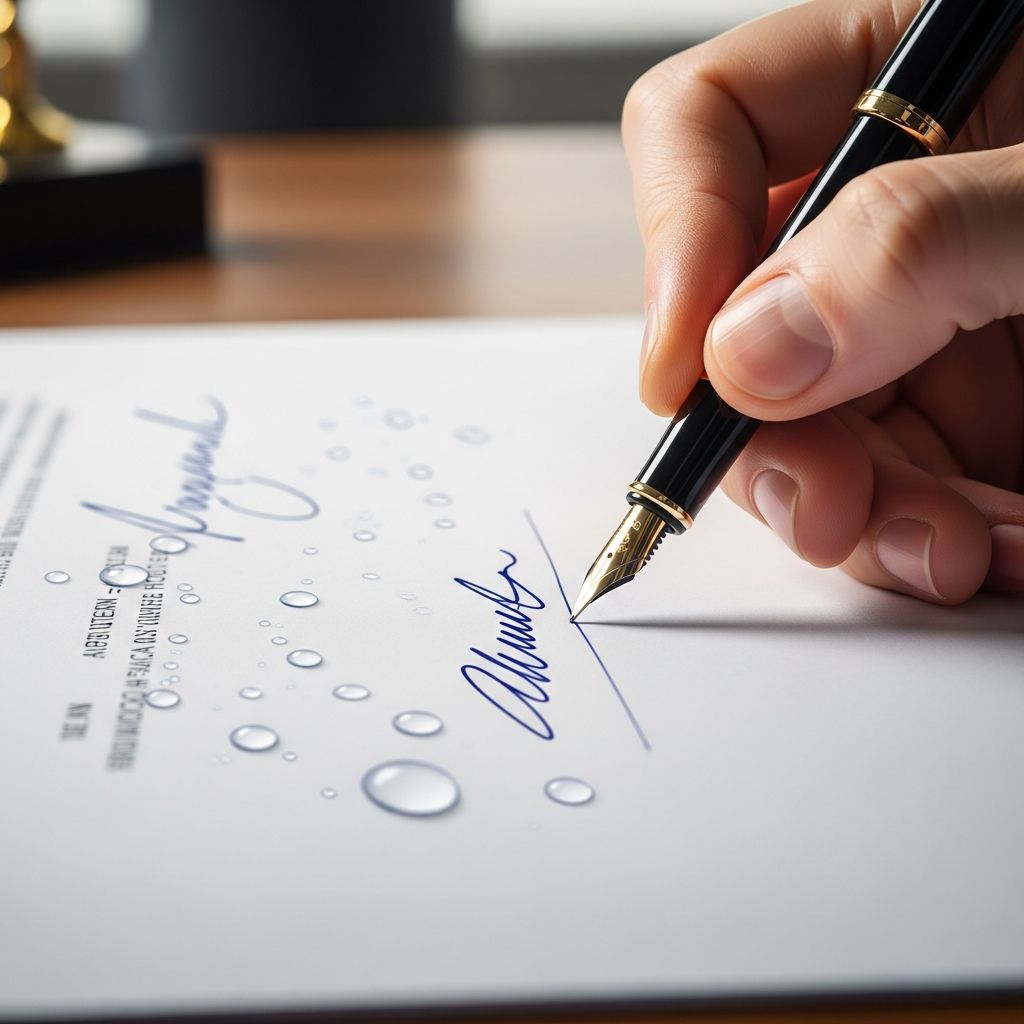
A
wet signature
refers to a physical, handwritten mark made with pen and ink on a paper document to indicate agreement or authentication. This traditional method has been the cornerstone of legal and contractual validity for centuries, distinguishing itself from modern digital alternatives by its tangible nature.Historical Background of Physical Signatures
Physical signatures trace their origins to ancient civilizations where seals, marks, or handwritten names served as proof of intent. Over time, the ‘wet’ ink signature became standardized in common law systems, providing a visible, verifiable record that courts could examine for authenticity. Even today, this method evokes a sense of formality and permanence in high-stakes dealings.
In the United States, laws like the Uniform Commercial Code (UCC) have long recognized signatures as evidence of assent, though not always strictly required for contracts under $500 involving goods. The key principle is clear intent from both parties to the exact terms, often called the ‘mirror image’ rule.
Defining Wet Signatures Precisely
At its core, a wet signature involves applying ink to paper in a way that represents the signer’s identity and approval. It doesn’t have to be cursive; printed names, initials, symbols, or even an ‘X’ qualify if made with authentic intent. The ‘wet’ aspect highlights the ink’s need to dry, contrasting with scanned or copied images that lack this originality.
Unlike electronic signatures, which use software to capture data, wet signatures create a physical alteration to the document itself. This makes them particularly valuable in scenarios demanding irrefutable proof of execution.
Legal Requirements for Wet Signatures Today
Despite widespread adoption of digital tools, wet signatures remain mandatory for specific documents under U.S. federal and state laws. The Electronic Signatures in Global and National Commerce Act (ESIGN) and Uniform Electronic Transactions Act (UETA) permit electronic signatures broadly but carve out exceptions.
- Wills, Trusts, and Codicils: These family law instruments often require physical presence and ink to prevent fraud.
- Real Estate Deeds and Mortgages: Transfers of property typically need wet signatures for recording with county offices.
- Adoptions and Divorce Papers: Court-related family documents prioritize physical verification.
- Promissory Notes and Certain UCC Contracts: High-value financial agreements under UCC sections like letters of credit or secured transactions.
- Notarized and Court Documents: Notaries generally require in-person wet signing.
Requirements vary by jurisdiction. For instance, some states demand originals for evictions or insurance benefits. Internationally, countries like Germany mandate wet signatures for stock transfers or real estate pledges.
Industries and Scenarios Demanding Physical Ink
Certain sectors cling to wet signatures for compliance and evidentiary strength. Real estate transactions, for example, involve deeds filed with government registries that accept only originals. Financial institutions use them for checks, high-value loans, and collateral documents.
| Industry | Common Documents | Reason for Wet Signature |
|---|---|---|
| Real Estate | Deeds, Mortgages | Government recording; notary presence |
| Finance | Promissory Notes, Checks | Anti-fraud measures; UCC compliance |
| Legal/Family Law | Wills, Adoptions | Witness verification; court acceptance |
| Government | Passports, Immigration Forms | Official authentication protocols |
| Courts | Filings, Orders | Originality for disputes |
International deals may require wet signatures if one party operates in a jurisdiction rejecting e-signatures.
Advantages of Using Wet Signatures
Wet signatures offer timeless reliability in legal contexts.
- Universal Acceptance: Recognized globally without tech barriers.
- Tangible Proof: Physical evidence resistant to digital tampering claims.
- No Tech Needed: Accessible to all, including those without digital tools.
- In-Person Verification: Ensures signers’ presence, ideal for notarized items with witnesses.
These traits make them ideal for archival documents or disputes where handwriting analysis provides forensic validation.
Challenges and Limitations of Traditional Signing
While robust, wet signatures have notable downsides in a fast-paced world.
- Logistical Hurdles: Printing, mailing, and collecting signatures delay processes.
- Storage Issues: Paper documents risk loss, damage, or degradation over time.
- Remote Impossibility: Parties must convene physically, impractical for global teams.
- Scalability Problems: Inefficient for high-volume business operations.
These inefficiencies drive the shift toward digital solutions where feasible.
Electronic Signatures: The Modern Contrast
Electronic signatures (e-signatures) replicate wet signature intent via digital means, legally equivalent under ESIGN/UETA if conditions are met: clear intent, consent to electronic business, linked records, archiving, and opt-out options.
Advanced digital signatures add layers like encryption, tamper-evidence, and non-repudiation, surpassing wet signatures in security for many uses. However, they can’t replace wet ink in exempted categories.
Comparing Wet and Electronic Signatures
| Aspect | Wet Signature | Electronic Signature |
|---|---|---|
| Execution | Pen on paper | Digital software |
| Speed | Slow (physical handling) | Instant (remote) |
| Security | Physical verification | Tamper-evident tech |
| Cost | Printing/shipping | Subscription fees |
| Legal Scope | Mandatory for some docs | Broad but excepted |
| Accessibility | No tech needed | Requires devices/internet |
This comparison highlights why hybrids—scanning wet originals for records—are common.
Best Practices for Compliant Document Signing
- Assess Requirements: Check jurisdiction-specific laws for your document type.
- Consult Experts: Attorneys can clarify ESIGN exceptions.
- Hybrid Approach: Wet sign critical docs, then digitize for storage.
- Notarization: Use in-person for required items; remote online notarization (RON) expands options in some states.
- Record-Keeping: Store originals securely; use audit trails for e-signs.
For international contracts, verify foreign rules to avoid invalidation.
Future Trends in Signature Authentication
Technology evolves with blockchain for immutable records and biometric verification (e.g., fingerprints) blending physical-digital security. Yet, wet signatures persist for their simplicity in trust-sensitive areas. Remote notarization gains traction post-pandemic, potentially reducing wet mandates.
Businesses should monitor updates, as jurisdictions adapt to digital norms while safeguarding exceptions.
Frequently Asked Questions (FAQs)
Is a printed name considered a valid wet signature?
Yes, any intentional mark—including printed names or symbols—qualifies if it shows assent.
Can wet signatures be scanned and used electronically?
Scanning creates a copy; for legal effect, the original wet version may still be needed in court, though hybrids are common.
Do all countries require wet signatures for the same documents?
No, laws differ; e.g., some nations reject e-signs outright for real estate.
How do I authenticate a wet signature in a dispute?
Use handwriting experts, witnesses, or prior samples; digital methods offer stronger audit trails.
When should I choose wet over electronic signatures?
Opt for wet when laws mandate it, for non-tech users, or maximum evidentiary weight.
References
- What is a Wet Signature and Why Should You Care? — iCertis. 2023. https://www.icertis.com/contracting-basics/what-is-a-wet-signature-and-why-should-you-care/
- Wet Signature vs. Electronic Signature: Understanding the Differences — DocuWare. 2024. https://start.docuware.com/blog/document-management/wet-signature-vs.-electronic-signature-understanding-the-differences
- What Is a Wet Signature? Everything You Need to Know — LegalZoom. 2023. https://www.legalzoom.com/articles/what-is-a-wet-signature-everything-you-need-to-know
- Wet Ink Signature: Meaning, Uses, Pros and Cons Explained — Sirion. 2024. https://www.sirion.ai/library/contracts/wet-ink-signature/
- Quick Tip: Wet Signatures — DocuSign. 2023. https://www.docusign.com/blog/quick-tip-wet-signatures
Similar Articles








Read full bio of medha deb


