
West Virginia Service Dogs and ESAs: Legal Guide
Comprehensive overview of West Virginia regulations for service animals and emotional support animals in public spaces and housing.
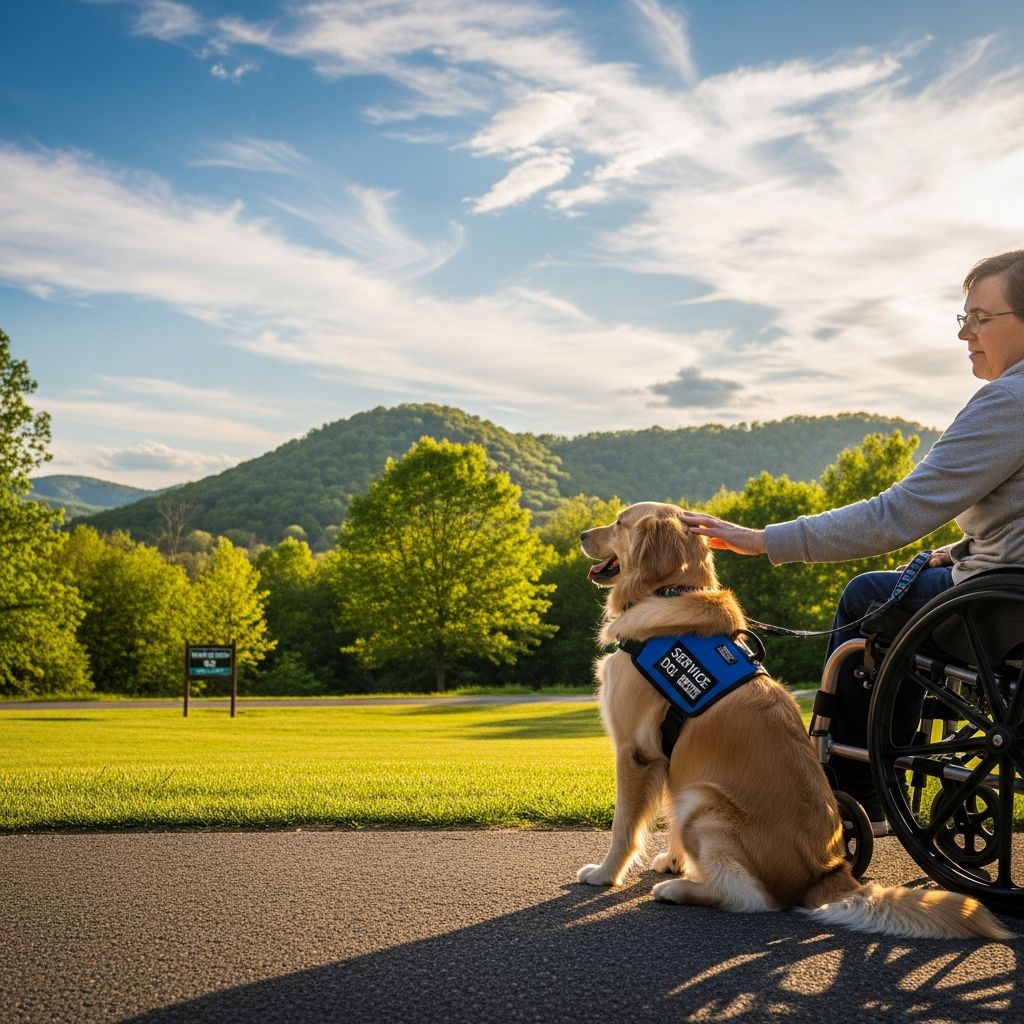
Individuals with disabilities in West Virginia benefit from robust protections for service animals in public settings and assistance animals in housing. These rights stem primarily from the federal Americans with Disabilities Act (ADA) and the state’s White Cane Law, ensuring equal access without discrimination.
Defining Service Animals Under Applicable Laws
The core definition of a service animal aligns closely between federal and state regulations. According to the ADA, a service animal consists of a dog or, in limited cases, a miniature horse that is individually trained to execute specific tasks directly related to a person’s disability. These tasks address needs arising from physical, sensory, psychiatric, intellectual, or other mental impairments.
West Virginia’s White Cane Law echoes this by classifying service animals as guide dogs, signal dogs, or any animal custom-trained to undertake work or tasks benefiting someone with a physical or mental disability. Examples include alerting to seizures, retrieving dropped items, providing balance support, or interrupting harmful self-stimulatory behaviors.
- Key distinctions: Only dogs (or miniature horses under ADA) qualify; pets or comfort animals do not.
- Training must be task-specific, not just general obedience or emotional provision.
- No species other than dogs/miniature horses receive automatic public access rights under these laws.
Access Rights in Public Accommodations
People accompanied by service animals enjoy full entry to places open to the general public. West Virginia law mandates this for a broad array of venues, mirroring ADA requirements.
| Category | Examples |
|---|---|
| Inns, Hotels, Motels | Lodging establishments |
| Restaurants | Dining facilities |
| Theaters, Concert Halls | Entertainment venues |
| Stores, Retail Shops | Commercial businesses |
| Auditoriums, Gymnasiums | Sports and assembly spaces |
| Educational Institutions | Schools and universities |
| Libraries, Museums | Cultural facilities |
| Public Transportation | Buses, trains |
These protections extend to all facilities deemed public accommodations under 42 U.S.C. § 12181(7), prohibiting denial based on the animal’s presence.
Verification and Inquiries Permitted
Business owners and staff lack authority to demand proof of training, certification, or disability details. Permissible questions are strictly limited: (1) Is this a service animal required for a disability? (2) What tasks does it perform? No further probing is allowed if the animal’s role is obvious.
State law reinforces that service animals require no government licensing, certification, or special identifiers like vests or tags. However, they must remain under control, typically via leash (except if it impedes task performance), and cannot occupy seats on public transit.
Responsibilities of Handlers and Liability
Owners bear responsibility for maintaining control and covering damages caused by their animal, excluding cases where provocation by others incites the behavior. Public venues cannot impose extra fees for the animal’s admission.
- Clean up after the animal.
- Ensure vaccinations and health compliance with local laws.
- Use leash/tether unless it interferes with duties.
Circumstances for Exclusion
Exclusion is permissible only if the animal presents a direct safety threat, is uncontrollably disruptive, or lacks housebreaking. Aggression, excessive barking at others, or uncleanliness justifies removal, but not mere presence or allergies.
Protections for Animals in Training
West Virginia explicitly grants access to certified trainers working with service animals in public accommodations, aligning with the training process needs. This applies during active training sessions.
Housing Protections for Assistance Animals
The federal Fair Housing Act (FHA) governs housing, classifying both service animals and emotional support animals (ESAs) as assistance animals. Landlords must permit them in rentals and condos, overriding no-pet policies, provided a disability-related need exists.
ESAs provide emotional support alleviating disability symptoms but lack public access rights outside housing. No pet fees or deposits apply, though damage repairs remain the tenant’s obligation.
Verification requires documentation of disability and need; self-attestation suffices if not obvious. HUD guidelines detail acceptable formats.
Note: West Virginia’s state Fair Housing Act, once covering animals under 150 pounds, was repealed in February 2024. Federal FHA now predominates, with potential reinstatement via HB 4757.
Health and Training Standards Recommendations
While not legally mandated beyond basics, best practices include veterinary care, spaying/neutering, flea control, and maturity (at least 12 months old with 6+ years working life). Animals must adapt to local climates.
Interference and Assault Penalties
West Virginia lacks a specific “service animal interference” criminal statute, unlike most states. However, proposed bills like SB 192 target assaults on service animals with penalties.
Frequently Asked Questions
Can restaurants refuse my service dog?
No, if it meets the definition and is under control. Only exclude for safety threats.
Do I need a doctor’s note for my ESA in housing?
Documentation of disability and need is required if not apparent; a healthcare provider letter suffices.
Are miniature horses allowed everywhere dogs are?
ADA permits assessment based on size/weight/type for feasibility in the space.
Does my therapy dog qualify as a service animal?
No, therapy dogs comfort generally; service animals perform specific disability tasks.
Can landlords charge for ESA damage?
Yes, standard damage liability applies, but no pet fees.
Navigating Challenges and Seeking Help
Disputes may require HUD complaints for housing or DOJ for public access. Local disability centers like WVATS offer guidance.
(Word count: 1678)
References
- West Virginia Laws on Service Dogs and Emotional Support Animals — Nolo. 2025. https://www.nolo.com/legal-encyclopedia/west-virginia-laws-on-service-dogs-and-emotional-support-animals.html
- WEST VIRGINIA CODE: §5-15-4 — WV Legislature. 2025-12-13. https://code.wvlegislature.gov/pdf/5-15-4/
- Service Dogs in Training (SDiT) State Laws — Service Dog Training School. 2025. https://www.servicedogtrainingschool.org/blog/service-dogs-in-training-laws-by-state
- You and Your Service Animal — Center for Excellence in Disabilities, WVATS. 2025. https://wvats.cedwvu.org/you-and-your-service-animal/
- Service Animals and Emotional Support Animals Booklet — WV DHHR. 2025. https://dhhr.wv.gov/healthprep/plan/specialpopulations/Documents/ADA%20Service%20Animal%20Booklet.pdf
Similar Articles








Read full bio of medha deb


