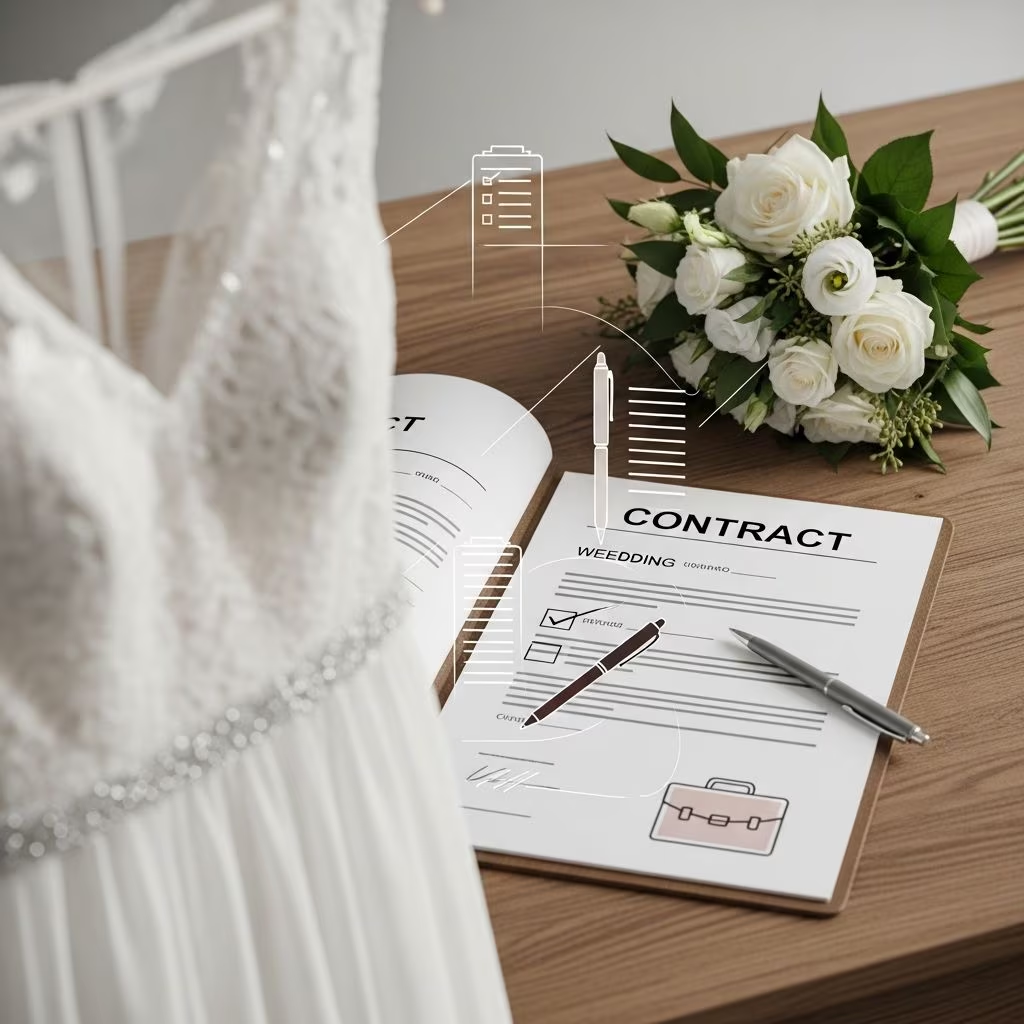
Understanding the Foundation of Wedding Service Agreements
When you hire professionals to help bring your wedding vision to life, you’re entering into legally binding relationships that require clear documentation. A wedding vendor contract serves as the cornerstone of these professional relationships, establishing a mutual understanding between you and each service provider involved in your celebration. This legal document protects both parties by specifying exactly what will be delivered, when it will be provided, and what compensation is expected in return.
The importance of having comprehensive written agreements cannot be overstated. Without proper documentation, disputes over service delivery, payment discrepancies, or unexpected cancellations can lead to financial losses and emotional stress during what should be an exciting time. A well-crafted contract eliminates ambiguity and provides recourse if either party fails to uphold their obligations.
Identifying the Parties and Event Specifics
Every wedding vendor contract must begin by clearly identifying who is entering into the agreement. This section should include the full legal names of both the engaged couple and the vendor or business entity providing services. Accurate contact information for all parties is essential, as this information will be used for all communications, notifications, and potential disputes.
The contract must also specify the exact details of your wedding event. This includes the specific date of your wedding, the year, and the time when services will commence. If your event spans multiple days or includes rehearsal events at the same venue, these details must be explicitly stated. The venue address should be completely accurate, including the specific location where the vendor will be performing their services. Additionally, the contract should reference your approximate guest count, as this directly impacts how vendors plan their resources and what they can realistically deliver.
Defining the Precise Scope of Services and Deliverables
One of the most critical sections of any wedding vendor contract is the detailed description of services to be provided. This is where vagueness becomes your enemy. Rather than simply stating that a photographer will provide “coverage,” the contract should specify the exact number of hours of photography, whether a second photographer will be present, the specific photographic styles included, and the format in which final images will be delivered.
For different types of vendors, this section takes on different meanings:
- Photographers and Videographers: Hours of coverage, number of edited images or video length, engagement sessions, albums, digital file ownership, and delivery timeline
- Caterers: Number of service staff, per-person meal cost, menu selections, service style (plated, buffet, family style), bar service details, and any dietary accommodation protocols
- Florists: Specific floral arrangements, delivery timing, setup and removal services, contingency plans for unavailable flowers, and whether design consultations are included
- Venues: Accessible areas of the property, setup and breakdown windows, included furniture and décor, parking availability, and restrictions on outside vendors or decorations
- Entertainment: Duration of performance, equipment provided, technical requirements, number of performers, and backup entertainment options
The more specific this section, the better protected both you and the vendor are from misunderstandings. What seems obvious to you might not be obvious to your vendor, and vice versa.
Breaking Down Financial Obligations and Payment Structures
The financial section of a wedding vendor contract is where many disputes originate if not carefully drafted. This section should comprehensively outline all costs associated with the vendor’s services, broken down into understandable components.
A complete payment structure typically includes:
- Deposit Amount: The non-refundable amount due upon signing the contract to secure your wedding date
- Payment Schedule: Specific dates when additional payments are due, and the amounts owed at each stage
- Final Balance: When the remaining payment is due, typically before the wedding date
- Payment Methods: Acceptable payment methods, whether checks, credit cards, bank transfers, or cash are permitted
- Late Payment Penalties: Consequences and fees if payments are not made by specified dates
- Additional Fees: Any extra charges that might apply, such as fees for overtime, rush orders, delivery to locations outside the city, or additional staff
- Refund Policy: Clearly state which portions of fees are refundable under what circumstances
Understanding which portions of your payment are refundable versus non-refundable is particularly important. Typically, deposits are non-refundable once a vendor has reserved your date and declined other bookings, but this should be explicitly stated rather than assumed.
Establishing Clear Timeline and Delivery Expectations
Beyond the wedding day itself, contracts should establish timelines for all aspects of service delivery. For photographers, this means specifying when edited images will be delivered after the wedding. For videographers, the timeline for completed videos should be clearly stated. For planners and designers, deadlines for final proposals and design presentations should be documented.
The contract should also address the method of delivery for completed work. Will photographers provide a USB drive with digital files, online gallery access, or both? Will printed albums be included in the standard package or as an add-on? For catering services, the contract should specify the exact arrival time for setup, when service will begin, and when the vendor’s staff will depart.
Setup and breakdown times are particularly important for venue contracts, as these directly impact when you and other vendors can access the space. Many venues impose additional fees if setup or removal extends beyond the contracted time period, so understanding these windows prevents unexpected charges.
Addressing Cancellation and Non-Performance Scenarios
Despite everyone’s best intentions, circumstances sometimes prevent vendors from fulfilling their commitments. Contracts should address what happens if a vendor becomes ill, equipment fails, or other emergencies prevent performance. Similarly, couples may need to cancel or postpone their weddings due to unexpected life events.
The cancellation clause should specify:
- How much notice must be provided by either party before cancellation
- What financial consequences result from cancellations made at different stages
- Whether cancellation fees decrease closer to the wedding date or remain constant
- What happens if both parties agree to postpone rather than cancel
- Whether the vendor has the right to decline to work with you if you cancel
Contingency or backup clauses are increasingly important in modern wedding planning. These clauses address what happens if the primary vendor cannot perform due to illness, equipment failure, family emergency, or other unforeseeable circumstances. Some vendors include language stating they will provide a suitable replacement or referral. Understanding these contingencies protects both parties and provides peace of mind that your event will proceed even if unexpected complications arise.
Managing Liability, Insurance, and Risk Allocation
Contracts must clearly delineate who bears responsibility for various types of damage or injury. This section typically includes liability and indemnification clauses that protect both the couple and the vendor from unexpected costs.
Key liability considerations include:
- Property Damage: Who is responsible if the vendor’s equipment damages your venue or personal property?
- Guest Injury: If a guest is injured due to the vendor’s negligence, who covers the cost?
- Vendor Insurance: Does the vendor carry liability insurance, and is proof of coverage required?
- Venue Requirements: Many venues require vendors to carry specific amounts of insurance coverage
- Third-Party Liability: If vendors hire subcontractors, who is responsible for their actions?
These clauses protect couples from bearing unexpected financial burdens if accidents occur during their events. They also protect vendors from frivolous claims by clearly establishing what they are and are not responsible for.
Protecting Creative Works and Intellectual Property Rights
For vendors producing creative work—particularly photographers and videographers—contracts must clearly establish ownership of original materials and usage rights. This becomes increasingly important in the age of social media, as couples may want to post wedding photos online while photographers may want to use images in their portfolios.
Creative ownership clauses should address:
- Who owns the raw, unedited images or footage
- Whether the couple or photographer retains copyright to edited final products
- Whether the photographer can use images for business promotion or portfolio purposes
- Restrictions on where and how the couple can publish images on social media
- Whether the couple can share images with third parties like other vendors or media outlets
- Whether prints or albums are included or must be purchased separately
Clear language in this section prevents disputes after your wedding when photographers and couples have differing expectations about how images can be used.
Incorporating Restrictions and Special Requirements
Depending on your venue and specific vendors, various restrictions and special requirements may apply. Venue contracts commonly include restrictions on open flames, outside alcohol, music volume levels, or decoration methods. These restrictions exist for legitimate reasons including fire codes, noise ordinances, and property preservation.
Contracts should clearly list:
- Prohibited items or activities at the venue
- Noise level restrictions and quiet hours
- Parking requirements and available spaces
- Whether vendors can bring guests or family members
- Technology requirements, such as Wi-Fi access or electrical outlet availability
- Dress codes required of vendors or their staff
- Restrictions on specific vendors based on venue preferences or contracts with other service providers
Understanding these restrictions before signing allows you to ensure your vision is compatible with venue requirements and plan accordingly.
Notification Protocols and Change Management
Wedding planning often involves changes as months pass and circumstances evolve. Contracts should establish how changes will be communicated and what authority various parties have to make modifications. This is particularly important for venue contracts, as construction, staffing changes, or renovations might occur between your signing date and your wedding day.
Smart contracts include language requiring vendors to notify you immediately if any changes occur that might affect your event. This could include:
- Staff turnover at your venue
- Planned renovations or maintenance at the venue
- Changes to included services or amenities
- Booking conflicts or double-bookings
- Changes to the vendor’s availability or staffing for your date
Early notification gives you time to adjust your plans or seek alternative vendors rather than discovering surprises on or near your wedding day.
Termination Rights and Dispute Resolution
Contracts should clearly outline what circumstances allow either party to terminate the agreement and what happens if termination occurs. Beyond cancellation due to scheduling changes, what happens if you’re simply unhappy with how a vendor is handling your event, or if a vendor breaches the terms of the agreement?
A comprehensive termination clause addresses:
- Grounds for immediate termination without penalty (material breach of contract)
- Grounds for termination with financial consequences
- The process for notifying the other party of termination
- What happens to payments already made
- The timeline for settling outstanding balances
- Whether either party has the right to pursue legal action
Additionally, contracts may include dispute resolution mechanisms such as mediation or arbitration, which can be faster and less expensive than court proceedings if disagreements arise.
Strategic Approaches to Contract Negotiation
While wedding vendor contracts often come pre-written by the vendor, many terms are negotiable. Couples should not assume that every detail in a presented contract is set in stone. Vendors often have flexibility regarding payment schedules, service add-ons, or specific deliverables.
Effective negotiation strategies include:
- Ask Questions: Request clarification on any terms you don’t fully understand before signing
- Propose Modifications: If specific terms don’t work for you, professionally request alternatives
- Document Changes: Ensure any agreed-upon modifications are added to the contract in writing before signing
- Be Respectful: Vendors appreciate couples who approach negotiations professionally and recognize the value of their services
- Get Everything in Writing: Verbal agreements made during negotiations mean nothing; all terms must be documented in the signed contract
Negotiation is a normal business practice and professional vendors expect it. The key is approaching negotiations as collaborative rather than adversarial.
Red Flags and Warning Signs in Vendor Contracts
Certain contract language should raise concerns and warrant further discussion or alternative vendors. Be cautious of contracts that:
- Include extremely broad liability waivers that absolve the vendor of responsibility for almost anything
- Lack specific details about what services are included
- Contain vague delivery timelines or unspecified final product details
- Do not clearly establish who owns creative works or intellectual property
- Include unreasonably high cancellation fees that seem designed to trap you into proceeding
- Fail to address contingency plans if the vendor cannot perform
- Include language allowing the vendor to make significant changes without your consent or notification
If a vendor resists reasonable requests for clarification or refuses to modify obviously one-sided terms, this may indicate they are not the right vendor for your event.
Common Questions About Wedding Vendor Contracts
Q: Should I have a lawyer review my vendor contracts?
A: For large contracts (venue, catering) or if terms are unclear, legal review is worthwhile. At minimum, have someone you trust review contracts to ensure all terms are acceptable and clearly written.
Q: What happens if a vendor goes out of business before my wedding?
A: This is why contingency clauses matter. The contract should specify what happens if the vendor cannot perform. Otherwise, you may only be entitled to a refund of payments made, with no guarantee of replacement services.
Q: Can I negotiate payment terms in vendor contracts?
A: Yes. Many vendors are willing to discuss alternative payment schedules, particularly if you’re booking significantly in advance. Discussing options before signing is always appropriate.
Q: What’s the difference between a cancellation and postponement?
A: Cancellation means the event won’t happen at all; postponement means it will happen on a different date. Contracts may have different financial implications for each scenario, so clarify how your vendor treats each situation.
Q: Should I require vendors to carry liability insurance?
A: Your venue may require this, and it’s worth requesting regardless. Insurance protects you if the vendor causes damage or injury during your event.
Q: What if the vendor changes key staff assigned to my event?
A: This is exactly why notification clauses matter. Include language requiring the vendor to inform you immediately of any staff changes and giving you the right to approve replacements.
References
- A Complete, Lawyer-Backed Guide to a Wedding Contract — The Knot. 2024. https://www.theknot.com/content/a-complete-guide-to-wedding-vendor-contracts
- What to Look for in a Wedding Vendor Contract — Zola. 2024. https://www.zola.com/expert-advice/what-to-look-for-in-a-wedding-vendor-contract
- Top Wedding Contract Clauses You Should Know — HelloPrenup. 2024. https://helloprenup.com/wedding/top-wedding-contract-clauses-you-should-know/
- Wedding Venue Contracts 101: Guide for Engaged Couples — Here Comes The Guide. 2024. https://www.herecomestheguide.com/wedding-ideas/wedding-venue-contracts
- Understanding Wedding Contracts: What to Know Before Signing — Michelle Leo Events. 2024. https://www.michelleleoevents.com/blog/understanding-wedding-contracts
- Navigating Vendor Contracts Like a Pro: A Guide for Bay Area Couples — Brownstone Gardens. 2024. https://www.brownstonegardens.com/post/navigating-vendor-contracts-like-a-pro-a-guide-for-bay-area-couples