
Wearable Tech Data in Court: Admissible Evidence?
Discover how fitness trackers like Fitbit can become key witnesses in criminal and civil cases, impacting verdicts and claims.
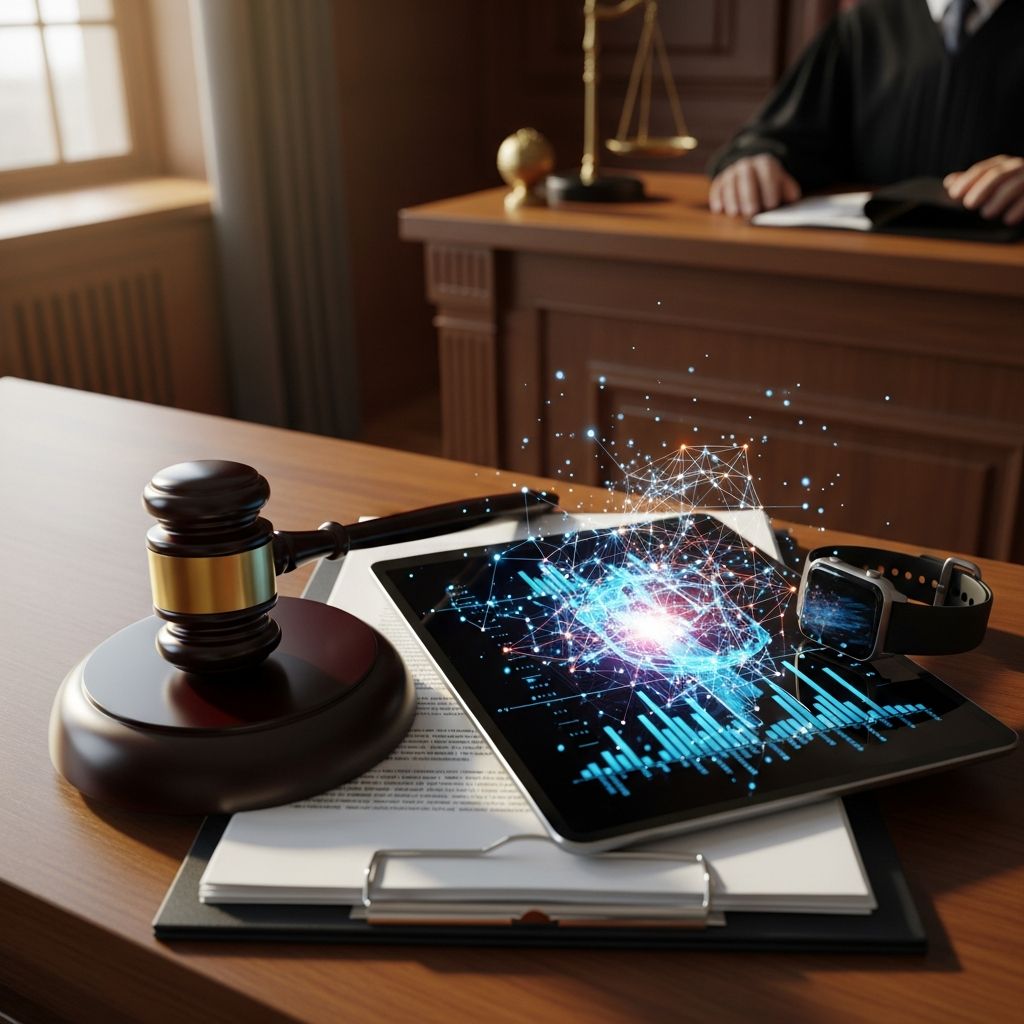
Fitness trackers and smartwatches generate vast amounts of personal data on steps, heart rates, locations, and sleep patterns, which courts now scrutinize as potential evidence in both criminal and civil matters. This data can corroborate alibis, contradict testimonies, or quantify injury impacts, but its entry into trials hinges on proving reliability, relevance, and authenticity.
The Rise of Wearables as Silent Witnesses
Over the past decade, devices from companies like Fitbit, Apple, and Garmin have exploded in popularity, collecting biometric and movement data continuously. In legal contexts, this information transforms everyday gadgets into forensic tools. Prosecutors and plaintiffs use it to challenge claims of immobility in injury cases or to timeline events in crimes. For instance, step counts can reveal if someone was active during alleged incapacitation, while heart rate spikes might indicate stress during key moments.
Courts treat this data like any digital evidence: it must pass tests for scientific validity. Experts analyze how sensors detect motion via accelerometers and gyroscopes, ensuring timestamps align and algorithms are transparent. Without such validation, judges exclude it under rules akin to Daubert standards, which demand empirical reliability.
Landmark Criminal Cases Featuring Tracker Data
In high-profile criminal trials, wearable data has swayed outcomes. A notable Connecticut Supreme Court decision in State v. Dabate (2025) upheld the admissibility of a victim’s Fitbit records. The court affirmed that non-forensic device data qualifies if experts demonstrate methodological soundness, including motion recording accuracy and error margins. This ruling set precedent: consumer wearables meet evidentiary thresholds with proper testimony.
Another early example involved a false accusation where a woman’s Fitbit contradicted her story. Downloaded activity logs showed movement inconsistent with her assault claim, turning the device into prosecutorial evidence. Such cases highlight trackers’ power to debunk alibis or prove presence at crime scenes via location pings or step patterns.
- Prosecution leverages data for timelines: Heart rate anomalies or unexpected activity bursts can undermine defenses.
- Defense counters with limitations: Devices assume wearer presence; data can be manipulated or misinterpreted.
- Expert involvement is crucial: Forensic analysts validate extraction from apps or devices.
Civil Litigation: Quantifying Injuries with Biometrics
In personal injury and products liability suits, plaintiffs’ wearable records often face subpoenas. Defendants seek pre- and post-incident comparisons to dispute disability claims. A Missouri federal case compelled a plaintiff to produce Fitbit data in a hip implant dispute, deeming activity levels directly relevant to pain and mobility allegations.
Courts prioritize discoverability over immediate admissibility concerns. In Bartis, a judge ordered partial data release despite privacy objections, noting low production burdens and inconsistencies in the plaintiff’s walking claims versus deposition admissions. Analytics firms like Vivametric further enhance utility by benchmarking individual data against population norms, proving deviations from age- or profession-expected activity.
| Case Type | Data Use | Outcome |
|---|---|---|
| Products Liability | Activity levels vs. injury claims | Data compelled; relevant to damages |
| Personal Injury | Pre/post-accident steps, heart rate | Weakens exaggerated immobility |
| Emotional Distress | Stress indicators | Potential for psychological claims |
Canadian lawyers have pioneered affirmative use, submitting a personal trainer’s diminished post-injury metrics to bolster compensation demands.
Legal Hurdles: Authentication, Relevance, and Reliability
Admitting wearable data requires navigating Federal Rules of Evidence (FRE) 401-403 for relevance, FRE 901 for authentication, and FRE 702 for expert reliability. Relevance is straightforward: Does activity contradict sworn statements? Authentication demands chain-of-custody proof, often via app logs, device syncing records, or subpoenas to manufacturers.
Reliability poses the biggest barrier. Courts probe sensor accuracy, algorithm biases (e.g., overcounting arm swings as steps), and external factors like device placement. In Dabate, NIH-funded research validated the specific model’s precision, satisfying Porter hearing scrutiny—Connecticut’s Daubert analog. Civil cases sidestep some criminal Fourth Amendment issues, easing discovery.
- Discovery Phase: Issue subpoenas or interrogatories; depose on device usage.
- Expert Validation: Hire digital forensics specialists to extract and interpret.
- Hearings: Use Daubert motions to challenge opponent data.
Privacy objections invoke Stored Communications Act limits, but courts often compel production with protective orders redacting irrelevant periods.
Strategic Considerations for Litigants
Prosecutors build cases around data gaps: Inactive trackers during claimed events raise suspicions. Defense attorneys attack via cross-examination on user errors—like forgetting to wear the device—or environmental interferences (e.g., vehicle motion inflating steps). In civil defense, consistent high activity post-accident erodes plaintiff credibility.
Plaintiffs proactively use data: Aggregate trends showing sustained decline support long-term damages. However, selective disclosure risks impeachment if full records reveal recoveries. Attorneys advise clients to preserve raw exports from apps before litigation, as manufacturers may limit historical access.
Privacy and Fourth Amendment Implications
Criminal contexts trigger constitutional scrutiny. Warrantless tracker data seizures may violate search protections, though voluntary app shares weaken this. Civil suits face fewer barriers, treating data as standard ESI. Emerging laws like CCPA regulate disclosures, prompting users to review terms granting third-party access.
Best practices: Opt for devices with strong encryption; regularly delete clouds; understand subpoena responses. Future regulations may mandate warrants for all biometric pulls.
Future Trends in Digital Forensics
As wearables integrate AI for predictive health and GPS precision, courts will grapple with black-box algorithms. Expect more precedents on multi-device correlations (e.g., phone + watch). By 2026, standards bodies may certify tracker forensics, streamlining admissibility. Litigators must stay ahead: Train on tools like Cellebrite for extractions.
Insurance firms already mine data for fraud detection, foreshadowing broader litigation roles. Ethical debates intensify: Does constant tracking erode presumption of innocence?
Frequently Asked Questions
Can Fitbit data alone convict someone?
No, it serves as corroborative evidence requiring context from experts and other proofs. Reliability hinges on validation.
How do courts get wearable data?
Via subpoenas to users or companies, device imaging, or app account exports during discovery.
Is tracker data always accurate?
Not infallible; errors from miswear, algorithms, or hacks occur. Experts quantify margins.
Can I delete data to avoid court use?
Spoliation risks sanctions; consult counsel before altering records.
What civil cases use this data most?
Personal injury, workers’ comp, and disability claims challenging activity levels.
References
- State v. Dabate and the Forensic Power of Fitness Data — Veracity Forensics. 2025. https://veracityforensics.com/when-wearables-tell-the-truth-state-v-dabate-and-the-forensic-power-of-fitness-data/
- Tracked Into Court – The Utility, Discovery, and Admissibility of Wearable Device Data — Protesolutio. 2025-09-02. https://protesolutio.com/2025/09/02/tracked-into-court-the-utility-discovery-and-admissibility-of-wearable-device-data/
- How to Use Personal Health Device Data in Litigation — Butler Snow. 2025. https://www.butlersnow.com/news-and-events/the-wearable-revolution-how-to-use-personal-health-device-data-in-litigation
- Technology – Fitbit Data Used as Evidence — HKGC Law. 2025. https://hkgclaw.com/practice-areas/personal-injury/technology-fitbit-data-used-evidence/
- The Admissibility of Data Collected from Wearable Devices in Court — Stetson University. 2017-06. https://www2.stetson.edu/advocacy-journal/wp-content/uploads/2017/06/Vinez_-_Wearables.pdf
Similar Articles








Read full bio of Sneha Tete


