
The Global Impact of the Wear Orange Movement in Human Rights
Discover how a brightly colored prison garment evolved into a powerful global symbol for civil liberties and the preservation of due process.
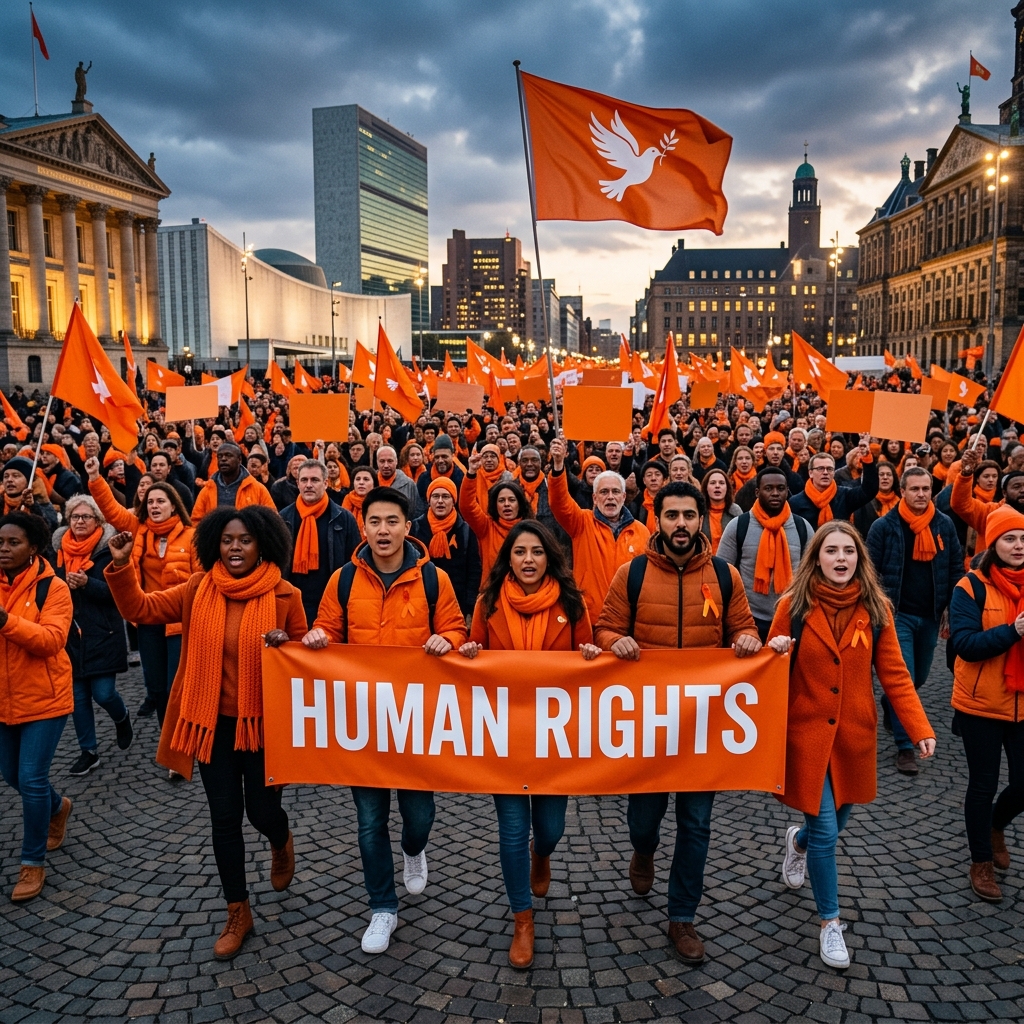
Color has long served as a shorthand for political movements, social upheaval, and demands for systemic justice. Yet, few hues are as deeply entrenched in the 21st-century battle for constitutional rights and international law as the stark, hyper-visible shade of safety orange. Originally engineered to guarantee visibility in industrial zones and later adopted by penal systems to easily identify and segregate inmates, the orange jumpsuit was thrust into the global consciousness following the establishment of military detention facilities in early 2002. Today, however, that same uniform has transcended its origins as a strict instrument of state control. Through the relentless efforts of transnational youth coalitions, civil liberties organizations, and digital activists worldwide, wearing orange has morphed into a profound declaration of resistance against indefinite detention, the suspension of habeas corpus, and the erosion of due process.
The Historical Genesis of a Protest Symbol
The timeline of the modern visual phenomenon surrounding the color orange is inextricably linked to January 11, 2002. On this date, the United States military transported the first cohort of detainees to Camp X-Ray at the Guantánamo Bay Naval Base in Cuba. The imagery beamed around the world—showing men kneeling in the Caribbean heat, clad in bright orange jumpsuits, blacked-out goggles, and heavy shackles—was intended by military officials to convey absolute security and the neutralization of unprecedented threats following the September 11 attacks. The government characterized these facilities as existing outside the normal bounds of federal courts, creating a highly contentious legal space where standard rules of evidence, trial rights, and the Geneva Convention protections were hotly contested or outright dismissed.
However, visual rhetoric is notoriously difficult to control. Instead of merely signifying the pacification of accused combatants, the orange jumpsuit quickly became emblematic of what global critics viewed as a massive overreach of executive power. Grassroots organizations and seasoned legal advocates recognized that the imagery could be subverted. By donning the very color meant to stigmatize and isolate the detainees, activists aimed to build a powerful bridge of shared humanity. The logic was powerful yet simple: if the state uses uniform colors to strip away individuality and obscure due process, the public can appropriate that same color to shine a glaring spotlight on those constitutional violations. Consequently, the date January 11—often abbreviated in organizing circles as “1/11″—became an annual day of intense international protest and reflection.
The Intersection of Digital Activism and Youth Movements
In the years following the opening of these specialized detention camps, human rights advocacy models underwent a significant and irreversible evolution. Traditional methods of community organizing, such as mailing lists and physical town hall meetings, were suddenly supercharged by the advent of digital networking. Independent platforms and youth-led initiatives began synchronizing their strategic messaging with established titans of human rights advocacy, including organizations dedicated to civil liberties and international amnesty.
This dynamic cross-pollination of grassroots energy and institutional legal expertise birthed a new paradigm of borderless solidarity. Youth activists utilized blogs, early social media platforms, and encrypted messaging to organize widespread participation. The strategic genius of this campaign lay in its sheer accessibility. Participating in a human rights demonstration no longer required a plane ticket to a nation’s capital or an advanced legal background. It simply required a participant to locate a piece of orange clothing, wear it prominently to school or work, and engage in conversations when asked about the unusual sartorial choice.
For young people living in regions with restricted freedom of assembly, digital coordination allowed them to express solidarity securely while amplifying their voices on an international stage. This method of visual disruption effectively bypassed traditional media gatekeepers, forcing the conversation about endless war and legal transparency into everyday, unavoidable spaces.
Civil Liberties and the National Security Apparatus
At the absolute center of the movement is a deeply complex debate regarding the precarious balance between national security and the preservation of civil liberties. Following catastrophic terrorist events, governments frequently argue that extraordinary threats necessitate equally extraordinary countermeasures. This rationale gave rise to controversial policies that permitted enhanced interrogation techniques, prolonged isolation, and the extended detention of individuals without formal criminal charges. Proponents of these parallel justice systems maintain that traditional judicial frameworks are ill-equipped to handle the realities of asymmetric warfare and transnational terrorism networks.
Conversely, the coalition of legal experts and activists behind these advocacy initiatives argues that compromising foundational legal principles intrinsically damages the democratic fabric of a nation. The suspension of habeas corpus—the venerable legal doctrine that prevents the government from holding people without showing valid judicial cause—is viewed not as a necessary security measure, but as a highly dangerous precedent that undermines the global rule of law.
When demonstrators stand in city squares wrapped in bright orange fabric, they are not merely protesting a specific geographic location or a single presidential administration; they are actively demanding strict adherence to constitutional frameworks and international human rights treaties. They are asking their governments to place trust in the resilience of the traditional judicial system rather than resorting to opaque, extrajudicial tribunals.
A Tool for Visibility in an Era of Forever Wars
One of the greatest challenges facing any long-term human rights campaign is the phenomenon of public fatigue. As military engagements and national security operations stretch from years into decades, the initial public shock surrounding controversial policies tends to dissipate rapidly. The general public becomes habituated to the status quo, and collective amnesia threatens to bury the plight of those still caught in the legal limbo of indefinite detention.
Visual symbols act as critical counterweights to this collective forgetting. Human cognition is highly responsive to striking imagery, and safety orange is designed specifically to capture immediate attention. When protesters stage solemn, silent vigils wearing these jumpsuits, they forcefully interrupt the banality of daily life. The color forces bystanders to stop, look, and ultimately remember the ongoing legal battles taking place out of sight.
To better understand the timeline of how legal frameworks and international advocacy efforts have intersected over the years, consider the following key developments in the ongoing debate over detention policies:
| Year | Legal & Policy Milestones | Advocacy & Campaign Actions |
|---|---|---|
| 2002 | Initial detainees arrive at offshore detention facilities; indefinite detention framework is established. | Initial shock worldwide; human rights organizations begin drafting emergency legal challenges and monitoring operations. |
| 2004 | Judicial rulings affirm that domestic courts possess the jurisdiction to consider legal appeals from detainees. | Grassroots organizations launch localized protests emphasizing the urgent restoration of the right to habeas corpus. |
| 2008 | Higher courts affirm that detainees hold a constitutional right to fundamentally challenge their detention. | Youth platforms and major civil rights groups formalize widespread visual campaigns for the January 11 anniversary. |
| 2015-Present | Executive branches attempt to outline plans to reduce prison populations, facing intense legislative roadblocks. | Advocates pivot heavily to digital storytelling, utilizing social media to keep the public engaged in the closure process. |
The Evolving Tactics of Transnational Solidarity
As the international advocacy landscape continues to shift rapidly, the tactics employed by global human rights movements have become markedly more sophisticated. In the early 2000s, actions were primarily centralized around major seats of government, such as the steps of national legislatures or supreme courts. Today, however, the campaign is characterized by its decentralized, fluid nature. During annual human rights commemorations, it is common to see coordinated actions in major European capitals, throughout Latin America, and across the Middle East simultaneously.
This globalization of political protest reflects a broader, more mature understanding that the policies implemented by global superpowers have severe, cascading effects on international norms. When a prominent democracy normalizes indefinite detention and bypasses traditional judicial scrutiny, it inadvertently provides rhetorical cover for authoritarian regimes worldwide to implement similar draconian practices under the convenient guise of internal security. Therefore, when international youth coalitions participate in these visual protests, they are essentially acting in preemptive self-defense of global human rights standards. They are signaling that the world is watching closely, and that international law must not be treated as a flexible guideline, but as an absolute, inviolable baseline for human conduct.
Why Symbolism Still Matters in Modern Policy Change
Ultimately, a critical observer might question the efficacy of wearing a specific color in the face of multi-billion-dollar national security apparatuses. Can a bright piece of fabric truly alter entrenched geopolitical strategies or shift domestic security policy? The answer lies in the nuanced mechanics of political pressure. Governments, regardless of their overwhelming power, rely fundamentally on a degree of public consent and presumed moral authority.
When an image—like a group of free citizens voluntarily donning a detention uniform—gains widespread cultural traction, it gradually chips away at that moral authority. It signals to lawmakers that a significant, highly engaged segment of the electorate finds the status quo morally and legally unacceptable. Furthermore, symbolic protests provide a crucial, low-barrier entry point for broader civic education. A single orange armband can spark a hallway conversation that leads a citizen to research the nuances of executive power, the history of international law, and the fundamental rights guaranteed by their nation’s constitution.
In this way, utilizing visual symbols in protests is not merely about closing a single facility or changing one specific rule; it is an ongoing, dynamic educational initiative aimed at immunizing the public against future civil liberties violations. As long as systems of extrajudicial detention exist in the shadows, the stark hue of safety orange will remain a vital, unavoidable tool for those relentlessly demanding justice, systemic transparency, and the restoration of fundamental human dignity.
Frequently Asked Questions (FAQs)
- What is the historical significance of the date January 11th in human rights advocacy?
January 11, 2002, marks the specific date the first group of detainees was transported to the military detention facilities at Guantánamo Bay. Consequently, human rights advocates and legal scholars globally recognize this date annually as a focal point to protest indefinite detention and demand the restoration of legal due process.
- How did the orange jumpsuit become associated with global protest movements?
Originally issued to detainees to easily identify, categorize, and segregate them within the camp, the bright orange jumpsuit was widely publicized in early military photographs. Activists swiftly appropriated the garment, turning an intended symbol of absolute compliance into a potent, unavoidable visual reminder of constitutional violations.
- What specific role do digital youth platforms play in these advocacy campaigns?
Digital networks and youth organizations have thoroughly democratized participation in human rights movements. By coordinating global actions—such as asking people worldwide to simply wear an orange item of clothing and post about it online—they bypass traditional media barriers and maintain sustained public pressure on policymakers.
- Why is the legal concept of habeas corpus such a central issue in these demonstrations?
Habeas corpus is the foundational legal right that protects individuals from unlawful and indefinite imprisonment by requiring the state to justify the detention before a judge. Many security policies post-2001 sought to bypass this principle, arguing that standard judicial reviews were unsuited for modern asymmetric threats. Activists argue that suspending this right fundamentally and permanently damages the rule of law.
References
- Wearing Orange and Proud — American Civil Liberties Union (ACLU). 2008-01-11. https://www.aclu.org/news/national-security/wearing-orange-and-proud
- How to protest Guantanamo Bay? — Amnesty International UK. 2008-01-08. https://www.amnesty.org.uk/blogs/campaigns/how-protest-guantanamo-bay
- Witness Against Torture (WAT) Organizational History — Influence Watch. 2023-01-15. https://www.influencewatch.org/non-profit/witness-against-torture-wat/
- Protesters condemn Guantanamo Bay on 10th anniversary with march from White House — The Washington Post. 2012-01-11. https://www.washingtonpost.com/blogs/post-politics/post/protesters-condemn-guantanamo-bay-on-10th-anniversary-with-march-from-white-house/2012/01/11/gIQANJMEqP_blog.html
Similar Articles








Read full bio of medha deb


