
Water Slide Injuries: Legal Rights and Accountability
Discover who is responsible for water slide accidents, key legal principles, injury stats, and steps to seek compensation effectively.
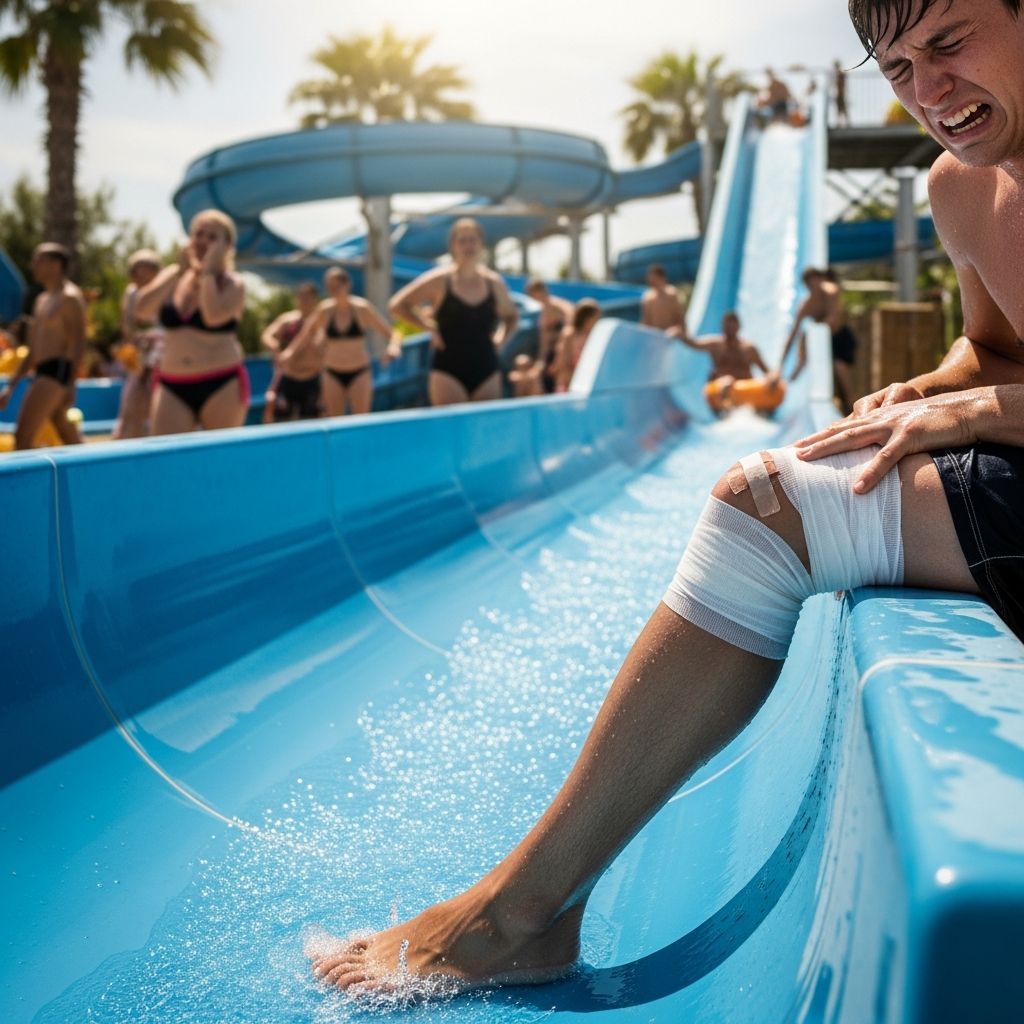
Water slides offer thrilling experiences at amusement parks and water parks, but they also pose significant risks leading to thousands of injuries annually. Understanding the legal framework surrounding these incidents empowers victims to hold responsible parties accountable and pursue rightful compensation.
Understanding the Scope of Water Slide Risks
Each year, water slides contribute to a notable number of emergency room visits across the United States. The U.S. Consumer Product Safety Commission (CPSC) reports that more than 4,200 people require hospital treatment for injuries sustained on public water slides, including cuts, concussions, fractures, and spinal damage.
These figures do not capture every incident, as many minor injuries go unreported or are handled on-site without medical escalation. Factors like high speeds, sudden drops, and water dynamics amplify dangers, especially when maintenance or supervision lapses occur.
Common Types of Injuries from Water Slides
Injuries vary in severity but follow predictable patterns based on slide mechanics and user errors. A study on water slide incidents in Jamaica documented rates of 8.1 injuries per 10,000 rides reported by operators and 3.0 per 10,000 requiring medical attention.
Typical harms include:
- Fractures and dislocations: Broken bones in arms, legs, shoulders, and pelvises, often from awkward landings or collisions.
- Head and neck trauma: Concussions, whiplash, and lacerations from impacts with slide walls or pool bottoms.
- Soft tissue damage: Lacerations, contusions, sprains, and abrasions accounting for over half of cases in some analyses.
- Spinal injuries: Disk damage or more severe trauma from high-velocity drops.
- Rare but severe cases: Pelvic fractures or drowning-related incidents in wave pools due to currents.
Children and teens face heightened vulnerability due to body size and developing bones, making supervision critical.
Who Bears Responsibility in Water Slide Accidents?
Liability often stems from negligence, where operators fail to uphold safety duties. Premises liability holds property owners accountable for maintaining safe conditions and warning of hazards.
Key responsible parties include:
- Park operators for poor maintenance, inadequate staffing, or ignoring defects.
- Manufacturers if slides have design flaws or faulty components.
- Lifeguards and staff under vicarious liability, where employers answer for employee negligence.
- In shared fault scenarios, riders may share blame for rule violations.
| Party | Potential Negligence | Example |
|---|---|---|
| Park Owner/Operator | Failure to inspect or repair | Not fixing worn slide surfaces leading to slips. |
| Manufacturer | Defective design | Slides with unsafe drop angles causing ejections. |
| Staff/Lifeguards | Inadequate supervision | Missing signs of rider distress. |
| Rider | Rule disregard | Going down headfirst against rules. |
Legal Foundations: Negligence and Premises Liability Explained
To succeed in a claim, plaintiffs must prove four negligence elements: duty of care, breach, causation, and damages.
- Duty: Parks owe invitees reasonable safety.
- Breach: Evidenced by missing warnings, poor upkeep, or untrained staff.
- Causation: Direct link between breach and injury.
- Damages: Medical costs, lost income, pain, and suffering.
Premises liability specifically targets property hazards, as seen in a 2022 Florida case where a rider sued Disney for hitting a pool bottom due to alleged inadequate warnings and maintenance.
Navigating Comparative Fault Rules
Most states apply comparative negligence, reducing awards based on plaintiff fault percentage. In a Florida example, if a park is 70% liable and the rider 30%, recovery drops by 30%.
This system encourages caution while allowing partial recovery. Pure contributory negligence states (few remain) bar claims entirely if any plaintiff fault exists.
Building a Strong Case: Evidence Essentials
Immediate action preserves proof. Crucial steps include:
- Reporting the incident to park management for official records.
- Photographing the slide, signage, and injuries.
- Collecting witness contacts.
- Securing security footage before deletion.
- Obtaining medical reports linking injuries to the event.
- Requesting maintenance and inspection logs.
Expert testimony from engineers or safety specialists often bolsters claims by identifying violations of standards like those from ASTM International.
Potential Compensation and Claim Timelines
Victims may recover economic and non-economic damages:
- Medical expenses, rehabilitation, and future care.
- Lost wages and earning capacity.
- Pain, emotional distress, and reduced quality of life.
- Wrongful death benefits for families.
Statutes of limitations vary: typically 2-3 years from injury, longer for minors. Prompt filing is vital.
Real-World Examples of Water Slide Litigation
A Polk County woman’s 2022 lawsuit against Disney’s Animal Kingdom Lodge alleged failure to warn and maintain a slide, resulting in severe pain and disability. She seeks over $50,000.
Other cases involve the Kansas Verrückt slide, linked to multiple concussions, fractures, and a fatal incident, highlighting ignored warnings.
These underscore how documentation and expert analysis drive successful outcomes.
Preventive Measures for Parks and Riders
Parks mitigate risks via regular inspections, clear rules (e.g., arms crossed, feet first), height/weight checks, and lifeguard training per Red Cross standards.
Riders should follow instructions, avoid impairments, and report concerns. Awareness reduces incidents.
Frequently Asked Questions
What should I do immediately after a water slide injury?
Seek medical attention, report to staff, document everything, and consult a personal injury attorney promptly.
Can I sue if I partly caused my injury?
Yes, in comparative fault states; your award reduces by your fault percentage.
How much are water slide injury settlements worth?
Varies widely; minor cases settle for thousands, severe ones for hundreds of thousands or more, covering proven damages.
Do water parks have immunity from lawsuits?
No, though some states limit claims via waivers or statutes; negligence overrides most protections.
Who covers injuries at private vs. public water parks?
Liability principles apply similarly; focus on negligence proof regardless of ownership.
This guide provides foundational knowledge, but personalized legal advice is essential. Consulting an experienced attorney ensures tailored strategy for your situation.
References
- Disney Water Slide Lawsuit Highlights Premises Liability Risks — WHKPA. 2022-06. https://whkpa.com/disney-water-slide-lawsuit-highlights-premises-liability-risks/
- Water Slide Injuries: Liability and Claims — Horn Wright, LLP. N/A. https://www.hornwright.com/personal-injury/amusement-park-accidents/water-slide-injuries-liability-and-claims/
- Water Park Accidents: Who’s Liable? — Roxell Richards Injury Law Firm. N/A. https://roxellrichards.com/water-park-accidents-liability-lawyer/
- Water slide injuries in Jamaica — PMC – NIH. 2018-03-29. https://pmc.ncbi.nlm.nih.gov/articles/PMC5891714/
- Water Park and Pool Liability: Who’s Responsible for Injuries? — Pulvers Thompson. N/A. https://pulversthompson.com/water-park-and-pool-liability-whos-responsible-for-injuries/
- Chicago Water Park Injuries and Deaths — Blumenshine Law Group. N/A. https://blumenshinelawgroup.com/water-park-injuries-and-deaths/
- What are the most prevalent water park injuries in Texas? — Daniels Stark. N/A. https://www.danielstark.com/blog/what-are-the-most-prevalent-water-park-injuries-in-texas/
Similar Articles








Read full bio of Sneha Tete


