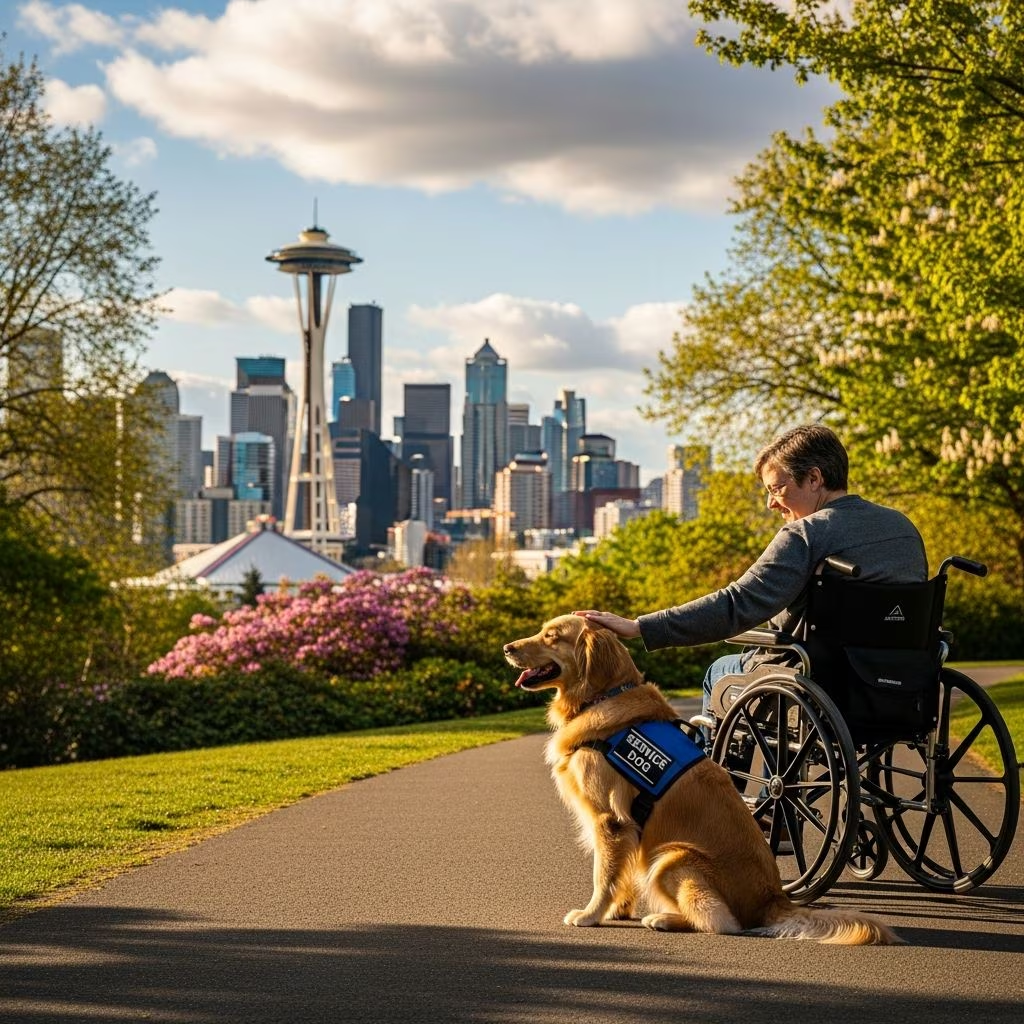
Individuals with disabilities in Washington state enjoy robust protections for using service animals in everyday settings. State and federal laws ensure access to public spaces and housing without discrimination, distinguishing trained service animals from emotional support companions.
Defining Service Animals Under Washington Regulations
Washington aligns closely with federal standards in recognizing service animals. These are primarily dogs, and in limited cases miniature horses, individually trained to perform specific tasks mitigating a person’s disability. Tasks may include guiding the visually impaired, alerting to seizures, retrieving items, or providing physical stability.
The training distinguishes service animals from ordinary pets. They must execute work or tasks directly related to the handler’s disability, not merely offer comfort or companionship. Mental health conditions qualify if the animal performs trained interventions, such as interrupting harmful behaviors or retrieving medication.
- Dogs: Most common; trained for physical, sensory, or psychiatric support.
- Miniature horses: Allowed if trained equivalently and manageable in the environment.
- Exclusions: No other species qualify as service animals in public settings; emotional support animals do not.
Public staff cannot demand certification, registration, or demonstrations of tasks. Legitimate inquiries are limited to two questions: (1) Is the animal required due to a disability? (2) What task or work is it trained to perform? No health documentation or vests are legally mandated.
Public Access Protections for Handlers
Both the Washington Law Against Discrimination (WLAD) and the Americans with Disabilities Act (ADA) mandate that service animals accompany handlers in all public accommodations. This encompasses a broad array of venues where the public is invited.
| Category | Examples Covered | Notes |
|---|---|---|
| Retail & Dining | Stores, restaurants, grocery markets | Full access; no pet policies override. |
| Entertainment | Theaters, stadiums, hotels | Includes seating areas and lobbies. |
| Government | Courthouses, libraries, schools | State facilities must comply fully. |
| Transportation | Buses, taxis (with limits) | Federal rules supplement state law. |
Religious organizations and certain private clubs are exempt unless they open facilities to the public. WLAD extends to resorts, amusement parks, and assembly halls.
Service animals in training receive identical protections as of recent updates, allowing trainers access with the same responsibilities.
Responsibilities of Service Animal Handlers
Handlers bear full accountability for their animals’ conduct. Washington requires housebreaking, control via leash or harness (unless it interferes with tasks), and compliance with local licensing and vaccination rules.
- Cleanup waste immediately.
- Ensure vaccinations and licenses where mandated by counties/cities.
- Maintain control; remove if disruptive.
- Pay for any damages caused.
Local ordinances apply equally: for instance, dogs over six months often need licensing for identification if lost.
When Access Can Be Denied
Exclusions are narrow and evidence-based. A service animal may be removed if:
- It is not housebroken.
- Out of control and handler fails to intervene effectively.
- Poses a direct threat to health/safety, based on actual behavior, not speculation.
Post-removal, facilities must offer alternative access to the handler, such as unassisted participation. Food establishments limit to dogs/miniature horses, excluding comfort providers.
Housing Rights for Service Animals and ESAs
Landlords cannot deny housing based on service animal use under WLAD and the Fair Housing Act (FHA). “No pets” clauses do not apply; no extra fees or deposits for the animal itself (damage repairs yes).
The FHA uniquely extends to emotional support animals (ESAs) in housing. ESAs provide necessary emotional aid via presence alone, without task training. A doctor’s note verifying necessity suffices; no public access rights for ESAs.
| Animal Type | Public Access | Housing Rights |
|---|---|---|
| Service Animal | Yes (WLAD/ADA) | Yes (WLAD/FHA) |
| ESA | No | Yes (FHA) |
| Pet | No | Subject to rules |
Apartments, condos, and rentals must allow full access to common areas.
Common Myths and Scams to Avoid
Beware online vendors peddling fake certifications or vests. These confer no legal weight under ADA or WLAD; DOJ explicitly rejects them.
- Myth: Vests prove service animal status. Fact: Attire irrelevant.
- Myth: All dogs qualify with a doctor’s letter. Fact: Tasks required for service status.
- Myth: ESAs enter stores. Fact: Housing only.
Report violations to local human rights commissions or HUD for housing.
Enforcement and Seeking Redress
Discrimination complaints fall under state Human Rights Commission or federal agencies. Fines apply for non-compliance, escalating for willful violations. Document incidents with photos, witnesses, and inquiry details.
Frequently Asked Questions
Can businesses ask for service animal proof?
No, only the two permitted questions. No demos or papers required.
Do service animals need special licenses?
No state requirement, but local pet laws apply.
Are miniature horses allowed everywhere dogs are?
Yes, if trained and feasible.
Can ESAs accompany in public like service dogs?
No, ESAs lack public access rights.
What if my service animal causes damage in housing?
Handler liable, like any occupant.
Are service animals in training protected?
Yes, full rights apply.
This guide synthesizes key protections (word count: 1678, excluding metadata/HTML tags). Consult legal experts for personal cases.
References
- Service Animals Comparison Guide: Public Access — ADANW. 2023. https://nwadacenter.org/factsheet/service-animals-comparison-guide-public-access
- Service Animal Guidelines — City of Vancouver, WA. 2024. https://www.cityofvancouver.us/city-managers-office/accessibility-and-inclusion-at-the-city-of-vancouver-for-people-with-disabilities/service-animal-guidelines/
- Washington Laws on Service Dogs and Emotional Support Animals — Nolo. 2024. https://www.nolo.com/legal-encyclopedia/washington-laws-on-service-dogs-and-emotional-support-animals.html
- Service and Companion Animals — Washington Law Help. 2024. https://www.washingtonlawhelp.org/en/service-and-companion-animals
- Service Animals Policy — University of Washington Civil Rights. 2023. https://www.washington.edu/civilrights/policies-and-guidance/ada-guidance/service-animals/
- Service Animals and the Washington Law Against Discrimination — WLA. 2015-06-01. https://www.wla.org/assets/WALE/2015WALEConference/Service%20Animals%20and%20the%20Washington%20Law%20Against%20Discrimination.pdf