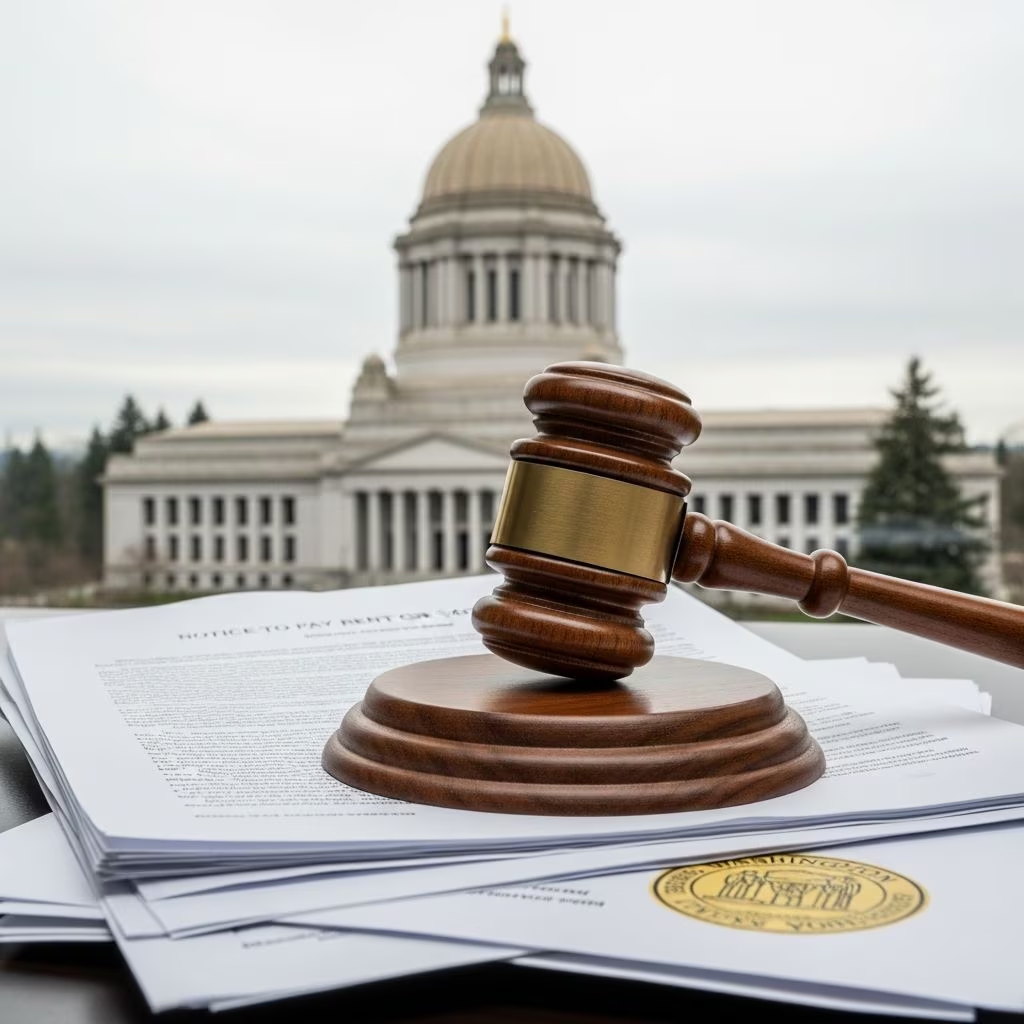
Evicting a tenant in Washington State is a complex legal process governed by state statutes, local ordinances, and court procedures. The state has enacted increasingly stringent tenant protection measures, making it essential for landlords and property managers to understand every step of the eviction process. Washington courts refer to evictions as “unlawful detainer actions,” and these cases are primarily regulated under the Revised Code of Washington (RCW) 59.12, 59.18, and 59.20. Understanding the proper procedures not only protects your legal standing but also prevents costly delays and ensures compliance with state requirements.
Understanding Valid Grounds for Eviction
Before initiating any eviction proceeding, landlords must establish legal cause. Washington law does not permit no-cause evictions; you must have a specific, documented reason to remove a tenant. The primary grounds for eviction fall into several categories, each with distinct notice requirements and procedures.
The most common reason for eviction is non-payment of rent. If a tenant fails to pay rent within a five-day grace period, landlords can serve notice. Other valid grounds include violations of the lease agreement, such as unauthorized occupants or violations of building rules. Additionally, criminal activity or waste on the premises—meaning deliberate or negligent damage to the property—constitutes valid eviction grounds. Some violations are considered “curable,” meaning the tenant can remedy the situation, while others are “non-curable” and cannot be fixed, such as criminal conduct.
Washington has also strengthened eviction standards in recent years, requiring clear written documentation of the reason for termination. Landlords must maintain detailed records of tenant violations and any attempts to resolve issues before filing for eviction.
Notice Requirements: The Foundation of Legal Eviction
Serving proper notice is the critical first step in any eviction. Washington law requires landlords to provide tenants with written notice specifying the eviction reason and a reasonable timeframe to comply or vacate. The notice period varies depending on the nature of the violation.
Eviction Notice Timelines by Violation Type
- Non-Payment of Rent: A 14-day notice to pay or vacate must be served. Some federally-funded properties require 30 days’ notice. Tenants have this period to pay outstanding rent or leave the premises.
- Curable Lease Violations: A 10-day notice to comply applies to violations that can be remedied, such as unauthorized vehicles or minor property damage. The tenant can cure the violation within this timeframe to avoid eviction.
- Non-Curable Violations: A 3-day notice to quit applies to violations that cannot be fixed, such as criminal activity. No opportunity to remedy exists; the tenant must vacate within three days.
Washington law requires that all notices be served in a legally valid manner. The process must follow strict procedural rules to ensure the tenant receives proper notice.
Service of Notice: Meeting Legal Requirements
Proper service of the eviction notice is mandatory and must follow specific procedures established by Washington law. Failure to serve notice correctly can invalidate the entire eviction proceeding and result in dismissal of your case.
The service process requires a structured approach:
- Initial Attempt: Always attempt personal service first by knocking on or ringing the door of the residence, presenting a copy to each adult occupant.
- Personal Service Alternative: If personal service is unsuccessful, leave copies with a person of suitable age and mail via USPS Certified Mail with First-Class postage to each occupant and “All Other Occupants.”
- Mailing Location: Until mid-2025, certified mail must be sent from within the county where the property is located.
- Documentation: Maintain a Declaration of Service proving how and when notice was delivered. This documentation is essential if the case proceeds to court.
Courts increasingly require evidence of communication and genuine attempts to resolve disputes before eviction filings. Some jurisdictions now mandate mediation programs or proof that landlords have tried to work with tenants.
The Court Process: Filing and Proceeding to Trial
Once the notice period expires without resolution, landlords may file an unlawful detainer action with the court. This formal legal process involves several stages, each with specific requirements and timelines.
Steps in the Eviction Lawsuit
- File the Complaint: Submit the eviction complaint to the appropriate court, including all documentation of notice service and the basis for eviction.
- Court Serves Tenant: The court issues a summons, which must be officially served on the tenant, notifying them of the lawsuit and court date.
- Tenant Files Answer: The tenant has a specified period to respond to the complaint, often filing an answer that may include defenses.
- Court Hearing: Both parties appear before a judge, present evidence, and argue their positions. Courts now require continuances to allow eligible tenants to obtain legal representation under Washington’s right-to-counsel law.
- Judgment: The judge issues a written decision. If the landlord prevails, the court enters judgment in favor of eviction.
A critical development in Washington eviction law is the state’s groundbreaking right-to-counsel program. Washington became the first state to guarantee counsel for indigent tenants in eviction cases when Governor Jay Inslee signed SB 5160 in April 2021. This means eligible tenants may have attorneys provided at state expense, which can extend court timelines as attorneys prepare for representation.
Obtaining and Executing the Writ of Restitution
If the court rules in your favor, the next phase involves obtaining and executing the Writ of Restitution, which is the court document authorizing the sheriff to forcibly remove the tenant and restore possession to the landlord.
After Judgment: If successful, the court issues a Writ of Restitution. A three-judicial-day waiting period applies (excluding the service day, weekends, and holidays) before the sheriff can execute the writ. This brief window allows tenants a final opportunity to vacate voluntarily.
Sheriff Enforcement: If tenants do not vacate voluntarily, the landlord must contact the assigned sheriff’s officer to schedule the eviction. In King County, the sheriff’s fee is $30 per hour plus mileage for execution of the writ. On the scheduled eviction date, the sheriff enforces the writ and physically removes the tenant and their belongings from the property.
Landlords bear significant responsibility during the sheriff’s execution. You must:
- Provide labor and equipment (trash bags, boxes, etc.) for property removal
- Sign the Eviction Data Form at the time of eviction
- Remove tenant property from the public right-of-way within 24 hours to avoid fines
- Ensure hazardous items are handled appropriately by law enforcement or secured by tenants if legal
Timeline Expectations and Planning Considerations
Many landlords are surprised by how long the eviction process actually takes. While government estimates sometimes suggest one to three months, reality is considerably different in most Washington jurisdictions.
Standard Timeline: Property managers should plan for four to six months from initial notice to final removal. Some cases take considerably longer, potentially extending into years in complex situations. Multiple factors contribute to these extended timelines, including court backlogs, tenant defenses, right-to-counsel delays, and rental assistance program processing.
HB 1003 Compliance Impact: Washington’s right-to-counsel law requires courts to delay proceedings sufficiently for tenants to obtain legal representation. Additionally, courts must consider whether rental assistance programs can resolve the dispute before proceeding to trial.
Recent Law Changes: Beginning in 2026, courts must delay eviction trials for non-payment of rent until at least 90 days following approval of health-related social assistance programs. This change specifically addresses situations where tenants may receive assistance to pay back rent.
Local Restrictions and Seasonal Eviction Bans
Beyond state law, Washington cities have imposed additional restrictions that significantly affect eviction timelines and availability. These local ordinances provide tenant protections during vulnerable periods and add substantial complexity to property management.
Seattle Eviction Restrictions
Winter Eviction Ban (Ordinance 126041): From December 1 through February 28, evictions of low and moderate-income tenants are prohibited, with narrow exceptions for criminal activity, owner move-in (which requires 90 days’ notice), or condemned units.
School Year Eviction Ban (Ordinance 126369): From September through mid-June, households with school-aged children or school employees cannot be evicted, with similar exceptions.
Practical Impact: These dual bans mean Seattle evictions are primarily limited to summer months, requiring landlords to plan years in advance for evictions during restricted periods.
Other Washington Cities
Tacoma and other municipalities have implemented different restrictions. Tacoma’s eviction ban shifts the window outside November through April, requiring different timing strategies than Seattle.
Recent Legislative Developments Affecting Evictions
Washington State continues to strengthen tenant protections through new legislation. In 2025-2026, several developments have reshaped the eviction landscape:
- Rent Increase Cap: New state law controls the amount that rents can increase annually, which advocates believe will help reduce eviction numbers
- Right-to-Counsel Program Launch: The right-to-counsel program launched January 5, 2026, formalizing the provision of counsel for Medicaid-eligible residents in long-term care facility discharges and expanding protections for eviction cases
- Court Continuance Requirements: Washington’s Supreme Court adopted rules requiring uniform procedures for first appearances, with courts mandated to advise tenants of right-to-counsel and continue cases for a reasonable time to obtain representation
- 90-Day Delay for Health-Related Assistance: Courts must now delay non-payment eviction trials until at least 90 days after approval of health-related social assistance
Compliance Obligations and Common Pitfalls
Non-compliance with Washington’s eviction procedures can have serious consequences, including case dismissal, sanctions, and additional penalties.
Documentation Requirements: Maintain detailed records of all tenant violations, communications, and notices. Use legally compliant forms designed for Washington. RHAWA (Rental Housing Association of Washington) provides updated forms and legal notices meeting current standards.
Registration and Licensing: Ensure your properties comply with city registration and business licensing requirements. Some jurisdictions now require landlords to maintain active registration before proceeding with evictions.
Mediation Attempts: Many jurisdictions increasingly expect landlords to demonstrate genuine efforts to resolve disputes through communication or mediation before initiating court proceedings.
Eviction Data Form Completion: For properties in King County and other jurisdictions, complete Eviction Data Forms accurately. The sheriff requires this documentation before executing writs of restitution.
Rising Eviction Rates and Program Capacity Issues
Washington State has experienced a significant increase in eviction filings in recent years. In King County alone, eviction filings in January 2025 were 66% higher than pre-pandemic levels. This surge has created challenges for the state’s right-to-counsel program, which cannot represent everyone who qualifies for assistance. Officials are examining potential cuts to federal rental assistance and Medicaid as contributing factors to the rising eviction crisis.
However, the program has achieved meaningful results: since 2021, 56% of people facing eviction were allowed to remain in their housing through case dismissals or negotiated agreements.
Frequently Asked Questions About Washington Evictions
Q: Can I evict a tenant without cause in Washington State?
A: No. Washington law requires landlords to have legal cause for eviction. Valid grounds include non-payment of rent, lease violations, criminal activity, or property damage. No-cause evictions are prohibited.
Q: What is the shortest notice period for eviction?
A: A 3-day notice to quit applies to non-curable violations like criminal activity. However, non-payment cases require 14 days’ notice, and federally-funded properties may require 30 days.
Q: How long does the eviction process typically take?
A: Plan for 4-6 months, with many cases taking significantly longer. Right-to-counsel delays, rental assistance processing, court backlogs, and local eviction bans can extend timelines considerably.
Q: What is HB 1003 and how does it affect evictions?
A: HB 1003 is Washington’s right-to-counsel law, making the state the first to guarantee attorneys for indigent tenants in eviction cases. This delays proceedings to allow tenants time to obtain legal representation.
Q: Are there seasonal restrictions on evictions in Washington?
A: Yes. Seattle prohibits evictions December 1-February 28 (winter ban) and September-mid-June (school year ban) for most low-income and school-household tenants. Other cities have different restrictions.
Q: What happens if I don’t serve notice correctly?
A: Improper service can invalidate the entire eviction proceeding. Courts require strict adherence to service procedures, including personal attempts and certified mail documentation.
Q: What costs am I responsible for during sheriff execution?
A: You must pay the sheriff’s fee (typically $30/hour plus mileage) and provide labor and equipment for property removal. Tenant belongings must be removed from public right-of-way within 24 hours.
Q: Can tenants delay eviction by filing answers or defenses?
A: Yes. Tenants can file answers and present defenses in court. Additionally, courts must now grant continuances allowing time for right-to-counsel representation.
Q: What legal forms should I use for Washington evictions?
A: Use RHAWA’s updated notices and Declarations of Service, which meet current Washington legal standards. Using outdated or non-compliant forms increases risk of case dismissal.
Q: What is “unlawful detainer action”?
A: This is Washington’s formal term for the eviction lawsuit filed in court. It is governed by RCW 59.12, 59.18, and 59.20. The case determines whether the tenant’s possession of the property is “unlawful.”
References
- Washington 2026 Rental Law and Compliance Guide for Landlords — Property Managers Seattle. 2026. https://propertymanagersseattle.com/washington-rental-law-compliance-guide/
- Understanding the Eviction Process in Washington State: Focus on King County — Rental Housing Association of Washington (RHAWA). 2025. https://www.rhawa.org/blog/understanding-the-eviction-process-in-washington-state-focus-on-king-county
- Washington Landlord Tenant Laws and Rights for 2026 — Snappt. 2026. https://snappt.com/blog/washington-landlord-tenant-laws/
- All About Washington State’s Groundbreaking Eviction Right to Counsel — Civil Right to Counsel. 2025. https://civilrighttocounsel.org/major_developments/all-about-washington-states-groundbreaking-eviction-right-to-counsel/
- Washington Eviction Process [2025] — Innago. 2025. https://innago.com/washington-eviction-process/
- Evictions About Rent — Washington Law Help. 2025. https://www.washingtonlawhelp.org/en/evictions-about-rent
- January 2026 Law Changes — Multifamily Northwest. 2026. https://www.multifamilynw.org/news/january-2026-law-changes