
Washington Criminal Statutes of Limitations Explained
Understand how long prosecutors have to file criminal charges in Washington and why those deadlines matter for your rights.
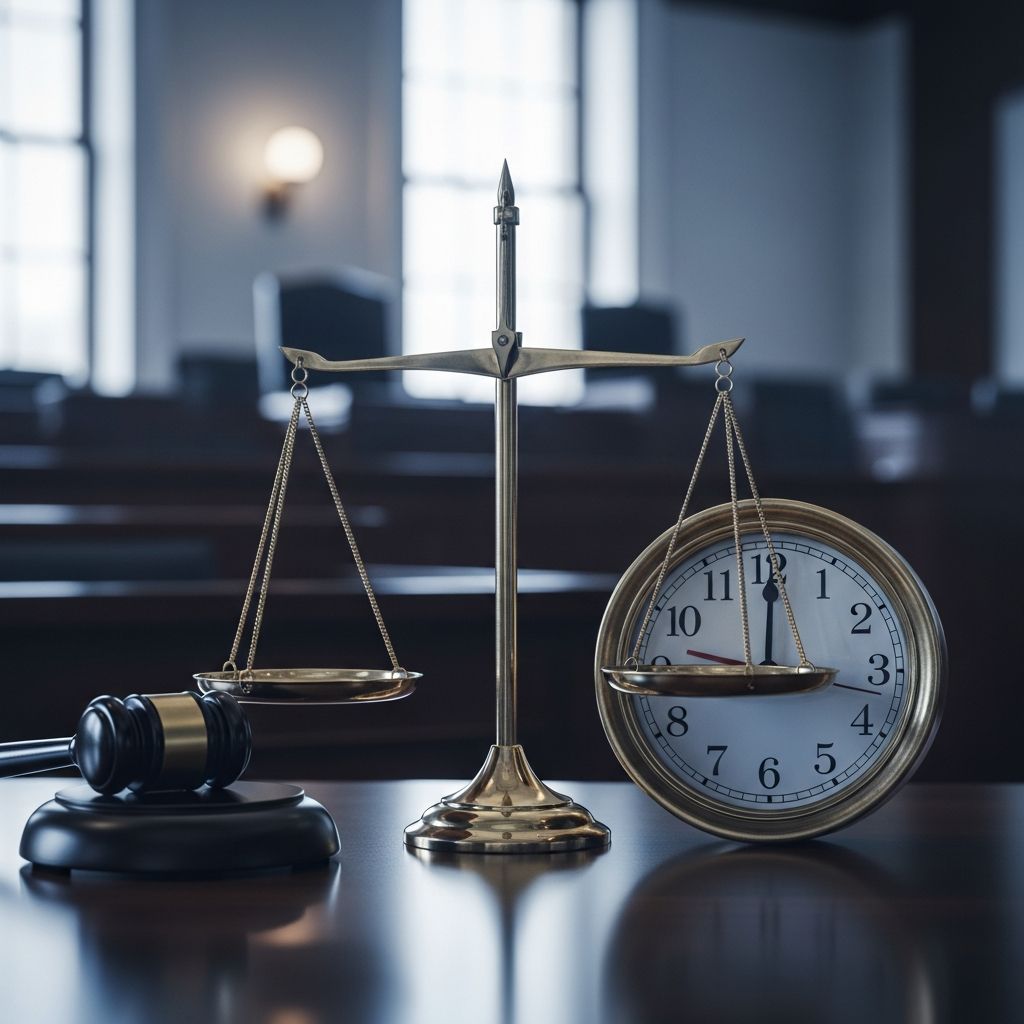
The criminal statute of limitations in Washington determines how long prosecutors have to file formal charges after a crime occurs. If the government files too late, the case can usually be dismissed as time-barred under Washington law.
This guide summarizes the key time limits, major exceptions, and practical implications of Washington’s criminal statute of limitations, primarily governed by RCW 9A.04.080 and related statutes.
What Is a Criminal Statute of Limitations?
In criminal law, a statute of limitations is a legal deadline for starting a prosecution. After this period expires, the state generally loses the power to bring charges for that particular offense.
- Purpose: promote fairness, protect against very old cases with stale evidence, and encourage timely investigations.
- Effect: if charges are filed after the deadline, the defendant can ask the court to dismiss the case as time-barred.
- Scope: time limits vary by crime type and seriousness; some serious crimes have no time limit at all.
Washington’s specific rules are set out in statute rather than judge-made law, so the text of the Revised Code of Washington (RCW) controls.
Overview of Washington’s Time Limits for Criminal Charges
RCW 9A.04.080 lists detailed time limits for many specific crimes and also provides general deadlines for felonies and misdemeanors.
| Category of offense | Typical time limit to file charges | Examples / notes |
|---|---|---|
| No limitation | Any time after the crime | Certain homicides and serious sex offenses (e.g., murder, some child rape cases). |
| 20 years | Up to 20 years after commission | Selected serious felonies, including some non-homicide violent offenses. |
| 10 years | Up to 10 years after commission (or longer if victim is a minor, in some crimes) | Certain felonies such as some sex offenses and crimes involving public officers. |
| 6 years | Up to 6 years after commission or discovery | Certain financial and fraud-related felonies (e.g., some theft and fraud statutes). |
| 5 years | Up to 5 years after commission | Selected class C felonies under specific chapters (e.g., some tax-related crimes). |
| General felonies | Usually 3 years | Applies when no specific longer period is listed in RCW 9A.04.080. |
| Gross misdemeanors | 2 years | More serious misdemeanors, often with higher maximum penalties. |
| Simple misdemeanors | 1 year | Less serious misdemeanors such as many low-level offenses. |
The specific statute and classification of the offense ultimately determine which deadline applies.
Crimes With No Statute of Limitations
For certain extremely serious crimes, Washington allows prosecution at any time, regardless of how many years have passed. RCW 9A.04.080 explicitly lists these offenses.
- Murder (including varying degrees)
- Homicide by abuse
- Arson if a death results
- Vehicular homicide
- Vehicular assault if a death results
- Certain hit-and-run injury accidents when a death results
- Some first-degree rape cases involving a victim under a specified age
For these crimes, advances such as DNA testing and new evidence can lead to charges decades later, reinforcing Washington’s policy that the most serious harms remain prosecutable indefinitely.
General Deadlines for Felonies, Gross Misdemeanors, and Misdemeanors
When a specific crime is not singled out with a unique deadline, Washington applies general time limits that depend on whether the offense is a felony, gross misdemeanor, or misdemeanor.
Felony Offenses
For most felonies without a special rule, the general statute of limitations is three years from the commission of the offense.
- Applies to many non-homicide, non-sex felonies not otherwise listed in RCW 9A.04.080.
- Does not override longer limits (such as 6, 10, or 20 years) or crimes with no limitation.
- Complex financial or fraud cases may instead follow extended time frames tied to discovery of the crime.
Gross Misdemeanors
Washington sets a two-year time limit for prosecuting most gross misdemeanors.
- Gross misdemeanors are more serious than simple misdemeanors and may involve higher fines or longer possible jail terms.
- Examples can include certain driving offenses and lower-level assaults, although the exact classification depends on the statute.
- Some specific gross misdemeanors may be subject to special provisions or tolling rules.
Simple Misdemeanors
For standard misdemeanors, the state generally has one year from the date of the offense to file charges.
- Commonly covers lower-level non-felony conduct.
- If prosecutors do not file within one year (and no tolling applies), the case is typically time-barred.
Extended Time Limits for Certain Crimes
Washington law reflects a policy choice that some crimes—especially those involving vulnerable victims or complex financial misconduct—warrant longer charging periods.
Sex Offenses and DNA-Based Extensions
In prosecutions for certain sex offenses, Washington modifies when the clock starts running. Under RCW 9A.04.080 and related provisions, the limitation period may run from the later of:
- the date the crime was committed, or
- a specified period after the suspect’s identity is conclusively established by DNA testing or certain photographic identification.
This rule recognizes that some sex crimes are difficult to investigate promptly, and modern forensic tools may solve cases long after the initial incident.
Financial, Fraud, and Public Corruption Offenses
Washington also provides longer statutes of limitations for some economic and public integrity crimes, reflecting their complexity and the time it may take to detect them.
- Certain racketeering and organized crime offenses can have up to a six-year limit.
- Some felony fraud and theft offenses tied to deception or vulnerable adults may also carry extended windows, sometimes measured from discovery as well as commission.
- Felonies committed by public officers in connection with their duties may be subject to special 10-year provisions in older versions of the statute, with details governed by the current RCW text.
Because these categories are technical, attorneys typically consult the exact statutory language to confirm the applicable period in a given case.
How Tolling Can Pause the Clock
Not all periods of time count toward the statute of limitations. Washington law includes tolling rules that temporarily stop the clock under specific circumstances.
Absence from the State
Under RCW 9A.04.080(2), the limitation period does not run while the person charged is not “usually and publicly” living in Washington.
- If a suspect leaves Washington or hides their usual residence status, the statute of limitations can be paused.
- This prevents individuals from escaping prosecution simply by staying out of the state until the normal time limit expires.
Defective or Dismissed Charges
If prosecutors file charges within the time limit but the indictment, complaint, or information is later set aside, Washington law can extend the limitation period by the time between filing and dismissal.
- This rule avoids penalizing the state when a timely filed case is dismissed on technical grounds.
- The extension length generally corresponds to the duration of the earlier, now-dismissed case.
When Does the Clock Start Running?
In most criminal cases, the statute of limitations begins when the crime is committed. However, Washington makes important exceptions for certain offenses.
- Standard rule: the clock normally starts on the date of the offense.
- Discovery-based rules: for some fraud, financial, and theft-related crimes, the period may run from the later of commission or discovery, recognizing that victims may not know about the wrongdoing right away.
- Sex crimes with forensic evidence: as discussed above, the starting point may be delayed until DNA or photographic evidence identifies a suspect, subject to statutory limits.
Determining the precise start date can be legally complex, especially in cases involving ongoing conduct or a continuing course of criminal behavior.
Why Statutes of Limitations Matter
The statute of limitations impacts both the prosecution and the defense in significant ways.
For Defendants
- Constitutional fairness: very old cases can undermine a fair defense because witnesses forget, move away, or die, and physical evidence can deteriorate.
- Predictability: after a certain time, individuals can have certainty that they will not face prosecution for past conduct covered by an expired limitation period.
- Defense strategy: when charges are filed close to or after the deadline, challenging the timeliness of prosecution is a critical legal issue.
For Victims and the Public
- Access to justice: longer or eliminated limitations for serious crimes reflect a policy to prioritize victim rights, particularly in homicide and serious sexual violence cases.
- Evidence gathering: statutes encourage early reporting and investigation, when evidence is fresher and outcomes may be more reliable.
- Public safety: allowing prosecution of grave offenses at any time supports long-term accountability and deterrence.
Criminal vs. Civil Statutes of Limitations
It is important to distinguish criminal from civil statutes of limitations. This guide focuses on criminal cases, where the government prosecutes an alleged offender.
- Criminal limitations are mainly found in RCW Title 9A, especially RCW 9A.04.080.
- Civil limitations for lawsuits (like injury or contract claims) are largely covered in a different chapter of Washington law, RCW 4.16.
- The deadline to sue someone in civil court is separate from, and may be longer or shorter than, the deadline for prosecutors to bring criminal charges.
Practical Tips for Understanding a Specific Case
Because Washington’s statute of limitations scheme is detailed and offense-specific, it is rarely enough to know only the general felony or misdemeanor deadlines.
Key steps typically include:
- Identifying the exact statutory citation for the charged or potential crime.
- Checking whether that offense appears explicitly in RCW 9A.04.080 with its own special time limit.
- Determining whether any tolling rules (such as absence from the state) apply.
- Analyzing when the limitation period began—date of offense, date of discovery, or date of forensic identification, depending on the crime.
Because these questions can be decisive, people facing potential or pending charges generally benefit from individualized legal advice based on current statutes and case law.
Frequently Asked Questions (FAQs)
How long does Washington have to file felony charges?
For most felonies without a special rule, Washington has about three years from the date of the offense to file charges, but many serious or specific felonies have longer periods or no limit at all, depending on RCW 9A.04.080.
Can murder charges be filed decades later in Washington?
Yes. Murder and certain related homicide offenses have no statute of limitations in Washington, so they may be prosecuted at any time after the crime, regardless of how many years have passed.
What if the suspect left Washington after the crime?
If a person is not “usually and publicly” residing in Washington, the statute of limitations period does not run during that time, effectively pausing the clock until they return or are otherwise within the state for limitation purposes.
Does the statute of limitations work the same for sex crimes?
Not always. Many sex offenses follow special rules, including later start dates tied to DNA-based identification or extended deadlines when the victim is a minor, so these cases often have significantly longer or modified limitation periods.
Is the civil deadline to sue the same as the criminal deadline?
No. Criminal and civil statutes of limitations are separate. Criminal time limits are found mainly in RCW 9A.04.080, while civil deadlines for lawsuits are addressed in RCW 4.16 and related provisions.
References
- RCW 9A.04.080 — Limitation of actions — Washington State Legislature. 2025-01-01 (current through 2025 updates). https://app.leg.wa.gov/rcw/default.aspx?cite=9A.04.080
- RCW 4.16 — Limitation of actions — Washington State Legislature. 2024-01-01. https://app.leg.wa.gov/rcw/default.aspx?cite=4.16
- What Are Criminal Statute of Limitations in Washington? — Nolo / CriminalDefenseLawyer.com. 2025-02-15. https://www.criminaldefenselawyer.com/criminal-case-statute-of-limitations/WA-felonies-misdemeanors.htm
- Washington Revised Code RCW 9A.04.080: Limitation of actions — Justia. 2005-01-01 (historic statutory text). https://law.justia.com/codes/washington/2005/title9a/9a.04.080.html
- Statutes of Limitations for Washington State — Seattle Law Hawks. 2023-06-01. https://seahawklaw.com/statute-of-limitations.php
- Washington Statute Of Limitations — Bungay Personal Injury Law. 2023-05-10. https://www.bungaylaw.com/washington-statute-of-limitations/
Similar Articles








Read full bio of medha deb




