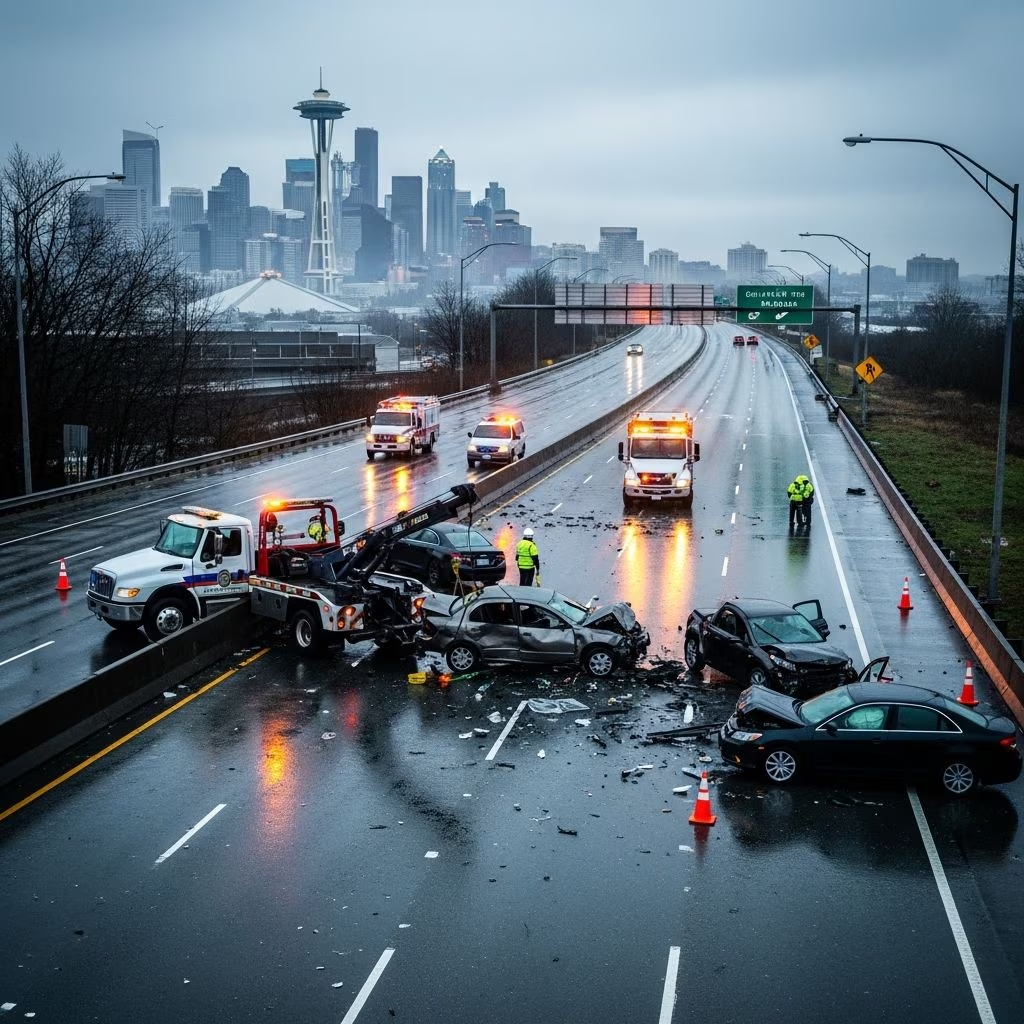
Vehicle collisions in Washington State demand swift action and awareness of specific legal frameworks to safeguard rights and promote accountability. This guide details key obligations, timelines for claims, fault determination, insurance essentials, and recent legislative shifts, empowering drivers and victims alike.
Immediate Response Protocols at Crash Sites
Washington law mandates staying at the scene of any collision involving injury or property damage exceeding $1,000. Drivers must exchange personal and insurance details, render aid to the injured, and summon authorities if harm or substantial damage occurs.
For minor incidents with parked, unattended vehicles and damage under $1,000, leavers must affix a note with contact and policy information, followed by a state report within four days per RCW 46.52.020. Police-generated reports become crucial evidence; victims should secure copies promptly for insurers.
- Remain present unless released by officers or medically transported.
- Relocate drivable cars from traffic lanes when safe.
- Undergo medical checks, as latent issues like concussions or soft-tissue damage may emerge.
Non-compliance risks hit-and-run charges, complicating fault proofs and compensation pursuits.
Time Limits for Pursuing Injury Compensation
Personal injury and property damage claims from crashes fall under a three-year statute of limitations, commencing on the incident date or injury discovery, as codified in RCW 4.16.080(2). This binds lawsuits against at-fault parties.
The discovery rule offers narrow extensions for non-obvious harms, but courts apply it stringently—prompt filing remains safest. Special pauses apply: minors gain until age 21; incapacity tolls the clock; absent culprits may suspend it during evasion.
| Scenario | Timeline Start | Key Notes |
|---|---|---|
| Standard Crash | Date of Collision | 3 years for injury/property suits |
| Minors (<18) | 18th Birthday | Until age 21 |
| Mental Incapacity | Capacity Restoration | Tolled meanwhile |
| At-Fault Absent | Return/Presence | Suspends during hiding |
Insurance notifications often precede legal deadlines; delays forfeit coverage despite open statutes.
Determining Responsibility in Multi-Vehicle Incidents
Washington employs modified comparative negligence, barring recovery if plaintiff fault exceeds 50% (RCW 4.22.005). Damages proportionately reduce by contributor shares, incentivizing careful apportionment.
Courts weigh elements like speed, signals, road adherence, and distractions. Plaintiffs over 51% culpable lose claims entirely, underscoring evidence’s role—photos, testimonies, black boxes prove pivotal.
Compensable Losses and Claim Categories
Victims pursue economic and non-economic awards:
- Medical Costs: Bills, therapies, future care.
- Lost Income: Wages, benefits, capacity diminishment.
- Pain/Discomfort: Physical agony, emotional toll.
- Asset Harm: Repairs, replacements, towing.
- Long-Term Effects: Scars, disabilities.
Quantifying intangibles involves expert inputs; robust records maximize settlements. Uninsured/underinsured motorist provisions activate when at-fault coverage falls short.
Insurance Mandates for Washington Drivers
State minimums demand $25,000 bodily injury per person, $50,000 per occurrence, and $10,000 property damage. Personal Injury Protection (PIP) covers regardless of fault up to policy caps, spanning medicals and 60% lost wages.
| Coverage Type | Minimum Limit | Purpose |
|---|---|---|
| Bodily Injury (per person) | $25,000 | Others’ medicals/pain from your fault |
| Bodily Injury (per accident) | $50,000 | Multiple victims |
| Property Damage | $10,000 | Vehicle/other fixes |
| PIP | Policy-defined | Your injuries irrespective of blame |
Higher limits shield against judgments; no-fault PIP eases initial recoveries sans liability fights.
Recent Reforms Bolstering Road Safety
Effective January 1, 2025, HB 2029 escalates penalties for drivers negligently harming vulnerable users—pedestrians, cyclists, mobility device operators. Death incurs fines up to $5,000, 10-year license suspension; grave injuries bring $2,500 fines, 5-year bans. “Negligent” means failing ordinary care endangering others.
2026 DUI enhancements extend felony look-backs to 15 years from 10, amplifying repeat-offender penalties and aiding civil leverage. Seatbelt emphasis cuts fatality risks 45%, injury 50%. Workers’ comp expansions enforce good faith on self-insureds.
Navigating Claims: Practical Steps Post-Crash
Post-collision roadmap:
- Prioritize health—treat even mildly.
- Alert police/insurers within days.
- Capture scene details, contacts, damages.
- Consult counsel early for deadline strategy.
- File suits pre-expiration; negotiate settlements.
Attorneys discern nuances like tolling, negotiate aggressively, marshal proofs for optimal outcomes.
Frequently Asked Questions
What if the culprit flees or lacks insurance?
Statutes may pause during absence; tap your uninsured motorist coverage. Swift attorney input preserves options.
Does delayed pain extend filing time?
Discovery rule potentially, but narrowly—act fast to evade bars.
Who pays if both partly at fault?
Shared proportionally until 51% plaintiff fault forfeits all.
Must I report fender-benders?
Yes, if over $1,000 or injured; minor parked hits need notes/reports.
How do 2025 vulnerable user laws impact claims?
Harsher penalties against negligent drivers strengthen liability proofs, boosting compensations.
Evidence Preservation Best Practices
Strong cases hinge on documentation:
- Scene snapshots (vehicles, roads, signals).
- Witness details/statements.
- Medical timelines/reports.
- Repair quotes, wage verifications.
- Event logs for insurers/litigators.
Digital tools, dashcams enhance accuracy amid disputes.
Seeking Justice: When to Engage Experts
Complex crashes—multiple parties, disputes, grave harms—warrant legal pros. They decode laws, counter insurer ploys, litigate if needed, securing superior awards versus solo efforts.
Free consults assess viability sans commitment; contingency bases align incentives.
References
- Statute of Limitations Car Accident Claims in Washington — Bellevue Injury Lawyer. 2024. https://www.bellevueinjurylawyer.com/statute-of-limitations-car-accident-washington/
- Washington State Car Accident Laws — Wells Trumbull. 2024. https://wellstrumbull.com/washington-state-car-accident-laws/
- New Washington state law aiming to protect ‘vulnerable road users’ — KOMO News. 2024-12-31. https://komonews.com/news/local/new-washington-state-laws-to-protect-vulnerable-road-users
- What Washington Injury Victims Need to Know Going Into 2026 — Tacoma Injury Law. 2025. https://tacomainjurylaw.com/2026-washington-injury-laws-victim-rights/