
Virginia’s Alcohol Liability Rules Explained
Understanding Virginia's strict no-liability stance on alcohol servers and hosts in injury cases.
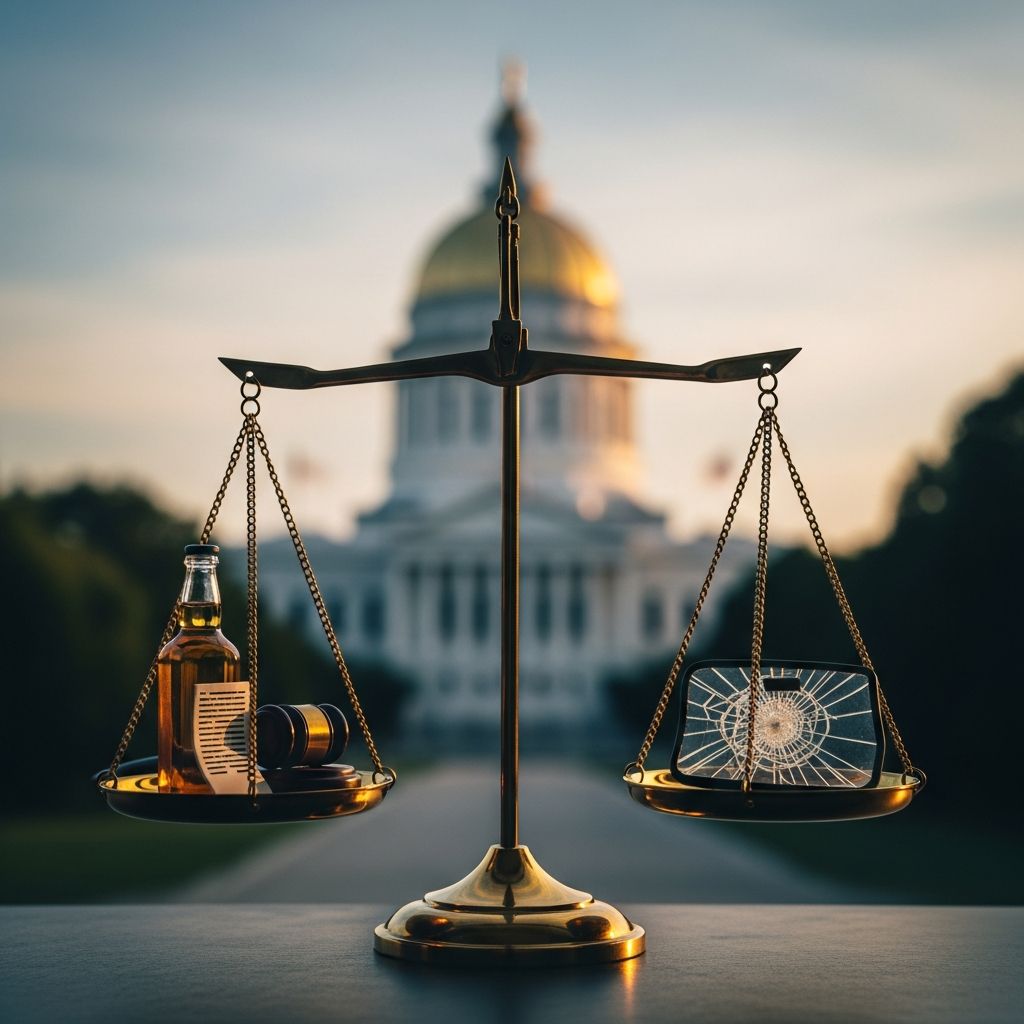
Virginia maintains a distinctive legal position on alcohol-related injuries, refusing to impose liability on those who provide alcoholic beverages, whether commercial establishments or private individuals. This approach stems from longstanding common law principles that attribute responsibility directly to the consumer rather than the supplier.
Historical Foundations of Alcohol Provider Immunity
The roots of Virginia’s policy trace back to early common law traditions in the United States, where supplying alcohol was not viewed as the proximate cause of subsequent harms caused by an intoxicated person. Courts reasoned that the act of consumption, not provision, triggers legal accountability. This perspective persists in Virginia, distinguishing it from the majority of states that have adopted statutes or judicial expansions to hold servers liable.
Under this framework, businesses like bars and restaurants face no civil repercussions for serving patrons who later cause accidents, even if visibly intoxicated. Similarly, private hosts enjoy immunity when guests overindulge and harm themselves or others. This rule underscores a commitment to personal responsibility, a cornerstone of Virginia jurisprudence.
Key Supreme Court Decisions Shaping the Landscape
Virginia courts have consistently upheld this immunity through pivotal rulings. In a landmark 1986 case, the Virginia Supreme Court dismissed claims against a tavern accused of serving a patron who appeared drunk before causing a vehicular collision. The court affirmed that furnishing alcohol does not constitute negligence, as the drinker’s voluntary actions break the chain of causation.
Another significant decision in 2000 reinforced this stance in a wrongful death suit involving underage service. The court rejected arguments for liability, emphasizing that minors bear responsibility for their intoxicated conduct, mirroring the treatment of adults. These precedents solidify Virginia’s rejection of dram shop claims, leaving no avenue for third-party recovery against alcohol providers.
Absence of Statutory Reforms
Unlike many states, Virginia lacks a dram shop act—legislation that would explicitly make retailers accountable for overserving. Legislative efforts to introduce such measures have repeatedly failed, including a 2022 proposal to target service to minors, which was defeated in the Senate. Lawmakers and courts alike defer to common law, deeming policy changes a legislative prerogative rather than a judicial one.
This legislative inertia aligns with Virginia’s contributory negligence system, where any plaintiff fault bars recovery entirely. Intoxicated individuals or their representatives thus face steep hurdles in pursuing damages from servers.
Social Host Protections in Private Settings
Virginia’s immunity extends robustly to non-commercial contexts. Homeowners, party organizers, and social hosts cannot be sued for injuries stemming from alcohol provided at gatherings. Courts have explicitly declined to carve out exceptions for serving minors, viewing their inability to purchase alcohol legally as irrelevant to post-consumption accountability.
- No liability for hosts serving adults who become impaired and cause harm.
- Minors served illegally still held fully responsible for their actions.
- Common law prioritizes the drinker’s foreseeability of risks over host negligence.
This broad shield encourages social hospitality without fear of lawsuits, though it shifts all burden to victims and perpetrators alike.
Comparisons with Neighboring Jurisdictions
| Jurisdiction | Dram Shop Statute | Social Host Liability | Key Features |
|---|---|---|---|
| Virginia | No | No | Common law immunity; contributory negligence bars claims |
| Maryland | No | Limited (minors only) | Courts defer to legislature; adults fully responsible |
| District of Columbia | Yes (recently amended) | Yes | Prohibits service to ‘appearing intoxicated’; foreseeability required |
Virginia’s position contrasts sharply with areas like D.C., where statutory changes now heighten business exposure. Maryland mirrors Virginia closely but allows narrow social host claims for underage service violations.
Implications for Businesses Serving Alcohol
Virginia establishments benefit from this protective regime, avoiding multimillion-dollar judgments common elsewhere. However, compliance with the Virginia Alcoholic Beverage Control Authority remains mandatory. Violations like selling to minors do not trigger civil dram shop suits but can lead to fines, license suspension, or revocation.
Owners should still prioritize training: monitor patron behavior, refuse service judiciously, and secure liquor liability insurance against potential legal shifts. While courts deem ABC Act breaches non-negligence per se, prudent risk management safeguards reputations and operations.
Defenses and Challenges for Potential Plaintiffs
Those injured by drunk drivers in Virginia must target the at-fault driver directly, navigating contributory negligence pitfalls. Assumption of risk further insulates providers, as patrons are deemed aware of alcohol’s effects. Proving a server’s role as proximate cause is futile under current precedent.
- Contributory Negligence: Any plaintiff contribution defeats claims entirely.
- Proximate Cause Doctrine: Serving alcohol deemed too remote from injury.
- Assumption of Risk: Drinkers accept inherent dangers.
Potential Future Developments
Though entrenched, Virginia’s laws could evolve via legislation or judicial reinterpretation, especially amid national trends toward expanded liability. Recent failed bills signal ongoing debate, particularly around underage service. Businesses and hosts should monitor General Assembly sessions for reforms.
Public health advocates push for dram shop laws to deter overserving, citing evidence from other states of reduced alcohol crashes. Yet Virginia prioritizes individual accountability, resisting such interventions.
Frequently Asked Questions
Does Virginia allow lawsuits against bars for drunk driving accidents?
No, Virginia courts hold that serving alcohol does not cause injuries from intoxicated patrons; the drinker is solely responsible.
Can I sue a friend for serving me too much alcohol at a party?
No, social host liability does not exist in Virginia, even for minors.
What if a bar violates alcohol control laws?
Administrative penalties apply, but no private civil damages for resulting injuries.
Is liquor liability insurance necessary in Virginia?
Recommended for defense against negligence claims unrelated to dram shop and preparation for legal changes.
Why hasn’t Virginia adopted dram shop laws?
Legislature views it as policy for lawmakers, not courts; emphasizes personal responsibility.
Navigating Alcohol Service Responsibly
Despite legal protections, ethical serving practices enhance safety. Train staff on intoxication signs: slurred speech, poor coordination, bloodshot eyes. Implement ID checks rigorously and offer alternatives like food or rideshares. These steps mitigate risks beyond liability, fostering safer communities.
For victims, focus shifts to direct claims against impaired drivers, supported by strong evidence like blood tests. Criminal charges often accompany civil pursuits, amplifying accountability.
Broader Public Policy Considerations
Virginia’s model promotes self-reliance but draws criticism for potentially under-deterring reckless service. Studies elsewhere link dram shop laws to fewer fatalities, prompting reform calls. Balancing freedom with protection remains contentious, with Virginia leaning toward minimal intervention.
In summary, alcohol providers in Virginia operate with significant legal security, grounded in decades of judicial consistency. Staying informed ensures continued compliance and preparedness.
References
- DRAM SHOP LIABILITY FOR BUSINESSES — Ferguson, Schetelich & Ballew, P.A. 2023. https://fsb-law.com/news-articles/dram-shop-liability-for-businesses/
- Dram Shop and Social Host Liability Laws in Virginia — Nolo. 2023. https://www.nolo.com/legal-encyclopedia/dram-shop-laws-social-host-liability-alcohol-related-accidents-virginia.html
- Dram Shop Laws in Your State — Insureon. 2025-01-15. https://www.insureon.com/small-business-insurance/liquor-liability/dram-shop-laws
- Dram Shop Laws — Wilson Kehoe Winingham. 2024. https://www.wkw.com/blog/dram-shop-laws/
- Dram Shop Laws and Your Virginia DUI Defense — T. Kevin Wilson Lawyer. 2023. https://www.tkevinwilsonlawyer.com/library/dram-shop-laws-and-your-virginia-dui-defense.cfm
- Virginia Dram Shop Laws Explained — Dulaney, Lauer & Thomas. 2024. https://www.dulaneylauerthomas.com/blog/do-you-know-the-dram-shop-laws-in-virginia.cfm
- Dram shop liability laws — County Health Rankings & Roadmaps. 2025. https://www.countyhealthrankings.org/strategies-and-solutions/what-works-for-health/strategies/dram-shop-liability-laws
Similar Articles








Read full bio of Sneha Tete


