
Violence Against Women Act: Federal Protections Explained
Understand how the Violence Against Women Act and related federal laws work together to address domestic violence and protect survivors.
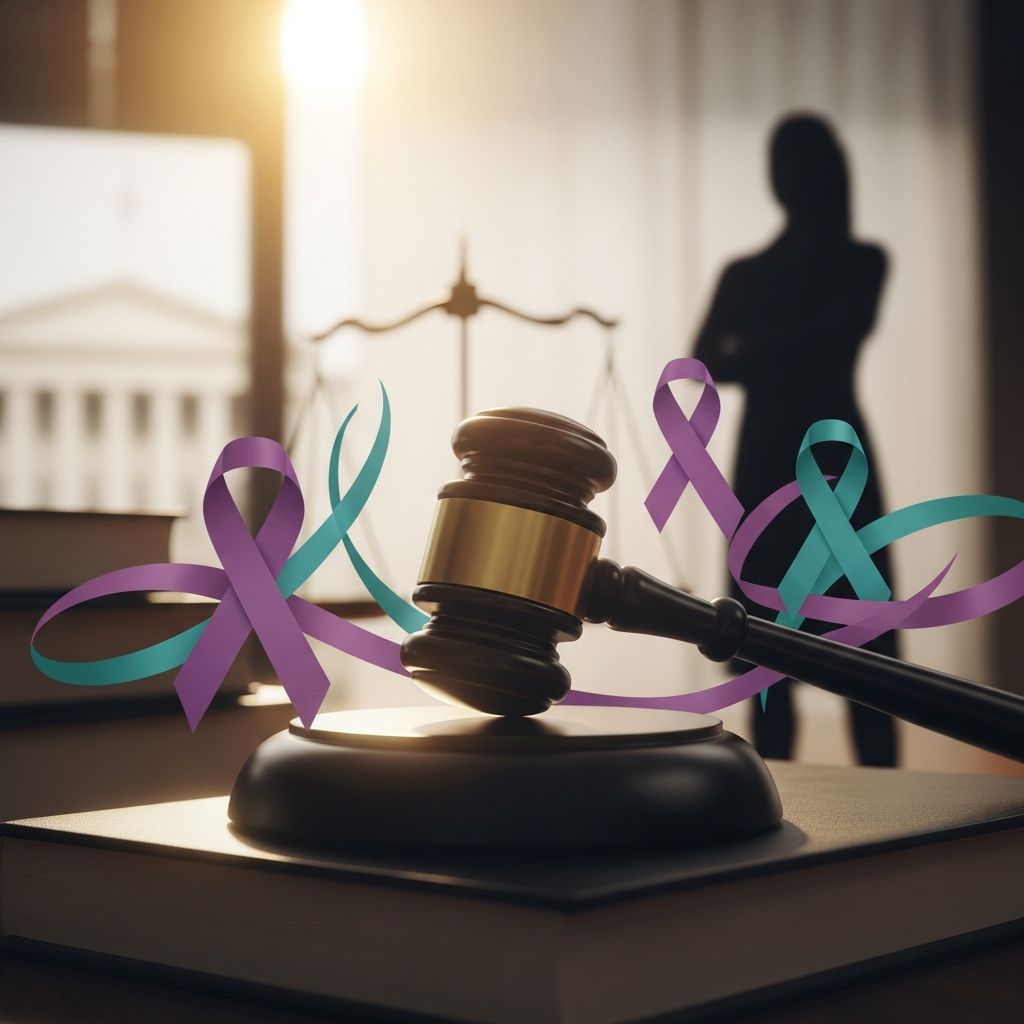
Domestic violence is not only a private tragedy; under U.S. law it is recognized as a serious crime that can trigger both state and federal consequences. The Violence Against Women Act (VAWA) and several related federal statutes were enacted to strengthen protections for survivors, support local services, and close dangerous legal gaps.
This article explains the core pieces of federal domestic violence legislation, with a focus on VAWA, how these laws interact with state systems, and what they mean for victims, survivors, and communities.
Understanding Domestic Violence Under U.S. Law
“Domestic violence” is a broad term that includes patterns of physical, sexual, emotional, economic, or psychological abuse used by one person to control an intimate partner or family member. Federal law does not replace state criminal codes, but it adds specific protections and crimes when conduct crosses state lines or involves certain protected categories.
Who Is Protected?
Under federal law, domestic violence often focuses on harm or threats against an intimate partner or close family member. Depending on the statute, this may include:
- Current or former spouses
- People who share a child in common
- Individuals who live or have lived together as intimate partners
- Persons similarly situated to a spouse under state law
- Certain parents, guardians, or household members in specific gun and protection-order provisions
Domestic Violence as a National Concern
Congress identified domestic violence as a national crime problem that overwhelms many state and local systems, especially when abusers evade accountability by crossing state lines or exploiting jurisdictional gaps. Federal legislation is intended to:
- Support and strengthen state and tribal responses, not replace them
- Create federal offenses in limited but high-risk situations (for example, interstate stalking)
- Provide funding for shelters, legal assistance, and victim services
Key Federal Laws Addressing Domestic Violence
Several major federal laws work together to respond to domestic and intimate partner violence.
| Law | Primary Focus | Examples of Impact |
|---|---|---|
| Violence Against Women Act (VAWA) | Criminal provisions, victim protections, and extensive grant programs | Funds shelters, legal aid; creates interstate domestic violence and stalking crimes |
| Family Violence Prevention and Services Act (FVPSA) | Core funding for domestic violence services | Supports hotlines, emergency shelter, counseling, and community programs |
| Gun Control Act & related amendments | Firearm prohibitions tied to domestic violence | Bars firearm possession by certain abusers and those under specific protection orders |
The Violence Against Women Act: Foundations and Evolution
VAWA was first enacted in 1994 to formally recognize domestic violence, sexual assault, and stalking as serious crimes and to provide federal tools and funding to address them.
Major Goals of VAWA
- Enhance criminal justice responses to domestic violence, dating violence, sexual assault, and stalking
- Promote coordinated community responses, encouraging collaboration among law enforcement, courts, advocates, and healthcare providers
- Support victims and survivors with services such as shelters, legal assistance, and crisis counseling
- Improve safety and autonomy for survivors in housing, employment, education, and immigration contexts
Reauthorizations and Modern Developments
Congress has reauthorized and updated VAWA several times—expanding protections and updating grant programs as knowledge about domestic violence evolved.
- Original 1994 law: Established core grant programs, created federal interstate domestic violence and stalking crimes, and enhanced penalties in certain federal cases.
- Subsequent reauthorizations: Strengthened protections for Native American survivors, LGBTQ+ individuals, immigrants, and college students; expanded housing safeguards; and updated grant requirements.
- 2022 VAWA reauthorization: Updated and reauthorized many grant programs, reinforced services for underserved communities, and addressed emerging issues such as cyberstalking and technology-facilitated abuse.
Federal Domestic Violence Crimes Under VAWA
Most domestic violence cases remain under state or tribal jurisdiction, but VAWA creates several federal felony offenses in specific circumstances, particularly when state lines or federal territories are involved.
Common Federal Offenses Related to Domestic Violence
- Interstate domestic violence: Traveling across state lines or entering/leaving Indian country with the intent to injure, harass, or intimidate an intimate partner, and then committing or attempting a violent act.
- Interstate stalking: Crossing state lines (or acting within U.S. maritime or territorial jurisdiction, such as military bases) to stalk or harass a victim, or using the mail, computers, or interactive computer services to carry out stalking.
- Interstate violation of protection orders: Traveling across state lines or entering/leaving Indian country with the intent to violate an eligible protection order and then engaging in that prohibited conduct.
These crimes are prosecuted by federal authorities and can result in substantial felony penalties, especially if the victim is seriously injured or killed.
Firearm Restrictions Tied to Domestic Violence
Access to firearms significantly increases the risk that domestic violence will turn lethal. Federal law responds by restricting gun possession for certain abusers under the Gun Control Act and related amendments.
When Firearms Are Prohibited
- Active protection orders: Individuals subject to qualifying domestic violence protection orders are generally barred from possessing firearms or ammunition while the order is in effect.
- Domestic violence misdemeanors: People convicted of a qualifying misdemeanor crime of domestic violence are prohibited from having firearms or ammunition under 18 U.S.C. § 922(g)(9).
- Certain dating partners: Recent federal changes have extended some firearm restrictions to people convicted of violence in dating relationships, addressing part of the so-called “boyfriend loophole.”
What Counts as a “Qualifying” Domestic Violence Misdemeanor?
Whether a prior conviction triggers the federal firearm ban depends on several legal factors. In general, the offense must:
- Be a misdemeanor under federal, state, or tribal law
- Have been committed by a current or former spouse, parent, guardian, co-parent, or similarly situated person
- Involve the use or attempted use of physical force, or the threatened use of a deadly weapon
Courts have interpreted “physical force” broadly; for example, the Supreme Court has held that even offensive touching in certain domestic assault convictions can qualify for the firearm prohibition.
Family Violence Prevention and Services Act (FVPSA)
While VAWA blends criminal law and grant funding, the Family Violence Prevention and Services Act (FVPSA) is primarily a funding statute designed to support core domestic violence services across the country.
FVPSA’s Role in Supporting Survivors
- Provides base funding for emergency shelters and transitional housing programs
- Supports 24-hour hotlines and crisis intervention services
- Funds counseling and advocacy for victims and their children
- Helps communities develop coordinated responses and prevention initiatives
FVPSA is notable because it is the only federal funding stream dedicated exclusively to domestic violence services and prevention.
How Federal and State Laws Work Together
Domestic violence survivors often navigate a patchwork of legal options. Understanding how federal and state systems intersect can help victims and advocates make informed decisions.
Division of Responsibility
- State and tribal courts
- Handle most criminal domestic violence cases (assault, harassment, violations of state protection orders)
- Issue and enforce restraining or protection orders under state law
- Oversee divorce, custody, child support, and property matters
- Federal authorities
- Prosecute specific interstate domestic violence, stalking, and protection-order violations under VAWA
- Enforce federal firearm prohibitions related to domestic violence convictions and protection orders
- Administer VAWA and FVPSA grant programs to support state, local, and tribal agencies
Protection Orders and Full Faith and Credit
VAWA requires states, tribes, and territories to recognize and enforce valid protection orders issued elsewhere, a concept known as full faith and credit. This is intended to prevent abusers from evading orders by moving across state or tribal boundaries.
Rights and Protections for Victims in Federal Cases
When a domestic violence case is prosecuted in federal court, victims have specific rights under federal statutes such as the Crime Victims’ Rights Act and related provisions.
Common Federal Victim Rights
- The right to be reasonably protected from the accused
- The right to reasonable, accurate, and timely notice of public court proceedings
- The right not to be excluded from public court proceedings, with narrow exceptions
- The right to be reasonably heard at public proceedings involving release, plea, or sentencing
- The right to restitution as provided by law
- The right to be treated with fairness and respect for dignity and privacy
Support Services Funded by VAWA and FVPSA
Even when a case is handled in state court, survivors may benefit from programs funded through VAWA and FVPSA, such as:
- Local shelters and safe houses
- Legal aid for protection orders and family law matters
- Advocacy services that accompany victims to court or work with law enforcement
- Specialized programs for Native American, immigrant, LGBTQ+, and rural communities
Limitations and Ongoing Debates
Federal domestic violence legislation continues to evolve, and not all original provisions have survived judicial review or political debate.
Constitutional Limits on Federal Power
Some civil remedies originally included in VAWA, such as allowing victims of gender-motivated violence to sue their attackers in federal court, were struck down by the U.S. Supreme Court as exceeding Congress’s constitutional authority under the Commerce Clause and Fourteenth Amendment. However, these decisions did not invalidate the core criminal provisions or grant programs.
Continuing Policy Questions
- How to ensure consistent enforcement of firearm prohibitions and speedy removal of guns when required
- How to improve responses in rural and tribal communities, where resources and law enforcement coverage may be limited
- How to address technology-facilitated abuse, including cyberstalking and digital surveillance
- How to secure stable funding for services during periods when reauthorization debates delay federal appropriations
Practical Takeaways for Survivors and Advocates
For individuals experiencing abuse, the interaction of federal and state law can be confusing. The following general points may help frame conversations with attorneys, advocates, or law enforcement.
- Most immediate safety and criminal matters are local. Call 911 or local law enforcement in emergencies, and seek a protection order through your state or tribal court.
- Federal law adds extra tools in particular situations. Interstate travel, stalking, or severe firearm-related threats may trigger federal interest under VAWA or the Gun Control Act.
- Protection orders can follow you across state lines. VAWA’s full faith and credit provisions support enforcement of qualifying protection orders nationwide.
- Firearm prohibitions may apply even to misdemeanors. A past domestic violence conviction or qualifying protection order can make it a federal crime to possess guns or ammunition.
- Help is often funded, at least in part, by VAWA or FVPSA. Shelters, hotlines, and legal services in your community may rely on these federal grants to offer free or low-cost support.
Frequently Asked Questions (FAQs)
Q: Does VAWA only protect women?
No. Although the law is called the Violence Against Women Act, its protections and funded services are generally available regardless of gender. Men, women, and nonbinary people can all benefit from VAWA-funded programs and protections.
Q: Is every domestic violence case a federal case?
No. Most domestic violence incidents are handled by state or tribal authorities under local criminal laws. Federal jurisdiction usually arises only in specific situations, such as interstate domestic violence, interstate stalking, or firearm violations linked to domestic abuse.
Q: If I move to another state, is my protection order still valid?
Often yes. Under VAWA’s full faith and credit requirements, states, tribes, and territories are generally expected to enforce valid protection orders issued elsewhere, provided certain conditions are met. Survivors should still consult local advocates or courts to confirm enforcement procedures.
Q: Can someone with a domestic violence misdemeanor ever legally own a gun again?
Federal law imposes a continuing prohibition on firearm possession for individuals with qualifying domestic violence misdemeanor convictions, though there can be narrow exceptions or relief mechanisms under some state or federal processes. Anyone in this situation should seek advice from a qualified attorney before attempting to purchase or possess firearms.
Q: Where can I find out which laws apply in my state?
State domestic violence laws vary. Survivors can consult state statutes, legal aid organizations, or victims’ advocates, many of whom use online legal information portals that explain state-specific protections and procedures in accessible language.
References
- Federal Domestic Violence Laws — U.S. Department of Justice, U.S. Attorney’s Office. 2023-06-01. https://www.justice.gov/usao-wdtn/victim-witness-program/federal-domestic-violence-laws
- Domestic Violence in the United States — Various authors, cited sources within article. Last updated 2024. https://en.wikipedia.org/wiki/Domestic_violence_in_the_United_States
- Federal Domestic Violence Laws — American Postal Workers Union (summarizing DOJ guidance). 2022-05-10. https://apwu.org/news/federal-domestic-violence-laws/
- Federal Laws — Pennsylvania Coalition Against Domestic Violence. 2023-08-15. https://www.pcadv.org/policy-center/federal-laws/
- Domestic Violence — Office on Violence Against Women, U.S. Department of Justice. 2022-11-04. https://www.justice.gov/ovw/domestic-violence
- The 2022 Violence Against Women Act (VAWA) Reauthorization — Congressional Research Service. 2022-11-15. https://www.congress.gov/crs-product/R47570
- Domestic Violence — Legal Information Institute, Cornell Law School. 2021-09-30. https://www.law.cornell.edu/wex/domestic_violence
Similar Articles








Read full bio of medha deb


