
Violence in Indigenous Communities: A Call for Reform
Restoring Tribal Sovereignty and Accountability to End the MMIP Epidemic
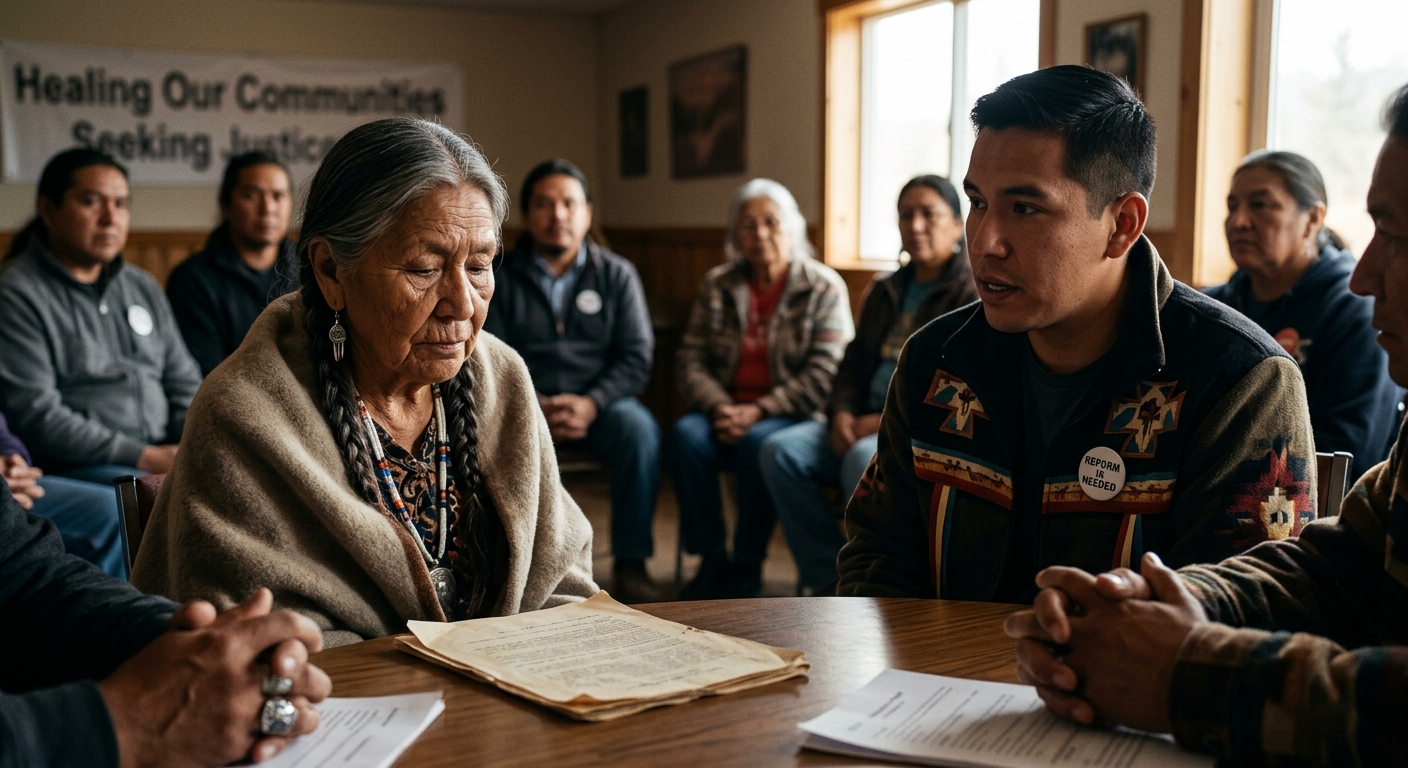
Introduction: Understanding the Scope of the Epidemic
The crisis of violence targeting Native American and Alaska Native women is not merely a modern anomaly but a centuries-long epidemic rooted in systemic inequities and legal fragmentation. Across the United States, Indigenous communities are navigating an unprecedented wave of trauma characterized by the Missing and Murdered Indigenous People (MMIP) crisis. While community advocates, families, and tribal leaders have long voiced their urgent concerns, a broader awakening is finally occurring on the national stage, demanding structural accountability for perpetrators who have historically evaded justice due to complex legal loopholes.
The fight to protect Indigenous women involves dismantling legal structures that strip sovereign nations of their authority and replacing them with systems of accountability that recognize tribal sovereignty and the fundamental human right to safety. For decades, the American criminal justice system has failed to adequately protect Native women. The intersection of marginalized identities, remote geographical locations, and deliberately weakened tribal jurisdictions created an environment where non-Native offenders could commit heinous crimes on tribal lands with near impunity.
The tragic result is a demographic that faces some of the highest rates of physical, emotional, and sexual violence in the United States. Addressing this crisis requires more than generalized awareness; it requires a deep, uncompromising look at the federal policies that created this vulnerability and a robust commitment to empowering tribal courts with the authority needed to prosecute crimes occurring within their own borders.
The Roots of the Jurisdictional Maze
To understand why accountability has been historically absent, one must examine the tangled web of federal, state, and tribal jurisdictions. The legal framework governing Indian Country has systematically eroded the power of tribal law enforcement to keep their communities safe.
Historical Precedents and Supreme Court Rulings
The cornerstone of this legal disenfranchisement can be traced back to the landmark 1978 Supreme Court decision in Oliphant v. Suquamish Indian Tribe. In this ruling, the Supreme Court determined that tribal courts lacked the inherent criminal jurisdiction to try and punish non-Indians who committed crimes on tribal lands, unless explicitly authorized by Congress. Instead, jurisdiction fell exclusively to federal prosecutors or, in some specific regions governed by Public Law 280, state authorities.
This transfer of jurisdictional power resulted in devastating consequences. Federal authorities, situated hours away from remote reservations, often lacked the resources, local knowledge, or immediate urgency to pursue these cases aggressively. As a result, declination rates—the rate at which federal prosecutors declined to take on cases originating in Indian Country—soared. Tribal leaders found themselves in a helpless position: they knew the perpetrators, the crimes were happening in their backyards, yet they were legally barred from holding these individuals accountable.
How the Maze Protects Offenders
The structural deficiency created by the Oliphant decision effectively weaponized the legal system against Indigenous victims. Abusers quickly recognized the legal void and exploited it. They understood that federal authorities were unlikely to pursue localized domestic disputes until they escalated into major felonies, extreme assaults, or homicides.
Survivors of intimate partner violence, stalking, and sexual assault were left without legal recourse, unable to secure enforceable protective orders from local courts that had the actual legal teeth to mandate compliance. The jurisdictional gap actively discouraged victims from reporting crimes, knowing that the structural odds of seeing a conviction were heavily stacked against them. This profound systemic failure forms the backbone of the MMIP crisis, where a lack of early intervention directly correlates with escalated, often fatal, violence.
The Statistical Reality: Demographics of the MMIP Crisis
The human cost of this legal labyrinth is staggering. The National Institute of Justice (NIJ) has conducted comprehensive research to quantify the scope of the violence, and their findings underscore an urgent need for federal intervention and tribal empowerment. It is a sobering reality that Native women face violence at rates that dwarf national averages. To truly comprehend the gravity of the situation, we must look at the data driving the demand for legislative reform.
Below is an overview of the startling statistics highlighting the pervasiveness of this violence, drawn from the NIJ’s extensive 2016 findings.
| Category of Violence | Prevalence Among Native Women | Key Context |
|---|---|---|
| Any Lifetime Violence | 84.3% | More than 4 in 5 Native women have experienced some form of violence in their lifetime. |
| Sexual Violence | 56.1% | More than half will experience sexual violence, significantly higher than national demographics. |
| Physical Violence by an Intimate Partner | 55.5% | Highlights the critical need for localized domestic violence intervention. |
| Stalking | 48.8% | Nearly half have been stalked, a precursor crime often leading to more severe violence. |
The most crucial data point in the context of jurisdictional reform is the rate of interracial victimization. With over 90% of violent crimes against Native women being committed by non-Native perpetrators, the inability of tribal courts to prosecute non-Natives directly correlates to the dangerously high rates of violence. These statistics are not just numbers; they represent generations of families torn apart by preventable tragedies. The data emphatically dictates that without restoring tribal jurisdiction over non-Native offenders, the epidemic will continue unchecked.
Restoring Tribal Sovereignty Through Legislation
Recognizing the fatal consequences of the Oliphant decision, Indigenous advocates have tirelessly lobbied the federal government to close the jurisdictional loopholes. The primary vehicle for this legislative remedy has been the Violence Against Women Act (VAWA). Reauthorizing and expanding VAWA has become the central battleground for Native rights organizations seeking to restore the inherent sovereignty of tribal nations.
The Role of the Violence Against Women Act (VAWA)
VAWA was originally passed in 1994 to fundamentally change how the criminal justice system responds to domestic and sexual violence. However, it wasn’t until the 2013 reauthorization of the Act that tribal jurisdiction saw a historic, albeit partial, restoration. The 2013 iteration of VAWA included a groundbreaking provision known as Special Domestic Violence Criminal Jurisdiction (SDVCJ). For the first time since 1978, participating tribes were granted the authority to prosecute non-Native offenders for specific crimes, namely domestic violence, dating violence, and the violation of qualifying protection orders committed within Indian Country.
This was a watershed moment. Tribes that met specific federal requirements regarding defendants’ rights—such as providing licensed public defenders and empaneling diverse juries—were able to establish robust courts, prosecute offenders, and finally offer a measure of localized justice. It was a clear demonstration that when tribes are equipped with the legal authority to protect their citizens, community safety improves.
Special Tribal Criminal Jurisdiction (STCJ) and VAWA 2022
However, the 2013 provisions were narrowly tailored. They did not cover crimes like sexual assault committed by strangers, child abuse, or sex trafficking—crimes deeply intertwined with the MMIP crisis. The limitations of the 2013 reauthorization became glaringly obvious as tribes continued to confront violent crimes outside the scope of SDVCJ. The 2022 reauthorization represented a monumental leap forward by replacing SDVCJ with the expanded Special Tribal Criminal Jurisdiction (STCJ).
Under STCJ, Congress expanded the list of covered crimes that tribes could prosecute against non-Native offenders. The newly included categories cover: Sexual Violence, Sex Trafficking, Child Violence, Stalking, Assault on Tribal Justice Personnel, and Obstruction of Justice. Furthermore, the 2022 act established a pilot program for Alaska Native villages, which face unique jurisdictional challenges distinct from the Lower 48 reservations. By expanding these authorities, the federal government explicitly acknowledged that true accountability requires robust, unencumbered tribal sovereignty.
The Path Forward: Systemic Changes Beyond Legislation
While the expansion of Special Tribal Criminal Jurisdiction through VAWA is a massive victory, legislative ink alone cannot dismantle centuries of systemic neglect. The realization of safety for Native women requires sustained investment, interagency cooperation, and a holistic approach to justice. The path forward must encompass several actionable pillars:
- Funding and Infrastructure Investment: Tribal courts and law enforcement agencies require immense financial resources to implement STCJ properly.
- Enhanced Data Collection and Information Sharing: The MMIP crisis is exacerbated by poor data sharing between local, state, federal, and tribal agencies. Implementing comprehensive, interoperable databases is essential for tracking missing persons and cross-referencing criminal histories.
- Interagency Collaboration: Federal agencies, including the Bureau of Indian Affairs (BIA) and the Federal Bureau of Investigation (FBI), must treat tribal law enforcement as equal partners. The creation of the Missing and Murdered Unit (MMU) within the BIA is a positive step, but it requires continuous oversight and integration with grassroots tribal efforts.
- Culturally Competent Victim Services: Justice is not solely about prosecuting offenders; it is about healing survivors. Funding must flow directly to tribal coalitions to provide culturally tailored, trauma-informed care, safe housing, and legal advocacy for victims of violence.
- Ongoing Public and Congressional Education: The unique legal status of tribal nations is widely misunderstood. Continuous advocacy is necessary to prevent any legislative rollbacks and to push for the eventual full overturn of the restrictions placed by Oliphant, granting tribes absolute jurisdiction over all crimes committed on their lands.
The pursuit of accountability for those who commit violence against Native women is inseparable from the broader struggle for tribal self-determination. Healing the epidemic of violence requires a steadfast commitment to returning power to the communities that bear the brunt of these tragedies. As tribes continue to implement their expanded authorities, the nation watches, reminded that justice delayed is justice denied, but sovereignty restored is the foundation of lasting peace.
Frequently Asked Questions (FAQs)
What does MMIP stand for?
MMIP stands for Missing and Murdered Indigenous People. You may also see it referred to as MMIW (Missing and Murdered Indigenous Women) or MMIWG2S (Missing and Murdered Indigenous Women, Girls, and Two-Spirit). These terms represent the ongoing crisis of disproportionate violence, disappearances, and homicides affecting Indigenous communities across North America.
Why couldn’t tribal police arrest non-Native offenders for decades?
In 1978, the U.S. Supreme Court ruled in Oliphant v. Suquamish Indian Tribe that tribal courts do not have inherent criminal jurisdiction to try and punish non-Indians. This created a legal loophole where non-Native individuals could commit crimes on tribal lands without being held accountable by local tribal law enforcement. Instead, they relied on federal or state authorities who frequently declined to prosecute these complex cases.
How does the Violence Against Women Act (VAWA) help Native women?
VAWA, specifically through its 2013 and 2022 reauthorizations, restored a critical measure of tribal sovereignty. The 2022 reauthorization established Special Tribal Criminal Jurisdiction (STCJ), which allows participating tribes to prosecute non-Native offenders for a specific list of crimes, including domestic violence, sexual violence, stalking, and sex trafficking.
Are all crimes committed by non-Natives on tribal lands now prosecutable by tribes?
No. While VAWA 2022 significantly expanded the list of covered crimes under STCJ, tribal jurisdiction over non-Natives remains limited to those specific categories. For crimes not explicitly listed, jurisdiction still falls to the federal or state government, highlighting the need for continued legislative reform to close remaining gaps.
What is the role of the Missing and Murdered Unit (MMU)?
The MMU is a specialized unit created within the Bureau of Indian Affairs (BIA) Office of Justice Services. Its primary mandate is to provide leadership, coordinate interagency investigations, and marshal federal law enforcement resources to solve missing and murdered cases involving American Indians and Alaska Natives.
References
- Violence Against American Indian and Alaska Native Women and Men: 2010 Findings from the National Intimate Partner and Sexual Violence Survey — National Institute of Justice. 2016-05-01. https://nij.ojp.gov/library/publications/violence-against-american-indian-and-alaska-native-women-and-men-2010
- 2013 and 2022 Reauthorizations of the Violence Against Women Act (VAWA) — U.S. Department of Justice. 2023-04-07. https://www.justice.gov/tribal/2013-and-2022-reauthorizations-violence-against-women-act-vawa
- Missing and Murdered Indigenous Peoples — U.S. Department of the Interior. 2021-12-14. https://www.doi.gov/priorities/missing-and-murdered-indigenous-peoples
Similar Articles








Read full bio of medha deb




