
Vigilante Illusion: Law and National Security
Why real-world national security cannot rely on the tactics of fictional heroes.
The Fiction of the Flawless Vigilante
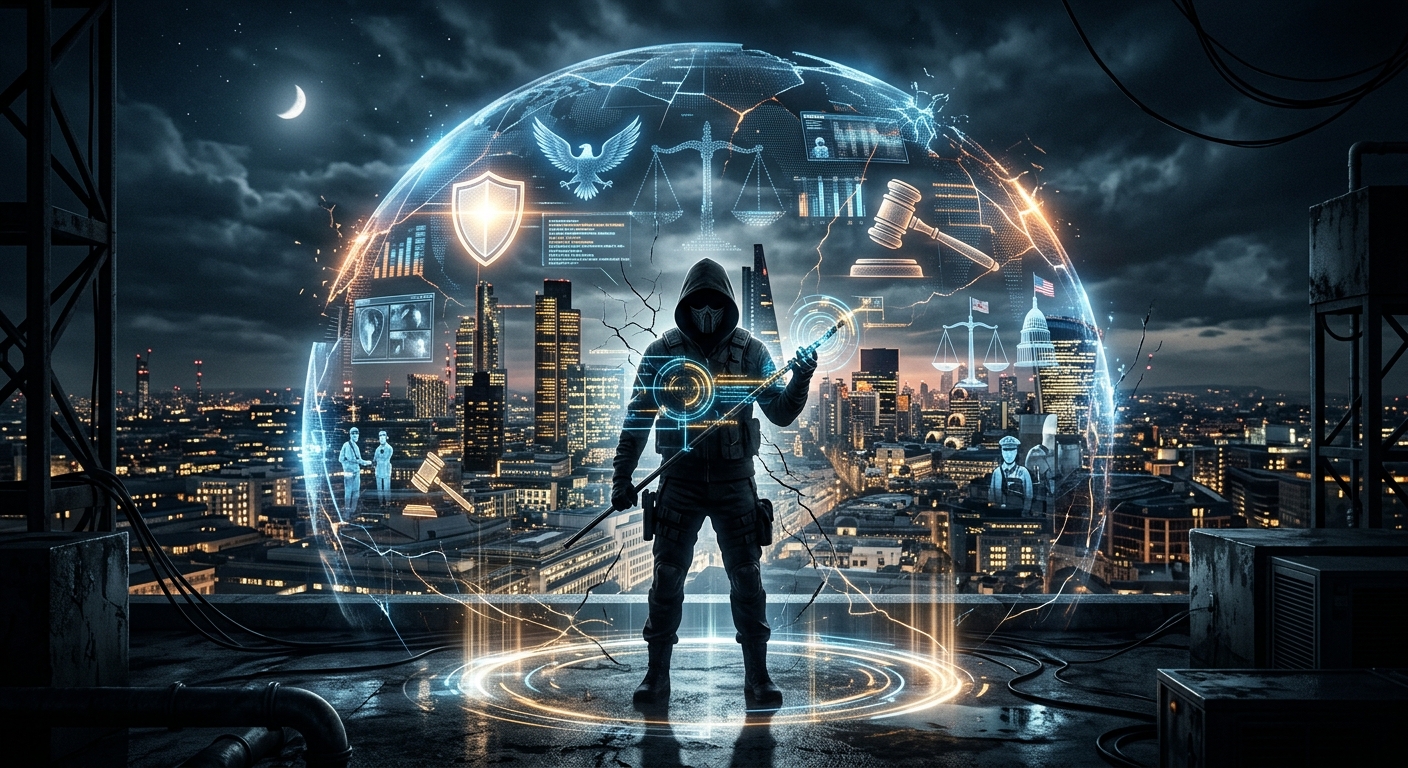
In the realm of popular culture, few archetypes are as universally recognized and celebrated as the rogue vigilante. Characters who operate outside the confines of the legal system, donning masks or capes to dispense justice where the courts have supposedly failed, tap into a primal human desire for immediate, absolute retribution. When faced with complex, bureaucratic, and often slow-moving democratic institutions, the cinematic fantasy of a flawless hero cutting through the red tape is undeniably compelling. However, when this pop-culture narrative spills over into real-world political discourse—particularly concerning national security, executive power, and counter-terrorism—the analogy becomes not just flawed, but demonstrably dangerous.
The suggestion that real-world leaders should emulate fictional vigilantes by pushing the boundaries of civil rights to combat existential threats represents a profound misunderstanding of both human fallibility and the foundational principles of a free society. Unlike comic book heroes, government officials are not imbued with infallible moral compasses or omniscient judgment. When real-world leaders break the law in the name of security, the result is rarely precise justice; more often, it is an erosion of the very democratic ideals they claim to protect. A government unbound by the Constitution does not resemble a superhero; it resembles the very authoritarian regimes it often claims to oppose.
The Psychological Allure of the Rogue Hero
To understand why the vigilante metaphor repeatedly surfaces in political commentary, we must examine the psychological impact of terror and existential threats on a populace. In times of profound national crisis, fear fundamentally alters public priorities. The collective desire for physical safety rapidly eclipses the abstract appreciation for due process, creating a fertile ground for authoritarian impulses. When a society feels intensely vulnerable, the painstaking procedural safeguards of the legal system can suddenly appear as burdensome obstacles rather than protective shields. This psychological shift often gives rise to the “strongman” phenomenon, where citizens become willing to trade their civil liberties for the promise of swift, decisive action against perceived enemies.
Entertainment media heavily reinforces this instinctive reaction. The ubiquitous “ticking time bomb” scenario—a popular plot device where a protagonist must use extreme, illegal methods to extract information and save thousands of lives—conditions the public to view constitutional rights as peacetime luxuries. Academic research examining media consumption highlights how consistent exposure to entertainment that portrays torture and illegal surveillance as effective and necessary significantly alters public perception. It increases tolerance for government overreach by presenting illegal actions as a moral imperative . However, this narrative relies on a crucial, entirely fictional premise: the absolute certainty of the protagonist. In the movies, the hero always knows they have the right suspect, and the illegal methods always yield the correct information just in the nick of time. In reality, intelligence is fragmented, suspects are frequently innocent, and extreme interrogation methods routinely produce false information that wastes resources and endangers lives.
Unpacking the “Ends Justify the Means” Fallacy
The core philosophical issue with applying vigilante logic to democratic governance is the reliance on extreme consequentialism—the belief that the ends automatically justify the means. Proponents of expanded executive power during wartime often argue that strict adherence to civil liberties is a dangerous form of moral vanity that a nation cannot afford when facing ruthless adversaries. They posit that leaders must be willing to dirty their hands, temporarily suspending the rules to eliminate threats, with the understanding that they will restore those rules once the emergency has safely passed.
This argument inevitably collapses upon contact with historical reality. Power, once expanded and consolidated under the guise of an emergency, is notoriously difficult to retract. When a government operates outside the law, it establishes a dangerous precedent that future administrations will inevitably exploit, steadily shifting the baseline of acceptable state behavior. Furthermore, the “dirty hands” argument assumes that the leader acting outside the law possesses perfect judgment and pure motives.
The architects of democratic republics harbor no such illusions about human nature. They understand that all individuals, regardless of their office or stated intentions, are susceptible to bias, corruption, and error. Consequently, designing a system of government based on the assumption of virtuous leaders is a recipe for tyranny. The rule of law exists precisely because we cannot guarantee the infallible morality of those in power. By romanticizing the rule-breaking hero, we inadvertently excuse the very abuses of power that legal frameworks were explicitly designed to prevent.
Real-World National Security vs. Caped Crusaders
The stark contrast between fictional narratives and real-world national security governance is best understood by examining the systemic differences in accountability, error rates, transparency, and collateral damage. When a cinematic hero bypasses legal constraints to conduct a warrantless search, the narrative ensures that they find exactly what they need, harming no innocent bystanders in the process. When a real intelligence agency implements a massive, warrantless surveillance program, it inevitably sweeps up the private communications of millions of innocent citizens, chilling free speech and violating fundamental privacy rights.
To further illustrate this disconnect, consider the structural differences outlined in the comparison below:
| Element | Fictional Vigilantism | Democratic Governance |
|---|---|---|
| Accountability | Accountable only to their own conscience; no legal repercussions for property damage, assault, or civil rights violations. | Subject to checks and balances, congressional oversight, judicial review, and regular public elections. |
| Error Rate | Zero. The suspect is always guilty, and the protagonist’s hunch is always correct. | High potential for error, false arrests, flawed intelligence, and systemic institutional bias. |
| Transparency | Operates entirely in the shadows; public awareness is unnecessary and often framed as an obstacle to success. | Requires strict public accountability. Secret laws and hidden directives undermine the legitimacy of the state . |
| Collateral Damage | Minimal to none, and any mistakes are instantly forgiven by the narrative framework. | Devastating impact on marginalized communities, loss of innocent life, and long-term geopolitical blowback. |
As legal scholars have frequently noted, the proliferation of “secret law”—where the executive branch operates under classified legal interpretations unknown to the public—poses a grave threat to democratic accountability . A vigilante thrives in secrecy, but a democratic republic dies in it.
The Bill of Rights: Our Anchor in the Storm
Our ultimate anchor against the turbulent pressures of fear and conflict is the Bill of Rights. Drafted as the first ten amendments to the United States Constitution, this document was never intended as a set of polite suggestions for peacetime . Rather, the architects of the Constitution, having recently fought a bloody revolution against an arbitrary and unchecked monarch, understood that the true test of a nation’s values occurs during moments of intense duress.
The Bill of Rights explicitly restricts state power, guaranteeing civil rights and liberties to the individual—such as freedom of speech, protection against unreasonable searches and seizures, and the fundamental right to due process . These rights were established with the full knowledge that crises would arise, that foreign and domestic enemies would threaten the state, and that leaders would inevitably feel the temptation to bypass legal constraints for the sake of expedience. The framers recognized that discarding these protections during a crisis does not save the nation; it destroys the very fabric of what makes the nation worth saving. The true measure of a society’s strength is its capacity to adhere to its deepest principles precisely when it is most difficult to do so.
Executive Power and the Illusion of Safety
The tension between constitutional limits and the desire for aggressive action has been particularly pronounced during modern counter-terrorism efforts. Following major security crises, the executive branch aggressively expands its authority, frequently citing national security as a blanket justification for circumventing traditional legal boundaries. This era has historically seen the normalization of extraordinary rendition, indefinite detention without trial, and sweeping domestic surveillance programs.
Legal and policy experts have heavily scrutinized this trend. Organizations like the Brennan Center for Justice have extensively documented how the rhetoric of a perpetual “war on terror” has been weaponized to expand executive power at the expense of civil liberties, noting that courts have sometimes demonstrated a troubling willingness to cave to the executive’s broad claims of national security . When the government claims a “special need” to protect the public that supposedly supersedes the Constitution, it creates a highly dangerous paradigm. The justification implies that civil liberties and national security are locked in a zero-sum game—that to increase our safety, we must inevitably decrease our freedom.
This is a false dichotomy. Strong, effective national security is entirely compatible with the rule of law. In fact, adherence to constitutional principles prevents the kind of chaotic, unaccountable overreach that ultimately makes a nation less secure, alienates allies, and degrades its moral standing on the global stage.
Cultivating Principled Leadership
Moving forward, it is imperative that citizens critically evaluate and reject the cinematic fantasy of the rule-breaking savior in our political discourse. True leadership does not consist of donning a metaphorical cape and declaring oneself above the law to defeat an enemy. Genuine political courage involves maintaining a steadfast commitment to democratic institutions, human rights, and constitutional law, even when faced with overwhelming public fear and the easy temptation of authoritarianism.
We do not need caped crusaders operating in the shadows; we need principled public servants operating in the light, subject to the intense scrutiny of the people they represent. By recognizing the critical distinction between the entertainment value of a vigilante and the real-world necessity of the rule of law, citizens can better hold their governments accountable. This ensures that the fight against external threats never demands the sacrifice of the republic itself.
Frequently Asked Questions (FAQ)
What is the “ticking time bomb” scenario, and why is it legally problematic?
The “ticking time bomb” scenario is a philosophical thought experiment and a common pop-culture trope. It proposes a situation where a suspect knows the location of a bomb about to detonate, and authorities must decide whether to use torture to extract the information. Legally and practically, it is highly problematic because it relies on impossible certainties—that the authorities have the absolute right person, that the person actually knows the information, and that torture will yield the truth rather than false confessions made to stop the pain. In reality, it is often used as a rhetorical tool to manipulate public opinion into accepting sweeping human rights violations.
Can the government legally suspend the Bill of Rights during a terrorist threat?
No, the government cannot arbitrarily suspend the Bill of Rights. While the Constitution does contain a specific clause allowing for the suspension of the writ of habeas corpus in cases of “rebellion or invasion” under strict circumstances, the broader protections of the Bill of Rights—such as the prohibition against cruel and unusual punishment, the right to free speech, and the guarantee of due process—remain intact regardless of the national threat level.
How does pop culture affect public opinion on civil liberties?
Media consumption significantly influences public perception and policy tolerance. Studies indicate that audiences who frequently consume procedural dramas or action movies that glorify the violation of civil rights (such as illegal surveillance or violent interrogations) as effective and heroic are more likely to support similar real-world government policies. They tend to underestimate the actual harm, systemic bias, and ineffectiveness involved in real-world scenarios.
What is the role of checks and balances in national security?
Checks and balances ensure that no single branch of government (usually the executive branch in matters of national defense) wields unchecked power. Judicial review and strict congressional oversight are essential to ensure that intelligence and military operations comply with both domestic constitutional law and international human rights standards, ultimately preventing a democracy’s slide into authoritarianism.
References
- The ’24’ Effect: How entertainment media affects the public perception of torture — Eastern Kentucky University (Encompass). 2018-01-01. https://encompass.eku.edu/honors_theses/562/
- Secret Law — Georgetown Law Journal. 2018-04-01. https://www.law.georgetown.edu/georgetown-law-journal/in-print/volume-106/volume-106-issue-4-april-2018/secret-law/
- The Bill of Rights: What Does it Say? — National Archives. 2023-04-27. https://www.archives.gov/founding-docs/bill-of-rights/what-does-it-say
- How Brett Kavanaugh Worked to Weaponize the War on Terror — Brennan Center for Justice. 2018-08-20. https://www.brennancenter.org/our-work/analysis-opinion/how-brett-kavanaugh-worked-weaponize-war-terror
Similar Articles








Read full bio of Sneha Tete


