
Vermont Motor Vehicle Accident: Legal Rights & Liability
Navigate Vermont car accident laws: understand liability, fault determination, and your legal recovery options.
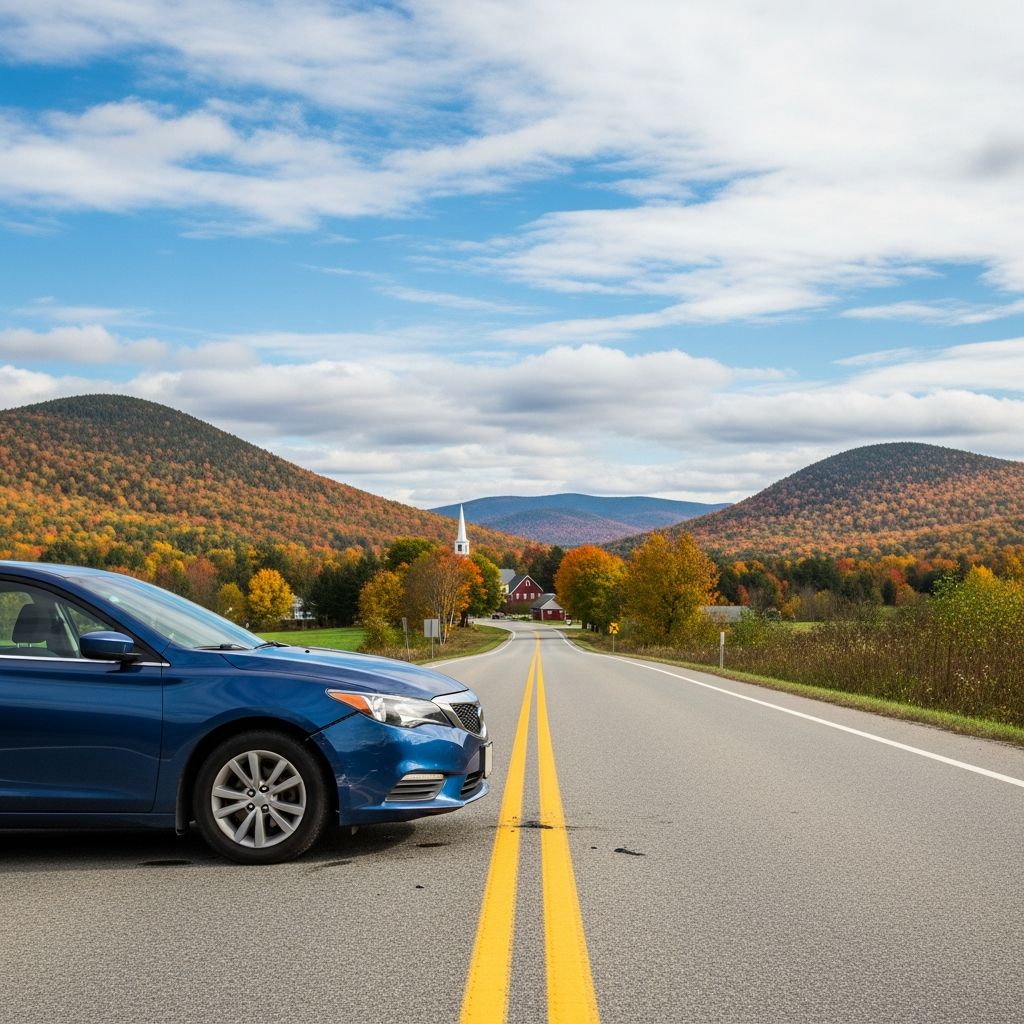
Navigating Motor Vehicle Collision Laws in Vermont
When a motor vehicle collision occurs on Vermont roads, the legal framework governing these incidents plays a crucial role in determining who bears financial responsibility and how injured parties can recover damages. Vermont’s approach to motor vehicle accidents differs from other states in several important ways, particularly in how fault is allocated and how compensation is calculated. Understanding these laws is essential for anyone involved in a traffic collision, whether as an injured party seeking damages or as someone facing liability claims.
The state’s legal system recognizes that accidents often result from multiple contributing factors, and Vermont’s comparative negligence statute reflects this reality. Rather than requiring one party to be completely at fault, Vermont allows for shared responsibility, which means that injured parties may still recover compensation even if they bear partial responsibility for the accident. This approach has significant implications for settlement negotiations, insurance claims, and courtroom litigation.
Understanding Vermont’s Comparative Negligence Framework
Vermont operates under a modified comparative negligence system, which fundamentally shapes how accident claims are resolved in the state. Under this system, courts and insurance companies evaluate the degree to which each party contributed to the collision. The critical threshold in Vermont is 50 percent—an injured person can recover damages as long as they are not more than 50 percent responsible for the accident.
This means that if you were involved in a motor vehicle collision and bear some responsibility for the accident, you are not automatically barred from receiving compensation. However, your compensation will be reduced by your percentage of fault. For example, if a court determines that you are 25 percent at fault and your total damages equal $100,000, you would receive $75,000 in compensation rather than the full amount.
The consequence of exceeding the 50 percent threshold is significant: if you are determined to be more than 50 percent at fault, you cannot recover any damages from the other party, even if they also contributed to the collision. This threshold creates an important incentive for thorough investigation and detailed evidence gathering in accident claims.
How Fault Gets Determined in Vermont Collisions
Determining fault in a motor vehicle accident involves analyzing multiple pieces of evidence and applying Vermont traffic laws to the specific circumstances of the collision. The process begins immediately after an accident occurs, when law enforcement officers respond to the scene.
The Role of Police Reports and Traffic Citations
When Vermont police arrive at a motor vehicle accident scene, they assess whether any traffic violations occurred and document their findings in an official report. These reports carry substantial weight in subsequent liability determinations. If an officer issues a traffic citation to one of the drivers, that citation serves as important evidence of negligence, though it does not automatically establish civil liability.
However, traffic violations in Vermont are admissible as evidence in personal injury claims, particularly when the statute violated was designed to protect public safety. This means that a citation for a specific traffic law violation can significantly influence how insurance adjusters evaluate fault and can be persuasive evidence if the case proceeds to court.
Evidence Used in Fault Determination
Beyond police reports, various types of evidence contribute to determining fault:
- Accident reconstruction analysis: Experts examine vehicle damage, skid marks, and collision angles to determine how the accident occurred
- Witness testimony: Statements from individuals who observed the collision provide crucial perspectives on driver behavior and road conditions
- Dashboard and surveillance footage: Video evidence provides objective documentation of the events leading to the collision
- Vehicle damage patterns: The location and extent of damage on both vehicles reveal the point of impact and vehicle positions
- Intersection design analysis: For accidents at intersections, the physical layout, signage, and traffic control devices are evaluated
- Weather and visibility conditions: Environmental factors at the time of the accident are documented and considered
Successfully establishing liability in a motor vehicle accident requires connecting these elements to demonstrate that a driver breached a legal duty, that this breach directly caused the collision, and that injuries or damages resulted from the accident.
Specific Traffic Violations and Liability in Vermont
Failure to Yield Requirements
One of the most common causes of motor vehicle accidents involves failure to yield the right of way. Vermont law establishes specific situations where drivers must yield to other vehicles or pedestrians, and violating these requirements often results in significant liability.
Under Vermont Statutes Annotated Title 23, drivers must yield the right of way in clearly defined situations designed to prevent confusion at intersections, crosswalks, highway entrances, and when vehicles are turning or merging. Specifically, Vermont law requires drivers to yield to vehicles already in an intersection or approaching closely enough to pose an immediate hazard—meaning if another vehicle is close enough that a reasonable driver would wait, proceeding anyway may constitute a violation.
Common failure to yield scenarios include:
- Making left turns across oncoming traffic without ensuring the path is clear
- Entering a roadway from a private driveway without checking for approaching vehicles
- Failing to stop for pedestrians in marked crosswalks
- Merging onto highways without yielding to vehicles already on the roadway
- Proceeding through stop signs or traffic signals when the light indicates to yield
In failure to yield cases, fault often hinges directly on whether one driver had a clear legal duty to wait. When police reports, witness statements, or traffic citations show a failure to yield violation, insurers frequently assign a significant portion of fault to that driver. These situations are especially dangerous because the non-yielding driver often strikes another vehicle at an angle, increasing the risk of severe injuries such as head trauma, spinal damage, and fractures.
Insurance Company Strategies in Accident Claims
After a motor vehicle accident, insurance carriers typically scrutinize claims aggressively, particularly in cases where one driver appears to have violated a clear traffic law. Insurance companies employ several strategies to minimize their payouts, even when their policyholder bears primary responsibility for the collision.
Common Insurance Company Arguments
Insurance adjusters may argue that an injured driver should have anticipated a traffic violation or taken evasive action to avoid the collision. In failure to yield cases, insurers sometimes rely on partial fault arguments to minimize compensation under Vermont’s comparative negligence statute.
For instance, if a motorcyclist was struck by a driver who failed to yield when exiting a parking lot, the insurance company might argue that the motorcyclist was slightly over the speed limit, attempting to reduce the settlement. However, Vermont courts frequently view the failure to yield as the dominant cause of such accidents, allowing recovery while adjusting damages based on comparative fault.
Protecting Your Interests Against Insurance Tactics
Understanding insurance company strategies helps injured parties avoid accepting unfair settlements. This means that failure to yield claims are rarely black and white—even when one driver violated a statute, insurers may attempt to shift blame to reduce payouts. Therefore, thorough documentation and professional legal assistance are critical when dealing with insurance claims following a motor vehicle accident.
Time Limits for Filing Motor Vehicle Accident Claims
Vermont law establishes a specific time frame within which injured parties must file lawsuits for motor vehicle accidents. The statute of limitations for car accident claims in Vermont is three years from the date of the collision. This timeline applies to personal injury claims seeking compensation for medical expenses, lost wages, pain and suffering, and other damages resulting from the accident.
While three years may seem like a substantial period, the time required for investigation, evidence collection, and legal preparation can be considerable. Insurance companies and defendants may employ delaying tactics, and thorough case development cannot be rushed. For this reason, contacting a Vermont motor vehicle accident attorney as soon as possible after an accident is advisable, rather than waiting until the statute of limitations approaches.
Failing to file a lawsuit within the three-year statute of limitations period results in dismissal of the case and forfeiture of any compensation. Courts will not consider the merits of an otherwise valid claim if it is filed after this deadline expires.
Serious Bodily Injury and Enhanced Liability Considerations
Vermont law recognizes that motor vehicle accidents resulting in serious bodily injury carry enhanced legal consequences and protections for injured parties. Recent legislation addresses situations where accidents involve serious injuries or fatalities, establishing specific procedures for evidence collection and prosecution.
When a motor vehicle collision results in serious bodily injury to another person, law enforcement has authority to require breath or blood tests from drivers involved in the accident, particularly when there is reasonable grounds to believe alcohol or other drugs may be involved. These tests and their results can be used as evidence in both criminal and civil proceedings.
Additionally, if serious bodily injury or death results from a traffic violation, the legal consequences are substantially more severe than in typical accidents. Penalties can include significant fines and imprisonment, depending on the circumstances and whether the driver had prior violations.
Key Elements Required to Prove a Motor Vehicle Accident Claim
Establishing liability in a Vermont motor vehicle accident requires more than simply pointing to a police citation or traffic violation. Successful claims require demonstrating several key elements:
| Element | Explanation |
|---|---|
| Legal Duty | The defendant driver had a legal obligation to act in a certain way—for example, yielding to other vehicles or maintaining safe speed |
| Breach of Duty | The defendant failed to meet this legal obligation, typically evidenced by traffic violations or negligent driving behavior |
| Causation | The breach directly caused the motor vehicle collision; the accident would not have occurred but for the defendant’s violation |
| Damages | The plaintiff suffered actual injury or property damage as a result of the collision |
Vermont courts expect plaintiffs to connect these elements clearly through evidence and legal argument. This approach ensures that compensation is awarded only when a clear causal link exists between a driver’s negligent conduct and the injuries or damages sustained.
Real-World Scenarios in Vermont Motor Vehicle Accidents
Left Turn Collisions
A common scenario involves a driver turning left on a Vermont state highway who misjudges the speed of oncoming traffic. The oncoming vehicle collides with the turning car, causing serious injuries. If the turning driver is cited under Vermont law for failure to yield, liability often rests primarily with that driver. However, if an investigation reveals that the other driver was significantly exceeding the speed limit, compensation may be reduced under comparative negligence principles rather than eliminated entirely.
Parking Lot Exit Collisions
Another typical situation involves a driver exiting a parking lot onto a busy road without yielding. A collision occurs, injuring a motorcyclist. Even if the motorcyclist was slightly over the speed limit, Vermont courts frequently view the failure to yield as the dominant cause, allowing recovery while adjusting damages based on comparative fault.
The Importance of Immediate Action and Documentation
The period immediately following a motor vehicle accident is critical for protecting your legal rights. Documenting the scene, obtaining witness information, preserving evidence, and promptly reporting the accident to insurance companies all contribute to stronger claims.
Photographs of vehicle damage, scene conditions, traffic signals or signs, and road conditions provide objective evidence that may be important months or years later when memories fade. Witness statements collected at the scene, while the events are fresh in participants’ minds, carry more weight than recollections obtained much later.
Additionally, seeking prompt medical evaluation and treatment not only protects your health but also creates a clear medical record linking any injuries to the motor vehicle accident. Insurance companies and courts recognize that delayed medical treatment can undermine claims, as it may suggest injuries were not serious or were caused by something other than the accident.
Frequently Asked Questions About Vermont Motor Vehicle Accident Law
Q: If I was partially at fault for a Vermont motor vehicle accident, can I still recover damages?
A: Yes, as long as you are not more than 50 percent at fault. Vermont’s comparative negligence law allows recovery with your compensation reduced by your percentage of responsibility.
Q: How long do I have to file a lawsuit after a motor vehicle accident in Vermont?
A: You have three years from the date of the accident to file a lawsuit. After this period expires, you lose the right to seek compensation.
Q: Does a traffic citation automatically mean I’m liable for the accident?
A: No, a traffic citation does not automatically establish civil liability, but it is admissible as evidence of negligence and carries significant weight in fault determinations.
Q: What evidence is most important in proving a motor vehicle accident claim?
A: Multiple types of evidence are important, including police reports, witness testimony, vehicle damage patterns, accident reconstruction analysis, and video footage if available.
Q: Can insurance companies reduce my settlement based on my own negligence?
A: Yes, insurance companies regularly argue partial fault to reduce settlements under Vermont’s comparative negligence rules. This is why professional legal representation is valuable.
Q: What happens if I’m more than 50 percent at fault for the accident?
A: If you are determined to be more than 50 percent at fault, you cannot recover any damages from the other party, even if they also contributed to the collision.
References
- Failure To Yield Laws in Vermont: How They Affect Car Accident Claims — Brandon J. Broderick Law. Accessed January 17, 2026. https://www.brandonjbroderick.com/vermont/failure-yield-laws-vermont-how-they-affect-car-accident-claims
- Act 41: Motor Vehicle Laws Amendments — Vermont General Assembly. 2025. https://legislature.vermont.gov/Documents/2026/Docs/ACTS/ACT041/ACT041%20As%20Enacted.pdf
- What is the Statute of Limitations in Car Accident Claims? — Larson Injury Law. Accessed January 17, 2026. https://larsoninjurylaw.com/what-is-the-statute-of-limitations-in-car-accident-claims/
Similar Articles








Read full bio of Sneha Tete


