
Vermont Funeral and Disposition Regulations
Comprehensive guide to Vermont's rules on burials, cremations, home funerals, and licensed services for end-of-life arrangements.
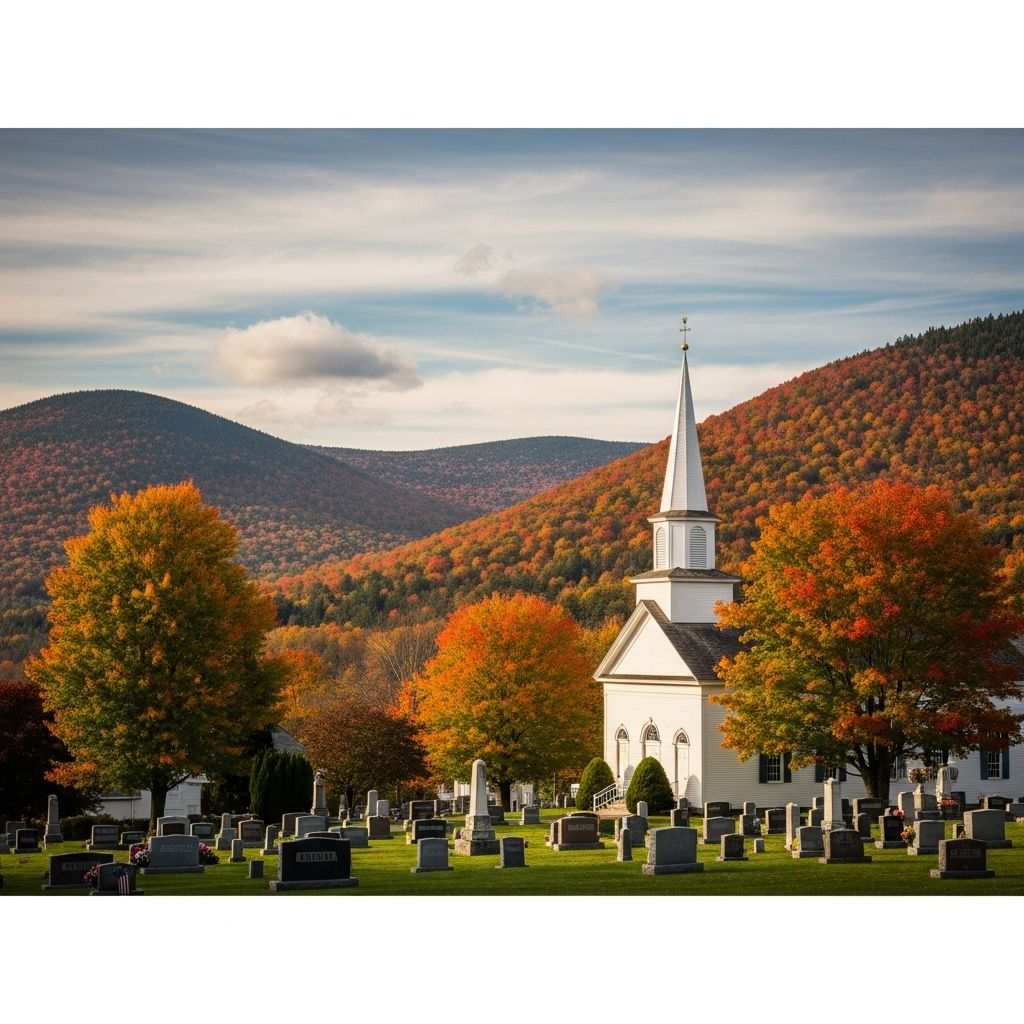
Vermont maintains a relatively flexible approach to end-of-life dispositions, emphasizing family involvement while upholding public health standards through licensing and oversight. State statutes permit home funerals, private property burials, and various cremation methods without mandating embalming or caskets, provided local rules are followed.
Overview of Legal Framework for Dispositions
Vermont’s regulations on handling deceased individuals balance professional oversight with personal autonomy. The Office of Professional Regulation, under the Director, licenses funeral establishments and personnel to ensure sanitary practices and consumer protection. Families can manage many aspects themselves if unpaid, reflecting the state’s progressive stance on death care. Key statutes in Title 26 outline funeral services, while Title 18 addresses vital records and burial permits.
Central to compliance is obtaining a death certificate and burial/transit permit. A healthcare professional must certify the medical details within 24 hours, after which the funeral director or person in charge completes the rest and files it within 48 hours with the town clerk or Office of Vital Records. The permit, authorizing disposition, must be filed by the 10th of the following month.
Licensing Requirements for Professionals and Facilities
To operate commercially, entities must secure licenses from the Office. Funeral directors, embalmers, establishments, and disposition facilities face biennial renewals with specific fees: $350 for directors/embalmers, $800 for establishments/facilities.
- Funeral Establishments: Require a licensed director as owner, manager, or co-owner. Must display the three least expensive caskets (cloth, metal, wood) and undergo inspections every two years.
- Disposition Facilities: Licensed for cremation, alkaline hydrolysis, or natural organic reduction; no prepaid funds allowed in contracts.
- Personnel: Removal staff must register ($125 fee); limited services establishments need oversight by a licensed director and disclose exclusions like embalming or viewings.
Inspections verify equipment, records, preparation rooms (if used for embalming), and compliance with health/safety rules. Out-of-state directors may assist if reciprocity exists. Unlicensed practice incurs penalties under 3 V.S.A. § 127.
Family-Directed and Home Funerals
Vermont uniquely allows unpaid individuals to handle family or community funerals, including transport and burial on private property, subject to zoning and health department approval. This supports “home funerals,” where families care for the body at home without professionals.
Steps for a home funeral include:
- Notify authorities and secure death certificate/permit.
- Coordinate with local health officials for body handling/storage.
- For private burial, confirm zoning allows it (often limited to related family) and file a site map with the town clerk.
No embalming is required by state law, facilitating natural care like dry ice use for preservation. Families must avoid public viewings without licensed oversight if charging fees.
Burial Options and Restrictions
Traditional cemetery burials have no statewide casket or vault mandates, though cemeteries may impose them. Grave liners or vaults might be required for ground stability.
| Burial Type | State Requirements | Local Considerations |
|---|---|---|
| Cemetery Burial | No casket/embalming needed | Cemetery rules on containers/vaults |
| Private Property | Family-related only; zoning OK | Health dept. permit; site map filed |
| Natural Burial Ground | Designated land; deed restriction | No improvements; public access limited |
Private property burials require checking local ordinances; outside villages, they’re often feasible for family. Natural burial grounds, established since 2015, restrict future development and must note this in deeds (Vt. Stat. tit. 18, § 5323). Consult the Vermont Department of Health’s Private Property Burials page for guidance.
Cremation and Alternative Dispositions
Cremation facilities must be licensed, handling contracts without prepayments. No casket is required; alternative containers (e.g., cardboard) suffice, per federal rules that funeral homes must disclose.
Alternatives like alkaline hydrolysis (water cremation) and natural organic reduction (composting) are authorized at licensed sites. Scattering ashes faces few restrictions:
- Private/Public Land: Generally allowed; seek permission for federal sites, avoid developed areas.
- Water: Inland needs state waterway permit; sea scattering 3 miles offshore, notify EPA within 30 days (Clean Water Act).
Transport of cremains requires no special permit post-cremation.
Consumer Rights and Common Practices
Vermont aligns with FTC Funeral Rule, mandating price lists and no embalming pressure. Establishments must offer affordable caskets visibly. Families can buy caskets elsewhere, including online. Vaults enhance grave integrity but aren’t legally compelled statewide.
Pre-need contracts are regulated; limited services (e.g., no ceremonies) must disclose limitations.
Planning Your Disposition: Key Checklist
- Secure death certificate (24 hrs medical, 48 hrs filing).
- Obtain burial/transit permit before disposition.
- Verify licensing for paid services; unpaid family OK.
- Check local rules for private burials/scattering.
- Review cemetery policies on containers.
Frequently Asked Questions
Can I conduct a home funeral in Vermont without a license?
Yes, unpaid family or community members may handle transport, care, and burial, per state law, as long as health permits are obtained.
Is embalming required for burial or transport?
No, Vermont has no embalming mandate, supporting green and home funerals.
Are caskets or vaults legally required?
Not by state law; cemeteries may require them. Alternatives accepted for cremation.
How do I bury on private property?
Ensure zoning allows (family only typically), get health approval, file site map with town clerk.
What are rules for scattering cremated remains?
Allowed on private land; federal permission advised; sea 3+ miles out with EPA notice.
Can out-of-state funeral directors work in Vermont?
Yes, if their state grants reciprocity to Vermont directors.
This guide synthesizes Vermont’s statutes for 2026 planning. Laws evolve; verify with officials for updates. Word count: 1678 (excluding metadata/JSON).
References
- The Vermont Statutes Online, Title 26, Chapter 21: Funeral Services — Vermont General Assembly. 2024 (accessed 2026). https://legislature.vermont.gov/statutes/fullchapter/26/021
- 04-110 Code Vt. R. 04-030-110-X – RULES OF THE BOARD OF FUNERAL SERVICE — Cornell Law School (Vermont Regulations). 2024. https://www.law.cornell.edu/regulations/vermont/04-110-Code-Vt-R-04-030-110-X
- Burial and Cremation Laws in Vermont — Nolo. 2024. https://www.nolo.com/legal-encyclopedia/burial-cremation-laws-vermont.html
- Private Property Burials — Vermont Department of Health (.gov primary source). 2024. https://www.healthvermont.gov/systems/end-life-decisions/private-property-burials
- FAQs – Vermont Funeral Resources & Education — Vermont Funeral Resources. 2024. https://www.vermontfuneral.org/faqs.html
Similar Articles








Read full bio of medha deb


