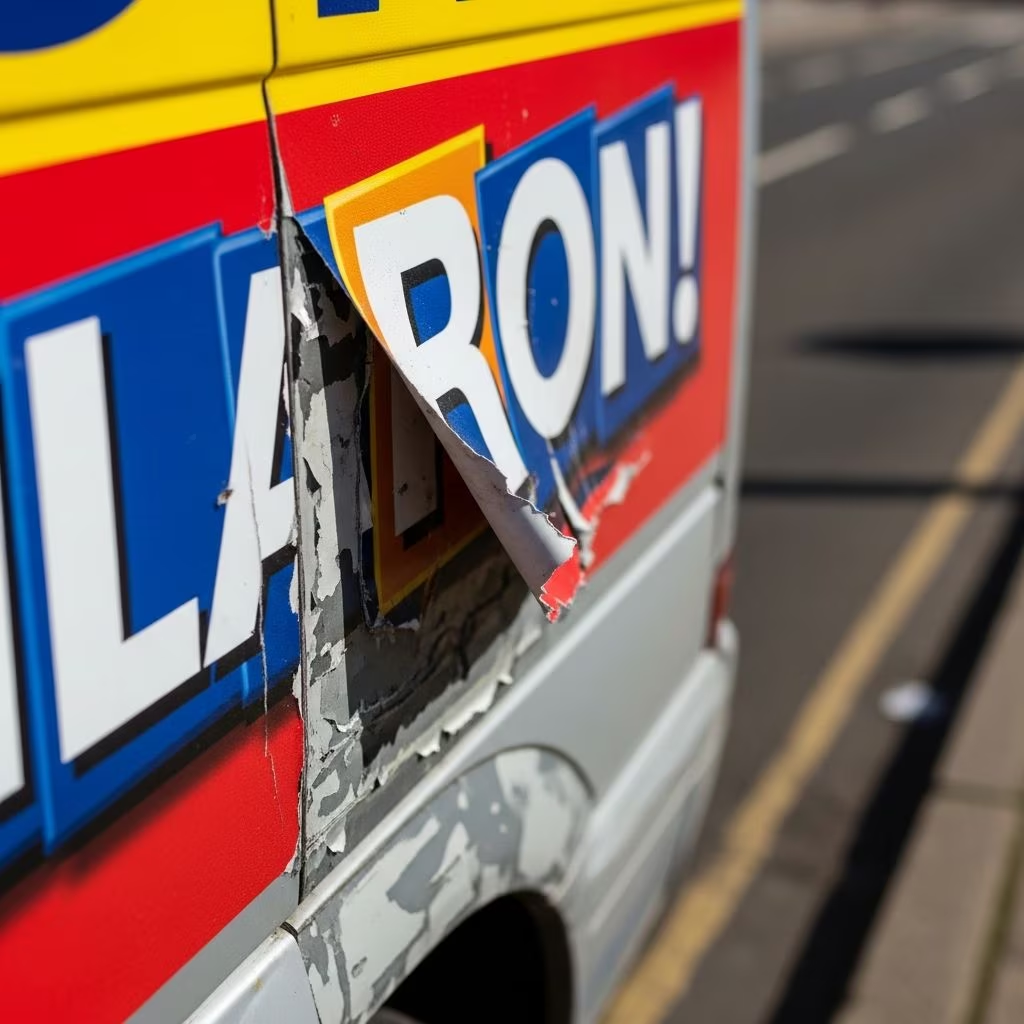
Vehicle wraps have emerged as a potent tool for small businesses seeking cost-effective, high-visibility marketing. By transforming ordinary cars into rolling billboards, companies can reach thousands of potential customers daily without recurring costs like traditional ads. However, the allure of this mobile advertising strategy comes with significant legal strings attached. Failing to address these can result in hefty fines, vehicle impoundment, or even lawsuits. This comprehensive guide explores the multifaceted legal landscape surrounding vehicle wraps, empowering business owners to advertise confidently and compliantly.
Understanding the Basics of Vehicle Wrap Regulations
At its core, a vehicle wrap involves applying large vinyl sheets printed with custom graphics to a car’s exterior. These durable materials withstand weather and road wear, lasting 3-5 years with proper care. While federally permissible across the U.S., vehicle wraps fall under a patchwork of state, county, and municipal rules treating them as mobile billboards.
No overarching federal prohibition exists, but local governments impose varied restrictions. For instance, certain jurisdictions classify wrapped vehicles alongside prohibited moving advertisements, akin to truck-side billboards. Researching these laws is non-negotiable before installation. Businesses must verify ordinances via city hall websites, DMV offices, or legal consultations to preempt violations.
- State-Level Variations: States like Pennsylvania permit wraps but outlaw designs mimicking emergency vehicles, such as flashing lights or siren graphics.
- City Bans: Urban areas like San Francisco outright prohibit vehicle advertising to curb visual clutter.
- Design Restrictions: Many locales ban reflective, animated, or distracting elements that could impair driver visibility or safety.
Proactive compliance starts with a locality-specific audit. Contact your local department of transportation or signage permitting office early in the planning phase.
Local Ordinances: The First Line of Defense
Diving deeper into local rules reveals why one-size-fits-all approaches fail. Municipal codes often cap wrap coverage—say, limiting ads to 50% of the vehicle’s surface—or mandate clear contact information display. Pennsylvania’s guidelines, for example, emphasize road safety by restricting glare-inducing materials.
| Location | Key Restriction | Potential Penalty |
|---|---|---|
| San Francisco, CA | Complete ban on vehicle ads | Fines up to $500 per violation |
| New York City, NY | No reflective materials | Vehicle impoundment |
| Pennsylvania (statewide) | No emergency vehicle mimicry | Registration revocation |
| General U.S. Municipalities | Max 60% surface coverage | $100-$1,000 fines |
This table illustrates common hurdles. Always cross-reference with official sources, as rules evolve. Non-compliance risks escalate quickly: a simple ticket can snowball into towing fees and legal battles, eroding advertising ROI.
Homeowners Associations: Hidden Neighborhood Barriers
Beyond public roads, residential zones pose unique challenges via Homeowners Associations (HOAs). These private entities enforce covenants dictating aesthetic standards, often banning commercial displays outright. Visible parking of wrapped vehicles in driveways or streets may trigger violations, leading to fines or forced removal.
HOA bylaws typically prioritize uniformity, viewing business wraps as eyesores. Garaging the vehicle becomes essential where rules prohibit street-side exposure. Savvy owners review governing documents pre-wrap and seek board approval. Amendments or variances are possible but require compelling business justifications.
- Review HOA declaration for ‘commercial use’ clauses.
- Propose temporary wraps for review.
- Opt for subtle, non-branded designs if full ads are barred.
Neglecting HOA protocols can result in community disputes or liens, complicating business operations far beyond advertising intent.
Vehicle Registration: From Personal to Commercial
Once local and HOA green lights shine, registration looms large. Advertising-laden vehicles may qualify—or require—reclassification as commercial. This shift entails higher fees, inspections, and paperwork but legitimizes business use.
States define ‘commercial’ variably: if the wrap promotes your enterprise and the car serves business purposes, expect DMV scrutiny. Failure to update invites suspension. Benefits include tax perks, but weigh against elevated insurance and licensing costs. Consult your state’s DMV handbook for thresholds, often tied to mileage or payload.
Insurance Implications for Wrapped Fleets
Vehicle modifications like wraps necessitate insurer notification. Policies may not automatically cover vinyl damage from accidents, vandalism, or fading. Commercial branding could reclassify your auto policy as business-use, hiking premiums or demanding riders.
Key steps include:
- Disclose wrap details (size, material, installer) promptly.
- Request coverage quotes for wrap-specific perils.
- Document pre-installation photos for claims baseline.
Insurers assess risk based on visibility and accident proneness. While wraps rarely spike rates alone, bundled with commercial status, expect 20-50% increases. Proactive dialogue ensures policy alignment, averting claim denials.
Design Choices: Creativity Meets Legality
Compelling designs drive wrap success, yet must toe legal lines. Offensive, false, or hazardous graphics invite trouble. Regulations frown on lewd imagery, unverified claims (e.g., ‘World’s Best’), or elements simulating police lights.
Best practices emphasize restraint:
- Use high-contrast, non-reflective vinyl.
- Incorporate legible fonts over 4 inches tall.
- Avoid political or controversial messaging.
- Test visibility from 500 feet at highway speeds.
Collaborate with regulation-savvy designers. Mockups submitted to authorities preempt redesign costs.
Tax Advantages: Claiming Wraps as Deductions
Amid pitfalls, silver linings emerge. The IRS views qualifying vehicle wraps as deductible advertising expenses under Section 162. Criteria demand exclusive business use and direct promotion—no personal detours.
Maintain meticulous records: invoices, mileage logs, photos. Deduct full installation costs in year one if temporary (under 30% permanent affixation). Consult CPAs to navigate audits, maximizing savings—wraps often recoup via 30,000+ daily impressions.
Maintenance and Longevity: Sustaining Compliance
Legal adherence extends post-installation. Faded or peeling wraps violate codes, mirroring billboard upkeep laws. Annual inspections ensure integrity, with professional cleaning preserving vibrancy.
Environmental factors accelerate wear: UV rays, salt, bird droppings. Budget 5-10% yearly for upkeep, extending lifespan and compliance.
Frequently Asked Questions (FAQs)
Are vehicle wraps legal everywhere in the U.S.?
No, while federally allowed, cities like San Francisco ban them outright. Always check local ordinances.
Do HOAs regulate vehicle wraps?
Yes, many prohibit visible commercial vehicles. Review bylaws and seek approval.
Does a wrap require commercial registration?
Often yes, if used for business advertising. Verify with your DMV.
Should I update my insurance for a wrap?
Absolutely—notify providers to cover modifications and potential commercial use.
Can I deduct wrap costs on taxes?
Yes, as business advertising if exclusively used for promotion. Keep records.
What designs are prohibited?
Distracting, offensive, or emergency-mimicking graphics. Prioritize safety-compliant creativity.
Vehicle wraps offer unparalleled marketing reach—up to 96,000 views daily per vehicle—but demand rigorous legal diligence. By mastering these nuances, small businesses convert roads into revenue streams safely and effectively.
References
- What Are the Legalities Surrounding Car Wraps? — Brand It Wrap It. 2023. https://www.branditwrapit.com/blog/what-are-the-legalities-surrounding-car-wraps/
- Should Your Company Wrap Vehicles? — Priority Press. 2024. https://priority-press.com/vehicle-wraps/
- Rules and Regulations for Vehicle Wraps: Navigating the legal landscape of wrapping your vehicle. — House of Signs Co. 2023-10-14. https://houseofsignsco.com/2023/10/14/rules-and-regulations-for-vehicle-wraps-navigating-the-legal-landscape-of-wrapping-your-vehicl/
- The legalities of car wraps: three things you need to know. — CarWraps.com. 2023. https://carwraps.com/blog/the-legalities-of-car-wraps-three-things-you-need-to-know
- Vehicle Wrap Advertising: Get Noticed Everywhere You Go. — Jobber Academy. 2024. https://www.getjobber.com/academy/vehicle-wrap-advertising/
- What Is Car Wrap Advertising? A Complete Guide For Commercial Use. — Fleet Wrap HQ. 2024. https://fleetwraphq.com/car-wrap-advertising/