
Vehicle Trunk Regulations: Legal Driving Standards
Understanding trunk safety laws and when police can stop drivers.
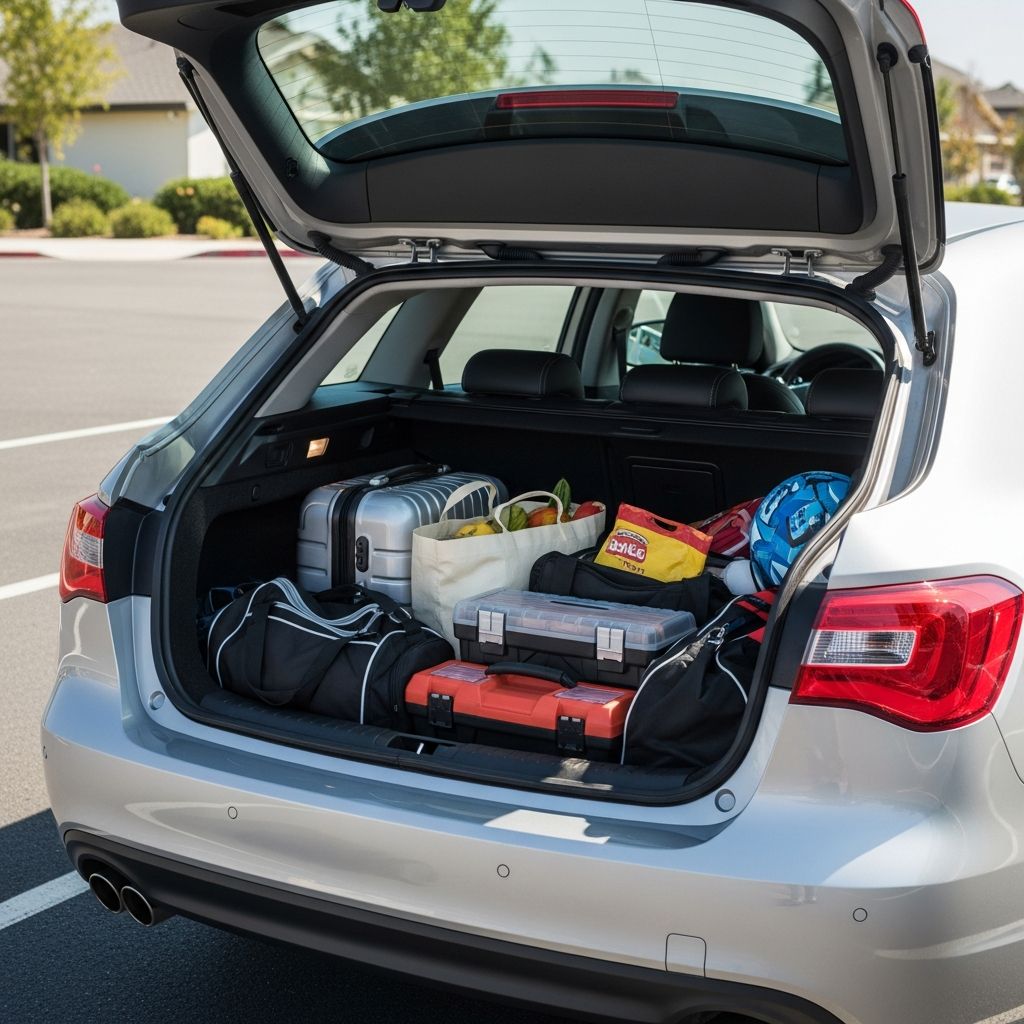
Understanding Trunk Safety and Traffic Law
Many drivers find themselves in situations where they need to transport cargo that exceeds the confines of their vehicle’s trunk space. Whether moving furniture, construction materials, or household goods, an open trunk becomes a practical necessity. However, the legality of operating a vehicle with an open trunk varies significantly across jurisdictions, and misunderstanding these regulations can result in traffic citations or worse. The question of whether you can legally drive with your trunk open is not straightforward and depends on multiple factors including your state’s specific vehicle code provisions, the type and nature of cargo being transported, and whether the open trunk creates a genuine safety hazard.
State-Specific Legal Requirements and Variations
The legal landscape regarding open trunk driving differs substantially across the United States. Some states explicitly prohibit operating a vehicle with an open trunk unless you’re transporting cargo that necessitates the extra space. Illinois, Kansas, Maryland, Minnesota, Nebraska, New Jersey, and Texas fall into this category, where driving with an open trunk without justifying cargo is considered unlawful. In contrast, many other states have no specific statutory prohibition against open trunk operation, allowing drivers greater flexibility in how they transport items.
The distinction matters significantly from a legal standpoint. States that prohibit open trunk driving without cargo essentially treat the practice as a standalone traffic violation, regardless of whether the condition poses any actual safety risk. States without explicit restrictions take a different approach, focusing instead on whether the open trunk creates a safety hazard or violates vehicle inspection standards.
Safety Concerns and Equipment Standards
Beyond state-specific statutes, vehicle equipment regulations establish baseline safety requirements. Many states require that vehicles be operated in a manner that does not endanger other motorists or pedestrians. An open trunk may violate these safety standards if cargo is insecurely fastened, if the trunk lid creates visibility issues for following drivers, or if items protrude beyond federally permitted overhang limitations.
Federal regulations govern how far cargo can extend beyond a vehicle’s rear. These overhang measurements are defined differently across states. California, for instance, measures overhang from the nearest axle, while other states calculate the distance from the tip of the closest bumper. When transporting items with an open trunk, the cargo must comply with these measurements to avoid federal violations.
Additionally, visibility concerns matter legally. If an open trunk obstructs your rear-view mirror or makes it impossible to safely monitor traffic behind your vehicle, this condition could provide legitimate grounds for a traffic stop. Police officers can justify enforcement action when an open trunk demonstrably impairs driver visibility or creates a reasonable safety hazard.
When Police Can Initiate Traffic Stops
Law enforcement authority to stop vehicles based on trunk conditions depends on establishing reasonable suspicion of a traffic violation or safety concern. Simply observing an open trunk does not automatically justify a traffic stop in all jurisdictions. Courts have grappled with this issue repeatedly, producing varying outcomes based on state law and specific circumstances.
In Pennsylvania, for example, courts have determined that a trunk bouncing up and down provides reasonable suspicion that the trunk latch mechanism is defective, constituting an unsafe condition under motor vehicle code provisions. This ruling reflects Pennsylvania’s vehicle inspection requirements, which specifically mandate trunk lid inspection. If a trunk cannot close securely, the vehicle fails inspection standards, and an officer observing this condition can stop the vehicle to investigate the mechanical defect.
Texas courts have reached different conclusions based on that state’s regulatory framework. Texas law does not require passenger vehicles to have trunks, nor does it mandate trunk inspection as part of vehicle safety standards. Consequently, driving with an open trunk does not automatically suggest a safety equipment violation in Texas. Police cannot justify a traffic stop based solely on observing an open trunk unless additional factors create reasonable suspicion of unsafe operating conditions or other traffic violations.
California presents another variation, where officers might argue that an open trunk presents a significant safety risk justifying the traffic stop, particularly if cargo is improperly secured or protruding dangerously. The specific facts surrounding the observation—whether the trunk is slightly ajar or completely open, whether cargo is visible and unsecured, whether visibility is substantially impaired—all influence whether reasonable suspicion exists.
Cargo Transportation and Legal Exemptions
Nearly all jurisdictions that restrict open trunk driving include exemptions for transporting bulky cargo. Large appliances, construction materials, furniture, and similar items often justify open trunk operation even in states with explicit prohibitions. The theory behind these exemptions recognizes that certain cargo by its nature cannot fit within standard trunk spaces, and preventing open trunk transportation would make legitimate commerce and personal moving activities unreasonably difficult.
When relying on a cargo exemption, drivers must ensure the cargo itself complies with all applicable laws. Items cannot extend beyond permitted overhang distances, must be securely fastened to prevent falling or shifting during transit, and cannot obstruct the driver’s vision or create hazards for other road users. A cargo exemption is not a blank check to transport items however one wishes; it merely permits the otherwise-prohibited condition of operating with an open trunk.
The Distinction Between Safety Hazards and Technical Violations
An important legal distinction exists between operating a vehicle in a condition that genuinely endangers others versus merely violating a technical regulatory requirement. Some jurisdictions focus on actual safety impacts, while others enforce violations regardless of whether danger exists. A vehicle operated safely with an open trunk—with cargo properly secured, visibility unimpaired, and all overhang requirements met—might technically violate a state statute prohibiting open trunk operation without cargo justification. However, the absence of any actual safety hazard can be relevant in legal proceedings challenging the stop or citation.
When a traffic stop results in evidence collection, such as in DWI investigations, the legality of the initial stop becomes crucial. If the stop was not justified by reasonable suspicion of a violation, evidence discovered during the stop may be suppressed through motion practice. Courts examine whether the observed condition actually constituted a traffic violation under that state’s specific law and whether reasonable suspicion of that violation existed.
Safe Practices for Open Trunk Driving
Even when driving with an open trunk is legally permissible, safety considerations must take priority. Defensive driving becomes especially important when your rear visibility is compromised. Raising a trunk lid or extending cargo beyond normal vehicle dimensions makes it more difficult to spot approaching vehicles, particularly those in blind spots. Drivers must increase vigilance, monitor surrounding traffic carefully, and adjust driving behavior accordingly.
Cargo securement is essential. Unsecured items shifting during transit or falling onto roadways create hazards for following vehicles and other road users. Using cargo nets, tie-down straps, or other securement methods keeps items in place and prevents dangerous situations. The cargo must also remain within visual boundaries, not protruding excessively or blocking tail lights and brake lights from other drivers’ view.
Before driving with an open trunk across state lines, research regulations in each jurisdiction you’ll traverse. A configuration legal in one state may violate another state’s traffic laws. Overhang measurements that comply with one state’s requirements might exceed another’s limits. Understanding these variations prevents unintended violations and potential traffic citations in unfamiliar jurisdictions.
Frequently Asked Questions
Q: Is driving with an open trunk always illegal?
A: No. Many states have no explicit prohibition against open trunk driving. Legality varies by jurisdiction and depends on factors like cargo presence, state regulations, and whether safety hazards exist. Some states permit open trunk operation without restriction, while others prohibit it except when transporting necessary cargo.
Q: Can police stop me for driving with an open trunk?
A: Police can only stop a vehicle for an open trunk if reasonable suspicion of a traffic violation exists. In states with explicit prohibitions on open trunk driving, an officer may stop a vehicle lacking cargo justification. In states without such provisions, officers must observe additional factors suggesting a safety hazard or equipment defect to justify a stop.
Q: What makes an open trunk a safety hazard?
A: An open trunk becomes a safety hazard when it significantly impairs rear visibility, when cargo is unsecured and shifting, when items protrude beyond legal overhang limits, or when the trunk lid mechanism is clearly defective. Bouncing or flapping trunk lids may indicate mechanical problems requiring repair.
Q: Can I transport cargo with an open trunk in states that prohibit it?
A: Yes, most states that prohibit open trunk driving include exemptions for transporting bulky cargo that requires the extra space. Furniture, appliances, building materials, and similar items typically justify open trunk operation even in restrictive jurisdictions.
Q: How far can cargo extend from my vehicle?
A: Federal regulations and state laws govern cargo overhang distances. Measurements vary by state and may be calculated from the nearest axle or the vehicle’s bumper tip. Cargo cannot extend beyond these limits, which typically range from 3 to 4 feet from the rear of the vehicle.
Q: What should I do if stopped for an open trunk?
A: Ask the officer what specific violation they observed. If the stop seems unjustified, you may consult a criminal defense attorney about filing a motion to suppress the stop. Understanding your state’s specific laws and the facts of the stop helps determine whether legal challenge is appropriate.
References
- David Frank Law: An Open Trunk Does Not Justify Stopping a Driver for DWI — David Frank Law. https://www.davidfranklaw.com/an-open-trunk/
- CarParts.com: Can You Drive With Your Trunk Open? — CarParts.com. https://www.carparts.com/blog/can-you-drive-with-your-trunk-open/
- Lancaster Law Group: Open Trunk Gives Police Reason To Stop You — Lancaster Law Group. https://lawlancaster.com/driving-with-your-trunk-bouncing-up-and-down-gives-police-a-reason-to-stop-you/
Similar Articles








Read full bio of medha deb


