
The Vanishing Right to a Hearing for U.S. Asylum Seekers
Expedited removal limits due process and federal court access for migrants.
The Promise of a Day in Court
The American legal system is anchored in the foundational promise that individuals facing severe deprivations of liberty deserve a fair and impartial hearinga concept universally recognized as one’s “day in court.” This principle serves as the ultimate constitutional safeguard against arbitrary, unchecked government action. For generations, the United States has positioned itself as a global beacon of hope, offering a formalized legal refuge for those fleeing persecution, tyranny, and violence.
However, for thousands of vulnerable noncitizens arriving at the United States border today, this constitutional guarantee has become an increasingly illusory concept. Over the past few decades, a combination of stringent legislative frameworks and landmark judicial rulings has systematically eroded the ability of asylum seekers to access federal courts. The escalating reliance on fast-track deportation procedures has fundamentally transformed the landscape of immigration enforcement. By prioritizing administrative speed, resource conservation, and deterrence over comprehensive judicial oversight, the current legal apparatus frequently forces asylum seekers into a bureaucratic labyrinth where life-and-death decisions are made behind closed doors, often with no judicial recourse.
The Mechanics and Expansion of Expedited Removal
To fully comprehend the gravity of this legal shift, one must first examine the mechanics of “expedited removal,” a statutory framework that radically alters the traditional deportation process. Enacted as a central component of the Illegal Immigration Reform and Immigrant Responsibility Act (IIRIRA) of 1996, expedited removal grants frontline immigration officers the extraordinary and unprecedented authority to deport certain undocumented individuals without a formal hearing before an immigration judge. Standard removal proceedings, governed by Section 240 of the Immigration and Nationality Act (INA), allow noncitizens to present evidence, call witnesses, and be represented by counsel before a judge. Expedited removal, authorized under Section 235 of the INA, bypasses these adversarial protections entirely.
Initially, expedited removal was narrowly tailored, intended primarily for individuals apprehended at official ports of entry carrying fraudulent documents or lacking proper visas. However, over subsequent administrations, the policy’s geographical and temporal scope has been drastically expanded. Under executive directives, immigration enforcement agencies have applied expedited removal to individuals apprehended anywhere within 100 air miles of any U.S. international land border who cannot prove they have been continuously present in the country for at least fourteen days. More recent policies have attempted to push these boundaries even further, seeking to apply expedited removal nationwide to individuals who have been in the United States for up to two years.
When a noncitizen is placed into the expedited removal track, they possess only one primary avenue to halt the fast-track deportation: they must affirmatively express a fear of persecution or torture in their country of origin. This declaration triggers a mandatory “credible fear interview” conducted by an asylum officer from U.S. Citizenship and Immigration Services (USCIS). The statutory threshold for establishing a credible fear is defined as demonstrating a “significant possibility” that the individual could ultimately qualify for asylum.
If the officer determines that the applicant meets this burden, the individual is generally excised from the expedited removal process and placed into standard immigration proceedings, granting them the opportunity to present a comprehensive defense against deportation. Conversely, if the officer issues a negative credible fear determination, the asylum seeker faces imminent, unreviewable deportation. While the applicant can request an immediate review of this negative decision by an administrative immigration judge, this review is notoriously swift, highly constrained, and offers none of the robust fact-finding mechanisms of a full trial.
The Great Writ and the Precedent of DHS v. Thuraissigiam
Historically, individuals detained by government authorities who believed their physical detention was unlawful could seek judicial relief through a petition for a writ of habeas corpus. Often referred to as the “Great Writ,” habeas corpus traces its origins to English common law and is explicitly enshrined in the Suspension Clause of the U.S. Constitution. It has historically served as a fundamental bulwark against executive overreach, ensuring that no branch of government can permanently lock someone away without answering to the judiciary. For years, legal advocates and civil rights organizations argued passionately that asylum seekers who received procedurally flawed negative credible fear determinations retained the constitutional right to petition federal courts for habeas corpus relief.
This brewing legal controversy reached a definitive crescendo in the 2020 Supreme Court case, Department of Homeland Security v. Thuraissigiam. The litigation centered on Vijayakumar Thuraissigiam, a Sri Lankan national of Tamil descent who had fled his home country after enduring severe political violence, arbitrary detention, and physical abduction. Shortly after crossing the southern United States border undetected, he was apprehended by border patrol agents and immediately placed into expedited removal proceedings. Following a negative credible fear determination by an asylum officer, Thuraissigiam filed a habeas corpus petition in federal district court. He argued that the asylum officer and the reviewing administrative judge had committed egregious procedural errors, including failing to provide adequate translation services, applying an incorrect legal standard, and ignoring vital country conditions evidence that corroborated his claims of torture.
In a sweeping and highly consequential 7-2 decision, the Supreme Court ruled against Thuraissigiam, effectively shutting the courthouse doors on thousands of similarly situated migrants. Justice Samuel Alito, writing for the majority, concluded that the Suspension Clause does not guarantee an asylum seeker the constitutional right to seek federal court review of a negative credible fear determination. The majority reasoned that habeas corpus has traditionally been utilized strictly as a legal vehicle to secure release from unlawful physical detention. Because Thuraissigiam was ultimately seeking an additional administrative processthe right to remain in the United States to pursue asylumrather than simple release from custody, the Court determined that the writ did not apply. Consequently, the ruling firmly entrenched the IIRIRA provisions that strip federal courts of jurisdiction over expedited removal, insulating frontline immigration decisions from federal judicial scrutiny.
In a sharp dissent, Justices Sonia Sotomayor and Elena Kagan warned of the dangerous precedent the ruling established. They argued that the decision unlawfully expanded executive power by removing the only mechanism available to ensure that immigration officers adhere to the laws enacted by Congress. The dissenting justices emphasized that without the fail-safe of judicial review, administrative errorswhether born of negligence, bias, or systemic dysfunctionwould remain permanently unchecked.
The Human Toll of Bypassing the Judiciary
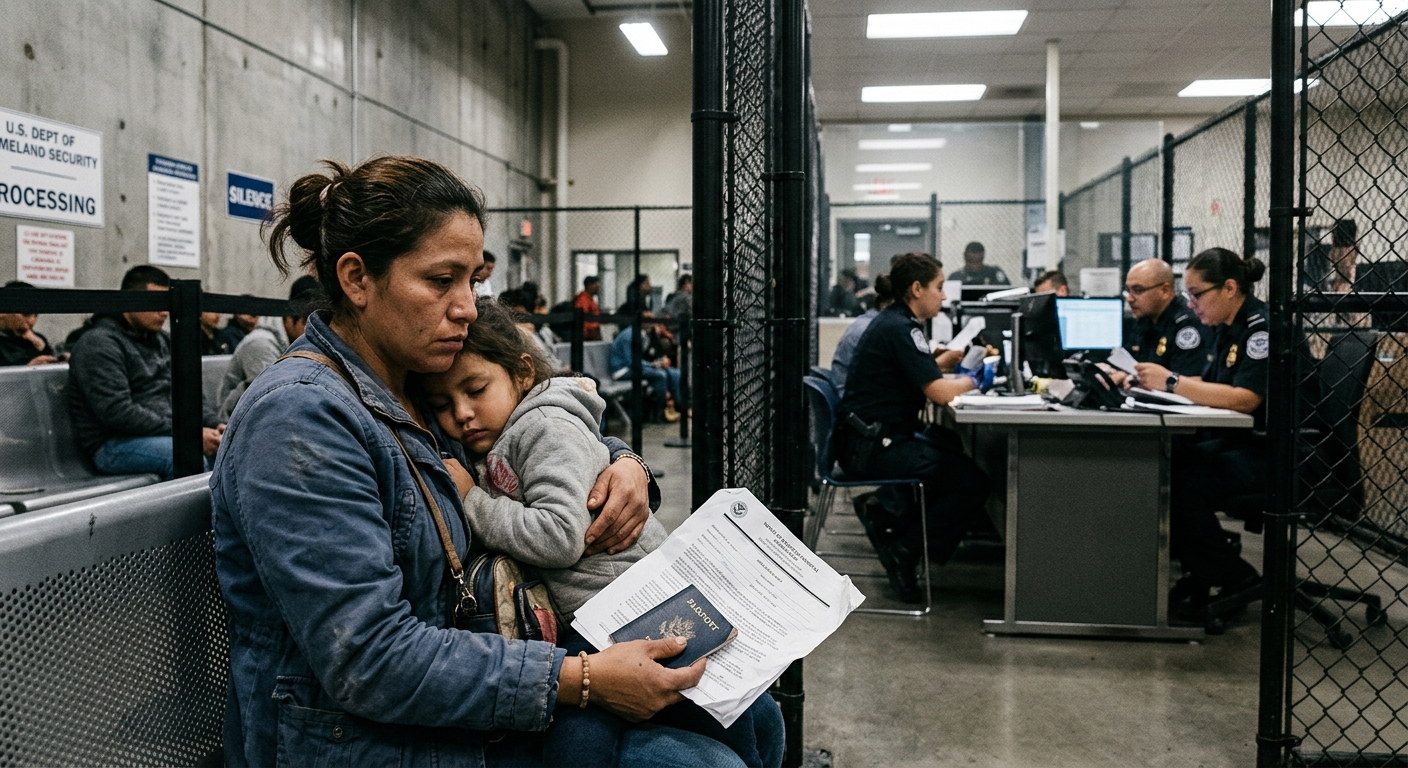
The foreclosure of federal court review carries profound, immediate, and often irreversible human consequences. By its very design, the expedited removal system prioritizes efficiency over accuracy, creating an environment highly susceptible to administrative error. Credible fear interviews are frequently conducted mere days or even hours after an individual has endured a harrowing, life-threatening journey. Asylum seekers are typically detained in austere, heavily monitored holding facilities, suffering from severe physical exhaustion, untreated medical conditions, and profound psychological trauma.
During these critical, high-stakes interviews, applicants routinely face insurmountable logistical hurdles. Adequate language interpretation is not consistently guaranteed, a problem that is particularly acute for speakers of rare indigenous dialects from Central America or isolated linguistic communities in Africa and Asia. Furthermore, individuals trapped in expedited removal are exceedingly rarely represented by legal counsel. Navigating the highly complex, continuously evolving legal definitions of “persecution” and establishing a “nexus to a protected ground” (such as race, religion, nationality, political opinion, or membership in a particular social group) is a monumental task for seasoned attorneys. Expecting a traumatized, unrepresented, and detained individual to articulate these complex legal concepts successfully is an inherently flawed premise.
Vulnerable populations bear the brunt of this systemic opacity. Survivors of severe gender-based violence, human trafficking, and LGBTQ+ individuals fleeing state-sponsored homophobia often require time, specialized psychological support, and established trust to recount the intimate details of their persecution. The rapid-fire nature of a credible fear screening frequently precludes this necessary environment. When adjudicative errors inevitably occurwhether an officer misunderstands critical cultural context, a translator inadvertently alters the meaning of a crucial statement, or an adjudicator capriciously applies the wrong legal standardthe Thuraissigiam precedent dictates that these fatal mistakes cannot be reviewed or corrected by an Article III federal judge.
This glaring lack of a judicial safety net dramatically increases the acute risk of refoulementthe forced return of a refugee to a sovereign state where they face imminent persecution, torture, or death. In the eyes of international human rights advocates and legal scholars, prioritizing administrative speed and deportation quotas over factual accuracy in life-or-death scenarios constitutes a severe abdication of both domestic due process and binding international humanitarian norms.
The Legal Debate: Due Process versus Plenary Power
The intense controversy surrounding expedited removal and the restriction of judicial access highlights a deep-seated, ongoing tension within American constitutional law: the stark conflict between the Due Process Clause and the archaic “plenary power doctrine.” The Due Process Clause of the Fifth Amendment guarantees unequivocally that no person shall be deprived of life, liberty, or property without due process of law. However, for well over a century, the Supreme Court has heavily relied on the plenary power doctrine, a judicial construct that grants the political branches of governmentspecifically the Executive and the Legislatureexceptionally broad and largely unreviewable authority over immigration policy, border control, and the admission or exclusion of noncitizens.
In restricting access to the courts for those subjected to expedited removal, the judiciary has leaned heavily on the legal fiction that noncitizens apprehended at or near the border are legally classified merely as “applicants for admission.” Under established, albeit heavily criticized, immigration jurisprudence dating back to nineteenth-century cases, an applicant for admission is deemed to possess only those limited procedural rights explicitly granted to them by an act of Congress. Because the IIRIRA explicitly and intentionally strips federal courts of the jurisdiction to review individual credible fear determinations, the courts have reflexively deferred to legislative intent, citing national sovereignty and border security.
Critics of this restrictive legal framework argue passionately that the plenary power doctrine is an outdated, xenophobic relic that unjustifiably shields modern immigration enforcement machinery from contemporary human rights standards and constitutional norms. Progressive legal scholars contend that when the stakes involve the potential deprivation of life or freedom from torture, basic constitutional due process must fundamentally require access to an impartial federal judge, entirely regardless of an individual’s specific immigration classification or their geographic proximity to an international border.
Potential Paths Forward: Restoring Federal Court Oversight
Given the Supreme Court’s definitive and restrictive stance on the constitutional limitations of habeas corpus within the immigration context, any comprehensive restoration of judicial review for asylum seekers must originate decisively from the legislative branch. Congress possesses the clear, undisputed constitutional authority to amend the Immigration and Nationality Act to explicitly grant federal courts the statutory jurisdiction to review expedited removal orders and negative credible fear determinations. Legislative reform could seamlessly establish a standardized appellate pathway, ensuring that administrative agencies remain strictly accountable to the judiciary and that the rule of law is upheld at the border.
In the absence of sweeping congressional action, the executive branch still retains significant administrative discretion to mitigate the inherent harshness of the expedited removal apparatus. The Department of Homeland Security and the Department of Justice could proactively implement robust internal oversight mechanisms to ensure the meticulous accuracy of credible fear screenings. Providing asylum seekers with guaranteed access to independent legal representation prior to their interviews, mandating comprehensive, ongoing trauma-informed training for all asylum officers, and drastically expanding the use of community-based alternatives to mandatory detention could significantly reduce the alarming risk of wrongful deportations. Ultimately, ensuring that asylum seekers receive a fair and comprehensive hearing is not merely a matter of statutory interpretation; it is a profound reflection of a nation’s commitment to foundational justice and human dignity.
Frequently Asked Questions (FAQs)
What is expedited removal in US immigration law?
Expedited removal is a fast-track deportation process created by the Illegal Immigration Reform and Immigrant Responsibility Act of 1996. It allows low-level immigration enforcement officers to quickly deport certain undocumented noncitizens without granting them a formal hearing before an immigration judge, thereby bypassing standard removal proceedings.
How does a credible fear interview work?
If a noncitizen in expedited removal expresses a fear of returning to their home country, they are granted a credible fear interview with an asylum officer. The applicant must demonstrate a “significant possibility” that they could establish eligibility for asylum. Passing the interview generally transfers the individual to standard, full immigration court proceedings, shielding them from immediate deportation.
What was the Supreme Court’s ruling in DHS v. Thuraissigiam?
In the 2020 landmark case Department of Homeland Security v. Thuraissigiam, the Supreme Court ruled 7-2 that asylum seekers placed in expedited removal do not have a constitutional right under the Suspension Clause (habeas corpus) to seek federal court review of a negative credible fear determination.
Why is judicial review important for asylum seekers?
Judicial review serves as a critical safety net against administrative errors. Because credible fear interviews are often conducted while individuals are traumatized, detained, and without legal representation, mistakes frequently occur. Federal court review allows an impartial judge to correct procedural or legal errors that could otherwise result in an individual being wrongfully deported to face persecution or death.
Can Congress change the expedited removal process?
Yes. Congress possesses plenary legislative authority over immigration laws and can pass legislation to amend the Immigration and Nationality Act. By enacting new laws, Congress could explicitly grant federal courts the jurisdiction to review expedited removal orders and negative credible fear determinations, effectively restoring vital judicial oversight.
References
- 19-161 Department of Homeland Security v. Thuraissigiam (06/25/2020) Supreme Court of the United States. 2020-06-25. https://www.supremecourt.gov/opinions/19pdf/19-161_g314.pdf
- Executive Office for Immigration Review: 6.4 – Limited Proceedings Department of Justice. 2024-05-14. https://www.justice.gov/eoir/reference-materials/ic/chapter-6/4
- Justice Department and Department of Homeland Security Issue Rule to Efficiently and Fairly Process Asylum Claims Department of Homeland Security. 2022-03-24. https://www.dhs.gov/news/2022/03/24/justice-department-and-department-homeland-security-issue-rule-efficiently-and
- Asylum, Interrupted Harvard Law & Policy Review. 2021-09-16. https://harvardlpr.com/2021/09/16/asylum-interrupted/
Similar Articles








Read full bio of medha deb


