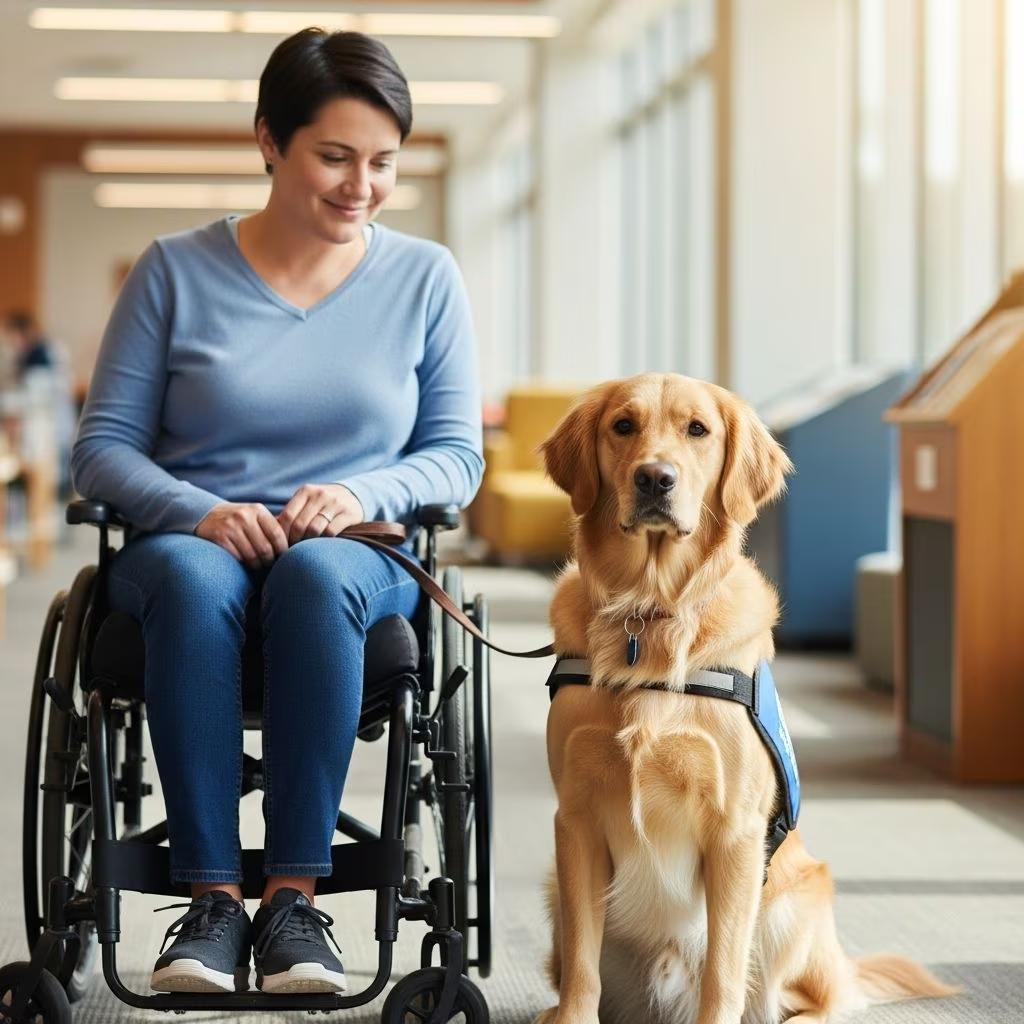
Individuals with disabilities in Utah enjoy robust legal protections for service animals, ensuring access to public spaces, housing, and other essential areas. These laws align closely with federal standards like the Americans with Disabilities Act (ADA), emphasizing trained dogs’ roles in mitigating disabilities while distinguishing them from emotional support animals (ESAs).
Defining Service Animals Under Utah Law
Utah statutes define a **service animal** primarily as a dog individually trained to perform specific tasks for people with disabilities. This includes guide dogs for the blind, hearing alert dogs, and mobility assistance dogs. Miniature horses may qualify under federal ADA guidelines if they meet behavioral and size criteria, though Utah law focuses mainly on dogs.
Key distinction: Emotional support animals provide comfort but lack task-specific training, granting them fewer public access rights. ESAs primarily receive housing protections under federal Fair Housing Act (FHA) rules, which Utah incorporates.
- Tasks examples: Retrieving items, opening doors, alerting to seizures, or providing balance support.
- Exclusions: Pets or therapy animals not trained for disability-related work.
Public Access Protections for Handlers
People with disabilities have the right to be accompanied by their service animal in all public accommodations, including restaurants, stores, hotels, and medical facilities, unless the animal poses a direct threat or is uncontrolled. Utah Code explicitly states this right, mirroring ADA provisions.
Businesses and public entities cannot deny entry based on the animal’s presence alone. Exceptions apply if the animal is a proven danger, not housebroken, or disruptive despite handler control. In healthcare settings, clinics must accommodate service dogs unless they fundamentally alter services.
| Scenario | Allowed? | Conditions |
|---|---|---|
| Restaurants & Retail | Yes | Must be under control; no demonstration required. |
| Hospitals & Clinics | Yes | Unless direct safety threat. |
| Grocery Stores | Yes | Leash optional if it interferes with tasks. |
| Zoos/Wild Parks | Possibly No | If direct animal contact risks health. |
Housing Rights and Landlord Obligations
Utah law prohibits housing discrimination against individuals with service animals, even in ‘no pets’ properties. Landlords cannot charge extra pet fees or deposits for verified service animals, though they may request confirmation of the animal’s status.
For emotional support animals, federal FHA applies, requiring ESA letters from licensed mental health professionals for reasonable accommodations. Utah aligns by banning refusals for disability-based animals. Damage caused by the animal remains the handler’s responsibility.
- No breed bans apply to service animals, even prohibited ones, absent case-by-case threat proof.
- Trainers can access housing with animals in training.
- Restitution required for violations causing harm.
Privileges for Service Animal Trainers
Utah extends public access rights to trainers accompanying animals in training to become service dogs or police canines, provided the handler is not disabled. This supports the training pipeline without requiring disability proof.
Trainers must ensure control, and access mirrors handler rights: full entry unless safety risks arise. This provision bolsters Utah’s commitment to self-sufficiency for disabled residents.
Criminal Penalties for Interference and Harm
Utah imposes strict penalties for harming or interfering with service animals, treating them as serious misdemeanors.
- Substantial injury or death: Class A misdemeanor; restitution for training/replacement costs.
- Harassment or chasing: Class B misdemeanor; includes owner liability for uncontrolled pets.
- Theft or loss: Civil action for damages available to handlers.
- Allowable response: Any person may injure/kill a dog attacking a service animal.
Vehicle operators must yield to visually impaired pedestrians with guide dogs, facing liability for failures. Service animals biting while controlled are exempt from quarantine.
Misrepresentation and Fraud Prohibitions
Falsely claiming an animal as a service dog is a class B misdemeanor in Utah. This includes lying to obtain documentation from healthcare providers. Penalties deter abuse of privileges, preserving access for legitimate users.
No vests, tags, or certifications are required under ADA or Utah law; only two inquiries permitted: (1) disability necessity? (2) trained tasks?. Local licensing/vaccination rules apply equally to all dogs.
Everyday Scenarios and Best Practices
In transportation: Service animals ride free with handlers on buses, taxis, and rideshares, controlled but not leashed if task-impeding.
Workplaces: Employers accommodate under ADA unless undue hardship; Utah follows suit.
Schools/Universities: Campuses like Utah State University allow service animals everywhere handlers go.
Handlers should carry vet records for vaccinations and train for public behavior to avoid exclusions.
Comparing Service Animals, ESAs, and Pets
| Type | Training Required | Public Access | Housing Rights | ID Needed |
|---|---|---|---|---|
| Service Animal | Yes, task-specific | Full (ADA/Utah) | Full, no fees | No |
| Emotional Support Animal | No | Limited | Yes (FHA letter) | Letter optional |
| Pet/Therapy Dog | No | No automatic | Subject to rules | N/A |
Frequently Asked Questions
Can service animals be any breed in Utah?
Yes, breed bans do not apply unless the specific animal poses a direct threat based on behavior.
Do service dogs need special vests or certification?
No, neither ADA nor Utah requires ID, vests, or certification; general dog licenses apply.
What if a service animal is disruptive?
Handlers must control it; uncontrolled or unclean animals can be excluded without penalty.
Are emotional support animals allowed in Utah stores?
No public access rights; only housing under FHA.
What penalties for harming a service dog?
Class A misdemeanor for injury/death, plus full restitution.
Can trainers bring dogs in training to public places?
Yes, full access rights without handler disability.
This guide synthesizes Utah’s evolving protections (updated through 2023 statutes), empowering disabled residents. Laws prioritize dignity and independence via reliable animal partners. For personalized advice, consult legal experts or disability services.
References
- Assistance Animals — Humane Society of Utah. 2023. https://www.utahhumane.org/blog/assistance-animals
- Utah Service Dog Laws and Certification — USA Service Dog Registration. 2020. https://usaservicedogregistration.com/statelaws/utah-service-dog-laws/
- Table of State Service Animal Laws — Animal Legal & Historical Center, Michigan State University College of Law. Accessed 2026. https://www.animallaw.info/topic/table-state-assistance-animal-laws
- Utah Code 26B-6-803: Right to be accompanied by service animal — Utah State Legislature. 2023-05-03. https://le.utah.gov/xcode/Title26B/Chapter6/C26B-6-S803_2023050320230503.pdf
- What Utah Clinics Need to Know About Patients’ Service Animals — RQN Legal. Accessed 2026. https://rqn.com/what-utah-clinics-need-to-know-about-patients-service-animals/
- Companion Animals and Service Animals — Utah Legal Services. Accessed 2026. https://www.utahlegalservices.org/node/10/companion-animals-and-service-animals
- Service Animals — ADA.gov, U.S. Department of Justice. Accessed 2026. https://www.ada.gov/topics/service-animals/