
Utah Car Accident Laws 2026: Essential Guide To Your Rights
Essential guide to Utah's updated car accident laws, insurance rules, claims processes, and driver rights in 2026.
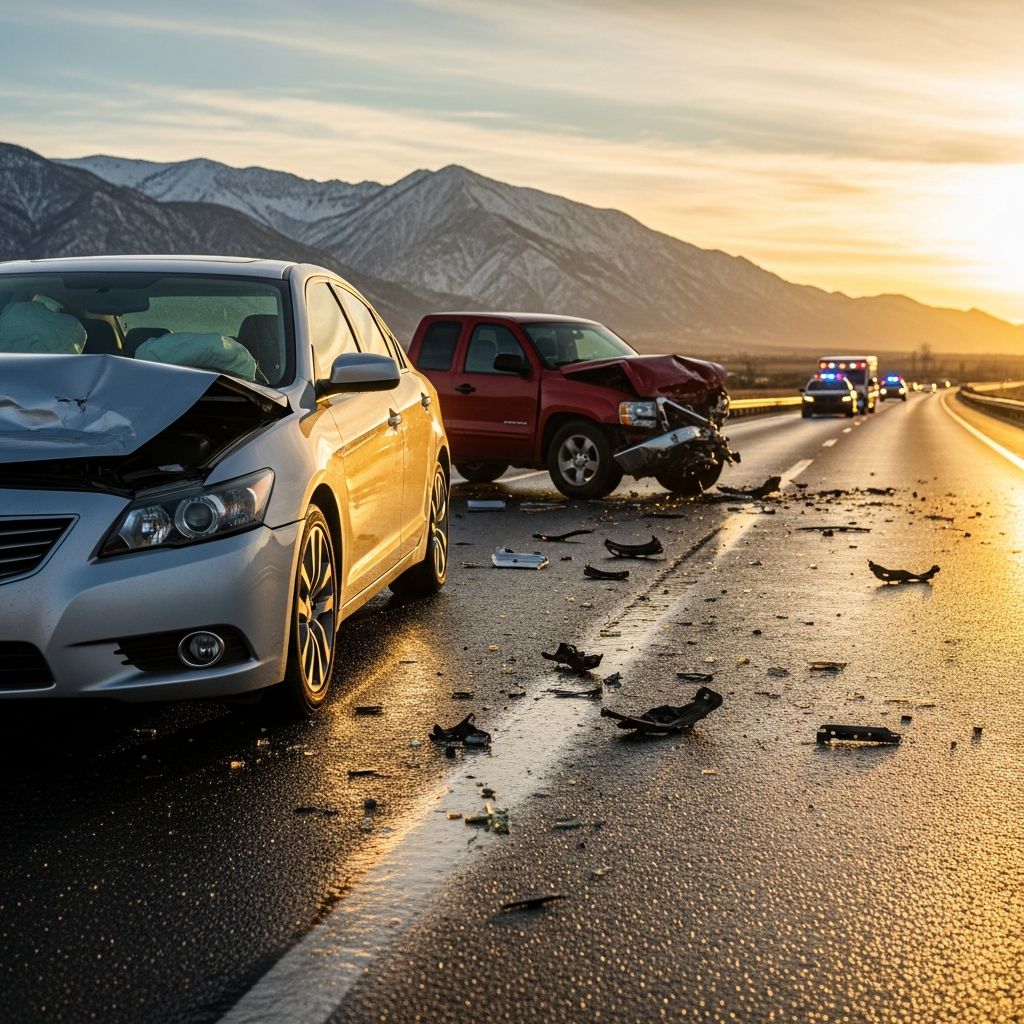
Navigating the aftermath of a car accident in Utah demands a clear grasp of state-specific rules. With recent updates to insurance minimums and ongoing no-fault provisions, drivers must stay informed to protect their interests. This guide breaks down key aspects from insurance mandates to claim processes and legal timelines.
Core Insurance Mandates for Utah Drivers
Utah enforces strict
car insurance requirements
to ensure financial responsibility on the roads. All registered vehicles must carry coverage throughout their registration period, as outlined in Utah Code 31A-22-302. This applies to residents and non-residents whose vehicles remain in the state for extended periods.The baseline policy includes
liability coverage
protecting others from your negligence: $25,000 bodily injury per person, $65,000 per accident for multiple injuries, and $15,000 property damage per accident. Additionally,Personal Injury Protection (PIP)
at $3,000 minimum covers your medical costs irrespective of fault.- Bodily Injury Per Person: $25,000 (rising to $30,000 under 2026 updates)
- Bodily Injury Per Accident: $65,000
- Property Damage: $15,000 (increasing to $25,000 in new rules)
- PIP: $3,000 for medical expenses, lost wages, and more
These limits form the foundation, but higher coverage is advisable given rising repair and medical costs. Utah’s no-fault framework prioritizes quick payouts from your own insurer for initial injuries.
Recent Reforms: 2026 Insurance Limit Increases
Starting in 2026, Utah has bolstered its auto insurance standards to better address modern accident impacts.
Bodily injury liability per person
jumps from $25,000 to $30,000, whileproperty damage liability
rises from $15,000 to $25,000 per incident. The per-accident bodily injury cap holds at $65,000, with a new combined maximum of $90,000 for all damages.| Coverage Type | Previous Minimum | 2026 Minimum |
|---|---|---|
| Bodily Injury Per Person | $25,000 | $30,000 |
| Bodily Injury Per Accident | $65,000 | $65,000 |
| Property Damage Per Accident | $15,000 | $25,000 |
| Combined Maximum | $80,000 | $90,000 |
| PIP | $3,000 | $3,000 |
These enhancements maintain Utah’s no-fault status, ensuring PIP handles initial medical bills without fault disputes. Drivers must update policies promptly to comply and avoid penalties.
When Must You Notify Authorities After a Crash?
Not all fender-benders require official intervention, but Utah law sets clear thresholds. Under Utah Code Section 41-6a-402, report to the Utah Department of Public Safety if the crash involves death, injury, or
property damage exceeding $2,500
. Authorities may demand a detailed report within 10 days.For minor incidents, exchange information with other parties: names, contacts, insurance details, and vehicle descriptions. Always prioritize safety by moving vehicles from travel lanes if possible and rendering aid to the injured.
- Report Immediately If: Fatalities, serious injuries, or damage over $2,500
- Police Presence: Recommended for disputes or significant damage
- Documentation Tips: Photos of scene, vehicles, injuries, and witness statements
Understanding Utah’s No-Fault System and Claim Thresholds
As a
no-fault state
, Utah directs initial claims to your own PIP coverage for medical expenses, wage loss, and essentials, regardless of blame. This streamlines recovery but limits non-economic damages like pain and suffering.To pursue the at-fault driver’s liability insurance or a lawsuit, surpass the
serious injury threshold
: either $3,000 in medical bills or qualifying harms such as permanent disability, impairment, disfigurement, or dismemberment. Meeting this unlocks broader compensation.Pro Tip: Track all expenses meticulously—bills, receipts, and treatment notes—to substantiate claims.
Filing an Insurance Claim: Step-by-Step Process
Post-accident claims require prompt, organized action. Consistency in reporting builds credibility with adjusters.
- Report Promptly: Contact your insurer and the at-fault party’s (for property) with basics: date, time, location, parties involved.
- Gather Evidence: Police reports, photos, witness contacts, medical records, repair estimates.
- Submit Documentation: File claims via app, phone, or agent; include all proofs.
- Cooperate with Adjuster: Answer questions factually; avoid admitting fault.
- Negotiate Settlement: Review offers carefully; consult an attorney for injury claims.
In no-fault scenarios, start with your PIP for medicals, then pivot to liability if thresholds are met. Settlements often finalize claims, so weigh long-term needs.
Comparative Fault: How Blame Affects Payouts
Utah employs
modified comparative negligence
, reducing your award by your fault percentage if under 51%. For instance, 20% at fault on a $100,000 claim yields $80,000.- If <50% Fault: Recover reduced amount from at-fault party
- If >50% Fault: Barred from recovery
- Evidence Matters: Dashcams, witnesses, and experts clarify fault shares
Critical Deadlines: Statutes of Limitations
Time erodes claims. Utah grants
four years
from the accident date for personal injury lawsuits. Property damage follows similar timelines, but insurers demand quicker filings. Act swiftly to preserve evidence and memories.Consequences of Driving Uninsured
Violation is a Class B misdemeanor. First offense: minimum $400 fine; repeat within three years: $1,000+. Expect license/registration suspension, $100 reinstatement fee, and possible SR-22 requirement for three years.
2026 traffic updates add owner liability for camera tickets, heightening compliance needs.
Vehicle Safety and Registration Rules
Utah eliminated most safety inspections, exempting salvage rebuilds, new ATVs, commercial vehicles, and certain motorhomes. Post-accident checks may apply under HB 56. Owners hold rights against subpar repairs per HB 119.
Frequently Asked Questions
What are Utah’s 2026 minimum car insurance limits?
$30,000 bodily injury per person, $65,000 per accident, $25,000 property damage, $3,000 PIP.
Does Utah require police reports for all accidents?
No, only for injuries, deaths, or $2,500+ damage.
Can I sue after a minor crash in Utah?
Yes, if medicals exceed $3,000 or serious injury occurs.
What if I’m partially at fault?
Compensation reduces by your fault percentage if under 51%.
How long to file a lawsuit?
Four years for personal injury.
Protecting Yourself: Practical Advice
Enhance coverage beyond minimums, document rigorously, and seek legal counsel for complexities. Utah’s evolving laws, like 2026 hikes, underscore proactive protection.
References
- Utah Car Insurance Laws And Requirements 2026 — Insuranceopedia. 2026. https://www.insuranceopedia.com/auto-insurance/minimum-car-insurance-requirements-utah
- Understanding Utah’s New Car Insurance Laws — Lehi Free Press. 2025-12-02. https://lehifreepress.com/2025/12/02/understanding-utahs-new-car-insurance-laws/
- Understanding Utah Car Accident Laws — We Win Injury Law. N/A. https://wewininjurylaw.com/understanding-utah-car-accident-laws/
- How to File an Insurance Claim After an Accident in Utah — Gibb Law Firm. N/A. https://www.gibblawfirm.com/how-to-file-an-insurance-claim-after-an-accident-in-utah/
- HB 119 Automotive Repair Business Amendments — Utah Legislature. 2026. https://le.utah.gov/~2026/bills/static/HB0119.html
Similar Articles








Read full bio of Sneha Tete


