
Understanding Used Car Dealer Warranties and Your Legal Rights
Learn how dealer warranties, federal rules, and state lemon laws protect you when buying a used vehicle from a dealership.
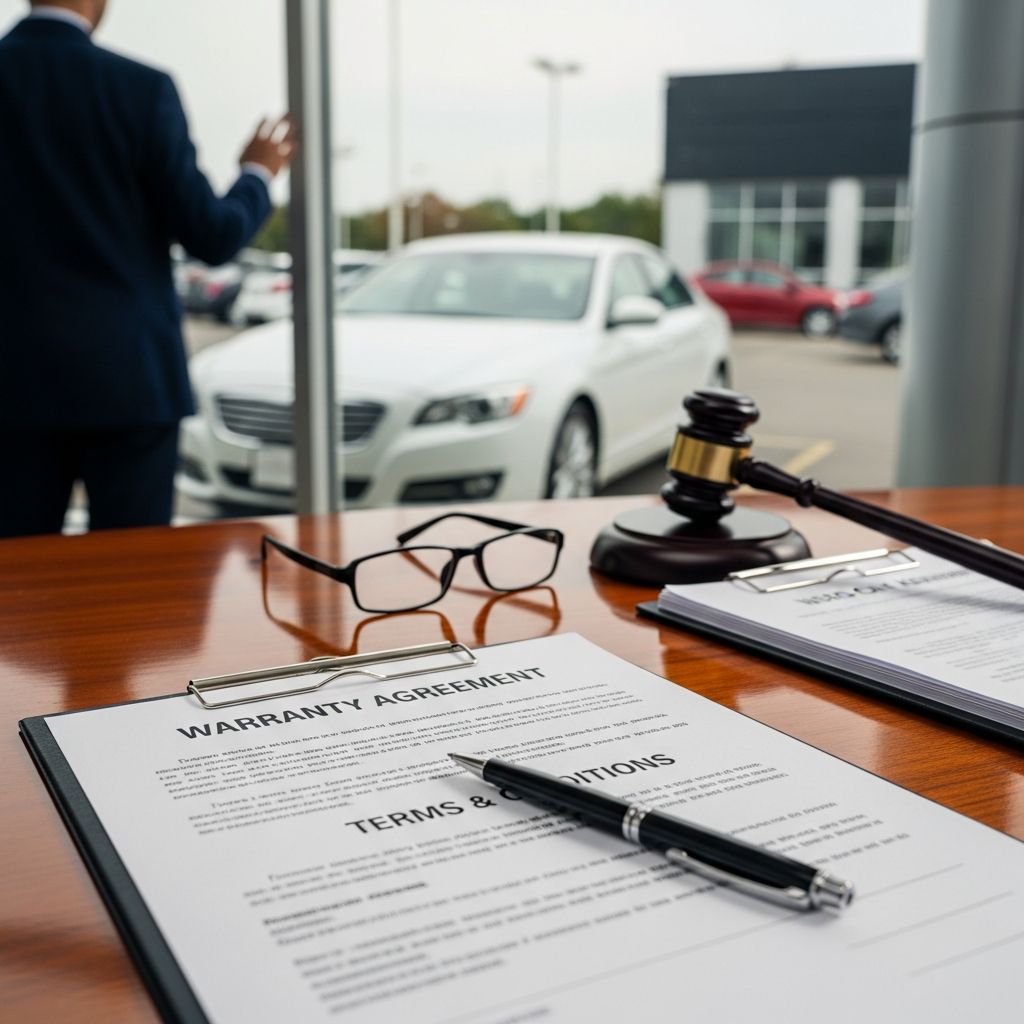
Buying a used car from a dealer can save money compared with purchasing new, but it also raises questions about reliability, warranties, and what happens if the car turns out to be a problem. This guide explains how dealer warranties work, how federal and state laws protect you, and what steps to take if your used car turns out to be a lemon.
1. Key Legal Protections When Buying a Used Car from a Dealer
When you purchase a used vehicle from a licensed dealer, several layers of law may apply to the sale. These protections come from federal rules, state statutes, and state common law.
- Federal Trade Commission (FTC) Used Car Rule – Requires dealers to post a Buyers Guide on most used vehicles, disclosing whether the car comes with a warranty and the basic terms of that coverage.
- Federal Magnuson–Moss Warranty Act – Governs written warranties on consumer products, including vehicles, and requires clear disclosure of warranty terms.
- State Lemon Laws – Some states extend lemon law protections to certain used vehicles, especially when manufacturer warranties are still in effect.
- Implied Warranties and Consumer Fraud Laws – Many states impose implied warranties of merchantability on dealer sales and prohibit deceptive or unfair business practices.
Understanding which of these layers apply to your situation is critical to knowing your rights if something goes wrong after purchase.
2. How the FTC Used Car Rule Protects You
The FTC’s Used Car Rule applies to most used passenger vehicles sold by dealers. Its core requirement is the use of a window sticker called the Buyers Guide.
2.1 The Buyers Guide Window Sticker
The Buyers Guide must be displayed prominently on the vehicle and must stay there until the sale is finalized. It is also incorporated into the sales contract, so what it says about warranty coverage is legally significant.
- Indicates whether the vehicle is being sold “as is” (where allowed by state law) or with a warranty.
- If there is a warranty, it must list the duration of coverage, the systems covered, and the percentage of repair costs the dealer will pay.
- Includes a warning to get all promises in writing and to keep the Buyers Guide after the sale.
In states that prohibit true “as is” sales, dealers must use an alternative version of the Buyers Guide that reflects state-specific limitations on disclaiming warranties.
2.2 What the Buyers Guide Cannot Do
The Buyers Guide provides minimum disclosure— it does not override stronger state protections. For example, a dealer may check “as is” on the Buyers Guide, but state law might still impose an implied warranty that the vehicle is fit for ordinary driving.
3. Types of Warranties in Used Car Dealer Sales
When you buy from a dealer, you may encounter several different kinds of warranty arrangements. Their interaction can be confusing, but the distinctions matter for your rights and remedies.
3.1 Express (Written) Dealer Warranties
An express warranty is a written promise about the condition or performance of the vehicle.
- Dealer warranty – A promise by the dealer to repair certain defects for a stated time and/or mileage, often limited to major components like the engine or transmission.
- Manufacturer warranty – Original new-car warranty that may still be in effect when you purchase a late-model used vehicle, or a manufacturer-backed certified pre-owned warranty.
The Magnuson–Moss Warranty Act requires that written warranties be clear and conspicuous, and that they be available before you commit to the purchase.
3.2 Implied Warranty of Merchantability
In many states, when a dealer sells a used vehicle, an implied warranty of merchantability arises by default. This legally implied promise means the car must be reasonably fit for ordinary driving purposes—safe and functional for basic transportation.
- Defects that significantly impair safety, use, or value (for example, failed brakes or a defective transmission) may breach this warranty.
- Minor cosmetic problems or normal wear and tear usually do not.
Some states allow dealers to limit or disclaim implied warranties by selling vehicles clearly marked “as is,” while others restrict or prohibit such disclaimers in consumer sales.
3.3 “As Is” Sales
An “as is” sale is one in which the dealer disclaims all implied warranties to the extent permitted by state law. If valid, it generally means the dealer is not responsible for post-sale defects, unless they committed fraud or violated other consumer laws.
| Type of Sale | Dealer Responsibility for Defects | Typical Buyer Protection |
|---|---|---|
| As Is (where allowed) | Very limited; no warranty obligations unless fraud or specific statutes apply | Possible fraud or misrepresentation claims; some states still recognize implied warranties |
| Dealer Limited Warranty | Must repair or address covered defects during warranty period | Magnuson–Moss protections; state warranty and contract laws |
| Manufacturer Warranty Still Active | Manufacturer is responsible for covered defects under its warranty terms | State lemon law may apply; federal warranty law also applies |
4. How Lemon Laws Can Apply to Used Cars
Lemon laws are primarily known for protecting buyers of new vehicles, but many states extend some protection to used cars, especially when a manufacturer’s warranty is still in force.
4.1 Basic Concept of Lemon Laws
State lemon laws usually provide a remedy (such as repurchase or replacement) when a serious defect covered by warranty persists after a reasonable number of repair attempts or leaves the vehicle out of service for an extended period.
- The defect must substantially impair the vehicle’s use, value, or safety.
- The consumer must give the manufacturer or dealer a reasonable opportunity to fix the problem.
- Many statutes impose timelines or mileage limits, such as problems arising within a certain number of months or miles after delivery.
4.2 Used Cars Under Manufacturer Warranty
Many states apply their lemon laws to used vehicles that are still covered by the original manufacturer warranty or a manufacturer-backed certified pre-owned plan.
- For example, a late-model used car with years remaining on a powertrain warranty may qualify for lemon law remedies if a serious defect repeatedly fails to be repaired during that warranty period.
- Courts may look at the severity of the defect, how many times it was repaired, and how long the car was out of service.
If the vehicle is sold without any remaining manufacturer warranty and without a dealer warranty, lemon law protection is often far more limited or unavailable, and other legal theories such as fraud or deceptive practices become more important.
5. State-Specific Rights in Dealer Used Car Sales
Each state’s statutes add another layer of protection. While the details vary, there are common themes in how states regulate dealer sales and warranties.
5.1 Examples of State Protections
- Mandatory Disclosures – Many states require dealers to disclose known damage, prior salvage status, or odometer discrepancies.
- Minimum Warranty Periods – Some states require dealers to provide a short warranty period on certain used vehicles, such as 30 days or a specified mileage, particularly for vehicles under a certain age or mileage.
- Consumer Bills of Rights – States like California require licensed dealers to provide itemized pricing for add-ons and financing disclosures in a Car Buyer’s Bill of Rights.
- Implied Warranty Limits – States may set minimum and maximum durations for implied warranties running alongside express warranties.
5.2 Dealer vs. Private Seller
State laws often distinguish between vehicles purchased from licensed dealers and those purchased from private parties.
- Dealer sales typically carry more statutory obligations and are subject to rules like the FTC Used Car Rule.
- Private sales usually have limited protections, often focusing on outright fraud or title issues rather than comprehensive warranties.
Because of these differences, a used car bought from a dealer may cost more than one bought privately, but it often comes with more robust legal protections.
6. Practical Steps Before You Buy
You can reduce risk significantly by taking a systematic approach before signing any paperwork.
6.1 Due Diligence Checklist
- Review the Buyers Guide on the window and compare it with the sales contract to confirm whether the car is sold “as is” or with a warranty.
- Ask for all written warranties, including any remaining manufacturer warranty or certified pre-owned coverage, and read the exclusions.
- Obtain a vehicle history report to check for prior accidents, salvage titles, or odometer issues.
- Have an independent mechanic inspect the car before purchase, especially if the warranty coverage is short.
- Confirm state law basics by checking your attorney general or consumer protection agency website for specific used car and lemon law rules in your state.
6.2 Questions to Ask the Dealer
- What is the exact duration and mileage limit of any dealer warranty?
- Which systems are covered, and what portion of repair costs will the dealer pay?
- Are there conditions that void the warranty, such as modifications or failure to follow maintenance schedules?
- Does any manufacturer or certified pre-owned warranty remain, and how do I transfer it into my name?
7. What to Do If Your Used Car Has Serious Problems
If your used vehicle develops significant defects shortly after purchase, your next steps should be deliberate and well-documented.
7.1 Documenting Issues and Repair Attempts
- Report problems quickly to the dealer or authorized repair facility, especially if you are within a short warranty window.
- Keep copies of all repair orders, invoices, and written communications.
- Note dates and mileage for each incident, including how long the vehicle was out of service.
This documentation is critical for any warranty claim, lemon law case, or dispute with the dealer or manufacturer.
7.2 Exploring Your Legal Options
- Warranty Claim – If the problem is covered, insist on repairs under the dealer or manufacturer warranty.
- Lemon Law Evaluation – If defects persist despite multiple repair attempts during the warranty period, consult a consumer law attorney about potential lemon law remedies in your state.
- Fraud or Deceptive Practices – If you discover odometer rollback, undisclosed accidents, or hidden structural damage, you may have claims under state consumer fraud statutes, even without a warranty.
- Complaints to Regulators – You can file complaints with your state attorney general, motor vehicle department, or consumer protection agency.
8. Frequently Asked Questions (FAQs)
Q1: Does buying a used car “as is” mean I have no rights at all?
Not necessarily. While a valid “as is” sale may limit warranty rights, you may still have protections under state consumer fraud laws, odometer statutes, title laws, or in some states, non-waivable implied warranties. Your actual rights depend on your state’s specific rules and the facts of the transaction.
Q2: If the dealer gives me a short warranty, can I still use my state’s lemon law?
In many states, lemon law coverage for used vehicles hinges on whether a manufacturer warranty or qualifying written warranty is in effect when the defect arises. If a serious problem persists after reasonable repair attempts within that warranty, you may be eligible for lemon law remedies, but the details vary by state and by the type of warranty.
Q3: Is the dealer responsible for problems that show up after the warranty expires?
Generally, once a valid warranty period ends, routine post-warranty breakdowns are not the dealer’s responsibility. However, if the dealer misrepresented the vehicle, concealed known defects, or violated disclosure laws, you might still have claims under fraud or consumer protection statutes, even after the warranty period.
Q4: What if my state bans “as is” sales of used cars?
In states that restrict or ban “as is” sales for certain consumer transactions, dealers must comply with those rules and use a version of the Buyers Guide that reflects state law. This can mean you automatically receive at least an implied warranty, and sometimes a minimum written warranty period, regardless of what the dealer prefers to offer.
Q5: How can I find my specific state’s used car and lemon law rules?
The most reliable sources are your state attorney general’s office, consumer protection agency, or motor vehicle department, many of which publish plain-language guides and FAQs on used car and lemon law rights. These official resources are preferable to informal online summaries.
References
- Used Car Rule (Used Motor Vehicle Trade Regulation Rule) — Federal Trade Commission. 2016-11-18. https://www.ftc.gov/legal-library/browse/rules/used-car-rule
- Used Car Lemon Law in California: Dealer vs Private Seller — Lawyers for Consumers. 2023-06-07. https://lawyersforconsumers.com/used-car-lemon-law-in-california-dealer-vs-private-seller-whats-actually-covered/
- California Used Car Laws: Know Your Rights — Quill & Arrow Law. 2023-03-14. https://www.quillarrowlaw.com/blog/california-used-car-laws-know-your-rights/
- The Impact of California’s Lemon Law on Used Car Purchases — Seven & Associates. 2022-08-29. https://sevenlaw.com/blog/the-impact-of-californias-lemon-law-on-used-car-purchases/
- Does the Lemon Law Apply to Used Cars With No Warranty in California? — LemonLawPro. 2022-05-11. https://www.lemonlawpro.com/blog/does-the-lemon-law-apply-to-used-cars-with-no-warranty-in-california/
- Laws of Buying a Used Car From a Dealer — LendingTree. 2023-01-12. https://www.lendingtree.com/auto/used-car-laws/
- Car Buyer’s Bill of Rights (FFVR 35) — California Department of Motor Vehicles. 2019-05-01. https://www.dmv.ca.gov/portal/car-buyers-bill-of-rights-ffvr-35/
Similar Articles








Read full bio of medha deb


