
Guide to Form I-539 for F-1/M-1 Student Status Change
Step-by-step instructions for completing Form I-539 to switch to F-1 or M-1 student visa status while in the U.S.
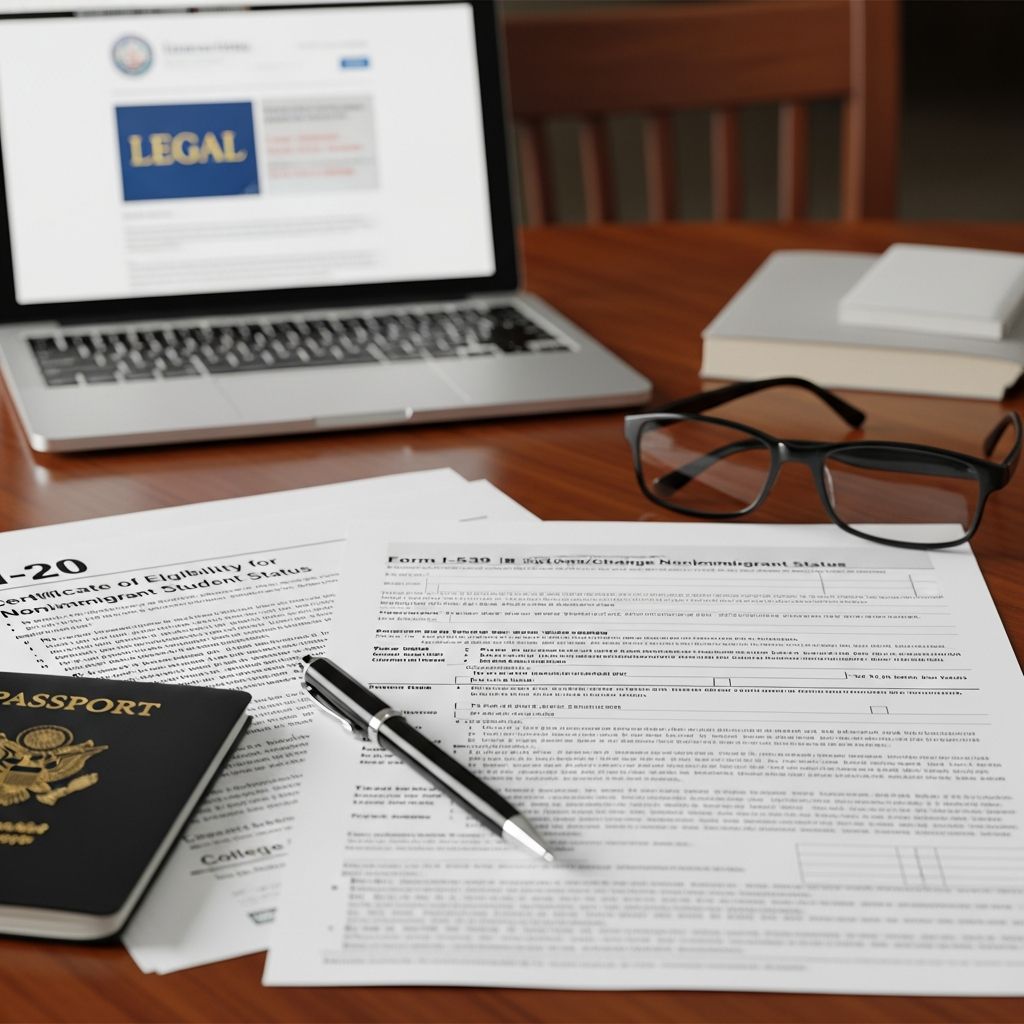
Changing your nonimmigrant visa status to F-1 (academic student) or M-1 (vocational student) while remaining in the United States requires filing Form I-539 with U.S. Citizenship and Immigration Services (USCIS). This process allows eligible individuals already in the U.S. on valid nonimmigrant visas to transition to student status without departing the country, provided they meet specific criteria and submit a complete application before their current status expires.
Understanding Eligibility for Student Status Change
To qualify for a change to F-1 or M-1 status via Form I-539, applicants must demonstrate they intend to pursue full-time studies at a USCIS-approved school. F-1 visas support academic programs like universities and high schools, while M-1 visas cover vocational or non-academic training such as flight schools or technical institutes. Key eligibility factors include:
- Current lawful nonimmigrant status, such as B-1/B-2 visitor, F-2 dependent, or H-4 dependent.
- Acceptance into a full-time program at a Student and Exchange Visitor Program (SEVP)-certified institution.
- Sufficient financial resources to cover tuition, living expenses, and return travel without unauthorized employment.
- No violations of current status, including overstay or unauthorized work.
- Intent to depart the U.S. upon program completion.
Individuals in certain statuses, like those who entered without inspection or have criminal records, are generally ineligible. USCIS emphasizes that approval is discretionary and not guaranteed, even if requirements are met.
Preparing Essential Documents Before Filing
Gathering documentation is critical for a successful I-539 application. Start by obtaining a Form I-20 from your SEVP-approved school, which certifies your enrollment and estimates costs. Additional required items include:
- Proof of current status: Copies of Form I-94 Arrival/Departure Record, passport pages with visa and entry stamps.
- Financial evidence: Bank statements, scholarship letters, or affidavits from sponsors showing at least the amount listed on I-20.
- School acceptance: Original I-20 signed by designated school official (DSO) within the last 12 months.
- Personal statement: Explaining reasons for status change, study plans, and ties to home country.
For dependents (F-2 or M-2), submit separate I-539 forms with corresponding I-20s. Organize documents clearly with a cover letter indexing each item to avoid processing delays.
Step-by-Step Instructions for Completing Form I-539
Form I-539, Application to Extend/Change Nonimmigrant Status, must be filled out accurately using black ink or typed. Download the latest version from the USCIS website. Here’s a breakdown of key sections:
| Part | Key Details |
|---|---|
| Part 1: Information About You | Full name, address, A-number (if any), current status, and I-94 number. Indicate ‘Change of Status’. |
| Part 2: Application Type | Select ‘Change of Status’ and specify new status: F-1 Student or M-1 Student. Enter class of admission and new status dates from I-20. |
| Part 3: Processing Information | Check ‘Yes/No’ for questions on criminal history, prior petitions, and status maintenance. Provide explanations where required. |
| Part 4: Additional Information | Detail travel history, employment, and education background if applicable. |
| Part 5: Applicant’s Statement | Sign and date; preparer must complete Part 6 if used. |
| Part 7: Interpreter/Translator | Applicable if assistance was provided. |
Double-check passport-style photo requirements: 2×2 inches, recent, white background. Attach to the form as instructed.
Calculating Fees and Payment Methods
The filing fee for Form I-539 is $470 for most applicants (as of 2026; confirm current amount on USCIS.gov). Dependents filed concurrently pay the same fee each. Online filers may qualify for reduced fees or use credit cards. Include Form G-1450 for credit card payments or a check/money order payable to ‘U.S. Department of Homeland Security’. Fee waivers are rare for status changes but possible with Form I-912 if facing extreme hardship.
Filing Options: Online vs. Paper Submission
USCIS encourages electronic filing via myUSCIS account for faster processing and real-time tracking. Paper filings go to lockbox addresses based on location and status (e.g., Phoenix or Chicago Lockbox). Use the USCIS Direct Filing Addresses tool for exact locations. Recommended filing timeline: 45 days before current status expires to allow for 3-12 month processing times.
Post-Filing Procedures and Maintaining Status
After submission, monitor case status online using receipt number. Biometrics may be required; attend appointments promptly. While pending, you maintain status but cannot travel abroad without advance parole (rarely granted). Approved applicants receive I-797 Notice of Action updating status; print for records. Denied cases may allow motion to reopen or departure.
Common Mistakes to Avoid in I-539 Applications
Avoid these pitfalls that lead to Requests for Evidence (RFEs) or denials:
- Submitting incomplete or outdated I-20s.
- Inadequate financial proof failing to match I-20 estimates.
- Filing too late, risking unlawful presence accrual.
- Missing signatures or photos.
- Not disclosing prior immigration violations.
Consult an immigration attorney for complex cases, such as prior overstays or multiple status changes.
Special Considerations for Dependents and Family Members
Spouses and unmarried children under 21 can change to F-2 or M-2 status concurrently. Each requires individual I-539 and I-20. F-2/M-2 holders cannot study full-time or work but may engage in part-time recreational courses. Upon principal’s program end, dependents must change status or depart.
Impact of Status Change on Travel and Re-Entry
Travel during pendency abandons the application unless advance parole is obtained (Form I-131). Post-approval, F-1/M-1 holders need F-1/M-1 visas from U.S. embassies abroad for re-entry, plus valid I-20 and I-94. Automatic visa revalidation does not apply to student visas.
Frequently Asked Questions (FAQs)
What is the average processing time for Form I-539 change to F-1/M-1?
Processing times vary by service center, typically 4-12 months. Check USCIS processing times tool for current estimates.
Can I work while my I-539 is pending?
No, unless eligible for Optional Practical Training (OPT) post-approval and after obtaining Employment Authorization Document (EAD).
What if my current status expires before approval?
Your status is automatically extended during pendency if filed timely, but avoid travel.
Do I need to notify my school after approval?
Yes, provide USCIS approval notice to your DSO for SEVIS updates and I-20 endorsement.
Is premium processing available for I-539?
No, premium processing does not apply to Form I-539 status changes.
Navigating Denials and Appeals
If denied, review the reasons in the notice. Options include refiling with new evidence, filing a motion to reopen/reconsider (Form I-290B within 30 days), or administrative appeal. Depart promptly to avoid unlawful presence bars (3/10 years).
This guide provides a thorough overview, but immigration rules evolve. Always verify with official USCIS resources or legal counsel for personalized advice.
References
- Change of Status – Travel.gov — U.S. Department of State. 2026-01-17. https://travel.state.gov/content/travel/en/us-visas/other-visa-categories/visa-employees-nato/change-status.html
- Completing Form I-539: Extending or Changing to H-4 Status — Stanford University Bechtel International Center. 2026-01-17. https://bechtel.stanford.edu/completing-form-i-539-extending-or-changing-h-4-status
- Application to Extend/Change Nonimmigrant Status — USCIS. 2025-12-01. https://www.uscis.gov/i-539
- Students and Employment — USCIS. 2026-01-10. https://www.uscis.gov/working-in-the-united-states/students-and-exchange-visitors/students
- Change My Nonimmigrant Status — USCIS. 2025-11-15. https://www.uscis.gov/visit-the-united-states/change-my-nonimmigrant-status
Similar Articles








Read full bio of medha deb


