
US Human Rights Record: A Global Evaluation
Analyzing international oversight and US domestic civil rights challenges.
Introduction: The Significance of International Oversight
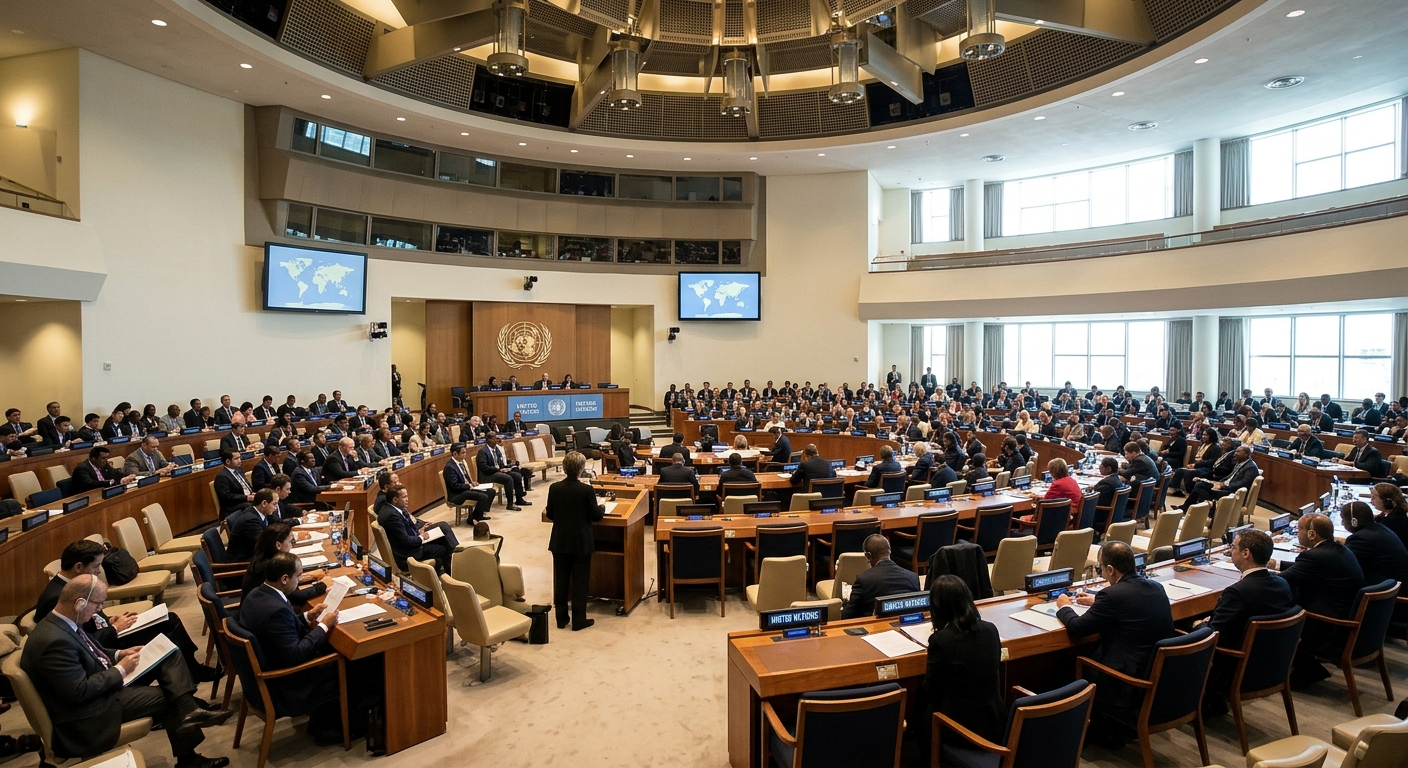
The United States has long positioned itself as a global champion of democracy, liberty, and fundamental freedoms, frequently advocating for the protection of these rights on the world stage. However, when the precise lens of international oversight is turned inward, a far more complex, nuanced, and sobering picture emerges. The United Nations Human Rights Committee routinely conducts rigorous, in-depth evaluations of all member states to assess their ongoing compliance with international treaties and human rights obligations. For the United States, these periodic reviews consistently surface profound and pressing concerns regarding systemic disparities, structural inequalities, and the gradual erosion of certain fundamental civil liberties across various domestic sectors.
These assessments, meticulously documented in comprehensive concluding observations, function as an essential and highly visible mechanism for global accountability. They reflect the persistent and often painful gap between the nation’s highest constitutional ideals and the everyday realities experienced by millions of its residents, particularly those in marginalized communities. Rather than merely offering condemnation or political criticism, international human rights bodies provide a detailed, actionable blueprint for structural reform, consistently urging the nation to bridge the deep divide between its localized domestic policies and its binding international legal commitments.
The Architecture of Global Human Rights Enforcement
To fully grasp the significance of these international evaluations, one must understand the framework of the International Covenant on Civil and Political Rights (ICCPR). Adopted by the United Nations General Assembly in 1966, the ICCPR is a cornerstone of international human rights law. The United States ratified this seminal treaty in 1992, thereby accepting the legal obligation to implement its provisions and submit to regular scrutiny.
The enforcement and monitoring of the ICCPR are overseen by the UN Human Rights Committee, a body composed of independent legal experts. During a periodic review, this committee examines several critical areas of domestic governance, including:
- Equality and Non-Discrimination: Assessing the presence of systemic biases across institutional frameworks.
- Right to Life and Physical Integrity: Evaluating law enforcement practices, the use of lethal force, and detention conditions.
- Electoral and Democratic Freedoms: Analyzing the accessibility and fairness of the voting process for all demographic groups.
- Protections for Vulnerable Populations: Reviewing the treatment of migrants, children in the welfare system, and Indigenous communities.
This multipronged approach ensures a holistic view of the domestic landscape. The ensuing dialogue culminates in concluding observations—a formal document delineating specific, urgent recommendations where the nation falls short of its binding treaty obligations. This rigorous architecture ensures that human rights are treated as universal, enforceable standards rather than subjective domestic privileges.
Critical Findings on Domestic Systems and Equity
Systemic Disparities within Criminal Justice
One of the most persistent areas of international concern revolves around the United States criminal legal system. International observers consistently point to deeply entrenched racial disparities permeating law enforcement and judicial processing. The disproportionate impact of policing practices on Black, Hispanic, and Indigenous communities remains a focal point of critiques, as routine encounters frequently escalate into instances of excessive, and sometimes lethal, force. Furthermore, the expansive nature of the American carceral state draws heavy scrutiny. Driven by stringent sentencing laws, the US maintains an exceptionally high incarceration rate. The UN frequently highlights the extensive use of solitary confinement, particularly its application to juveniles and individuals with severe mental health conditions. International bodies view prolonged solitary confinement as a direct violation of the prohibition against cruel or degrading treatment, demanding a paradigm shift toward rehabilitative justice.
Electoral Participation and Voting Integrity
The foundation of civil society is the unhindered ability of citizens to participate in the democratic process. However, international reviews highlight the erection of systemic barriers obstructing equitable access to the ballot box. While the Constitution guarantees the right to vote, state-level legislative maneuvers frequently complicate this access. Strict voter identification requirements, the aggressive purging of voter registration rolls, and the systemic disenfranchisement of individuals with felony convictions are repeatedly flagged by human rights monitors. These restrictive measures disproportionately marginalize minority voters and low-income communities. By creating logistical hurdles, these policies distort the democratic mandate and conflict with the ICCPR’s core principle of equal participation, prompting international experts to advocate for robust federal standards that safeguard the democratic infrastructure.
Healthcare Access and Bodily Autonomy
In recent years, the intersection of healthcare access and human rights has become a prominent feature in international evaluations of the US. Following significant judicial shifts that removed federal protections for abortion access, the landscape of reproductive healthcare has become highly fragmented. The UN Human Rights Committee explicitly notes that restricting access to comprehensive reproductive health services fundamentally threatens the rights to privacy, bodily autonomy, and the right to life. Beyond reproductive autonomy, international monitors emphasize the glaring racial disparities present in maternal and infant mortality rates. Black and Indigenous women face maternal mortality rates drastically higher than their white counterparts. These alarming statistics indicate deeply rooted systemic neglect, constituting a profound violation of the principle of non-discrimination.
Examining Vulnerable Populations
The Complexities of the Child Welfare System
The American child welfare system frequently faces severe criticism from international human rights bodies for relying on punitive mechanisms that result in the traumatic separation of families. The threshold for state intervention is frequently linked to conditions of poverty—such as unstable housing or food insecurity—rather than actual abuse, conflating economic hardship with neglect. The UN emphasizes that the state has a primary obligation to support and preserve the family unit, utilizing separation only as an absolute last resort. The lingering psychological trauma inflicted upon children removed from their homes constitutes a severe human rights concern. International standards dictate that family preservation programs must be adequately funded, ensuring children are not penalized for the systemic economic disadvantages faced by their parents.
Border Enforcement and Migrant Protections
Immigration enforcement and border policies remain a volatile and heavily scrutinized domain. The treatment of migrants, asylum seekers, and unaccompanied minors at the southern border frequently dominates international human rights discussions. Policies relying on prolonged administrative detention, the use of private detention facilities, and the expedited expulsion of asylum seekers without thorough due process directly contravene the core tenets of international refugee law. The UN Human Rights Committee consistently urges the United States to adopt humane alternatives to detention, ensuring immigration proceedings uphold the dignity of all individuals. Ensuring that asylum seekers have access to fair hearings and adequate legal representation is recognized as a non-negotiable standard in global human rights frameworks, critical for preventing cruel and inhuman treatment.
Indigenous Sovereignty and Environmental Impacts
The ongoing marginalization of Native American and Indigenous communities is inextricably linked to issues of land rights, sovereignty, and environmental justice. International evaluations critique the failure of the US government to secure free, prior, and informed consent from Indigenous populations regarding major infrastructure projects traversing their ancestral lands. These extraction projects often risk severe environmental degradation and the desecration of culturally significant sites. Furthermore, the broader implications of climate change are increasingly framed as a pressing human rights issue. Indigenous communities are disproportionately vulnerable to ecological crises due to their reliance on natural ecosystems. The UN urges the United States to take decisive action to protect these populations, recognizing that environmental degradation inherently threatens the right to life and cultural continuity.
The Road to Alignment: Strategies for Reform
For the United States to genuinely align its vast domestic framework with its international human rights obligations, comprehensive and systemic policy overhauls are not just recommended, they are absolutely imperative. The concluding observations and detailed recommendations provided by bodies such as the UN Human Rights Committee serve as a vital, highly structured roadmap for these necessary structural reforms. Achieving true compliance requires an unprecedented, coordinated effort between federal, state, and local governments to firmly codify human rights protections and ensure the uniform, equitable application of civil liberties across all jurisdictions, regardless of regional political landscapes.
This critical path forward involves establishing robust, fully independent oversight mechanisms for law enforcement agencies to ensure uncompromising accountability for abuses of power. It requires sweeping federal legislation to permanently protect and expand voting rights, actively shielding minority and low-income communities from localized disenfranchisement efforts and gerrymandering. Furthermore, fully integrating established human rights principles into healthcare infrastructure, child welfare systems, and environmental policies is essential for addressing the deep-seated systemic disparities that continue to plague the nation’s most vulnerable populations. Embracing these reforms is the only viable method for the United States to demonstrate a genuine, lasting commitment to the global standards it so frequently champions abroad.
| Human Rights Domain | Key UN Committee Recommendation | Required Domestic Policy Shift |
|---|---|---|
| Criminal Justice | Limit solitary confinement and address racial profiling. | Establish independent policing oversight and shift towards rehabilitative justice models. |
| Electoral Access | Remove barriers to voting for minority groups. | Enact federal voting rights protections to override restrictive state laws. |
| Healthcare Equity | Ensure comprehensive access to reproductive health. | Codify bodily autonomy and address racial disparities in maternal mortality. |
| Immigration | End prolonged detention and guarantee due process. | Expand community-based alternatives to detention for asylum seekers. |
Frequently Asked Questions
What is the International Covenant on Civil and Political Rights (ICCPR)?
The ICCPR is a multilateral treaty adopted by the United Nations General Assembly in 1966. It commits its parties to respect the civil and political rights of individuals, including the right to life, freedom of religion, freedom of speech, freedom of assembly, and electoral rights. The United States ratified this treaty in 1992, thereby agreeing to be bound by its terms and subject to periodic reviews regarding its implementation on a domestic level.
How does the UN enforce its human rights recommendations?
The UN Human Rights Committee cannot deploy international police or issue legally binding federal laws within a member state. Instead, enforcement relies on a mechanism of international accountability, diplomatic pressure, and public transparency. The committee issues formal concluding observations, which highlight deficiencies and outline specific reforms. Domestic civil society organizations, legislators, and human rights advocates then utilize these findings to push for legislative and policy changes at local, state, and national levels.
Why is the US child welfare system a subject of international scrutiny?
International human rights standards prioritize the preservation of the family unit above all else. The US child welfare system is frequently criticized by the UN because it often defaults to removing children from their homes due to circumstances heavily rooted in systemic poverty, rather than instances of intentional, malicious abuse. The significant trauma associated with these family separations is viewed globally as a violation of the child’s fundamental rights, prompting urgent calls for better-funded family support and preservation programs rather than punitive family fracturing.
How do environmental policies intersect with human rights in these evaluations?
International bodies increasingly recognize that a safe, clean, and sustainable environment is entirely foundational to the enjoyment of all human rights, particularly the right to life and health. In evaluations of the US, environmental policies are heavily scrutinized concerning their disproportionate impact on marginalized groups, especially Indigenous communities. Failure to properly consult these communities on large infrastructure projects or to adequately protect them from the harsh impacts of climate change is categorized as a severe failure to uphold fundamental human rights.
References
- Concluding observations on the 5th periodic report of the United States of America — UN Human Rights Committee. 2023-12-07. https://tbinternet.ohchr.org/_layouts/15/treatybodyexternal/Download.aspx?symbolno=CCPR%2FC%2FUSA%2FCO%2F5&Lang=en
- U.S. Presentation to the UN Human Rights Committee — U.S. Mission to International Organizations in Geneva. 2023-10-17. https://geneva.usmission.gov/2023/10/17/u-s-presentation-to-the-un-human-rights-committee/
- Universal Periodic Review – United States of America — Office of the United Nations High Commissioner for Human Rights. 2020-11-09. https://www.ohchr.org/en/hr-bodies/upr/us-index
Similar Articles








Read full bio of medha deb


