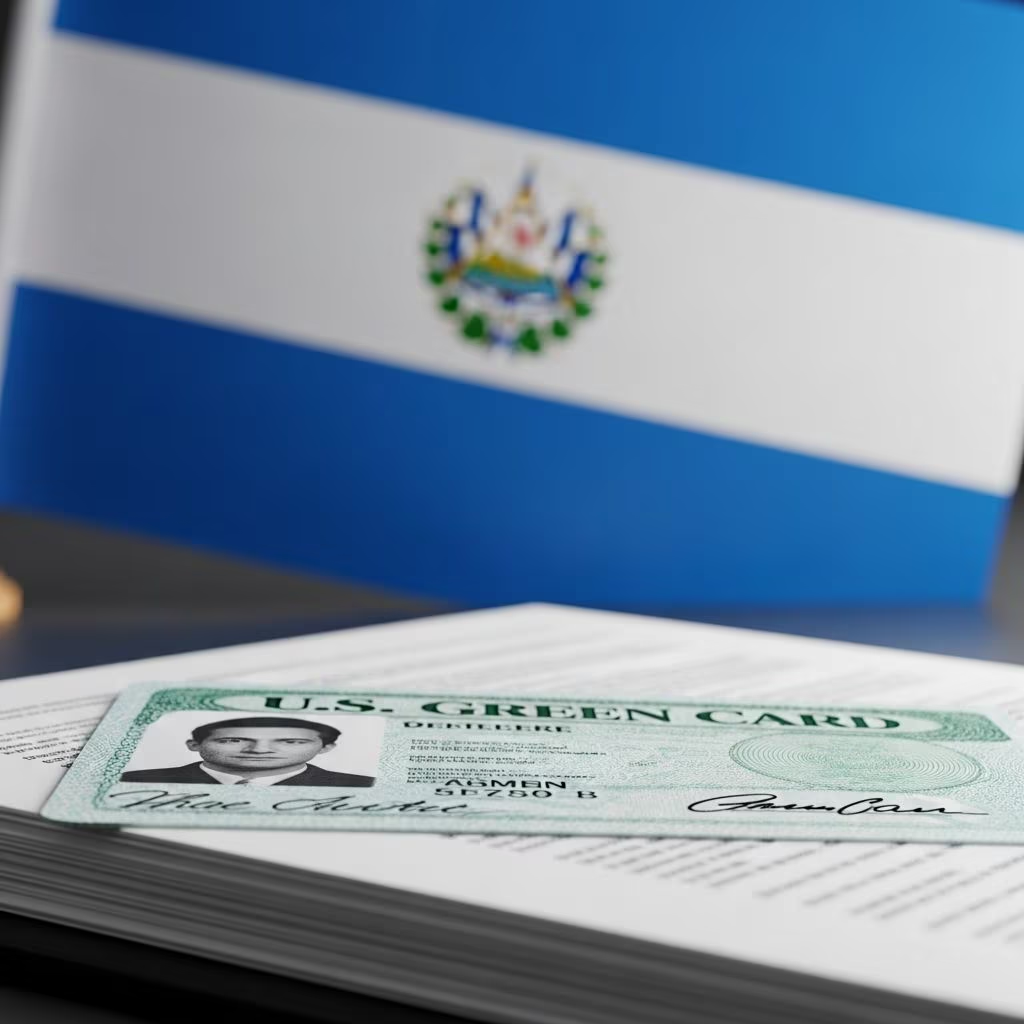
Securing a green card for a spouse from El Salvador involves a structured immigration process designed for family reunification. U.S. citizens can sponsor their Salvadoran partners for lawful permanent residency, enabling them to live and work permanently in the United States. This pathway prioritizes immediate relatives, bypassing visa quotas for faster processing.
Understanding Eligibility and Basic Requirements
To begin, the marriage must be legally valid under U.S. standards. Marriages performed in El Salvador are generally recognized if they comply with local laws, such as civil ceremonies conducted by authorized officials. Provide an original marriage certificate, translated into English, along with proof of relationship authenticity like joint photos, correspondence, or affidavits from family.
U.S. citizens must demonstrate good moral character and financial ability to support the spouse, typically via the Affidavit of Support (Form I-864). Spouses entering with less than two years of marriage receive conditional residency, requiring action to remove conditions later. Salvadoran applicants need police certificates, such as the Solvencia de la Policía Nacional Civil, especially for those 18 and older.
- Key Eligibility Factors:
- U.S. citizen petitioner (permanent residents face longer waits).
- Valid, bona fide marriage not entered solely for immigration benefits.
- Salvadoran spouse free of inadmissibility grounds like certain crimes or health issues.
- All foreign documents apostilled and translated per U.S. Embassy rules.
Step-by-Step Application Process
The journey starts with filing Form I-130, Petition for Alien Relative, with U.S. Citizenship and Immigration Services (USCIS). Upon approval, the case moves to the National Visa Center (NVC) for document submission and fee payments, culminating in a visa interview at the U.S. Embassy in San Salvador.
| Step | Description | Timeline Estimate |
|---|---|---|
| 1. File I-130 | Submit petition with marriage proof and fees to USCIS. | 10-13 months approval |
| 2. NVC Processing | Submit DS-260, affidavit of support, and civil documents. | 2-4 months |
| 3. Embassy Interview | Attend visa interview in San Salvador with originals. | Scheduled post-NVC |
| 4. Enter U.S. & Get Green Card | Visa stamped; card mailed after entry. | Within 90 days of entry |
During the interview, present originals: marriage certificate, divorce/death records if applicable, police certificates, and medical exam results. For stepchildren or prior marriages, additional proofs like parental marriage certificates are mandatory.
Document Preparation Essentials
Salvadoran civil documents often require annotations, such as divorce notes on marriage certificates margins instead of separate decrees. U.S. documents need apostilles for Salvadoran recognition, issued within 60 days, and Spanish translations following local norms.
Financial sponsorship demands proof of 125% above poverty guidelines income. Joint sponsors can assist if needed. Medical exams from embassy-approved physicians check for communicable diseases.
- Required Documents Checklist:
- Original marriage certificate (apostilled if from U.S.).
- Divorce/death certificates for prior unions.
- Salvadoran police clearance (Solvencia de la Policía Nacional Civil).
- Passport valid for at least six months.
- Vaccination records and sealed medical exam.
- Form I-864 Affidavit with tax returns and employment letters.
Navigating Conditional Permanent Residency
If married less than two years at entry, the green card is conditional for two years. Within 90 days before expiration, file Form I-751 to remove conditions, proving ongoing marriage via shared finances, leases, or photos. USCIS may waive if abuse occurred. Post-removal, the spouse qualifies for naturalization after three years of residency while married to the U.S. citizen.
Potential Challenges and Solutions
Common hurdles include delays from incomplete documents or suspected fraud. Embassy in San Salvador scrutinizes relationships; prepare evidence of cohabitation or visits. Salvadoran residency rules differ, requiring separate processes like sworn spousal statements for work permits. Hiring an immigration attorney ensures apostilles, translations, and compliance, streamlining approvals.
Prior Salvadoran residency isn’t required for U.S. green cards but may support visa intent. Update police certificates in CEAC for electronic cases.
Pathways Beyond Standard Processing
K-3 visas allow spouses to enter sooner while I-130 pends, though rarely used now due to aligned timelines. Adjustment of status applies if the spouse is already in the U.S. legally. TPS holders from El Salvador may have parole options, but spousal petitions remain primary.
Frequently Asked Questions (FAQs)
Q: How long does the entire green card process take for a Salvadoran spouse?
A: Typically 12-24 months from I-130 filing to green card receipt, varying by USCIS workload and embassy scheduling.
Q: Does my Salvadoran marriage need apostille for USCIS?
A: Original Salvadoran certificates suffice if legible; apostille required for U.S.-issued docs presented in El Salvador.
Q: What if we married less than two years ago?
A: Conditional green card issued; file I-751 jointly within two years to make it permanent.
Q: Can I work in the U.S. while waiting abroad?
A: No, until green card obtained; K-3 allows work authorization post-entry.
Q: Are children included in the spousal petition?
A: No, file separate I-130 for stepchildren under 21; prove relationship via birth and marriage certificates.
Financial and Planning Considerations
Expect fees: I-130 ($535), DS-260 ($325), affidavit support ($120), medical exam ($200-500), and travel. Budget for lawyer fees ($2,000-5,000) to avoid denials. Plan visits with evidence to build bona fide proof. Post-green card, spouses access work permits (EAD) and travel (Advance Parole).
For Salvadoran work residency, spouses need apostilled birth/police records, medical reports, and economic support proof from the Salvadoran partner. This contrasts with U.S. processes but informs dual-planning families.
Success hinges on meticulous preparation. Track case status via USCIS and CEAC portals. Post-approval, the visa is valid six months for U.S. entry.
El Salvador’s dual citizenship allows retaining nationality post-U.S. naturalization, unlike some nations requiring renunciation. Families benefit from flexible residency options.
References
- Married to a Salvadoran? Here’s What You Need to Know! — My Latin Life (YouTube). 2025-06-06. https://www.youtube.com/watch?v=QD65jgGOdcY
- I’m a U.S. citizen and I married an El Salvadorian woman — Avvo Legal Answers. N/A. https://www.avvo.com/legal-answers/i-m-a-u-s-citizen-and-i-married-an-el-salvadorian–402570.html
- U.S. Embassy San Salvador, El Salvador – SNS — U.S. Department of State. N/A. https://travel.state.gov/content/travel/en/us-visas/Supplements/Supplements_by_Post/SNS-San-Salvador.html
- Salvadoran Residency Requirements — U.S. Embassy in El Salvador. N/A. https://sv.usembassy.gov/salvadoran-residency-requirements/