
The Evolution and Challenges of U.S. Asylum Policy: Upholding Humanitarian Commitments
Exploring the historical foundations, modern deterrence strategies, and technological barriers shaping the reality of asylum seekers at the U.S. border.
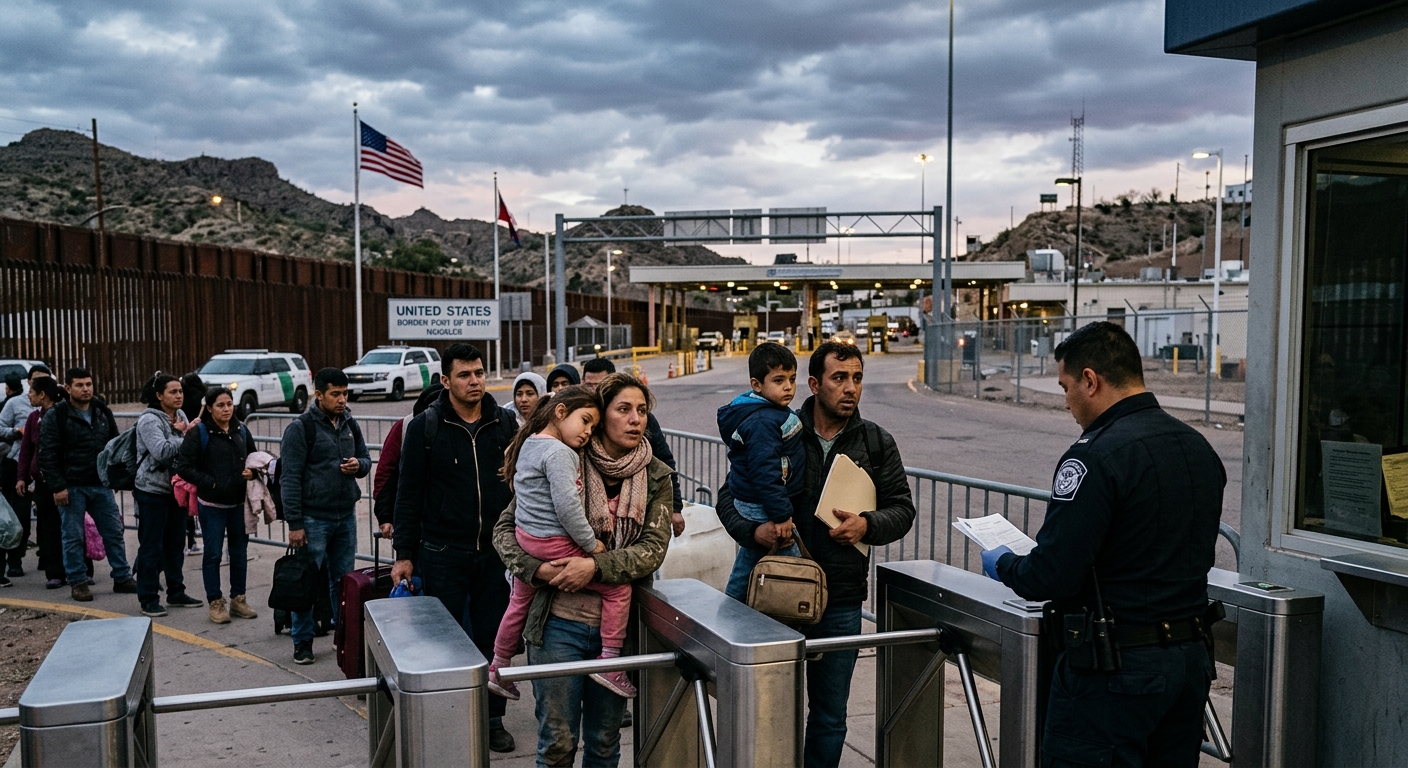
The Enduring Debate Over American Asylum
The pursuit of safety across international borders remains one of the most defining and complex global narratives of the modern era. In the United States, providing a safe haven to those fleeing severe persecution is not merely an ideological aspiration; it is a legally codified imperative deeply entrenched in both domestic and international law. Over the decades, however, this steadfast commitment has been aggressively tested, renegotiated, and increasingly encumbered by vast administrative backlogs and unprecedented technological barriers.
As geopolitical instabilities, economic collapses, and widespread emergencies escalate globally, the United States border has become the focal point of a highly polarized, high-stakes debate. This ongoing discourse pits stringent border security measures and enforcement priorities against the fundamental, universally recognized humanitarian right to seek asylum. This comprehensive overview explores the historical legal foundations of American asylum law, the dramatic pivot toward deterrence-based enforcement—specifically through public health directives—and the modern digitization of border processing that continues to shape the daily, lived realities of vulnerable migrants today.
The Legal Foundation: The Refugee Act of 1980
Prior to the late 1970s, the United States fundamentally lacked a comprehensive, uniform statutory framework for admitting refugees and processing domestic asylum seekers. The chaotic aftermath of the Vietnam War and the subsequent mass displacement of hundreds of thousands of Southeast Asians underscored the glaring inadequacy of ad-hoc, temporary admission programs that relied heavily on presidential parole powers. In response to this pressing need for systemic reform, Congress decisively passed the Refugee Act of 1980 (Public Law 96-212). This watershed piece of legislation fundamentally realigned domestic immigration procedures with established international human rights standards.
The Refugee Act systematically adopted the United Nations’ definition of a refugee into binding U.S. law. It established that individuals possessing a “well-founded fear of persecution” on account of five protected, specific grounds—race, religion, nationality, membership in a particular social group, or political opinion—were legally eligible for protection. Crucially, the Act created distinct, formalized procedures for foreign nationals who were already physically present in the United States, or arriving at a land border, to formally apply for asylum, entirely regardless of their current immigration status or the specific manner in which they crossed the border.
- Establishment of Uniform Procedures: Replaced the politically motivated and chaotic ad-hoc admission protocols with a highly structured, legal process for evaluating individual claims based strictly on merit and fear of persecution.
- Enshrinement of Non-Refoulement: Explicitly solidified the absolute guarantee that individuals would not be forcibly returned to a country where their lives, freedom, or safety would be inherently threatened.
- Annual Ceilings and Resettlement: Set an initial annual ceiling for refugee admissions and funded a newly created Office of Refugee Resettlement to assist those granted legal protection.
This was a monumental, historic shift in domestic policy. According to the U.S. Citizenship and Immigration Services (USCIS), before 1980, there was absolutely no permanent legal mechanism for individuals residing in the U.S. to seek protection under the Refugee Convention. The Act firmly cemented the nation’s role as a global beacon for humanitarian resettlement and due process.
The Shift to Deterrence: Title 42 and the Era of Expulsions
Despite the robust, compassionate legal foundations laid down in 1980, the last two decades have witnessed a stark, undeniable paradigm shift toward deterrence-based immigration policies. The most aggressive and visible manifestation of this shift occurred in March 2020, with the sudden implementation of Title 42. This was a controversial public health order issued by the Centers for Disease Control and Prevention (CDC) during the rapid onset of the COVID-19 pandemic.
Title 42 effectively slammed the U.S.-Mexico border shut to asylum seekers, empowering border enforcement officials to rapidly expel migrants back to Mexico or their countries of origin without affording them the legal opportunity to present their asylum claims to an immigration judge or trained asylum officer. This unprecedented policy completely superseded the standard humanitarian protocols outlined in the Immigration and Nationality Act (INA). For over three years, Title 42 was utilized millions of times to indiscriminately turn away individuals and families actively seeking safety, stranding them in perilous, unsanitary conditions in northern Mexico border towns.
When Title 42 finally reached its expiration on May 11, 2023, the termination of the public health order did not herald a return to the pre-2020 asylum processes. Instead, federal agencies immediately introduced the “Circumvention of Lawful Pathways” rule. As detailed in the Federal Register, this new, highly restrictive regulation was explicitly designed to manage expected, historic surges in migration. It generally presumes individuals to be legally ineligible for asylum if they cross the border unlawfully between established ports of entry and fail to apply for protection in a transit country before reaching U.S. soil. This restriction dramatically narrowed the legal avenues through which vulnerable populations could seek domestic protection, effectively continuing the long legacy of severe deterrence under a brand-new regulatory guise.
Digitizing the Border: The Impact and Inequities of the CBP One App
As part of the post-Title 42 border management strategy, the federal government placed an immense, unprecedented emphasis on technological solutions to create a system of orderly processing. At the absolute center of this modern initiative is the CBP One mobile application. U.S. Customs and Border Protection (CBP) expanded the functionality of the app to mandate that migrants located in central and northern Mexico use it to schedule limited appointments to present themselves at specific, designated land Ports of Entry.
By the summer of 2023, CBP proudly announced it was processing up to 1,450 appointments per day through the mobile application. The stated administrative goal was to establish a safe, orderly, and humane pathway that directly disincentivizes dangerous illegal border crossings. However, the strict reliance on a smartphone application as the primary, and often sole, gateway to the U.S. asylum system has introduced severe, life-threatening accessibility challenges for those fleeing violence.
Lawmakers, technological experts, and human rights advocates have repeatedly pointed out the inherent, glaring inequities of digitizing a fundamental human right. A 2023 letter from members of Congress to the Department of Homeland Security highlighted that successfully securing an appointment often resembled winning a high-stakes lottery, given the overwhelming, desperate demand and severely limited daily slots. Furthermore, users frequently encounter crippling technical glitches, facial recognition errors that have notoriously struggled to register darker skin tones, and immense language barriers. Initially, the app entirely lacked translations for widespread languages like Haitian Creole, functionally isolating entire demographics of asylum seekers. Migrants without access to reliable Wi-Fi, updated smart devices, or a stable power source find themselves effectively walled off by an invisible, impenetrable digital barrier.
The Human Cost: Health Inequities and the Reality of Wait Times
The compounding, devastating effects of these stringent border policies have severely exacerbated physical and mental health crises among global migrant populations. When legal pathways are choked by insurmountable digital barriers and strict regulatory presumptions of ineligibility, desperate individuals are frequently pushed into the shadows. They are forced to rely on exploitative human smugglers or attempt incredibly dangerous, unregulated border crossings across hostile desert terrains or deadly rivers.
Peer-reviewed research and extensive reports from public health experts have thoroughly documented the profound health inequities worsened by these deterrence-based policies. Stranded in squalid, makeshift encampments along the border for months on end while waiting for a coveted CBP One appointment, migrants face severe sanitation issues, rampant infectious diseases, and a complete lack of access to basic medical or prenatal care.
Beyond the widespread physical ailments, the psychological toll is virtually immeasurable. These highly vulnerable populations are exceptionally susceptible to targeted cartel violence, organized kidnapping, financial extortion, and sexual assault. These horrific conditions disproportionately impact women, children, and minority individuals, who face elevated risks of gender-based violence and human trafficking while trapped in legal limbo. The continued criminalization and deterrence of forced migration not only violate the foundational spirit of international asylum frameworks but actively, predictably perpetuate profound human suffering right on the doorstep of the United States.
Reclaiming the Humanitarian Imperative
The complex, shifting trajectory of U.S. asylum policy over the last forty years powerfully reflects a deep, unresolved tension between humanitarian ideals and geopolitical enforcement realities. While sovereign nations undeniably possess the inherent right to manage and secure their borders, the United States is also unequivocally bound by its own domestic laws and international treaties to provide a fair, impartial hearing to those fleeing extreme violence and systemic persecution.
True, sustainable border management requires an administrative infrastructure that does not sacrifice foundational due process for the sake of political expediency or optical orderliness. Expanding physical processing capacities at Ports of Entry, ensuring technological tools like the CBP One app are equitable and truly accessible to all demographics, and fundamentally returning to the compassionate principles outlined in the Refugee Act of 1980 are critical steps. Recognizing the inherent humanity of those arriving at the border is not mutually exclusive with maintaining a safe, orderly immigration system; rather, it is the defining characteristic of a society that claims to value liberty and justice for all.
Frequently Asked Questions (FAQs)
What is the primary difference between a refugee and an asylum seeker under U.S. law?
A refugee is an individual who has been forced to flee their home country and has been formally processed and granted protection and legal status before arriving in the United States. An asylum seeker is someone who has fled their country and is actively seeking protection from persecution after already arriving at a U.S. border or from within the interior of the country.
How did the Refugee Act of 1980 fundamentally change the U.S. immigration system?
The Refugee Act of 1980 brought the United States into direct compliance with international human rights law by adopting the United Nations’ definition of a refugee. It officially established clear, uniform procedures for asylum applications for individuals physically present in the U.S. and set up a systematic resettlement program, effectively ending the historical reliance on temporary, ad-hoc admission policies.
What was Title 42 and why was it highly controversial?
Title 42 was an emergency CDC public health order activated in March 2020 during the onset of the COVID-19 pandemic. It allowed border enforcement agents to immediately expel migrants and asylum seekers back to Mexico or their home countries without formally processing their asylum claims. It was widely controversial because it effectively suspended legal asylum rights under the guise of public health, leaving thousands stranded in dangerous conditions.
What is the “Circumvention of Lawful Pathways” rule?
Introduced immediately after the expiration of Title 42 in May 2023, this federal rule generally presumes that individuals are legally ineligible for asylum if they cross the U.S. border unlawfully between official ports of entry and fail to apply for asylum in a transit country they passed through on their way to the United States.
How does the CBP One app affect asylum seekers today?
The CBP One app is a mobile application mandated by the U.S. government for migrants in Mexico to schedule appointments to present their asylum claims at Ports of Entry. While designed to make border processing more orderly, it acts as a massive technological barrier due to limited daily appointments, frequent technical glitches, severe language limitations, and the flawed assumption that all fleeing migrants possess access to smartphones and reliable internet.
References
- 94 STAT. 102 PUBLIC LAW 96-212—MAR. 17, 1980 — GovInfo. 1980-03-17. https://www.govinfo.gov/content/pkg/STATUTE-94/pdf/STATUTE-94-Pg102.pdf
- Chapter 1 – Purpose and Background — U.S. Citizenship and Immigration Services (USCIS). 2025-02-26. https://www.uscis.gov/policy-manual/volume-7-part-m-chapter-1
- Securing the Border — Federal Register. 2024-06-07. https://www.federalregister.gov/documents/2024/06/07/2024-12628/securing-the-border
- CBP One™ Appointments Increased to 1,450 Per Day — U.S. Customs and Border Protection. 2023-06-30. https://www.cbp.gov/newsroom/national-media-release/cbp-one-appointments-increased-1450-day
- CBP One Letter 2023 — U.S. Senator Cory Booker. 2023-03-27. https://www.booker.senate.gov/imo/media/doc/cbp_one_letter.pdf
- Deterrence-based asylum policies exacerbate health inequities among women and children seeking safety at the US–Mexico border — PubMed Central (PMC). 2023-11-21. https://www.ncbi.nlm.nih.gov/pmc/articles/PMC10662705/
Similar Articles








Read full bio of Sneha Tete


