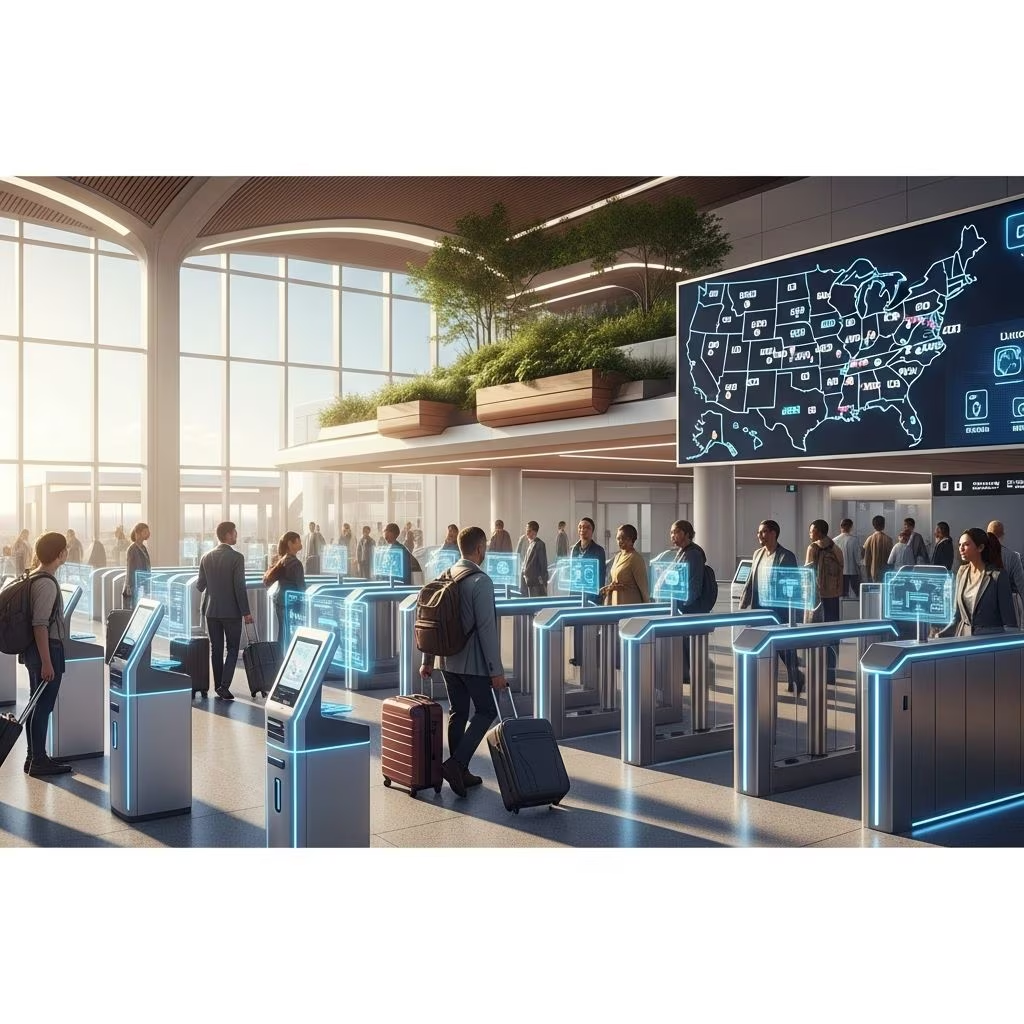
Entering the United States through an airport involves multiple layers of security and immigration checks designed to verify identity, admissibility, and compliance with entry rules. In 2026, travelers face stricter ID enforcement, expanded biometric use, and refined Customs and Border Protection (CBP) processes. This guide breaks down each stage, from pre-flight preparations to final customs clearance, helping you arrive prepared and confident.
Essential Travel Documents for U.S. Entry
Valid documentation is the foundation of a successful U.S. entry. U.S. citizens and lawful permanent residents typically need proof of citizenship or residency, while foreign nationals require visas, ESTA approvals, or other authorizations. Passports remain the gold standard for international arrivals, with specific rules for air travel.
- Passports: Required for all international flights. U.S. passport cards are not accepted for air travel but work for land/sea entries.
- Visa Waiver Program (VWP) Travelers: Need an approved ESTA (Electronic System for Travel Authorization) linked to a valid e-passport. Proposed 2026 updates aim to modernize ESTA and I-94 processes for better digital tracking.
- Visa Holders: Carry your visa, passport, and any supporting documents like invitation letters or employment proofs.
- U.S. Citizens/Residents: Passport, birth certificate with photo ID, or naturalization certificate. Military IDs or Global Entry cards also suffice in some cases.
Always check expiration dates—documents must be valid for your entire stay. Lost documents? Contact your embassy or use CBP’s deferred inspection sites post-arrival.
TSA Security Screening: REAL ID and the $45 Fee
Before boarding international flights to the U.S., or on domestic connections, pass through Transportation Security Administration (TSA) checkpoints. Fully enforced since 2026, REAL ID compliance is mandatory for domestic flights and boarding gates.
| Acceptable IDs | Notes |
|---|---|
| REAL ID compliant driver’s license/state ID | Marked with a star; check your state’s DMV. |
| Passport or Passport Card | Primary option for internationals. |
| Global Entry, NEXUS, SENTRI cards | Trusted traveler programs. |
| Military ID, DHS trusted traveler cards | Valid for all users. |
Arrive without an acceptable ID? TSA’s 2026 identity verification process incurs a $45 fee per incident. Officers conduct manual checks, possibly using facial recognition or databases, but you’ll board after payment—better than missing your flight. Digital IDs (e.g., mobile driver’s licenses) are increasingly accepted but carry a backup physical ID to avoid fees. Always verify the full TSA list on their official site before travel.
Disembarking and Initial CBP Processing
Upon landing at a U.S. airport, follow signs to immigration (CBP). International arrivals use dedicated halls with automated kiosks or officer stations. U.S. citizens and permanent residents often use faster lanes.
- Complete any in-flight customs forms (e.g., electronic via airline app).
- Proceed to CBP primary inspection: scan passport or use facial recognition kios booths.
- Prepare for officer interaction: state purpose, duration, and address.
Biometrics are standard: fingerprints and digital photos confirm identity against your visa/ESTA. Note: While CBP gained full biometric authority on December 26, 2025, implementation varies—no mandatory changes for general aviation yet, but commercial airports widely use it.
The CBP Inspection: Keys to Approval
CBP officers assess admissibility under immigration law. Expect questions on travel intent, funds, ties abroad, and prior visits. Honesty is critical—discrepancies can lead to secondary screening.
Common Red Flags and How to Avoid Them:
- Mismatched answers (e.g., saying ‘tourist’ but carrying job resumes).
- Insufficient funds proof or vague itineraries.
- Past overstay history, visible in CBP databases.
Carry evidence: hotel bookings, return tickets, bank statements. For B-1/B-2 visitors, emphasize temporary intent. Denials are rare (<1% of arrivals) but can bar reentry—appeal via CBP or consulate if needed.
Customs Declaration and Baggage Checks
Post-immigration, declare goods via APC kiosks (Automated Passport Control) or forms. U.S. residents declare $800 duty-free; excess incurs tariffs. Prohibited items: certain foods, large cash (>$10K must declare), drugs.
| Item Category | Allowed | Restricted/Prohibited |
|---|---|---|
| Food | Sealed baked goods, baby formula | Fresh fruits, meats, dairy |
| Alcohol | 1L per adult, 21+ | Absinthe, unlabeled bottles |
| Currency | Any amount if declared >$10K | Undeclared bulk cash |
| Gifts/Souvenirs | <$100 value | Counterfeit goods, wildlife products |
Random baggage scans occur; secondary inspections for high-risk profiles. Green lanes for low-risk; red for declarations.
Trusted Traveler Programs: Skip the Lines
Enroll in Global Entry ($100/5 years) for expedited CBP and TSA. Includes TSA PreCheck. Canadians: NEXUS. Biometrics auto-enroll you in exit tracking. Approval requires background check (10-12 weeks).
Special Scenarios: Families, Minors, and Visa Issues
Families: Birth certificates for minors traveling without both parents. Consent letters recommended. Visa overstays or bond programs: 32 countries added in 2026 for pilot cash bonds guaranteeing departure.
Health checks: No routine vaccinations required, but declare illnesses. ESTA denials? Apply for B-1/B-2 visa.
Frequently Asked Questions (FAQs)
What if I forget my passport at U.S. airport entry?
Contact airline lost-and-found first, then CBP deferred inspection. U.S. citizens may use secondary proofs temporarily.
Is facial recognition mandatory for U.S. citizens?
Optional at most checkpoints; opt out available. Foreign nationals usually required.
How long can CBP hold me in secondary inspection?
Typically 1-2 hours; up to 24 if complex. Rights include lawyer access post-admissibility decision.
Does REAL ID apply to international arrivals?
For connecting domestic flights yes; primary entry uses passport.
What’s new with biometrics in 2026?
CBP authorized expanded collection Dec 2025, but GA unchanged. Commercial: routine at major hubs.
Tips for a Hassle-Free Arrival
- Arrive 3+ hours early for internationals.
- Use airline apps for e-customs.
- Practice CBP Q&A responses.
- Backup digital copies of docs.
- Monitor travel.state.gov for updates.
By understanding these steps, you minimize delays and focus on your U.S. adventure. Safe travels!
References
- NEW Airport Rules Catching Americans Off Guard in 2026 (TSA $45 Fee Explained) — YouTube (TSA Update Video). 2026-01-01. https://www.youtube.com/watch?v=2tPY95Lo4Zw
- CBP Clarifies Biometric Entry and Exit Rule for General Aviation — Universal Weather and Aviation, Inc. 2025-12-30. https://www.universalweather.com/blog/u-s-border-security-overhaul-mandatory-biometrics-begin-december-26-major-esta-changes-proposed/
- International Travel Requirements — United Airlines (Official). 2026. https://www.united.com/en/us/fly/travel/trip-planning/international-travel-requirements.html
- Travel Advice and Advisories for United States — Government of Canada (.gov). 2026. https://travel.gc.ca/destinations/united-states
- State Department’s Visa Bond Program: 32 New Countries and 6 New Airports Added — Ogletree Deakins. 2026-01-15. https://ogletree.com/insights-resources/blog-posts/state-departments-visa-bond-program-32-new-countries-and-6-new-airports-added-to-the-list/