
The Urgent Fight for Menstrual Equity Behind Bars
Exploring the devastating impact of menstrual product deprivation in U.S. prisons.
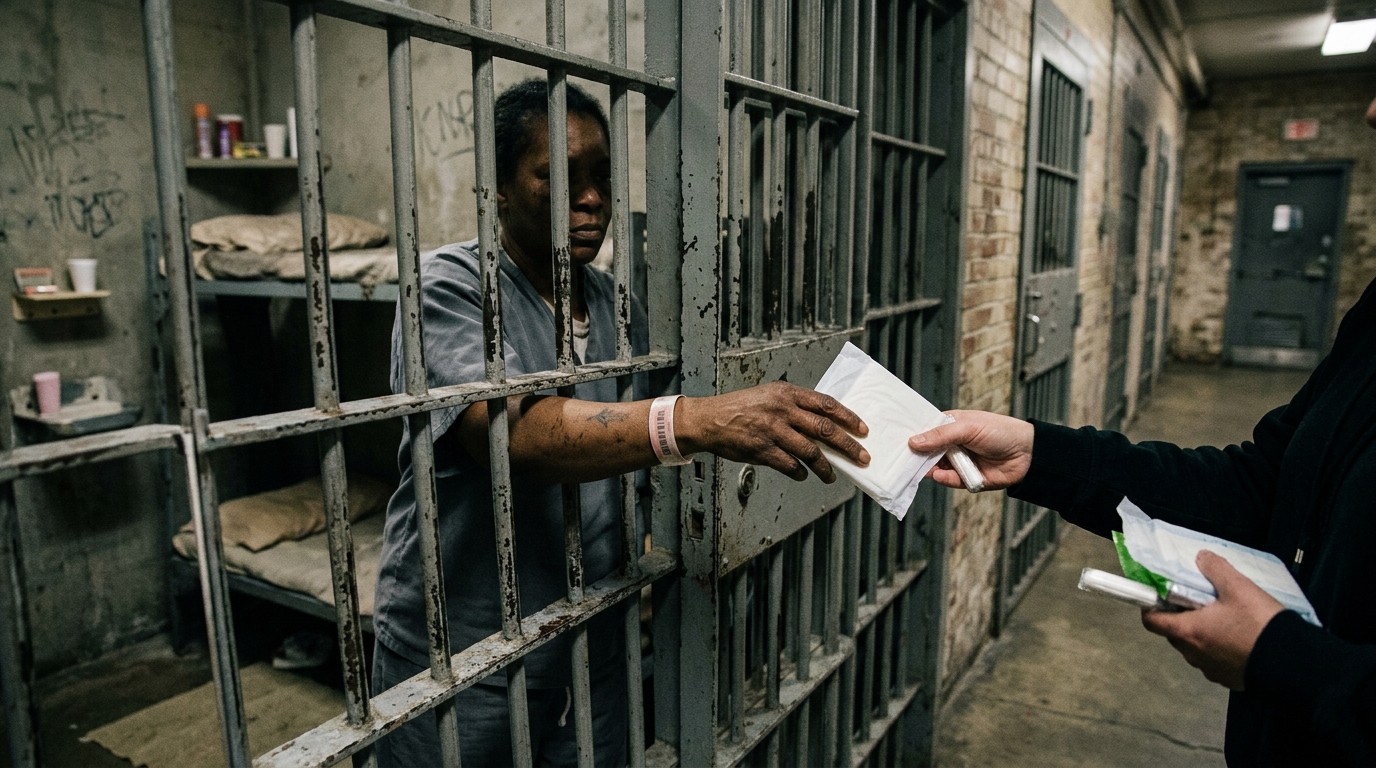
The Invisible Crisis of Bleeding Behind Bars
Menstruation is a fundamental, unavoidable biological process experienced by roughly half the global population. Yet, for hundreds of thousands of incarcerated individuals within the United States carceral system, this ordinary bodily function is routinely transformed into a source of deep humiliation, physical danger, and systemic psychological trauma. Menstrual equity—the principle that access to safe, clean, and sufficient menstrual hygiene products is a basic human right—remains an elusive concept behind bars.
When human beings are systematically deprived of the basic tools required to manage their periods, they are simultaneously stripped of their dignity and their right to bodily autonomy. Incarcerated individuals are routinely denied the sanitary products and safe practices they desperately need to care for themselves. Addressing this issue requires looking beyond the walls of prisons and jails to understand how the deprivation of menstrual products acts as an invisible, secondary layer of punishment that jeopardizes physical health, enforces patriarchal control, and violates fundamental human rights. As advocacy groups continue to fight for policy changes, society is slowly waking up to the reality that withholding basic hygiene care constitutes a severe abuse of state power.
The Health and Physical Toll of Menstrual Deprivation
Without consistent access to standard pads and tampons, incarcerated women, transgender men, and non-binary individuals are often forced to improvise out of sheer desperation. In many facilities, a person is handed a severely limited allotment of low-quality, non-absorbent pads during intake, which is expected to last an entire month. When those state-issued supplies inevitably run out, individuals resort to fabricating makeshift menstrual products out of unsanitary materials, such as scratchy toilet paper, torn clothing, notebook paper, or even the stuffing ripped from prison mattresses.
The physical consequences of these survival tactics are devastating. The prolonged use of a single pad or tampon, or the insertion of unsterilized makeshift products, creates an environment ripe for dangerous bacterial growth. Studies reveal that a lack of adequate menstrual hygiene management significantly correlates with life-threatening conditions, including Toxic Shock Syndrome (TSS), severe bacterial vaginosis, and chronic urinary and reproductive tract infections. According to a survey published by the National Institutes of Health, nearly one-quarter of incarcerated respondents who experienced menstrual product deprivation reported suffering direct negative health consequences due to the prolonged use of inadequate supplies.
Beyond the physical ailments, the psychological toll of this forced neglect cannot be overstated. Experiencing a menstrual cycle in a hostile environment while fearing infection or public exposure forces individuals into a constant state of hyper-vigilance and anxiety, deeply impacting their mental well-being and overall rehabilitation.
Weaponizing Basic Needs: Control and Disciplinary Action
The scarcity of menstrual products inside correctional facilities does not merely cause physical harm; it actively weaponizes a natural bodily function to enforce control and dominance. Because facilities often strictly limit the number of free products distributed, menstruating individuals must routinely approach corrections officers—many of whom are male—to beg for additional pads or tampons. This extreme power imbalance creates an environment ripe for coercion, sexual harassment, and profound humiliation. In a harrowing statistical reality, over 62 percent of surveyed incarcerated women reported having to barter or trade favors just to secure basic hygiene necessities.
Furthermore, the carceral disciplinary system frequently punishes people for the prison’s own failure to supply adequate products. When an incarcerated person inevitably bleeds through their uniform because they were denied a pad, they may be charged with a formal rule violation for ‘destruction of state property’ or ‘poor hygiene’. These arbitrary disciplinary tickets are not minor inconveniences; they can result in the loss of critical privileges, the suspension of family visitation rights, removal from rehabilitative programming, or even placement in solitary confinement. By treating natural menstruation as intentional misconduct, the system layers cruel and unusual punishment onto an already marginalized population.
The Economic Trap: Commissary Costs vs. Prison Labor
For many individuals navigating the carceral system, the only alternative to begging a guard for substandard state-issued supplies is purchasing brand-name tampons or panty liners from the prison commissary. However, this seemingly simple solution is an economic impossibility for a vast majority of the incarcerated population. The exorbitant pricing structures within prison commissaries effectively criminalize poverty. Incarcerated individuals are essentially held captive in a closed-loop economy where the state dictates both their microscopic wages and the inflated prices of their basic necessities.
| Economic Factor | Average Value in Prison |
|---|---|
| Cost of Name-Brand Tampons (Box) | $5.00 – $8.00 |
| Average Prison Labor Wage | $0.15 – $0.30 per hour |
| Monthly Income (Full-Time Work) | $8.00 – $15.00 |
| Labor Hours Required for One Box | 20 – 40 hours |
For instance, research into state correctional facilities has shown that in states like Missouri, an incarcerated person might earn a maximum of barely $8.00 per month for their labor. Meanwhile, a single box of standard tampons at the facility’s canteen can cost nearly $6.00, consuming almost their entire monthly salary. This economic trap forces individuals to make an impossible choice: purchase the hygiene products they need to maintain their health and dignity, or purchase supplemental food, phone time to speak with their children, or vital medical co-pays.
Legislative Milestones: The First Step Act and State Reforms
Thanks to the relentless advocacy of formerly incarcerated women and reproductive justice organizations, the legal landscape surrounding menstrual equity has begun to shift over the last decade. The most prominent federal milestone occurred in December 2018 with the passage of the First Step Act. This bipartisan federal legislation explicitly mandated that the Federal Bureau of Prisons (BOP) provide all incarcerated individuals with sanitary napkins and tampons completely free of charge.
Spurred by this federal momentum, a growing wave of states began drafting their own ‘Dignity for Incarcerated Women’ bills. State legislatures in California, Ohio, Colorado, and Maine have passed binding laws requiring county jails and state prisons to provide free, comprehensive access to menstrual products. For example, California’s AB 732 requires robust reproductive healthcare access, mandating the unhindered provision of menstrual products in local and state facilities. These legislative milestones represent a critical rhetorical and legal acknowledgment that menstrual equity is deeply intertwined with the Eighth Amendment’s protection against cruel and unusual punishment.
The Implementation Gap: When Policy Fails in Practice
However, the existence of a progressive policy on paper does not automatically translate to dignified treatment behind bars. The grim reality is that carceral systems frequently use the mere existence of a law to deflect public scrutiny, while incarcerated people continue to experience systemic deprivation.
This implementation gap was starkly highlighted in a February 2026 report by the U.S. Government Accountability Office (GAO). The federal watchdog found that despite the clear legal mandates of the First Step Act, numerous BOP facilities were failing to fully adhere to the requirements. Investigators discovered that prisons were not providing the necessary types of menstrual products in accessible common areas, nor were they reliably replenishing stocks within the mandated 24-hour window. In many cases, critical supplies were kept locked away, forcing inmates to jump through the very administrative hurdles the law was intended to eliminate. Similarly, U.S. Immigration and Customs Enforcement (ICE) facilities lacked specific, enforceable standards to ensure consistent access. At the state level, an investigation by the California Department of Justice previously revealed that nearly all county jail policy manuals failed to fully comply with state reproductive healthcare mandates. Without rigorous oversight, facility wardens retain the discretionary power to quietly ignore the law, rendering hard-fought legislative victories hollow.
A Blueprint for Meaningful Menstrual Equity
Achieving true menstrual equity in the carceral system requires moving beyond performative legislation toward strict accountability and fundamental cultural shifts. Activists and public health experts recommend a comprehensive framework to ensure that basic dignity is upheld across every level of the justice system:
- Unrestricted, Free Access: Menstrual products must be placed in open, easily accessible locations—such as bathrooms and common housing areas—rather than being locked in a guard’s office. No person should ever have to ask a corrections officer for permission to manage their period.
- Comprehensive Product Variety: Prisons must provide a wide array of products, including multiple sizes of tampons, pads with wings, and panty liners, to accommodate different bodily needs and varying menstrual flows.
- Decriminalizing Biological Functions: Departments of corrections must strictly prohibit the issuance of disciplinary infractions for blood-stained clothing or bedding. Instead, facilities should provide free, immediate access to laundry services and clean replacement uniforms.
- Independent, Third-Party Auditing: As federal reports have demonstrated, self-reporting by prisons is vastly insufficient. State and federal governments must mandate unannounced, independent audits of correctional facilities, with severe financial or administrative penalties for wardens who fail to provide required hygiene products.
Furthermore, incorporating the lived experiences of formerly incarcerated individuals into the policy-making process is essential. Only by centering the voices of those who have survived these dehumanizing conditions can the system create realistic, enforceable policies that guarantee reproductive justice and bodily autonomy for all.
Frequently Asked Questions (FAQs)
What exactly is menstrual equity?
Menstrual equity refers to the affordability, accessibility, and safety of menstrual products for all individuals who need them. It encompasses the fundamental human right to manage one’s period with dignity, free from stigma, financial burden, or systemic barriers. In the context of incarceration, it means ensuring that jails, detention centers, and prisons provide sufficient, high-quality pads and tampons at no cost to the incarcerated population.
Why can’t incarcerated people just buy pads from the prison commissary?
While some prisons sell brand-name menstrual products in their commissaries, the wages paid for prison labor are staggeringly low—often between 15 and 30 cents per hour. A single box of tampons can cost upwards of $6.00, meaning an incarcerated individual might have to work up to 40 hours just to afford one menstrual cycle’s worth of products. This extreme economic disparity makes purchasing products utterly impossible for the vast majority of people living behind bars.
What did the First Step Act do for menstrual equity?
The First Step Act was a landmark piece of federal legislation passed in 2018 that, among other vital criminal justice reforms, legally required the Federal Bureau of Prisons (BOP) to provide sanitary napkins and tampons to federal inmates entirely free of charge. While this was a major legislative victory, recent government audits have shown that many federal facilities still fail to consistently comply with these requirements.
What are the health risks of being denied menstrual products?
When individuals are denied adequate pads or tampons, they often resort to using single products for multiple days or creating makeshift tampons out of unhygienic materials like toilet paper or mattress stuffing. This leads to dangerous bacterial buildup, drastically increasing the risk of Toxic Shock Syndrome (TSS), severe bacterial vaginosis, reproductive tract infections, and long-term pelvic inflammatory disease.
References
- Federal Custody: Bureau of Prisons and ICE Should Take Actions to Improve Access to Menstrual Products (GAO-26-107694) — U.S. Government Accountability Office. 2026-02-02. https://www.gao.gov/products/gao-26-107694
- Menstrual Equity in the Criminal Legal System — National Institutes of Health / PMC. 2023-01-01. https://www.ncbi.nlm.nih.gov/pmc/articles/PMC10156936/
- First Step Act Overview — Federal Bureau of Prisons. 2019-07-19. https://www.bop.gov/inmates/fsa/overview.jsp
- Attorney General Bonta Releases First-Ever Reproductive Healthcare in Jails Report — California Department of Justice. 2023-08-24. https://oag.ca.gov/news/press-releases/attorney-general-bonta-releases-first-ever-reproductive-healthcare-jails-report
Similar Articles








Read full bio of Sneha Tete


