
Unveiling Truth: The Reality of Polygraph Testing
Discover the science, accuracy debates, legal limits, and future of polygraph tests in detecting deception.
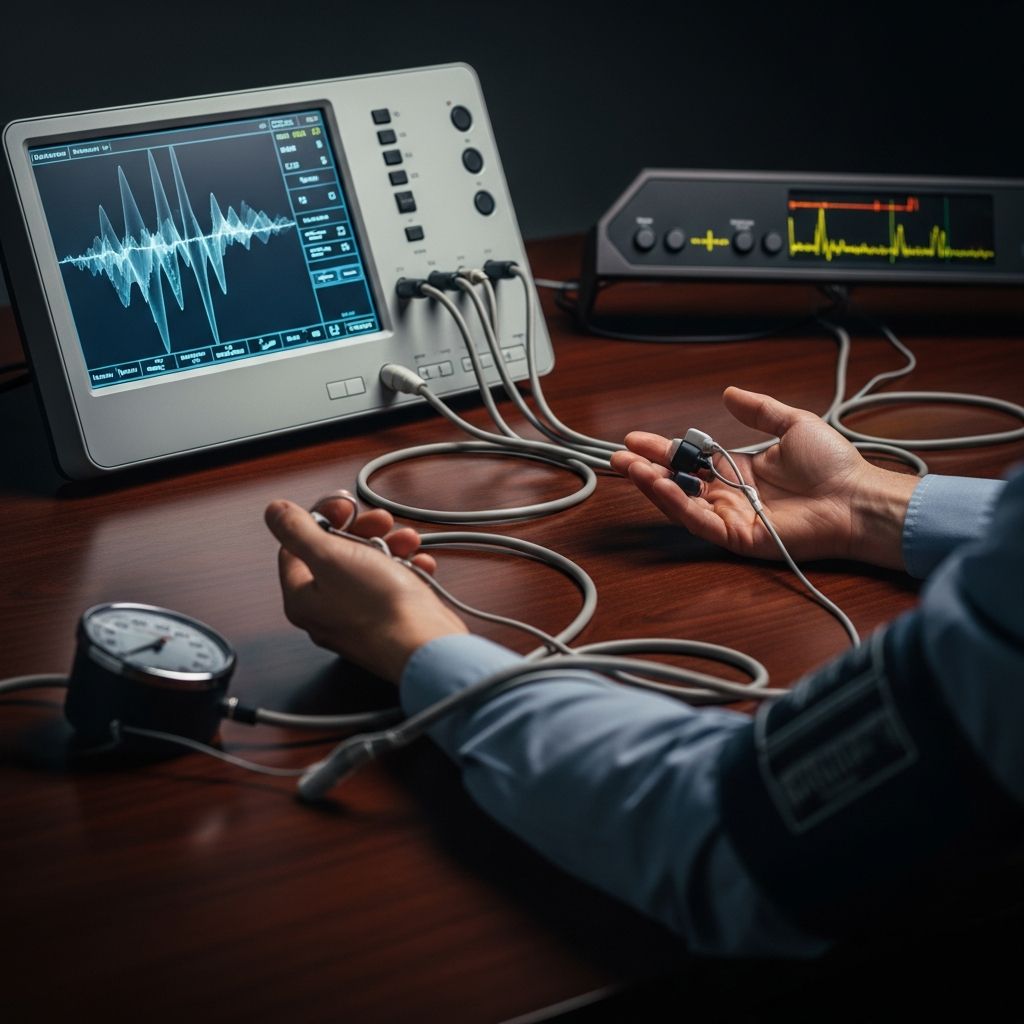
Polygraph tests, commonly known as lie detectors, have captivated public imagination for decades as tools to separate truth from deception. These devices record physiological signals like heart rate, breathing, and sweat levels during questioning, operating on the premise that dishonesty triggers distinct bodily reactions. Despite their popularity in investigations and employment screening, scientific scrutiny reveals significant limitations in their reliability.
The Fundamental Science of Deception Detection
At their core, polygraphs monitor involuntary responses from the autonomic nervous system, which controls functions beyond conscious effort. When a person encounters stress—potentially from lying—the body may exhibit elevated blood pressure, altered respiration, or increased skin perspiration. This approach traces back to early 20th-century experiments linking emotional arousal to measurable physical changes.
Key physiological channels include:
- Cardiovascular activity: A cuff on the arm tracks blood pressure and pulse variations, which can spike under duress.
- Respiratory patterns: Bands around the chest and abdomen detect shallow or rapid breathing indicative of anxiety.
- Skin conductance: Finger electrodes measure electrical conductivity changes due to sweat gland activation.
- Movement and vasomotor responses: Sensors capture subtle shifts in muscle tension or blood flow control.
These metrics produce a chart where examiners analyze wave amplitudes, frequencies, and correlations across channels to infer truthfulness. Consistent spikes during key questions, compared to neutral baselines, suggest possible deception.
Evolution of Polygraph Technology Through History
The journey of polygraph development began in 1915 with William Marston’s systolic blood pressure recorder, inspired by observations of emotional stress impacts. John A. Larson advanced this in 1921 by integrating respiration and heart rate monitoring into a single device. Leonarde Keeler’s 1930s innovations added galvanic skin response, forming the basis of modern systems.
By the late 1980s, computerized polygraphs introduced algorithms for data analysis, reducing human error and boosting claimed precision. Today’s instruments feature digital interfaces, automated scoring, and enhanced sensors, yet the core theory remains unchanged: arousal equals potential deceit.
| Era | Innovation | Key Contributor | Impact |
|---|---|---|---|
| 1915 | Blood pressure focus | William Marston | Established physiological lie link |
| 1921 | Multi-metric device | John A. Larson | Added respiration, heart rate |
| 1930s | GSR integration | Leonarde Keeler | Improved sensitivity |
| 1980s+ | Computerization | Various | Automated analysis, higher accuracy claims |
Inside a Typical Polygraph Examination
A standard polygraph session unfolds in phases to establish baselines and provoke responses. It starts with a pre-test interview where the examiner builds rapport, explains the process, and crafts tailored questions. This induces baseline anxiety and ensures comprehension.
The core testing phase involves three question types repeated across charts:
- Irrelevant questions: Neutral queries like “Is your name John?” to set a calm baseline.
- Control questions: Vague probes about past misdeeds (e.g., “Have you ever stolen?”) expected to elicit mild guilt responses.
- Relevant questions: Issue-specific, such as “Did you commit the theft?” where deviations signal potential lies.
Sensors attach, and the examinee answers yes/no while charts record data. Examiners often include a ‘stim test’—asking deliberate lies to demonstrate detection prowess. Post-test, charts undergo numerical scoring or visual review for patterns like suppressed breathing or conductance surges.
Accuracy Realities: Strengths and Critical Flaws
Proponents cite modern polygraphs achieving 95-98% accuracy through refined protocols and software. Field studies in criminal probes support utility when combined with evidence. However, the American Psychological Association notes no unique ‘lie signature’ exists; arousal stems from fear, anger, or medical issues, not just deceit.
Key limitations include:
- False positives: Innocent people fail due to anxiety (up to 30% in screenings).
- False negatives: Skilled deceivers or psychopaths show muted responses.
- Countermeasures: Techniques like biting tongue or mental distractions can skew results.
The National Academy of Sciences’ review found insufficient evidence for reliable deception detection in diverse populations, especially security screening. Accuracy hovers around 70-90% in lab settings but drops in real-world stress.
Legal Landscape: Polygraphs in Court and Beyond
In the U.S., federal courts largely deem polygraphs inadmissible under Frye or Daubert standards due to error rates and subjectivity. States vary: some allow stipulations (mutual agreement), others ban entirely. Employment use persists, though the Employee Polygraph Protection Act (1988) restricts private sector screenings except for security firms.
Internationally, practices differ; some nations like Japan integrate polygraphs routinely, while others reject them outright. Law enforcement favors them as investigative aids, not proof.
Alternatives and the Promising Future of Lie Detection
Emerging technologies challenge polygraph dominance. Eye-tracking scans pupil dilation and gaze aversion linked to cognitive load. fMRI maps brain activity in deception-related areas like the prefrontal cortex, boasting higher lab accuracy but high costs.
AI-driven voice stress analysis and optical sensors promise non-invasive, real-time assessment. Hybrid systems combining biometrics with machine learning aim for superior precision. Research from the National Academies explores these as polygraph supplements.
Frequently Asked Questions About Polygraphs
Can you fail a polygraph if you’re telling the truth?
Yes, anxiety or unfamiliarity can mimic deception signals, leading to false positives in up to 30% of cases.
Are polygraphs admissible in court?
Rarely; most U.S. courts exclude them due to unreliability, though some allow if both parties agree.
How do you beat a polygraph test?
Countermeasures like controlled breathing or physical tics exist but are unreliable and often illegal in formal settings.
What is the most accurate lie detection method?
Currently, no method exceeds 90% reliably; behavioral analysis and evidence integration outperform tech alone.
Do polygraphs work on psychopaths?
Less effectively, as they exhibit blunted emotional responses, potentially yielding false negatives.
References
- Understanding Polygraph Testing: How Lie Detectors Work — Polygraph Test. 2023. https://www.polytest.org/science-behind-polygraph-tests-and-how-they-work/
- Understanding the Polygraph Chart: A Deep Dive into Lie Detection — LieDetectorTest.com. 2023. https://liedetectortest.com/polygraph-examiner/understanding-the-polygraph-chart-a-deep-dive-into-lie-detection
- Lie Detection: The Science and Development of the Polygraph — Illumin. USC.edu. 2023. https://illumin.usc.edu/lie-detection-the-science-and-development-of-the-polygraph/
- Do “lie detectors” work? What psychological science says — American Psychological Association (apa.org). 2023-10-12. https://www.apa.org/topics/cognitive-neuroscience/polygraph
- The Polygraph and Lie Detection — National Academies Press (nationalacademies.org). 2003. https://www.nationalacademies.org/read/10420/chapter/3
- polygraph — Legal Information Institute, Cornell Law School (law.cornell.edu). 2023. https://www.law.cornell.edu/wex/polygraph
Similar Articles








Read full bio of Sneha Tete


