
The Unseen Crisis: When Military Service Ends in Deportation
Exploring the legal pitfalls and bureaucratic failures that lead to the deportation of non-citizen U.S. military veterans.
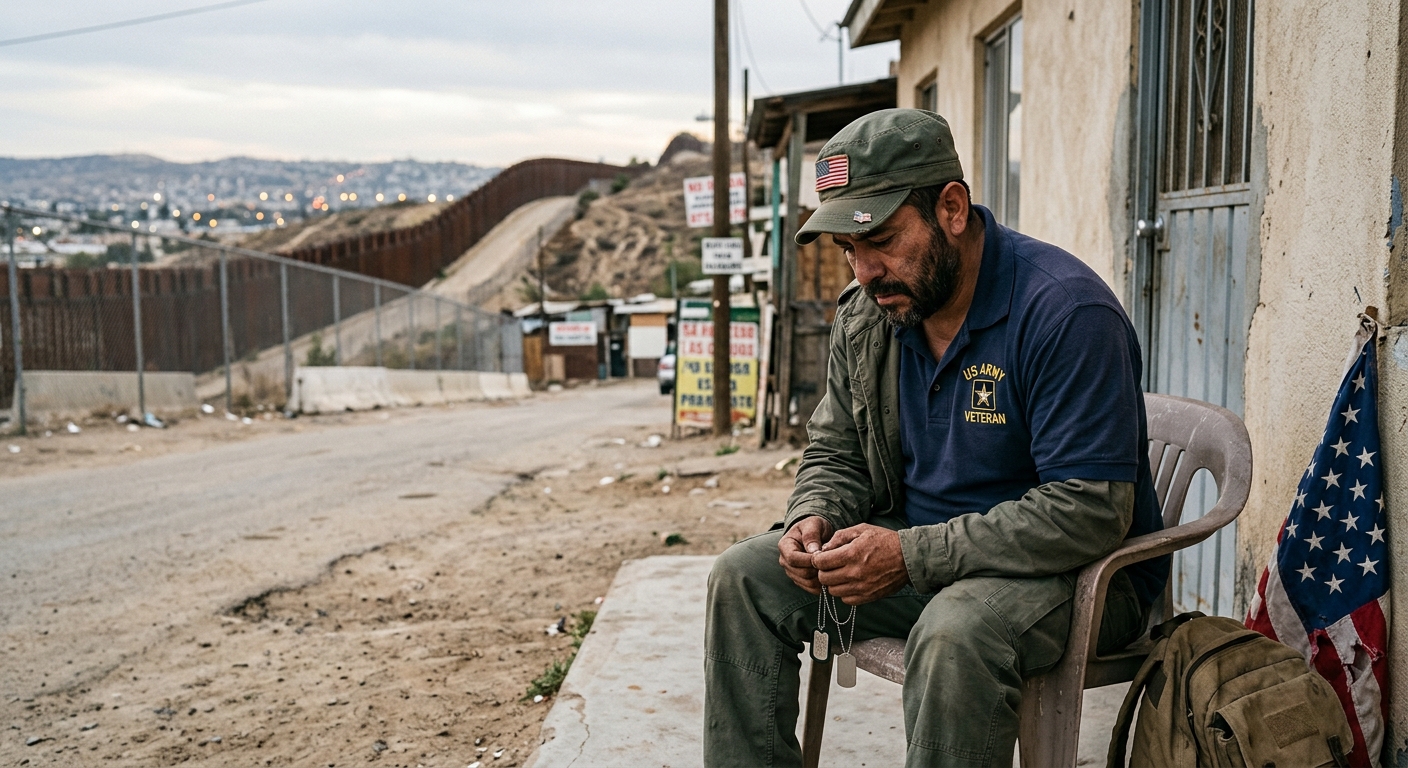
There is a profound and unsettling paradox at the intersection of United States immigration policy and military service. For generations, the United States Armed Forces have relied on the courage, diverse skill sets, and unwavering dedication of non-citizens to defend national security interests both domestically and abroad. These individuals take a solemn oath to protect a nation that, in many cases, is not legally their own. Yet, despite their willingness to make the ultimate sacrifice, an alarming number of honorably discharged military veterans have found themselves subjected to the harshest of immigration penalties: deportation. This phenomenon exposes a fracture in the system where military service is celebrated in uniform but often disregarded in immigration court.
The deportation of military veterans is not an isolated administrative error but rather the consequence of a rigid, unforgiving legal framework combined with systemic bureaucratic failures. When veterans transition from active duty to civilian life, they often carry the invisible scars of war, including post-traumatic stress disorder (PTSD) and traumatic brain injuries (TBI). Without adequate support, these vulnerabilities can lead to minor legal infractions. Under stringent immigration laws enacted in the late 1990s, these infractions can trigger mandatory deportation proceedings, stripping immigration judges of the discretion to consider a veteran’s honorable military record. The resulting exile leaves individuals stranded in unfamiliar countries, separated from their American families, and entirely cut off from the health benefits they earned through their service.
A Legacy of Non-Citizen Service in the Armed Forces
To fully grasp the magnitude of this crisis, one must understand the historical reliance of the U.S. military on non-citizen service members. The tradition of immigrants fighting for the United States dates back to the Revolutionary War and has been a cornerstone of military readiness in every major conflict since . The military values the unique linguistic skills, cultural competencies, and high retention rates that non-citizens bring to the armed forces. As of recent estimates, the Department of Defense recruits thousands of legal permanent residents (LPRs) and other eligible non-citizens into the military each year, with tens of thousands actively serving across all branches .
For many non-citizens, enlisting in the military is viewed as a profound demonstration of loyalty to their adopted homeland and a recognized pathway to the American Dream. The promise of expedited citizenship is often used as a recruitment tool, incentivizing service with the prospect of naturalization. However, the demographic realities of these service members mean they are uniquely vulnerable to shifts in immigration policy. Many arrive in the U.S. as young children and have no memory of their birth countries, speaking only English and identifying exclusively as American. When the system functions correctly, these service members naturalize and integrate fully into civilian life. But when the system fails, the consequences are devastating, turning former soldiers into exiles .
The Bureaucratic Illusion of Automatic Citizenship
A central catalyst for the deportation of veterans is a widespread misunderstanding regarding how military service interacts with the naturalization process. Many non-citizen recruits mistakenly believe that taking the oath of enlistment automatically confers United States citizenship. This misconception is frequently reinforced by a lack of clear guidance from military recruiters and commanding officers. In reality, while military service provides a legal mechanism for expedited naturalization, the process is far from automatic. It requires service members to navigate a labyrinthine application process through U.S. Citizenship and Immigration Services (USCIS), complete extensive paperwork, and attend formal interviews and ceremonies.
The logistical challenges of active-duty military service further complicate this process. Service members are frequently deployed to combat zones or stationed overseas, making it difficult to attend mandatory naturalization appointments or respond to USCIS requests for evidence. Paperwork is frequently lost during base transfers, and applications are routinely delayed. Furthermore, recent policy shifts over the past decade temporarily dismantled naturalization assistance programs at basic training sites, erecting deliberate bureaucratic barriers that caused military naturalization rates to plummet. Consequently, a significant portion of non-citizen veterans leave the military with an honorable discharge but without the protective shield of U.S. citizenship, leaving them wholly exposed to the complexities of civilian immigration enforcement.
Combat Trauma, Criminalization, and Strict Immigration Law
The journey from an honorable military discharge to deportation is rarely linear; it is typically mediated by the profound challenges of transitioning to civilian life. A significant number of veterans struggle with service-connected disabilities, particularly PTSD, depression, and substance use disorders. In the absence of immediate and effective mental health interventions, some veterans self-medicate or exhibit behaviors that result in encounters with the criminal justice system. For a U.S. citizen, a minor drug offense or an altercation might result in probation, mandatory counseling, or a short jail sentence. For a non-citizen veteran, the same offense can trigger a permanent and irreversible deportation order.
The legal mechanism driving these deportations is the Illegal Immigration Reform and Immigrant Responsibility Act (IIRIRA) of 1996. This legislation drastically expanded the definition of what constitutes an “aggravated felony” in immigration law, encompassing a wide array of non-violent and relatively minor offenses, such as simple assault or certain drug possession charges. Crucially, IIRIRA stripped immigration judges of discretionary power in cases involving aggravated felonies. Even if a judge wishes to consider a veteran’s combat medals, honorable service, or deep community ties, the law mandates deportation. This zero-tolerance framework essentially criminalizes the mental health struggles of veterans, punishing them with a life sentence of exile for infractions directly linked to their military service.
The Harsh Reality of Life in Exile
Deportation is a bureaucratic term that fails to capture the catastrophic human toll of exile. When veterans are deported, they are typically banished to countries they left as toddlers. They often lack fluency in the local language, possess no social safety net, and are targeted by local criminal organizations who view American military veterans as lucrative assets or threats. The psychological devastation of being discarded by the country they swore to defend exacerbates their pre-existing combat trauma, leading to high rates of severe depression and suicide among deported veterans.
Furthermore, deportation severs a veteran’s access to the robust medical care promised to them by the Department of Veterans Affairs (VA). While deported veterans technically remain eligible for certain VA benefits, the geographical barriers render these benefits entirely inaccessible. VA facilities do not operate in foreign countries, and international telehealth options are notoriously limited or legally restricted. Consequently, veterans with severe service-connected injuries are left to navigate inadequate foreign healthcare systems at their own expense.
The collateral damage of deportation also extends to the families left behind. Spouses and children—the vast majority of whom are U.S. citizens—are forced to choose between moving to a dangerous and unfamiliar country or enduring indefinite family separation. The primary breadwinner is removed, plunging military families into severe financial distress and emotional turmoil, a stark contradiction to the military’s ethos of never leaving a soldier behind.
Policy Corrections and the Immigrant Military Members Initiative
For years, the plight of deported veterans remained a hidden crisis, fought primarily by grassroots organizations operating out of border cities like Tijuana, Mexico. However, sustained advocacy and investigative reporting eventually forced the federal government to acknowledge the systemic failures leading to veteran deportations. A landmark 2019 report by the U.S. Government Accountability Office (GAO) revealed that Immigration and Customs Enforcement (ICE) consistently failed to adhere to its own policies requiring special consideration and higher-level review before initiating deportation proceedings against military veterans .
In response to mounting pressure, recent administrative efforts have sought to rectify these historic injustices. The establishment of the Immigrant Military Members and Veterans Initiative (IMMVI) represents a coordinated effort between the Department of Homeland Security (DHS) and the VA to halt the wrongful deportation of active-duty members and veterans . IMMVI also aims to repatriate eligible deported veterans by offering mechanisms such as humanitarian parole, allowing them to return to the U.S. to access VA healthcare and resume their naturalization processes. While these initiatives mark a significant ideological shift, advocates argue that administrative policies are fragile and subject to the whims of changing political administrations. To secure a permanent solution, legislative action is required to restore judicial discretion to immigration judges, ensuring that military service is permanently codified as a protective factor against deportation.
Frequently Asked Questions (FAQs)
Can you join the U.S. military without being a U.S. citizen?
Yes. Lawful permanent residents (Green Card holders) and individuals from freely associated states are eligible to enlist in the United States Armed Forces. The military actively recruits non-citizens, recognizing the diverse skills and dedication they bring to national defense.
Does military service automatically make you a U.S. citizen?
No. This is a common and dangerous misconception. While military service qualifies non-citizens for an expedited naturalization process, it is not automatic. Service members must proactively file an application with U.S. Citizenship and Immigration Services (USCIS), pass background checks, and attend an oath ceremony. Bureaucratic hurdles often prevent service members from completing this process before their discharge.
Why are honorably discharged veterans being deported?
Non-citizen veterans are subject to the same strict immigration laws as civilians. Under laws passed in 1996, minor criminal convictions—often stemming from untreated combat trauma or PTSD—are classified as “aggravated felonies” in immigration court. These classifications mandate automatic deportation, stripping judges of the ability to weigh the veteran’s military service against the offense.
What happens to a veteran’s military benefits after deportation?
Technically, a veteran retains their eligibility for Veterans Affairs (VA) benefits. However, in practice, being deported makes accessing these benefits nearly impossible. VA hospitals and specialized mental health clinics are located within the United States, meaning deported veterans cannot physically access the healthcare they earned through their service.
What is being done to bring deported veterans back?
The federal government recently launched the Immigrant Military Members and Veterans Initiative (IMMVI), which aims to identify deported veterans and assist them in returning to the U.S. through humanitarian parole. Additionally, advocacy groups continue to push for sweeping legislative reforms to protect non-citizen service members from deportation permanently.
References
- Demographic and Military Service Characteristics of Military Families — National Center for Biotechnology Information (NCBI) / NIH. 2019. https://www.ncbi.nlm.nih.gov/books/NBK547615/
- DOD Official Testifies on Supporting Naturalization of Eligible Service Members — U.S. Department of Defense. 2022-06-29. https://www.defense.gov/News/News-Stories/Article/Article/3078495/
- Immigration Enforcement: Actions Needed to Better Handle, Identify, and Track Cases Involving Veterans (GAO-19-416) — U.S. Government Accountability Office (GAO). 2019-06-06. https://www.gao.gov/products/gao-19-416
- Deportation of non-citizen military veterans: A critical analysis of implications for the right to health — PubMed Central (PMC). 2018-09-01. https://www.ncbi.nlm.nih.gov/pmc/articles/PMC6684346/
- Discretionary Options for Military Members, Enlistees and Their Families — U.S. Citizenship and Immigration Services (USCIS). 2025-08-27. https://www.uscis.gov/military/discretionary-options-for-military-members-enlistees-and-their-families
Similar Articles








Read full bio of medha deb


