
The Crisis of Unrepresented Defendants at Initial Hearings
Without legal representation early on, thousands face unjust pretrial detention.
The Critical First Moments of the Justice System
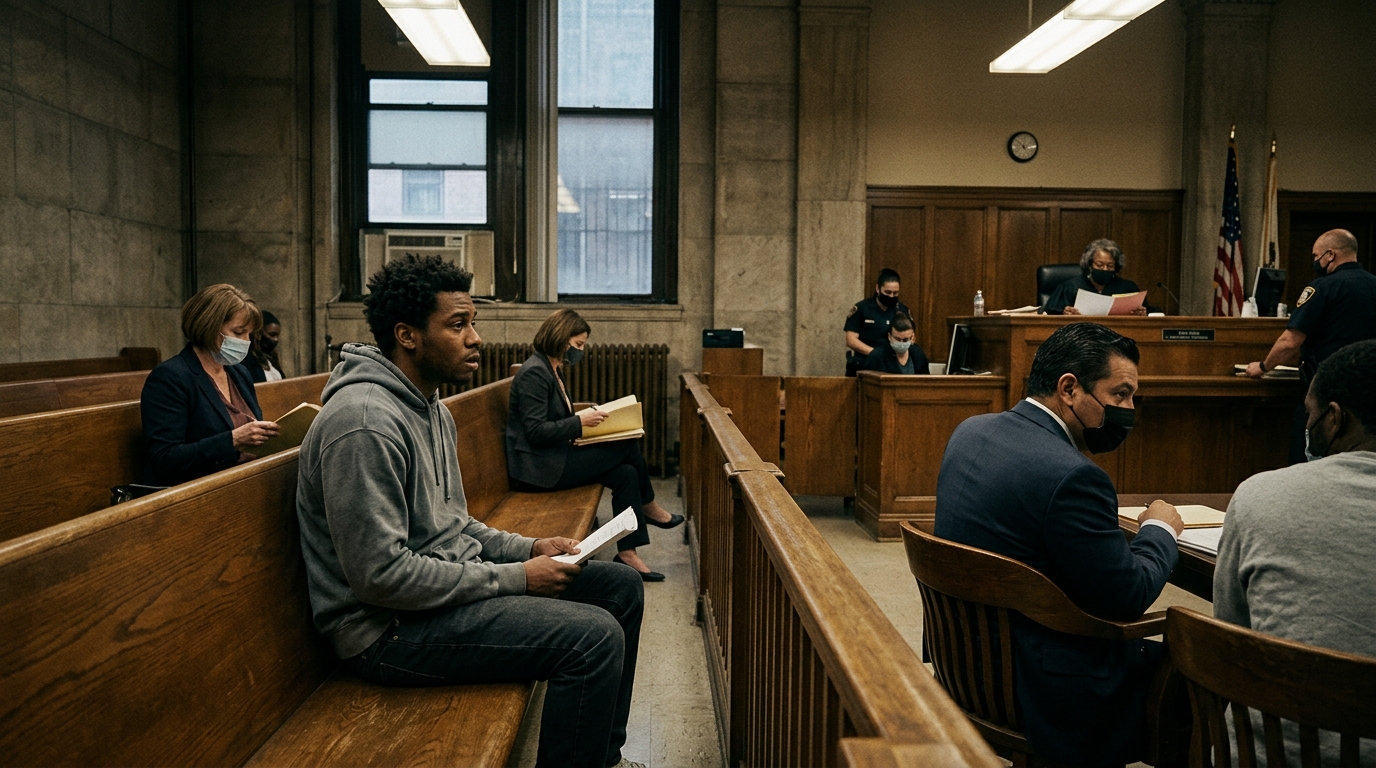
The moment the handcuffs click, a complex, intimidating, and often unforgiving legal machinery is set into motion. For an individual arrested and brought into police custody, the ensuing hours are a disorienting blur of booking procedures, holding cells, and profound uncertainty. Within the first twenty-four to forty-eight hours of arrest, the accused faces a critical, life-altering juncture: the initial court appearance, frequently referred to as magistration or the initial bail hearing. This is the precise moment a judicial officer decides whether the individual will go home to their family and job, or remain locked inside a jail cell pending trial. Yet, in courtrooms across the United States, a systemic anomaly persists. While the American legal framework boasts a constitutional guarantee to legal representation, this crucial first hearing frequently occurs without a defense attorney anywhere in the room. For those with financial means, a private lawyer is dialed immediately, ensuring an advocate is present. For the indigent, however, a lawyer at this stage is treated not as a fundamental right, but as a luxury they simply cannot access, leaving them to navigate a high-stakes legal labyrinth entirely alone.
The Constitutional Promise Versus Pretrial Reality
Over sixty years ago, the landmark United States Supreme Court decision in Gideon v. Wainwright (1963) fundamentally altered the landscape of American jurisprudence. The Court unanimously held that the Sixth Amendment guarantees the right to counsel for indigent defendants in criminal prosecutions, famously declaring that any person haled into court, who is too poor to hire a lawyer, cannot be assured a fair trial unless counsel is provided for them. This ruling birthed the modern public defender system and established the principle that justice should not depend on the size of a defendant’s wallet. However, the interpretation of exactly when this right officially attaches and must be provided has created a dangerous, gaping loophole in the pretrial process. The Supreme Court has historically noted that the right to counsel begins at the initiation of adversary judicial criminal proceedings. In many jurisdictions, courts and local governments have interpreted this ambiguously, arguing that the very first bail hearing does not always trigger the immediate presence of appointed counsel. As a result, the constitutional promise of Gideon falls flat at the exact moment a defendant’s physical liberty is first placed on the bargaining table. The guarantee of a lawyer during a trial months down the road offers little comfort to an individual who is being remanded to a detention center today.
The Mechanics of Magistration and the Power Imbalance
To understand the severity of this representation gap, one must examine the actual mechanics of an initial appearance and the inherent power imbalances present. During this hearing, a magistrate judge formally reads the criminal charges, explains basic constitutional rights, and, most importantly, sets the conditions of pretrial release, which typically involves determining a monetary bail amount. The judge makes this monumental decision based on incredibly limited information, usually relying solely on a probable cause affidavit written by the arresting police officer and the arguments presented by a prosecuting attorney. Without a defense lawyer present, there is absolutely no one to push back against the prosecution’s narrative or to provide crucial context about the defendant’s life. A defense attorney could inform the judge that the accused has a stable, full-time job, is the primary caretaker for young children, suffers from a medical condition requiring specific treatment, or simply does not have the financial resources to afford a five-thousand-dollar bond. Instead, unrepresented defendants—often sleep-deprived, traumatized, and entirely unversed in legal terminology—are left to advocate for themselves. In their desperation to explain their situation, they might inadvertently make self-incriminating statements that the prosecution can and will use against them later in the case.
The Devastating Cascade of Pretrial Detention
When bail is set beyond a defendant’s financial means due to the absence of legal advocacy, the consequences extend far beyond spending a few extra nights in a holding cell. The National Institute of Justice, alongside various criminal justice research bodies, has extensively documented the devastating ripple effects of pretrial detention. When a person is locked up simply because they cannot afford bail, their life can completely unravel in a matter of days. Missing even a single week of work can result in immediate termination, which in turn leads to an inability to pay rent, ultimately culminating in eviction and homelessness. Family structures are violently disrupted; single parents may lose custody of their children to the foster care system, and elderly dependents may be left without their primary caregivers. Furthermore, the psychological toll of incarceration in overcrowded county jails cannot be overstated. Pretrial detainees are forced to endure the trauma of confinement despite being legally presumed innocent. This period creates a cyclical trap of poverty and criminalization, where the punishment begins long before a jury is ever impaneled or a verdict is rendered. The economic cost is also borne by the taxpayers, who fund the exorbitant daily expenses of housing non-violent individuals in local jails simply because they lacked the upfront cash to buy their freedom.
Comparing Outcomes: Unrepresented vs. Represented Defendants at Initial Hearings
| Factor | Without Defense Counsel | With Defense Counsel (CAFA) |
|---|---|---|
| Bail Amounts | Significantly higher, often ignoring the defendant’s actual ability to pay. | Lower, tailored to financial reality; increased likelihood of non-monetary release. |
| Case Context | Judge only hears the police and prosecutor’s side of the story. | Judge receives vital context on employment, family ties, and community stability. |
| Self-Incrimination Risk | High; defendants often speak out of turn and make statements used against them. | Zero; attorney speaks on behalf of the client, protecting their Fifth Amendment rights. |
| Pretrial Detention Length | Days, weeks, or months, leading to severe collateral life consequences. | Minimized; many clients are released the same day to prepare their defense from home. |
A Systemic Failure: The Texas Context and National Struggles
The lack of legal representation at initial hearings is not an isolated oversight; it is a systemic failure deeply rooted in underfunded public defense systems and bureaucratic inertia. Recent legal battles in Texas provide a stark illustration of this nationwide crisis. In jurisdictions like Travis County, systemic and historical practices required indigent individuals to face magistrates without any legal advocate, effectively ensuring that cash bail was set in a vacuum. Recognizing the severe constitutional violations occurring daily, civil rights organizations launched aggressive litigation. In a landmark federal class action lawsuit filed by the American Civil Liberties Union and partner organizations, advocates argued that denying counsel at first appearance forces marginalized people into precarious situations that strip them of their dignity and liberty. This litigation ultimately resulted in a late 2025 settlement agreement guaranteeing that every person arrested and facing incarceration in the county is provided with an attorney at their first criminal court appearance. This victory highlights a broader reality: realizing constitutional mandates often requires exhausting legal battles. Jurisdictions frequently cite logistical hurdles and staffing shortages as excuses, treating fundamental rights as mere administrative inconveniences rather than absolute mandates.
Coerced Pleas and the Erosion of the Presumption of Innocence
Perhaps the most insidious and long-lasting consequence of unrepresented bail hearings is the phenomenon of the coerced plea deal. When an indigent defendant is remanded to pretrial detention with an unaffordable bail, the pressure to secure their own release becomes overwhelming. Prosecutors frequently leverage this desperation by offering a “time served” plea agreement. For a person who has already lost their job, is facing eviction, and is terrified of losing their family, the prospect of pleading guilty in exchange for immediate release is an offer that is nearly impossible to refuse—even if they are entirely innocent of the underlying charges. By accepting the plea, the individual is finally allowed to walk out of the jail doors, but they do so carrying the permanent, heavy burden of a criminal conviction. This criminal record acts as an invisible shackle, hindering future employment opportunities, restricting access to public housing, and revoking educational financial aid. The absence of a lawyer at that crucial initial hearing sets off a chain reaction that completely erodes the presumption of innocence, transforming the justice system into an assembly line of convictions driven by economic vulnerability rather than factual guilt.
Paths to Reform: Implementing Counsel at First Appearance
Fixing this systemic gap requires both political willpower and logistical innovation on a national scale. Implementing Counsel at First Appearance (CAFA) protocols ensures that public defenders or court-appointed counsel are present during magistration, fundamentally altering the trajectory of a criminal case. Successful models in various states have demonstrated that when public defenders are integrated into the initial bail process through shift systems or remote video conferencing, the reliance on monetary bail decreases dramatically. Moreover, comprehensive holistic defense models, which employ social workers alongside attorneys, can immediately present judges with viable, community-based alternatives to incarceration. While local governments often balk at the upfront costs of hiring more public defenders to cover these initial hearings, the long-term financial analysis overwhelmingly supports reform. By reducing the number of people unnecessarily held in pretrial detention, counties save millions of taxpayer dollars previously wasted on jail beds, inmate healthcare, and facility maintenance. Investing in early legal representation is not merely a moral imperative; it is a fiscally responsible policy that enhances public safety by keeping individuals connected to their jobs and communities.
Conclusion
Ultimately, the integrity and legitimacy of the American criminal justice system rely entirely upon the premise of equal representation. The promise that a person is innocent until proven guilty rings hollow when the most vulnerable members of society are forced to navigate the most critical, liberty-defining stage of their criminal proceedings alone. A lawyer should never be a luxury reserved only for those who can afford to purchase their own freedom. Ensuring that every individual has an advocate by their side from the very moment their liberty is threatened is essential to fulfilling the unkept promises of the Constitution. Only by demanding systemic reform and prioritizing indigent defense can society begin to dismantle the two-tiered system of justice that has plagued the nation for far too long.
Frequently Asked Questions
What is an initial appearance or magistration?
An initial appearance is the first court proceeding after an arrest. During this hearing, a magistrate judge formally notifies the defendant of the charges against them, advises them of their rights, and determines the conditions of pretrial release, which frequently includes setting a monetary bail amount.
Why is it important to have a lawyer at the first court appearance?
A lawyer can advocate for lower bail or release on recognizance by presenting the judge with crucial context about the defendant’s life, such as employment status and community ties. They also protect the defendant from making self-incriminating statements during the hearing.
Did the Supreme Court rule that everyone gets a free lawyer?
In Gideon v. Wainwright (1963), the Supreme Court ruled that indigent defendants have a Sixth Amendment right to appointed counsel in criminal cases. However, jurisdictions have historically debated exactly when this right activates, often exploiting a loophole to exclude the initial bail hearing.
What happens if a defendant cannot afford the bail set at the initial hearing?
If a defendant cannot afford bail, they are placed in pretrial detention and must remain in jail until their trial or until the case is resolved. This can lead to severe consequences, including job loss, housing instability, and intense pressure to accept a guilty plea just to be released.
How does pretrial detention affect the outcome of a criminal case?
Data shows that individuals held in pretrial detention are statistically much more likely to be convicted and receive longer prison sentences compared to those who fight their cases from outside of jail. The desperation of being incarcerated often leads innocent people to plead guilty to secure a “time served” release.
References
- Clarence Earl GIDEON, Petitioner, v. Louie L. WAINWRIGHT. — Supreme Court of the United States. 1963-03-18. https://www.law.cornell.edu/supremecourt/text/372/335
- Pretrial Research and Safety — National Institute of Justice. 2023-04-12. https://nij.ojp.gov/topics/courts/pretrial-research-and-safety
- Travis County Signs Settlement Agreement to Resolve ACLU and ACLU of Texas Lawsuit, Guaranteeing Counsel at First Appearance in Travis County — American Civil Liberties Union. 2025-12-22. https://www.aclu.org/press-releases/travis-county-signs-settlement-agreement-to-resolve-aclu-and-aclu-of-texas-lawsuit
Similar Articles








Read full bio of Sneha Tete


