
Consequences of Unpaid Property Taxes in Ohio
Understand the penalties, liens, foreclosures, and redemption options for delinquent property taxes in Ohio to protect your home.
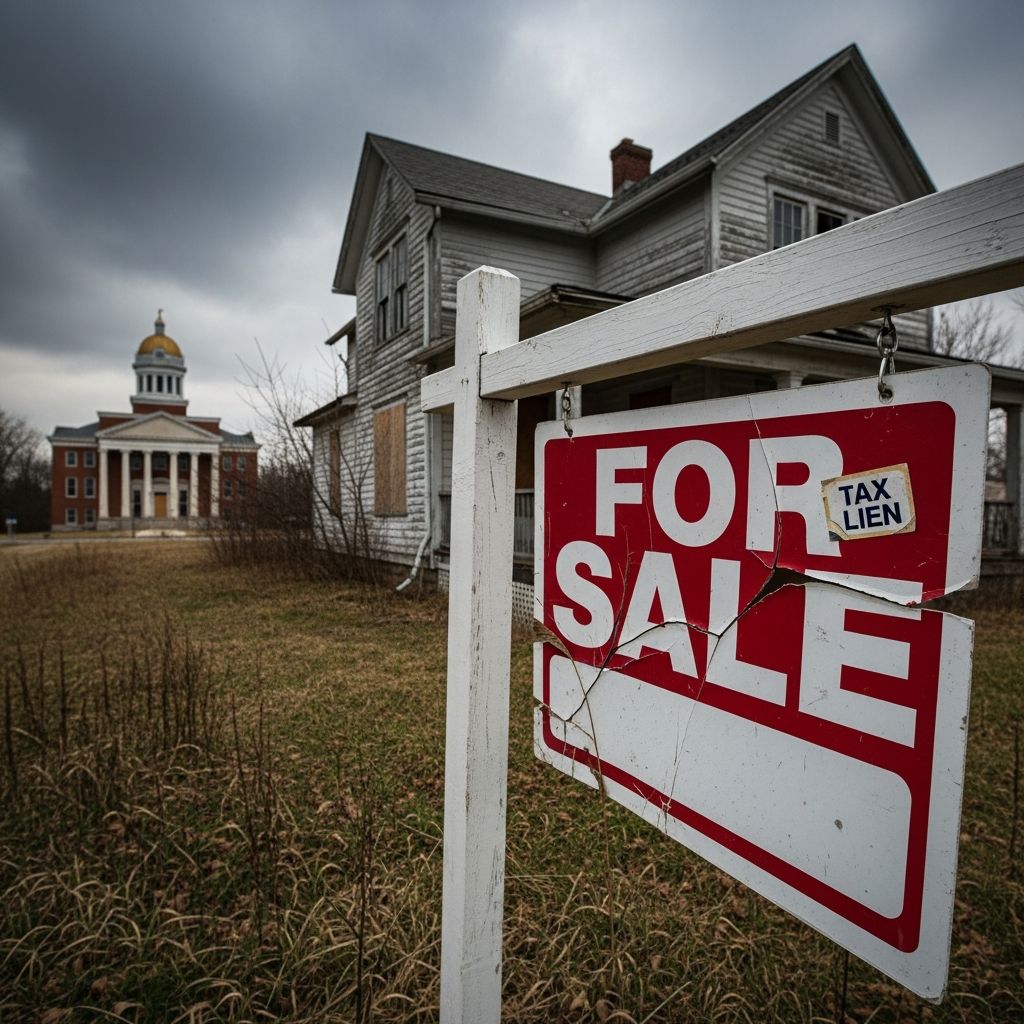
Property taxes fund essential public services in Ohio, including schools, roads, and local government operations. When homeowners fail to pay these taxes on time, a series of escalating consequences unfolds, starting with financial penalties and potentially leading to the loss of property ownership. This comprehensive guide outlines the process, timelines, legal remedies, and strategies to avoid or resolve delinquency.
Property Tax Payment Deadlines and Initial Penalties
Ohio real estate taxes are typically billed semiannually. The first half is due by December 31, and the second half by June 20 of the following year, though some counties may adjust these dates slightly for mailing purposes.
If payments are late, a standard
10% penalty
applies to the unpaid portion of current taxes. For instance, missing the December 31 deadline for the first installment incurs this penalty on the outstanding balance. There’s a grace period: paying within 10 days of the due date reduces the penalty to 5%.- First-half taxes (due Dec 31): 10% penalty if unpaid; 5% if paid within 10 days.
- Second-half taxes (due Jun 20): Same 10% penalty structure applies post-deadline.
- Delinquent prior years: Penalties compound, plus monthly interest.
Interest accrues monthly on unpaid balances, including penalties, at a rate tied to the federal short-term rate (approximately 1/12th per month). This charge begins the first day of the month after delinquency and continues until full payment.
Accumulation of Charges Over Time
Beyond the initial 10% penalty, unpaid taxes trigger ongoing costs that can quickly escalate the debt. Counties add interest starting August 1 for prior delinquencies and December 1 for the total balance in some areas.
| Timeframe | Penalty/Interest | Details |
|---|---|---|
| Within 10 days late | 5% penalty | Half of full 10% waived by county treasurer. |
| After 10 days | 10% penalty + monthly interest | Interest on taxes and penalties; rate per Ohio Rev. Code §5719.041. |
| Over 1 year delinquent | Lien risk | Potential tax lien sale or foreclosure proceedings. |
These charges are recorded on the tax duplicate, making the property less attractive to buyers and complicating refinancing or sales.
Tax Liens: The First Major Legal Step
After about one year of delinquency, Ohio counties attach a
tax lien
to the property. This lien secures the unpaid taxes, penalties, and interest, giving the county treasurer authority to act.The treasurer has two primary options:
- Sell the tax lien certificate: Investors bid on the lien at a public auction. The buyer pays the delinquent amount and receives the right to collect it back with added interest (up to 18% in foreclosure scenarios).
- Direct foreclosure: The county bypasses the lien sale and files a lawsuit to foreclose directly (Ohio Rev. Code §5721.18).
Homeowners receive notice via summons and complaint before any action, providing an opportunity to pay or negotiate.
Tax Lien Sales: Process and Investor Rights
In a tax lien sale, the county auctions certificates representing the lien. The purchaser advances the owed amount and earns interest or penalties on their investment.
Key timeline:
- Post-sale redemption period: One year minimum before the buyer can foreclose.
- Foreclosure initiation: After one year, the lienholder files suit; property auctions to satisfy debt.
- Final confirmation: Court approval of sale transfers ownership; redemption ends.
Redemption costs rise over time: initially just taxes plus interest, but post-foreclosure filing, it includes 18% annual interest, attorney fees, and court costs (Ohio Rev. Code §5721.38).
County-Led Foreclosure Procedures
If the treasurer opts for foreclosure without a lien sale, they file in court. The process mirrors mortgage foreclosures but prioritizes tax debts, which supersede most other liens.
Judgment leads to a sheriff’s auction. The highest bidder receives a deed after court confirmation (Ohio Rev. Code §5721.19).
During proceedings, owners can:
- Pay full amount (taxes, penalties, interest, fees, court costs) before confirmation.
- Enter a payment contract if no prior defaults (Ohio Rev. Code §5721.25).
Post-foreclosure start, redemption requires property compliance with zoning, building, health, and safety codes.
Redemption Rights and Payment Plans
Ohio offers robust redemption opportunities, allowing owners to reclaim property even after sales or foreclosure starts.
Redemption amounts:
- Before foreclosure: Lien amount + interest.
- After foreclosure filing: Certificate price + 18% interest/year + fees.
Payment plans with the treasurer provide relief for those unable to pay lump sums, available pre-foreclosure confirmation if no prior defaults.
Impact on Mortgaged Properties
For mortgaged homes, lenders often escrow taxes. Delinquency prompts the servicer to advance payment and bill the owner, potentially leading to mortgage foreclosure if unreimbursed.
Tax liens have priority over mortgages, heightening risks for borrowers.
Strategies to Prevent Tax Delinquency
Avoiding escalation starts with proactive steps:
- Set up escrow: Ensures timely payments via mortgage.
- Appeal assessments: If taxes seem high, challenge via county Board of Revision.
- Financial aid: Check homestead exemptions, senior deferrals, or veteran programs.
- Payment arrangements: Contact treasurer early for contracts.
Selling the property before lien attachment can resolve debts from proceeds.
Long-Term Effects of Delinquency
Unresolved delinquency damages credit, blocks refinancing, and culminates in ownership loss. Post-foreclosure, former owners may face eviction and tax sale profits go to debt satisfaction, with rare surpluses refunded.
Frequently Asked Questions
What is the penalty for late property taxes in Ohio?
A 10% penalty on unpaid current taxes, reducible to 5% if paid within 10 days. Interest accrues monthly thereafter.
How long before a tax lien sale in Ohio?
Typically after one year of delinquency, though counties vary.
Can I redeem my home after a tax sale?
Yes, within one year pre-foreclosure, or until court confirmation post-filing, paying full amounts plus 18% interest and fees.
What if I have a mortgage?
Servicer may pay taxes and charge you; failure to reimburse risks mortgage foreclosure.
Are payment plans available?
Yes, with county treasurer before final sale confirmation, if no prior defaults.
References
- What Happens If I Don’t Pay Property Taxes in Ohio? — Nolo. 2024. https://www.nolo.com/legal-encyclopedia/what-happens-if-i-dont-pay-property-taxes-ohio.html
- Property – Penalties – Ohio Department of Taxation — Ohio Dept. of Taxation. Accessed 2026. https://tax.ohio.gov/help-center/faqs/property-penalties
- 15. How much penalty if I pay my taxes late? – Portage County — Portage County OH. Accessed 2026. https://www.portagecounty-oh.gov/treasurers-office/faq/15-how-much-penalty-if-i-pay-my-taxes-late
- Section 323.121 – Ohio Revised Code — Ohio Legislature (codes.ohio.gov). 2024. https://codes.ohio.gov/ohio-revised-code/section-323.121
- Ohio – Penalties – Property – Explanations — CCH AnswerConnect. Accessed 2026. https://answerconnect.cch.com/document/joh0129e68c9a7bc510009d4990b11c2ac4f1032/state/explanations/ohio/penalties
- Section 5719.041 – Ohio Revised Code — Ohio Legislature (codes.ohio.gov). 2024. https://codes.ohio.gov/ohio-revised-code/section-5719.041
- Real Estate Tax – Williams County OH — Williams County OH. Accessed 2026. https://www.williamscountyoh.gov/268/Real-Estate-Tax
Similar Articles








Read full bio of medha deb


