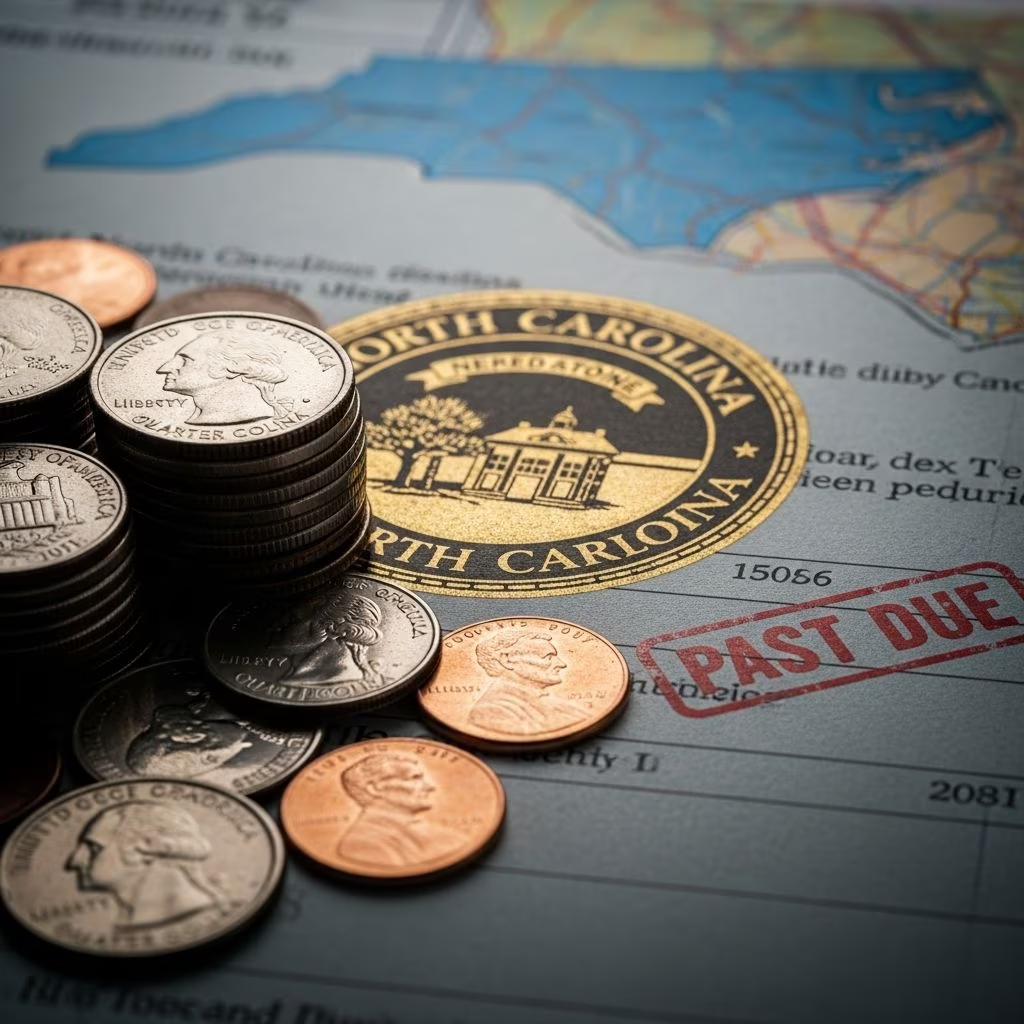
Property taxes fund essential local services in North Carolina, but failing to pay them on time can lead to severe financial and legal repercussions for homeowners. Delinquency initiates a structured enforcement process designed to recover owed amounts, potentially culminating in the loss of property ownership. This comprehensive guide outlines the timeline of consequences, legal mechanisms involved, homeowner rights, and actionable strategies to mitigate risks.
Property Tax Payment Deadlines in North Carolina
North Carolina counties assess property taxes annually, with bills typically mailed in the fall. Payments are due by January 5 of the following year to avoid penalties. For taxes assessed in a given year, this deadline applies uniformly across the state, though some counties offer discounts for early payment between September 1 and January 5.
Missing this date classifies the account as delinquent. Homeowners receive bills specifying the exact due date, and electronic reminders are often available through county tax portals. Understanding these timelines is crucial, as the enforcement clock starts immediately upon delinquency.
Initial Financial Penalties: Interest and Late Fees
Once delinquent, unpaid taxes accrue interest at a rate of 2% for the first month, followed by 0.75% per month thereafter until paid in full. This compounding structure ensures the debt grows rapidly, incentivizing prompt resolution.
- First month: 2% interest on the principal.
- Subsequent months: Additional 0.75% per month or portion thereof.
- No cap: Interest continues until full payment, including any added costs.
Counties may also impose administrative fees for collection efforts, though state law limits additional penalties on delinquent accounts. These initial charges can double the original tax bill within a year if ignored, transforming a manageable obligation into a substantial burden.
Enforcement Actions Before Foreclosure
Local tax collectors employ aggressive collection tactics short of property sale to recover funds. These measures target personal assets and income streams, escalating pressure on delinquent taxpayers.
| Enforcement Method | Description | Typical Timeline |
|---|---|---|
| Garnishment of Wages | Court-ordered deduction from paycheck until debt is cleared. | After 60-90 days delinquent. |
| Bank Account Levy | Seizure of funds directly from accounts. | Concurrent with garnishment. |
| Income Tax Refund Offset | State refunds applied to tax debt. | Annually during refund season. |
| Rent Attachment | Interception of rental income from the property. | When applicable to investment properties. |
| Personal Property Seizure | Sale of vehicles, boats, or equipment to satisfy debt. | After initial notices. |
These remedies are authorized under North Carolina statutes and executed through county tax offices or sheriff departments. Wake County, for example, advertises delinquent accounts in local newspapers like The News & Observer approximately two months after delinquency, adding public notice and further fees.
The Tax Lien: A Claim on Your Property
If non-judicial collections fail, the county records a tax lien against the property title. This legal encumbrance secures the unpaid taxes, interest, and fees, giving the government first-priority claim over most other creditors, including mortgage lenders.
Key impacts of a tax lien include:
- Sale or Refinance Block: Title transfer requires lien satisfaction; unpaid liens cloud title and halt closings.
- Credit Damage: Liens appear on credit reports, raising borrowing costs and signaling financial distress.
- Mortgage Acceleration: Lenders monitor liens and may advance payment to protect collateral, then demand reimbursement plus fees, potentially triggering mortgage default.
Tax liens are advertised per state law, notifying owners and interested parties before escalation to foreclosure.
Tax Foreclosure Process: Step-by-Step Timeline
Persistent delinquency leads to tax foreclosure, where the county seeks court authority to sell the property. North Carolina employs judicial foreclosure, either through a direct lawsuit against the owner or an in rem action against the property itself.
- Foreclosure Complaint Filed: Tax collector sues in superior court; owner receives summons and complaint (N.C. Gen. Stat. § 105-374).
- Judgment Entry: If undefended or debt unpaid, court orders sale after hearing defenses like billing errors.
- Execution Request: Filed 3 months to 2 years post-judgment; sheriff schedules public auction (N.C. Gen. Stat. § 105-375).
- Auction Sale: Property sold to highest bidder; proceeds cover taxes, costs, fees first.
- Confirmation and Deed Transfer: Court approves sale; new owner receives title if no redemption.
Homeowners receive multiple notices throughout, providing opportunities to cure the default. The process typically spans 1-2 years, longer than mortgage foreclosures due to statutory safeguards.
Redemption Rights: Your Window to Reclaim Ownership
North Carolina offers robust redemption periods post-sale, allowing owners to recover property by paying the full redemption amount.
- Pre-Confirmation: Pay before court upholds the sale.
- Upset Bid Period: Additional time for higher bids or owner payment (N.C. Gen. Stat. § 1-339.57).
- Full Cure: Includes all delinquent taxes, current taxes, interest, penalties, and costs (N.C. Gen. Stat. § 105-374).
Post-sale proceeds beyond debts belong to the former owner, as affirmed by the U.S. Supreme Court in Tyler v. Hennepin County (2023), prohibiting retention of surplus equity. Redemption timelines vary slightly by county; contact local tax offices for specifics.
Mortgage Implications and Lender Interventions
Property tax liens supersede mortgages, prompting lenders to act. Non-escrowed loans see servicers paying taxes to preserve collateral, then billing owners—often leading to escrow mandates or default.
Escrowed mortgages automatically advance funds from reserves, increasing monthly payments. Failure to reimburse triggers standard mortgage foreclosure, which runs parallel to tax proceedings and offers additional notices before sale.
Strategies to Resolve Delinquent Taxes
Proactive steps can halt escalation:
- Contact Tax Office Immediately: Request payment plans or hardship extensions; many counties accommodate.
- Partial Payments: Current-year taxes may clear title issues, with delinquents prorated at closing.
- Legal Defense: Challenge errors in court; prove payment or assessment disputes.
- Bankruptcy Option: Automatic stay pauses collections, though tax liens persist.
- Professional Help: Tax attorneys or advisors negotiate resolutions.
Preventing Delinquency: Best Practices for NC Homeowners
Avoidance is simplest protection:
- Enroll in escrow if mortgaged.
- Calendar January 5 annually; pay early for discounts.
- Monitor mail and online portals for bills.
- Appeal assessments if overvalued.
Frequently Asked Questions About NC Property Tax Delinquency
Can I lose my home over unpaid property taxes in North Carolina?
Yes, prolonged delinquency leads to judicial tax foreclosure and public auction sale, though redemption rights provide cure opportunities.
How quickly does interest start on late taxes?
Interest begins January 6 at 2% for the first month, then 0.75% monthly.
Does a tax lien affect selling my house?
Absolutely; liens must be paid at closing, or the sale fails.
What is the redemption period after a tax sale?
Owners can redeem before sale confirmation and during upset bid periods by paying full amounts owed.
Will my mortgage company pay my taxes?
Likely yes, to protect their lien position, then bill you—potentially causing default.
References
- Consequences of Unpaid Property Taxes in North Carolina — TrustBGW. 2023. https://www.trustbgw.com/blog/consequences-of-unpaid-property-taxes-in-north-carolina
- What Happens If I Don’t Pay Property Taxes in North Carolina? — Nolo. 2025. https://www.nolo.com/legal-encyclopedia/what-happens-if-i-dont-pay-property-taxes-north-carolina.html
- FAQs: What if I do not pay on time? — Pender County Government. Accessed 2026. https://www.pendercountync.gov/FAQ.aspx?QID=153
- Delinquent Taxes — Wake County Government. Accessed 2026. https://www.wake.gov/departments-government/tax-administration/payment-information/delinquent-taxes
- N.C. Gen. Stat. § 105-360: Due date; interest for nonpayment of taxes — NC General Assembly. 2025. https://www.ncleg.gov/EnactedLegislation/Statutes/PDF/BySection/Chapter_105/GS_105-360.pdf